Self-Sacrificial leadership. Researchers posit that self-sacrificial leaders have a strong sense of obligation to fulfill the responsibilities to their followers . Leadership in Nigeria has to be sacrificial.
You can't ask me to endure while you live in luxuries and eldorado!
Acute atrial fibrillation is one of the most challenging arrhythmias to manage in the ER.
I’ve simplified the entire treatment approach into a practical algorithm that’s easy to remember and apply. 🧵👇
C is the correct answer. Most cases of acute pharyngitis are viral and self-limiting, so first-line management is symptomatic treatment with paracetamol/NSAIDs, hydration, and rest. Antibiotics should be reserved for confirmed or strongly suspected Group A Streptococcal infection based on clinical scoring and/or testing.
Prescribing azithromycin, co-amoxiclav, or ceftriaxone for every sore throat contributes to antimicrobial resistance, adverse effects, and unnecessary healthcare costs. Antibiotic stewardship starts with recognizing when antibiotics are not needed.🩺💊
Clinical pearl: The best antibiotic for most sore throats is no antibiotic at all. 😊
A 66-year-old man presents with a 1-week history of diarrhoea and vomiting. He complains of severe back pain and generalized weakness and is admitted to the emergency department. Examination reveals reduced power in his lower limbs, ataxia, tachypnoea, and diplopia. A CT scan of the brain is normal. Which one of the following is the next most appropriate investigation?
A. Urine dipstick
B. Magnetic resonance imaging (MRI) of the brain
C. Echocardiogram
D. Spirometry
E. Electroencephalography (EEG)
🧠 FOR RESIDENTS | HOUSE OFFICERS | CONSULTANTS
(STROKE LOCALIZATION MADE SIMPLE)
When a stroke patient arrives, don’t start with scans first.
👉 First question at bedside: Which vascular territory is involved?
This single step predicts the full neurological deficit.
1️⃣ Middle Cerebral Artery (MCA) Stroke
📍 Most common stroke territory
Contralateral face & arm weakness > leg
Contralateral sensory loss
Dominant hemisphere → Aphasia
Broca: non-fluent speech
Wernicke: fluent but meaningless speech
Non-dominant hemisphere → Hemispatial neglect
💡 Key clue: Face + arm > leg = MCA
2️⃣ Anterior Cerebral Artery (ACA) Stroke
Contralateral leg weakness > face/arm
Sensory loss (leg predominant)
Frontal lobe features:
Personality change
Urinary incontinence
💡 Key clue: Leg > face/arm = ACA
3️⃣ Posterior Cerebral Artery (PCA) Stroke
Contralateral homonymous hemianopia
No motor weakness
Memory impairment (hippocampus)
💡 Key clue: Isolated visual field defect = PCA
4️⃣ Basilar Artery Stroke
⚠️ Neurological emergency
Locked-in syndrome
Conscious but quadriplegic
Vertical eye movements preserved only
Bilateral motor deficits ± cranial nerve palsies
💡 Key clue: Locked-in = basilar until proven otherwise
5️⃣ Lacunar Strokes (Small vessel disease)
Seen in HTN & diabetes
Deep brain involvement:
Pure motor hemiparesis (internal capsule)
Pure sensory stroke (thalamus)
Ataxic hemiparesis (pons)
Dysarthria–clumsy hand syndrome
❗ No cortical signs:
No aphasia
No neglect
No visual field defects
💡 Key clue: Pure motor OR pure sensory = lacunar
🔑 ONE-LINE PATTERN RECOGNITION:
Face/arm > leg → MCA
Leg > face/arm → ACA
Visual field cut only → PCA
Locked-in → Basilar
Pure motor/sensory → Lacunar
🧠 If you can localize, you can diagnose before imaging.
HYPERTENSIVE URGENCY vs EMERGENCY 👇👇
Hypertensive Urgency -
When BP ≥180/120 mmHg
But No organ damage
The patient may be stable ( headache, anxiety only )
Treatment -
With oral drugs, slow BP reduction.
Hypertensive Emergency -
When BP ≥180/120 mmHg and
Organ damage present
Brain - stroke, confusion
Heart - MI, heart failure
Kidney - AKI
Eyes - retinopathy
Treatment -
Immediately with IV drugs in ICU
In September 2015, on an Air Canada flight from Spain to the US, a 2-year-old boy began struggling to breathe. His asthma attack worsening, oxygen levels dropping to a dangerous 87-88%.
His medication was stuck in checked luggage, and the plane had only an adult inhaler—no pediatric spacer or nebulizer.
Enter Dr. Khurshid Guru, an Indian-origin robotic surgeon from Roswell Park Cancer Institute (originally from Kashmir). When the call for a doctor went out, he sprang into action.
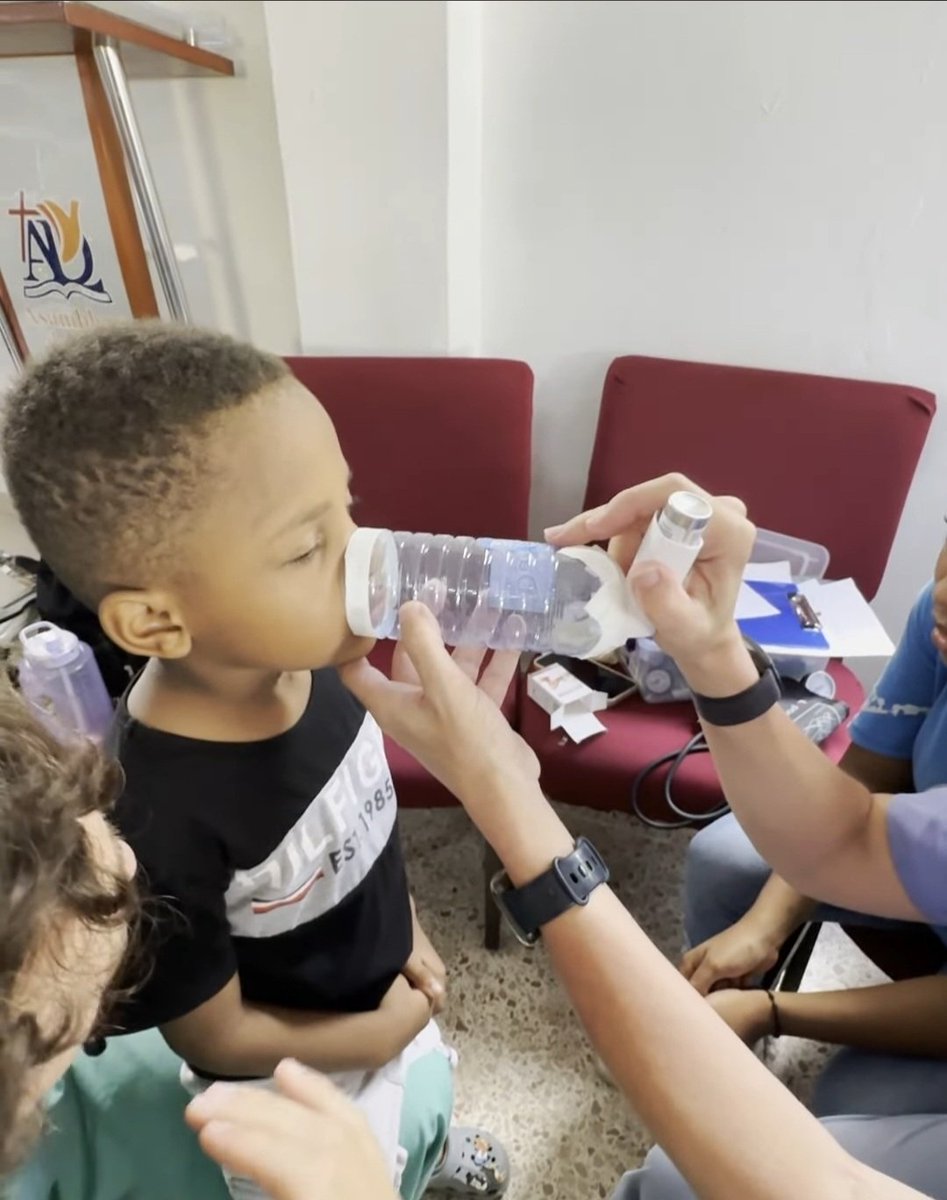
Channeling his inner innovator spirit, Dr. Guru improvised a lifesaving spacer (a breathing device that can deliver high medication content to lungs for kids) using:
-A plastic water bottle (cut to create a chamber)
-A plastic cup
-Tape
-The plane's oxygen mask & tank
-A passenger's adult inhaler
He poked holes in the bottle, attached the inhaler to deliver medicated mist, connected oxygen for flow, and fitted the mask so the toddler could inhale both effectively. Quick thinking turned everyday items into a pediatric breathing aid.
The child's breathing stabilized, oxygen levels rose, and he was safe for the rest of the flight. By the time the plane landed, the 2-year-old was playing with his mother.
This was indeed a miraculous work by Dr. Guru at 30,000 feet.
Images are for representative purpose.
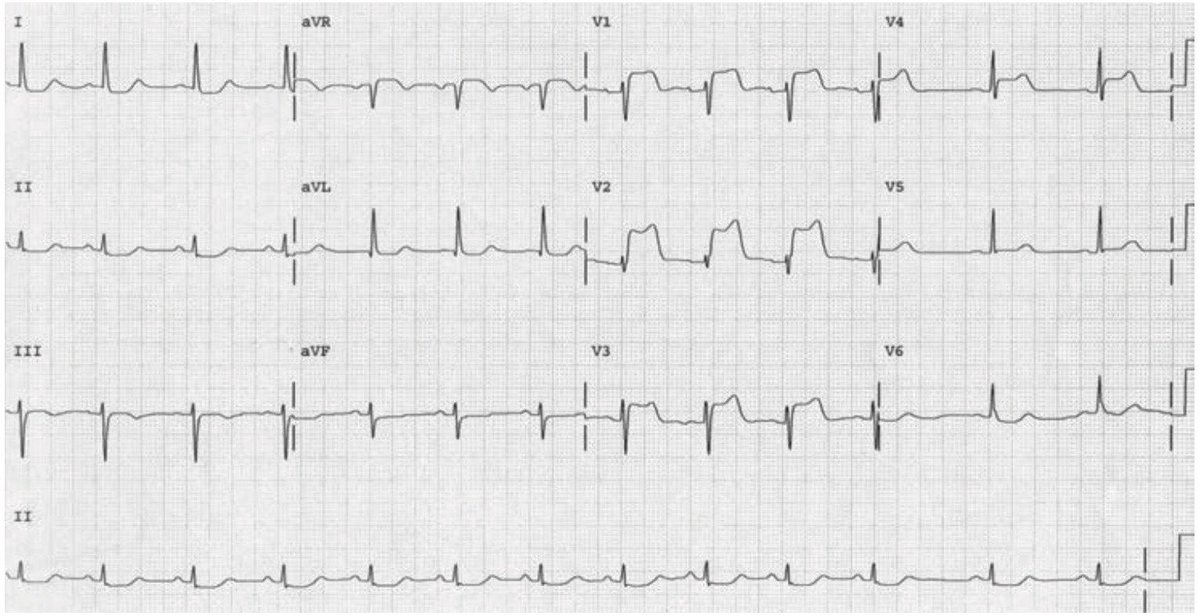
ECG alert 🚨
Clinical ECG case 🩺
A 56-year-old man presents with 90 minutes of severe retrosternal chest pain, pressure-like, radiating to the left arm, associated with diaphoresis and nausea. Pain began during exertion and did not relieve with rest.
He reports intermittent exertional chest discomfort over the past few weeks. High-sensitivity Troponin-I:
How would you interpret this ECG & what’s the culprit artery here?
#MedTwitter #MedX #ECG #Cardiology
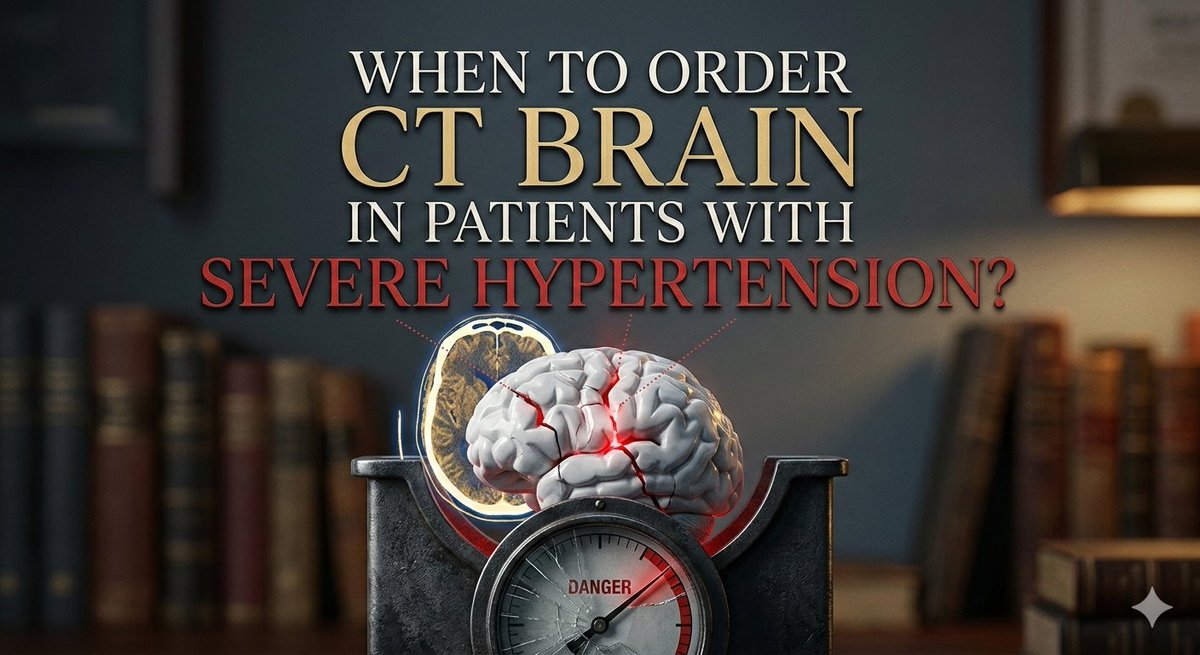
🧠 When to order CT Brain in severe hypertension? 🚨
Red flags:
1️⃣ Severe headache + very high BP ⚡ → suspect intracerebral hemorrhage 🩸
2️⃣ Headache + vomiting & blurred vision 🤢👀 → ↑ ICP / hypertensive encephalopathy
3️⃣ Headache + neuro deficit 💪 → possible stroke