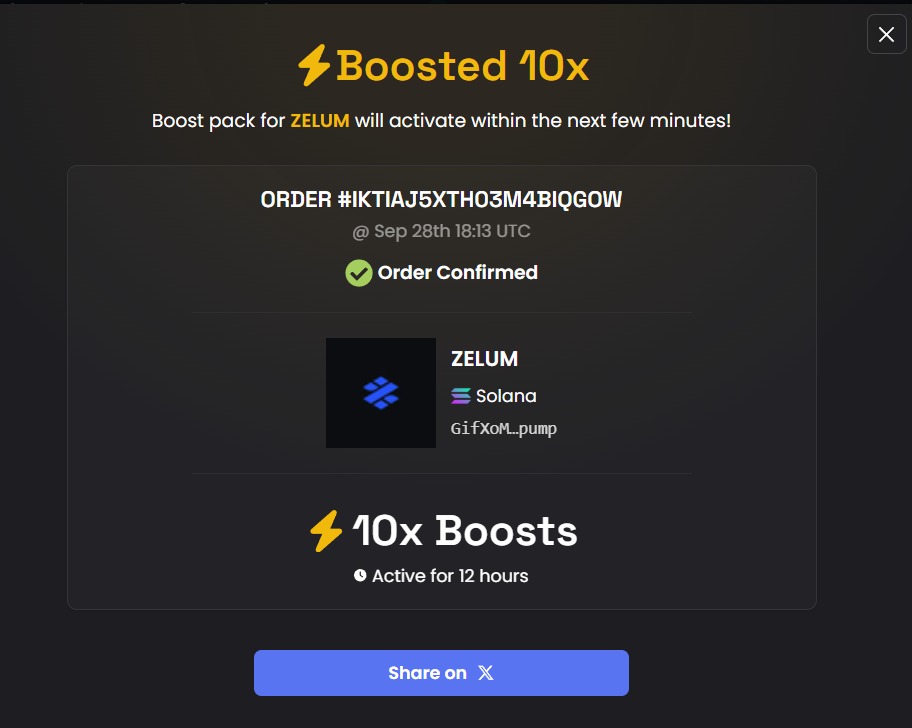
$ZELUM is live on Solana.
GifXoMHe5L3jed2Hqf3vCjMNZgM495fbaWM61Nx2pump
Zelum is the Zcash virtual machine: encrypted execution, Zcash settlement, and shielded notes. The token is now trading on Solana.
Zelum Testnet is Live
Mixer is live on Zelum testnet and involving real assets, more than 500 assets supported and more than 5 chains supported
Zelum testnet is for shielding
https://t.co/cJAwcp3Guy
Zelum runs an encrypted EVM. Developers deploy normal contracts. Those contracts read and write shielded state, so the inputs and outputs are not published with the transaction.
Dexscreener socials for Zelum have been verified. The profile links on the token page now point to the official Zelum accounts.
https://t.co/3rlSMTPzsn
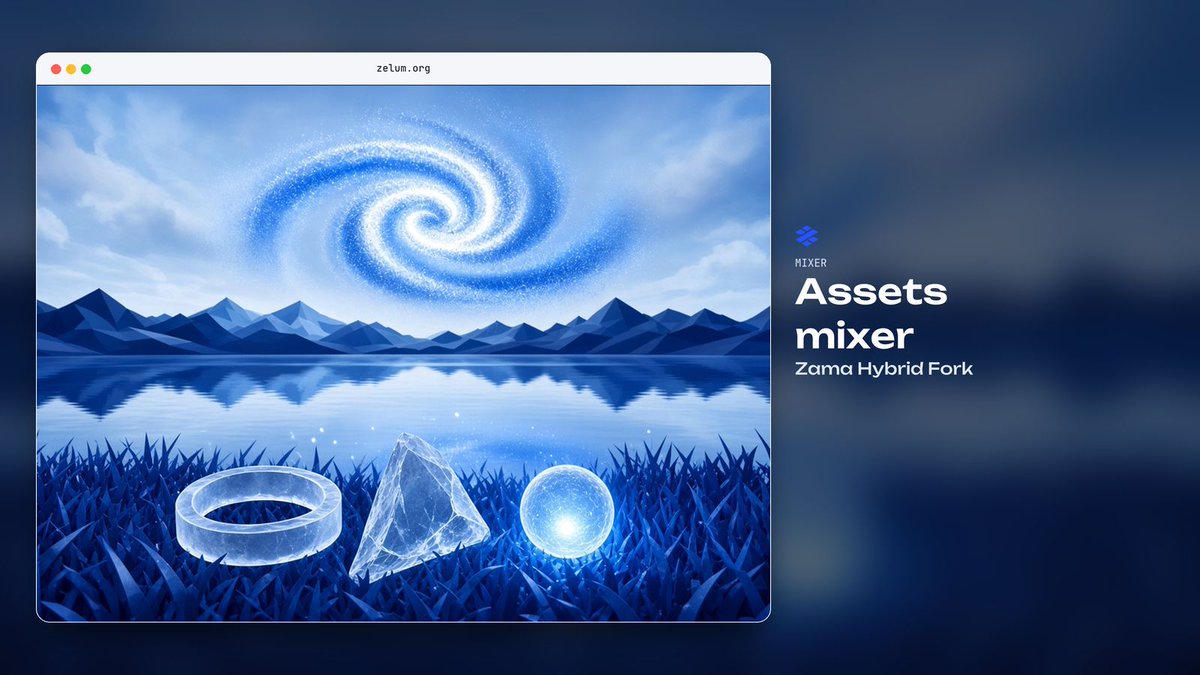
Assets mixer. A ring, a shard, and a sphere sit in the grass. They are different objects in one field. An assets mixer is the same idea applied to value. Holdings enter as notes and leave as notes. The public surface does not receive a route, a neighbor list, or a narration of who stood next to whom.
Zama Hybrid Fork is the execution side of that promise. Contracts run in an encrypted EVM. Zcash is where the result settles. Mixing is not a separate theater from the machine. It is the machine doing what it was built to do: move value and programs under one rule, and end both as a seal. Counterparties see their own notes. Observers see that the field changed.
The spiral stays in the sky. It is not a map of the path across the water. The objects in front are enough. Different shapes, one quiet ground, and no transcript of how they arrived.
Zelum launching today testnet is live and mixer is live with real assets. It is an encrypted EVM that runs as a layer 2 on Zcash. Contracts execute in the usual way. The state they touch is shielded, and Zcash settles the result.
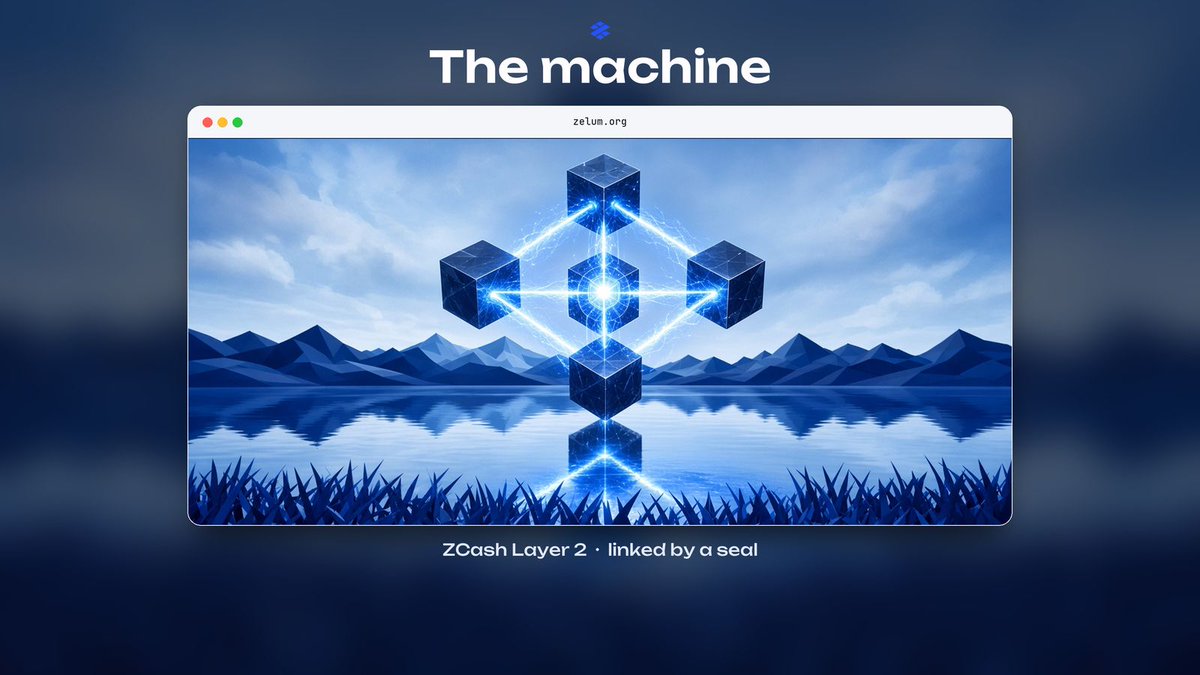
The machine. Five cubes, linked by light, are the anatomy. One sits at the center. The others take the points of a cross. The beam that joins them is the seal: the only part of the work that has to travel. Around that cross, the lake and the mountains stay still. The machine is busy. The landscape does not narrate it.
Zelum is the Zcash virtual machine, a layer 2. Encrypted execution runs above. Zcash settles below. The hybrid is that join, including the Zama lineage of encrypted EVM execution, bound to a chain whose native object is already a shielded note. The fork is the choice to make that join the product, rather than to leave encrypted execution and shielded settlement apart.
The reflection under the cubes repeats the structure without adding a second story. What you see twice is the link, not the contents. That is the machine at rest: parts connected, work contained, and a public mark that says the connection held.
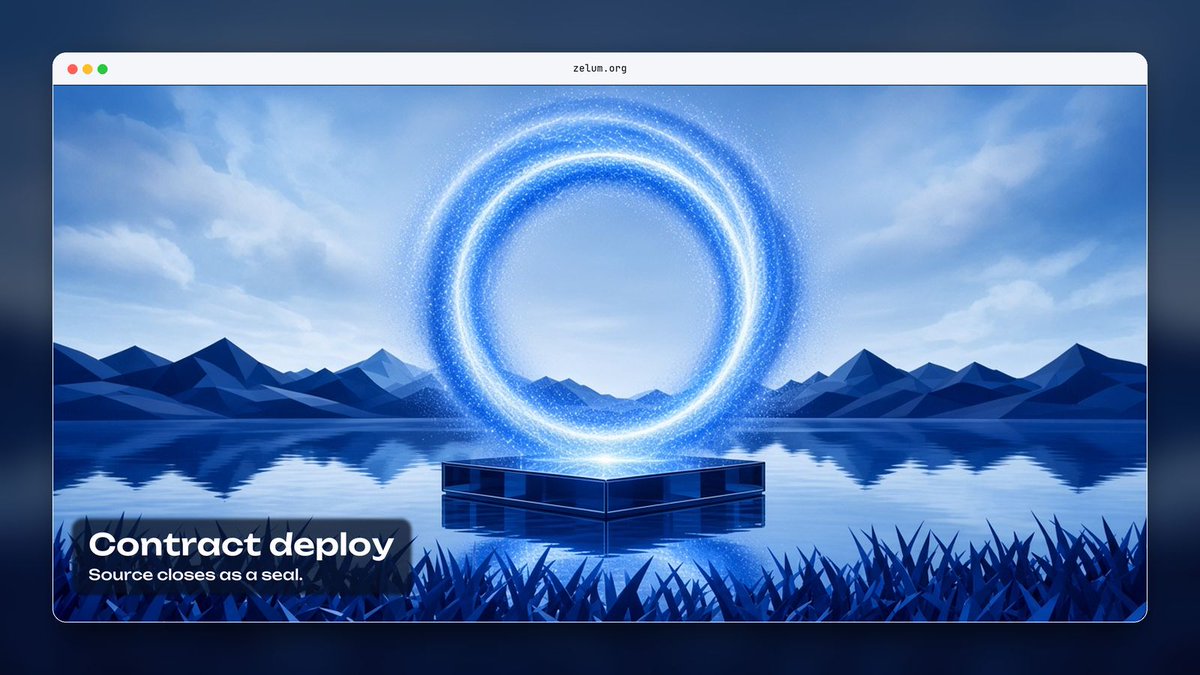
Source closes as a seal. The ring above the plinth is a deploy. Source goes in. A contract comes out only as something the chain can accept: a seal at a height, with the name, the hash, and the note kept with the parties who hold them. The bright circle is the moment the work closes, not a window onto the source.
Deploying on Zelum is still an EVM act. The difference is where the state lives. Execution happens in the machine. Settlement happens on Zcash. A program can be as specific as the people writing it need it to be, and the public record can remain a commitment. The plinth is the closed object. The ring is the proof that it closed.
Nothing in that picture is a dashboard. There is no feed of internal steps, because those steps are not the public artifact. The artifact is the seal. When the ring is done, the lake holds one more quiet object, and the chain has what it needs.
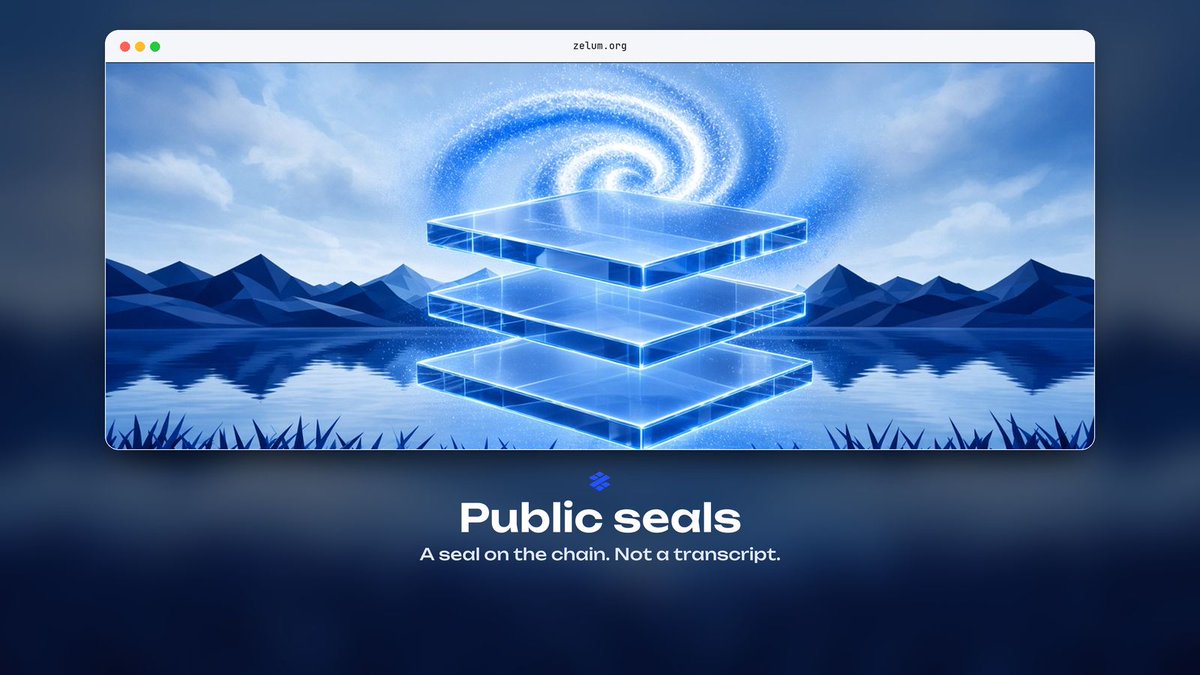
Public seals. Three slabs, stacked, are the ledger in still form. Each one is a closed layer. Light edges them so you can see that they are separate, and the reflection shows that they belong to the same water. A seal is not a story of what happened inside. It is the record that a valid transition finished.
A transfer begins as a note. A contract begins as source. Both end at a height. Zelum executes. Zcash settles. The chain accepts the seal and does not have to repeat the contents of the work. Observers learn that a block closed. They do not receive the path, the balances, or the order of the parties.
That is why the public surface stays thin. The slabs do not open. The spiral sits behind them and does not enter the stack. Privacy here is not a coat of paint on a transparent ledger. It is the decision that the public chain records a seal, and stops.
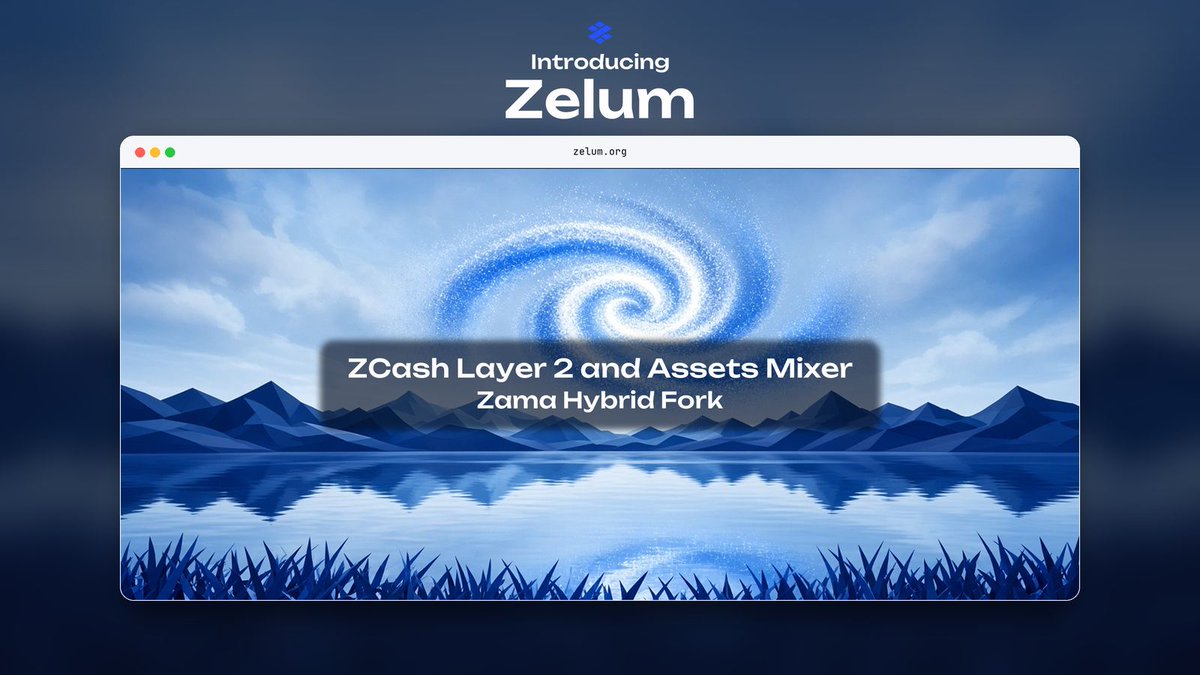
Zelum is a Zcash virtual machine: an encrypted EVM that runs as a layer 2 on Zcash, and a place where assets can move without leaving a public transcript. The picture is the machine at rest. A low-poly lake holds a spiral of light over the water, mountains cut the horizon, and the whole still sits inside a window, the way a working system is shown before anyone is asked to trust a diagram. Above that frame the name is plain. Introducing Zelum. In the middle of the glass, the rest of the sentence is already written: ZCash Layer 2 and Assets Mixer, Zama Hybrid Fork. That line is the product. Execution stays inside the note. Zcash keeps the seal. What the public chain is allowed to see is that the work closed, not the story of how it closed.
A layer 2 on Zcash is a division of labor, not a second copy of the same ledger. Zelum is the execution layer. Contracts run in a form developers already know, against shielded state, and a valid transition closes as a seal the chain underneath can accept. Zcash is the settlement layer because shielded value is already its native object. The program can be expressive. The public record can still be a commitment. A transfer begins as a note. A contract begins as source. Both end at a height, under one rule: the machine executes, Zcash settles, and the path between a counterparty’s view and an observer’s view stays with the note. Observers can see that the ledger moved. They do not receive a transcript of what the machine did.
The assets mixer is that same rule applied to value. Assets enter as notes and leave as notes. The public surface records a seal, not a route, not a balance sheet of who stood next to whom, and not a narration of the path between one holding and the next. Counterparties who hold the relevant notes can see what those notes entitle them to see. Everyone else sees that a block closed. This is why the still is quiet. The spiral, the lake, and the reflection are not decoration for a dashboard. They are a picture of a ledger that refuses to narrate itself. Private notes, public seals, and a settlement that does not require the chain to repeat the contents of the work.
Zama Hybrid Fork names the execution lineage and the break from it. Zelum takes the encrypted-EVM idea associated with Zama, where a contract runs without laying its state open, and binds that idea to Zcash as the chain that settles it. The hybrid is the join: familiar contract execution, shielded notes, and Zcash as the place a seal is accepted. The fork is the decision to make that join the machine, rather than to leave encrypted execution and shielded settlement in separate worlds. The window in the image is the introduction. The testnet is where the introduction becomes a key in hand, a note moved, and a contract sealed. The galaxy stays in the sky. The ledger underneath it stays quiet.
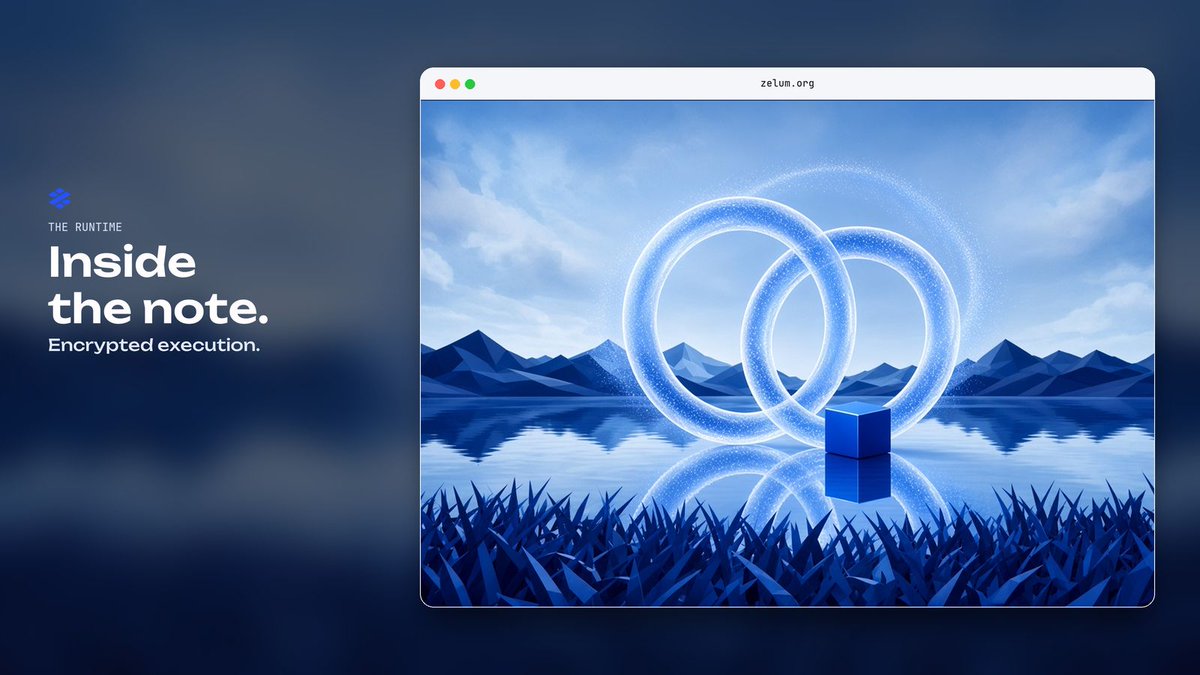
Inside the note. The two rings are the runtime. A contract does not perform itself in public. It runs inside the note, against shielded state, and the only thing that has to leave is proof that the run closed. The cube on the water is that proof: small, solid, and enough.
Zelum is an encrypted EVM on Zcash. Developers keep the execution model they already know. The state that execution touches stays shielded. Zcash is the settlement layer underneath, because shielded value is already its native object. The machine can be expressive. The public record can still be a commitment.
What an observer receives is a seal, not a transcript. Counterparties who hold the note can see what the note entitles them to see. Everyone else can see that the ledger moved. That split is the whole runtime: private work, public acceptance, and nothing narrated in between.