Parasite cell biology, science and microscopes (with a garnish of computers, graphics and graphic design). Runs a research lab in the University of Edinburgh.
Just realised I totally forgot the BioRxiv link for the trypanosome genome spliced leader, polyadenylation and mRNA annotation paper: https://t.co/94Ued7Ze7K
Do you use or analyse trypanosomes, leishmania, etc. genomes? You might find this useful - we've got loads of genomes, but an annotation gap for mRNAs, this tool aims to fix that.
Want to computationally analyse a genome's-worth of protein localisations? Have data for 4.5 million cells at your fingertips using this Python tool to access https://t.co/OGQ2KACppv data https://t.co/U0fUxL9rdL (we're out of beta and releasing on time 🎂)
The AlphaFold Database, jointly developed with @GoogleDeepMind, now contains datasets from specialist communities.
This includes rich datasets for microbes, viruses & parasites associated with tropical diseases.
https://t.co/5Ano1AW64I
For now, just Trypanosoma brucei and a few select additional predictions. But the improvements can be big! For example https://t.co/Zn72nwfke3 vs https://t.co/rRDjpkfn65
1/5 How do parasites "shape-shift" to evade our immune system? It’s all about gene selection. Our latest work in @PNAS identifies a new key player: ESBX.
@UniOfYork@BiologyatYork@YBRI_UoY
3/5 This paper is special. After the loss of Prof. Gloria Rudenko @imperialcollege the UK scientific community stepped up. Guided by Prof. Keith Gull, multiple labs collaborated to cross the finish line. Pleasure to collaborate with Sunter, @Zephyris & @Tiengwe_trypLab Labs
We built an ultra-fast genomics viewer for the browser.
Before YouTube, sharing videos online was painful. Files were too large to email, too large to host, formats were not standardized, and each video existed in isolation instead of as part of a wider database.
This is the situation we are in with omics and other medical data. Current viewers are either slow browser tools with few features, or desktop applications requiring large file downloads before use.
We want to make complex biomedical data more accessible over the internet, and critical to that is a fast, secure genomics viewer in the browser. Today we're happy to show off our viewer. It performs like a desktop application, doesn't require large file transfers, and enables secure collaboration.
We don't have open access yet, but if you'd like to give it a spin, shoot me a DM
https://t.co/UCbhc91JvZ
Last week, Humanity’s Last Exam was published in @Nature.
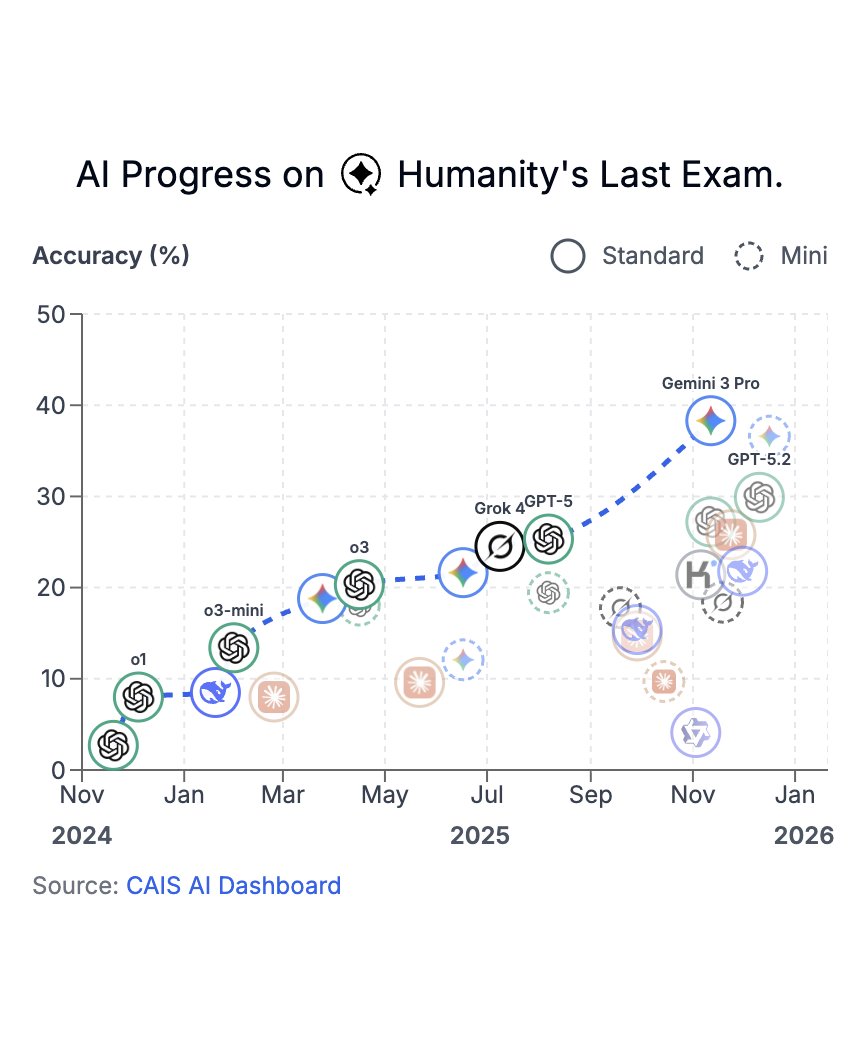
In just over a year, model scores on HLE have risen from under 5% to nearly 40%.
Thank you to @scale_AI and the 1000+ HLE co-authors for helping policymakers and the public track these rapid advances in AI capabilities.
Last week, Humanity’s Last Exam was published in @Nature.
In just over a year, model scores on HLE have risen from under 5% to nearly 40%.
Thank you to @scale_AI and the 1000+ HLE co-authors for helping policymakers and the public track these rapid advances in AI capabilities.
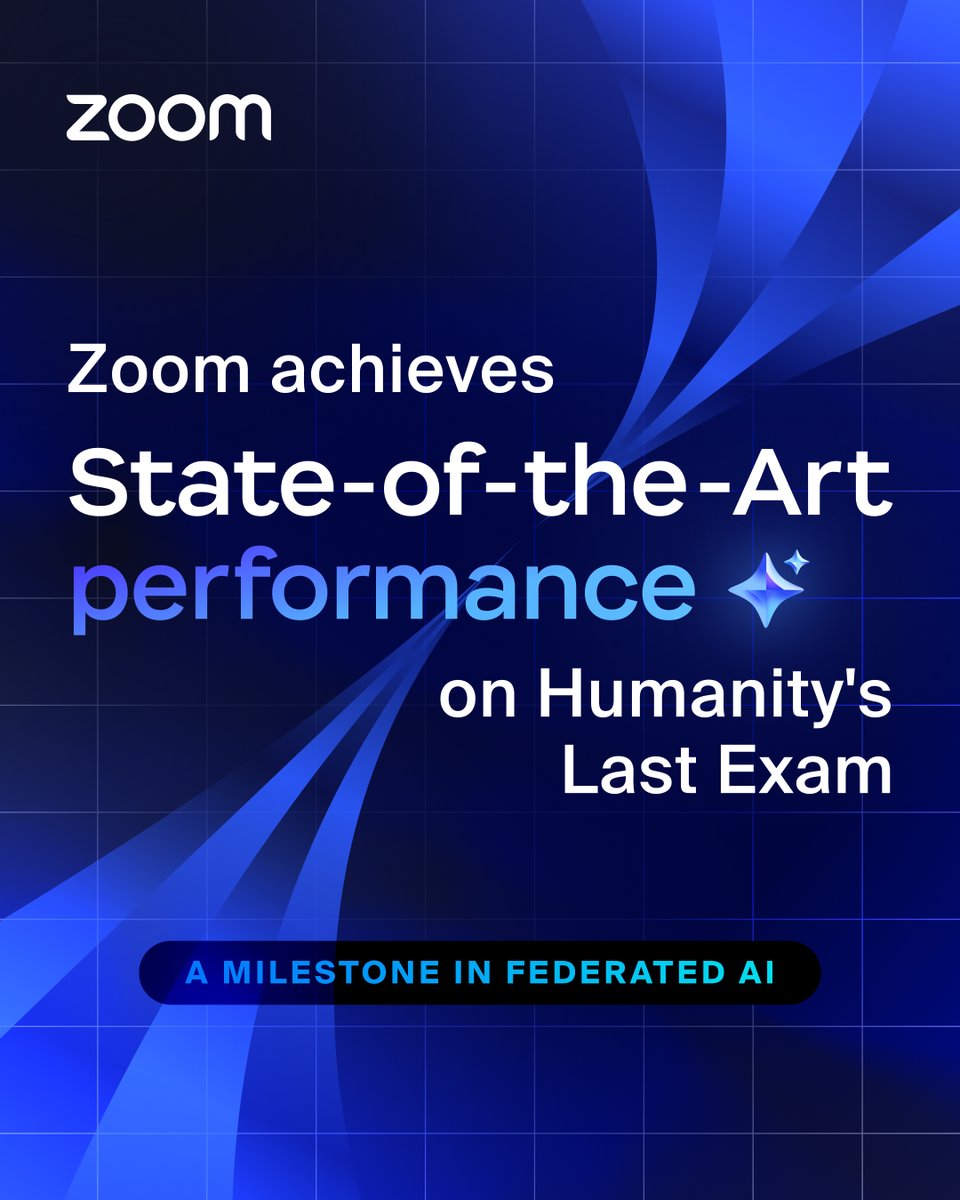
Zoom achieved a new state-of-the-art (SOTA) result on Humanity’s Last Exam (HLE): 48.1% — outperforming other AI models with a 2.3% jump over the previous SOTA. ✨
HLE is one of the most rigorous tests in AI, built to measure real expert-level knowledge and deep reasoning across complex problems.
What that means for you:
✅ More accurate summaries
✅ Better reasoning
✅ More powerful automation in AI Companion 3.0
Click the link to learn more. 🔗 https://t.co/lo4aNFr8Md
Very excited to share this one! Our comprehensive structure, genetics and biophysics dissection of which flagellar dyneins and other proteins are needed for flagella to beat and drive cells swimming behaviours: https://t.co/XAjMkmaNjt
https://t.co/PE1VOSDup9 update now done... Now with gene annotations from the latest genome, better links to source data (on BioImage Archive https://t.co/EgqwPEK3BJ), fixed missing images, and better cell cycle stage examples (selected using https://t.co/eGGD9JgnCj).
I'm working on some server changes for https://t.co/PE1VOSDup9, you might see missing data (particularly missing images)... But don't worry, it will all be up again soon!
After a hiatus, the discoba lineage-optimised Alphafold2 structure predictions are back up! Get your improved Trypanosoma and Leishmania structure predictions here. Try out the Google Colab iPython notebook (and let me know if you have any problems) https://t.co/o4ggMsqNec