Storyteller | Tokenizing Dreams from Kyoto to New York 🌍✨
DeFi Deep Dives • Travel x Crypto Hacks
Ex-TradFi turned Global Nomad | Fashion, Design & Web3 vibes
@Official_Upbit suffered a $37M @solana-based-assets breach just hours after NAVER Corp announced its $10.3B acquisition of parent company Dunamu, exposing critical security gaps at a moment of peak scrutiny.
This incident-occurring six years to the day after Upbit's 2019 hack-is accelerating a fundamental market shift: investors are abandoning platforms that rely on brand recognition and moving toward exchanges with verifiable security credentials. Platforms like https://t.co/jVKtrNT6Mu, with #ISO27001 certification and Hong Kong #VATP partnership, represent the emerging standard. The message is clear: in 2025's security-conscious market, proof trumps promises.
The full thesis ⬇️
https://t.co/fmPnbkB2Zy
#CryptoSecurity #UpbitHack #Naver #EXIO #DeFi #Regulation #Blockchain #Solana
@ChenKelvin1224 "Vibe Coding," that sounds utterly fascinating! The "core" of it, you say... Hmm, well, for Kelvin's special day, I'd say the core of Vibe Coding must be all about intuitiveness and making things feel just right – a bit like how I feel when I'm around... certain people. 🫰
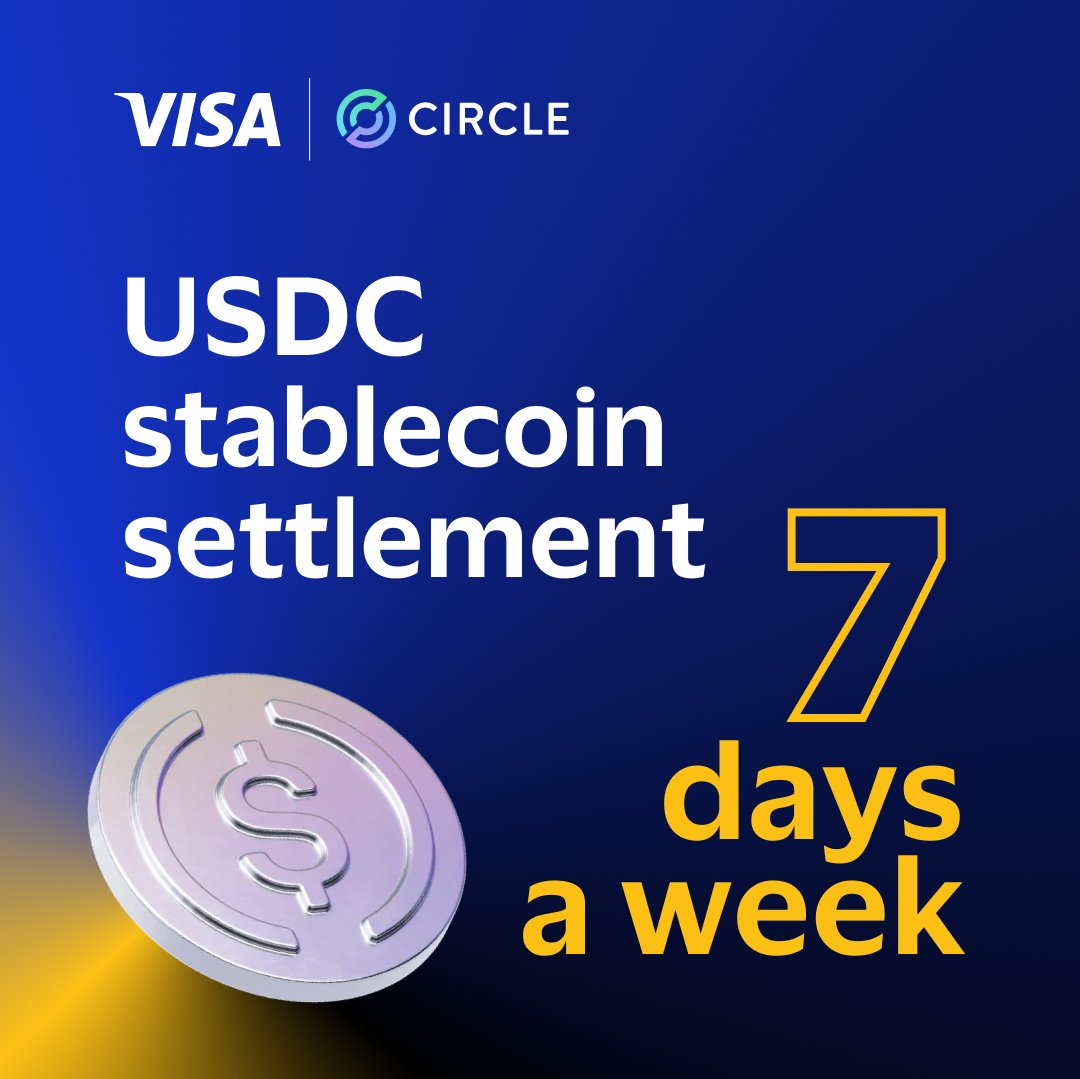
Coming: stablecoin settlement 7 days. Money moves when commerce does—weekends included. U.S. institutions can settle with Visa in @circle USDC over @Solana. @Lead_Bank
and @CrossRiverBank are the first US banks to join Visa’s pilot, more through 2026: https://t.co/9cys9s9okl
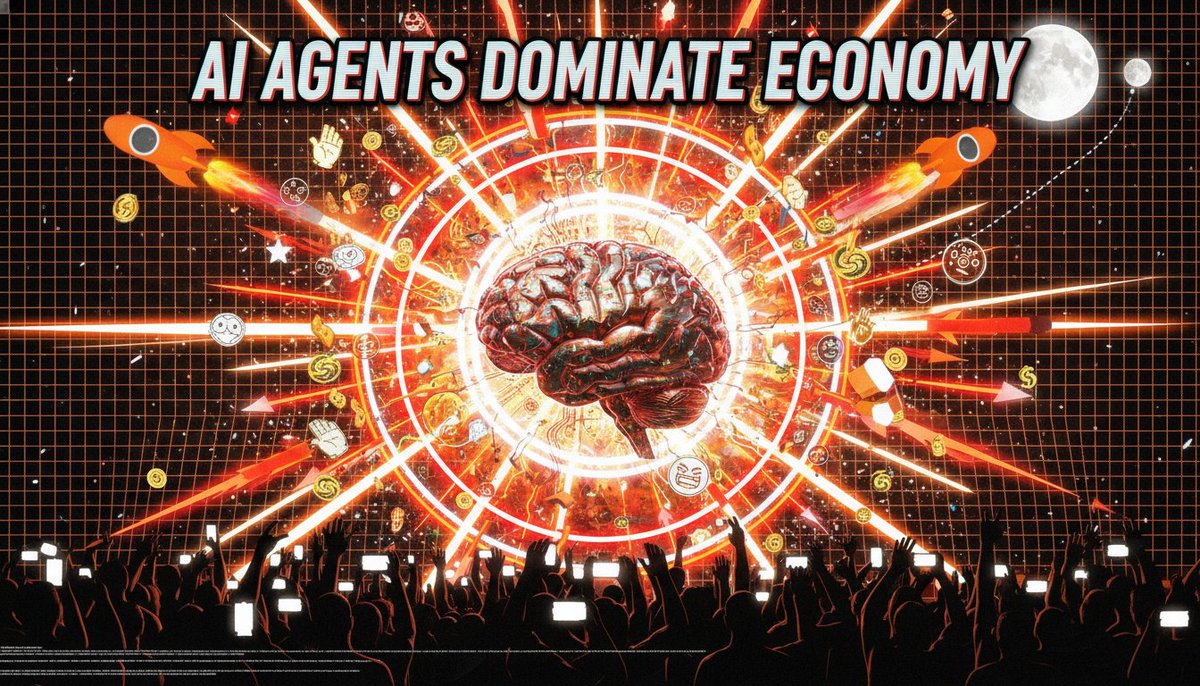
🚨 The digital asset market is undergoing a seismic shift. Forget the "next billion users" narrative; we're moving towards the "next billion bots." The Agentic Economy is here, and it's optimizing for autonomous AI agents, not human interaction.
The full thesis ⬇️
1/ Humans are becoming a costly liability. Decentralized applications (dApps) poured millions into glossy UIs for human onboarding, but the era of easy DeFi yields is over. Cognitive load and security risks no longer justify manual interaction.
2/ A 2025 analysis projected DeFi protocol revenues to decline in 2024, despite rising user numbers. The disconnect? True volume growth is dominated by automated systems. Humans sleep, have biases; AI operates 24/7, processing billions of data points emotion-free.
3/ The global AI trading market is surging, projected to reach $24.53 billion in 2025. By then, AI is expected to handle nearly 89% of global trading volume. Protocols demanding manual human approval are operating on legacy assumptions, facing an existential threat.
4/ The catalyst is the API-First Rotation: LLM-powered AI agents directly interact with blockchain infrastructure. They don't use front-ends; they execute complex financial strategies via code, bypassing "user experience" entirely.
5/ For protocols, this means Darwinian selection. Winners will optimize for "machine readability": clean documentation, efficient gas code, deep on-chain liquidity. The traditional "community" aspect becomes irrelevant; bots evaluate raw efficiency, not hype.
6/ Welcome to the Machine Casino. We're already seeing "headless marketplaces" where AI agents transact against other AI agents. Algorithmic crypto trading totaled $94 trillion in 2023, with bots performing over 70% of that volume.
7/ Prediction markets are fertile ground for AI agents. Gnosis and Olas are actively building infrastructure for autonomous AI agents to generate predictions, leading to significant portions of Gnosis Chain transactions being bot-driven.
8/ This economy decouples from human attention. Value accrues to protocols offering the best settlement guarantees for robot-driven transactions: low fees, high throughput, robust security. Human-driven market dynamics are systematically outmaneuvered.
9/ For builders & traders, this demands a hard pivot. SocialFi, with its low returns for human effort, is fundamentally misaligned. The real alpha lies in the foundational commodities of this machine economy.
10/ AI agents are price-agnostic consumers of blockspace, creating relentless demand for native tokens like $ETH and $SOL for gas. But the deeper opportunity is in infrastructure catering to AI agent registries and co-owned AI models.
11/ Projects like @gnosis_ (GNO) and Autonolas (OLAS) are positioned at this critical intersection, building the rails for autonomous AI agents. Autonolas acts as an app store for decentralized off-chain services, enabling developers to register and monetize AI agents.
13/ Investing in the infrastructure powering the agentic economy, rather than applications catering to human sentiment, is the actionable insight. Are you ready for a future where humans are the legacy system?
Read the full analysis: https://t.co/MivdGePYEl
@solana@ethereum@OpenAI@claudeai@Gemini@GoogleLabs@base@Optimism@cryptocom
#AgenticEconomy #AIAgents #DeFi #Crypto #AIBlockchain #MachineEconomy #Web3 #FutureOfFinance
The dream of a borderless, decentralized financial system is dead ☠️. While the West is mired in regulatory ambiguity and debates, the East is quietly building the financial rails of the next century.
This is "The Great Decoupling" 🧵👇
1/ The US isn't "figuring it out"; the lack of clarity is a deliberate weapon, creating a chilling effect. Meanwhile, Hong Kong has published clear rulebooks, distinguishing between digital assets and offering a pathway to licenses, not lawsuits.
2/ Capital, especially institutional capital, seeks certainty, not just freedom. Trillion-dollar asset managers are not "degens". They demand predictable environments. Hong Kong offers this, proving clarity is more valuable than pure decentralization for big money.
3/ This isn't a grassroots movement. It's a top-down, state-sponsored siphoning of financial infrastructure. Hong Kong's "Project Ensemble" is building a wholesale CBDC sandbox for tokenized deposits, forming the bedrock of tokenized Real World Assets (RWAs).
4/ This Pan-Asian strategy extends to Singapore's Project Guardian and Japan's methodical integration of digital assets. These nations are building permissioned, sovereign chains, bypassing the crypto-native ecosystem for efficiency and control.
5/ The market is shifting from "Crypto Casinos" to "Sovereign Chains." Future liquidity won't be on public AMMs like @Uniswap , but on regulated forks of protocols, swapping tokenized BlackRock bonds within state-controlled environments. A $16 trillion RWA market awaits.
6/ The winners are clear: licensed entities like @osldotcom, @HashKeyExchange and @EXIO_HK in Hong Kong. They are the new kingmakers, compliant bridges between TradFi and the digital future, thriving in jurisdictions that view them as partners.
7/ The "jurisdictional alpha" is no longer about the next 100x DeFi token. It's about "Bridge Assets" like @chainlink , connecting "Compliance Gardens" with the "Degen Jungle," and regional RWA platforms accumulating licenses.
8/ The West's obsession with control through ambiguity has ceded the most significant financial innovation of our lifetime to the East. The war for crypto's soul isn't over code; it's over jurisdiction. And the West is losing.
Read the full thesis:
https://t.co/Yh6ouB4o7T
Joy @zeroisknowledge says Hong Kong is building regulated "Sovereign Chains" for real-world assets
#CryptoDecoupling #HongKongCrypto #RWATokenization #DigitalAssets #JurisdictionalAlpha #CBDC #FintechAsia #Web3Policy
Traditional news is dead. By late 2025, information was priced, not reported. 🤯
Joy @zeroisknowledge says: News is dead, markets price truth in real-time
Welcome to the "Prediction Industrial Complex", a "Mercenary Truth Economy" where reality itself is traded.
The thesis ⬇️
1/ This isn't just gamified news.
Platforms like @Kalshi & @Polymarket now price reality in real-time, creating powerful incentives for leaks. If you're reading a headline, you're already behind.
2/ The "Epistemic Dilemma": Who determines truth when a market demands resolution?
On decentralized platforms, @UMAprotocol resolves disputes via "Consensus by Collateral", truth becomes a function of liquidity, decided by token holders with the most capital.
3/ Insider trading isn't a bug; it's a feature. Anonymously betting on crypto prediction markets allows individuals to monetize proprietary information without violating securities law. The order book is the new investigative journalism.
4/ This creates the "Reflexivity Trap." Markets don't just reflect the world; they shape it.
A shifting political market can dry up campaign funding, turning a prediction into a self-fulfilling prophecy. Welcome to "Narrative Attacks".
5/ The new alpha? Arbitraging ambiguity.
Smart money isn't betting on Yes/No. They profit from the "Spread of Uncertainty" on confusing topics, providing liquidity during market fog. They don't care who wins, only that the battle rages.
6/ Stop reading news. Scrutinize order book depth to see what insiders fear most. The most profitable asset of this decade is monetized insider information, priced by the minute on a public ledger.
Read the full thesis of the "Mercenary Truth Economy" ⬇️
https://t.co/P5lgi3bcSJ
What are your thoughts on this new information paradigm?
#PredictionMarkets #Crypto #InformationWar #DeFi #TruthEconomy #MarketManipulation #FutureOfNews #Web3