🚀 **PiRC-207 v2 | Computational Logic & How CEX vs Mined Pi Works**
Here’s a clear and simple explanation of the calculation system inside the Ze0ro99/PiRC repository, written for the community.
**The Core Number**
Everything starts with one fixed value:
1 Mined Pi = 10,000,000 micro units.
This is the foundation of the entire system.
**How the Layers Calculate**
• The Purple layer (Crown) is the real mined currency.
If you have 5 Pi, it equals 50,000,000 micro units.
• The Green layer (PiCash) and Blue layer (Banks) work differently:
10,000 units = 1 Pi
1,000 units = 1 PiGCV
Example:
20,000 Green units = 2 Pi
5,000 Blue units = 0.5 Pi
• The other layers (Red, Orange, Yellow, Indigo) follow a simple 1:1 relationship with Pi or their fixed values.
**How the System Works**
Each of the seven layers is a separate colored token on the network.
Every layer has its own purpose:
- Purple → Core mined Pi
- Green → Daily cash (PiCash)
- Blue → Banks and financial institutions
- Red → Governance
- The rest → Mid-tier, high-tier, and premium reserve uses
Even though they have different roles, the system keeps their value equal.
**How CEX Currency Is Distinguished from Mined Currency**
This is the most important part:
The Purple layer is the actual mined Pi. It comes from mining and uses the 10-million micro system. It is the real base currency.
On centralized exchanges (CEX), all seven colored π symbols are treated as equal to 1 Pi.
The color is only a visual and functional distinction (governance, banking, daily use, reserves, etc.).
The code itself states:
“Colored π symbol for CEX distinction (all ≡ 1 Pi)”
So on exchanges, every colored π has the same value.
On-chain, the Purple layer remains the true mined foundation, while Green and Blue are specially prepared for banking and daily transactions.
**Extra Liquidity Rule (314 System)**
There is also a liquidity calculation:
Liquidity Accumulation = CEX Volume × 31,847
This helps measure and manage liquidity pools related to the system.
**In One Sentence**
Mined Pi (Purple) is the real base currency using micro units.
On CEX, all colored layers are equal in value to 1 Pi — the color only shows the purpose.
This keeps the system organized, clear, and balanced for the whole community.
#PiRC #PiNetwork #PiRC207
🚨 BREAKING
🇺🇸 TRUMP INSIDER WITH 100% WIN RATE JUST OPENED A MASSIVE $56,000,000.00 BITCOIN SHORT!
HE BECAME ACTIVE FOR THE FIRST TIME SINCE OCTOBER FLASH CRASH, WHEN HE MADE $120 MILLION IN JUST 3 HOURS.
THIS GUY DEFINITELY KNOWS THE MARKET WILL CRASH SOON…
🚨 BREAKING
🇺🇸 BLACKROCK JUST STARTED LIQUIDATING BITCOIN RIGHT AFTER THE U.S. MARKET OPENED!
THEY ARE NONSTOP DUMPING HUNDREDS OF MILLIONS IN BITCOIN RIGHT NOW, NONSTOP.
LOOKS LIKE THEY KNOW TODAY IS THE LAST CHANCE TO SELL BEFORE ANOTHER CRASH NEXT WEEK...
🔥JUST IN: @PiCoreTeam Reveals the importance of Protocol v26 Upgrade🚀.
The Pi Mainnet is upgrading to Protocol v26. All Mainnet node operators must complete the upgrade by August 11 to remain connected to the network. Protocol v26 is a major milestone that improves contract safety, state management, interoperability, and cryptographic capabilities ahead of the final planned upgrade, Protocol v27. With 8 successful upgrades completed over the past few months, these final two upgrades will bring the network up to date...
🚨 Protocol v26: A Major Step Toward the Final Phase of Pi Network's
Infrastructure Evolution
The Pi Core Team has announced that all Mainnet Node operators must upgrade to Protocol v26 before August 11 to remain connected to the network.
This is not just another routine update.
Protocol v26 introduces several important improvements that strengthen the backbone of Pi Network:
🔒 Enhanced smart contract security
🗄️ More efficient blockchain state management
🔗 Improved interoperability
🔐 Stronger cryptographic capabilities
These upgrades are designed to make the network more secure, more efficient, and better prepared for future ecosystem growth.
But the most significant part of the announcement is what comes next.
According to the Pi Core Team, eight protocol upgrades have already been completed over the past months. Protocol v26 is the penultimate step, and Protocol v27 will be the final planned upgrade of this evolution cycle.
This tells us something important.
The Core Team is following a structured roadmap rather than rushing development. Each protocol update strengthens the underlying infrastructure before moving to the next stage.
Building a blockchain capable of supporting millions of users, developers, merchants, and applications requires a solid technical foundation.
The sequence is now becoming clear:
✅ Multiple protocol upgrades completed
➡️ Protocol v26 – Infrastructure consolidation
➡️ Protocol v27 – Final planned upgrade of this protocol modernization cycle
For Node operators, the message is simple: update before August 11.
For the Pioneer community, this is another sign that Pi Network continues to prioritize long-term stability, security, and scalability over short-term hype.
Strong infrastructure always comes before mass adoption.
UTILITY WINS. ⚡
🔱 PI-MAN
Guardian of The Core Team and Pioneers
In direct alignment with:
• Nicolas Kokkalis @nkokkalis
• The Pi Core Team @PiCoreTeam
• Chengdiao Fan @Chengdiao
• Kosasih Nakamoto @KOSASIH48495
Alongside: • ARC-314 @cryptoshun1980
• Founder000 @TheFounder31400
The Hidden PiVerse 💜
#PiNetwork #PiCoreTeam #PiNode #OpenMainnet #Blockchain
On the panel, @nkokkalis explained that proof of humanity depends on context.
In some cases, systems need to know exactly who a person is.
In others, they may only need to know whether an action is being performed by a human or a bot or whether unique people are behind a set of actions.
He also emphasized that privacy-preserving verification should avoid exposing unnecessary personal information and must remain usable for real people.
@PiCoreTeam #PiNetwork
Pi Network Ventures
A development initiative of $100 million held in Pi and USD, which strategically invests in startups & businesses, including those that advance the utility, adoption and real-world impact of Pi.
@PiCoreTeam#Pi
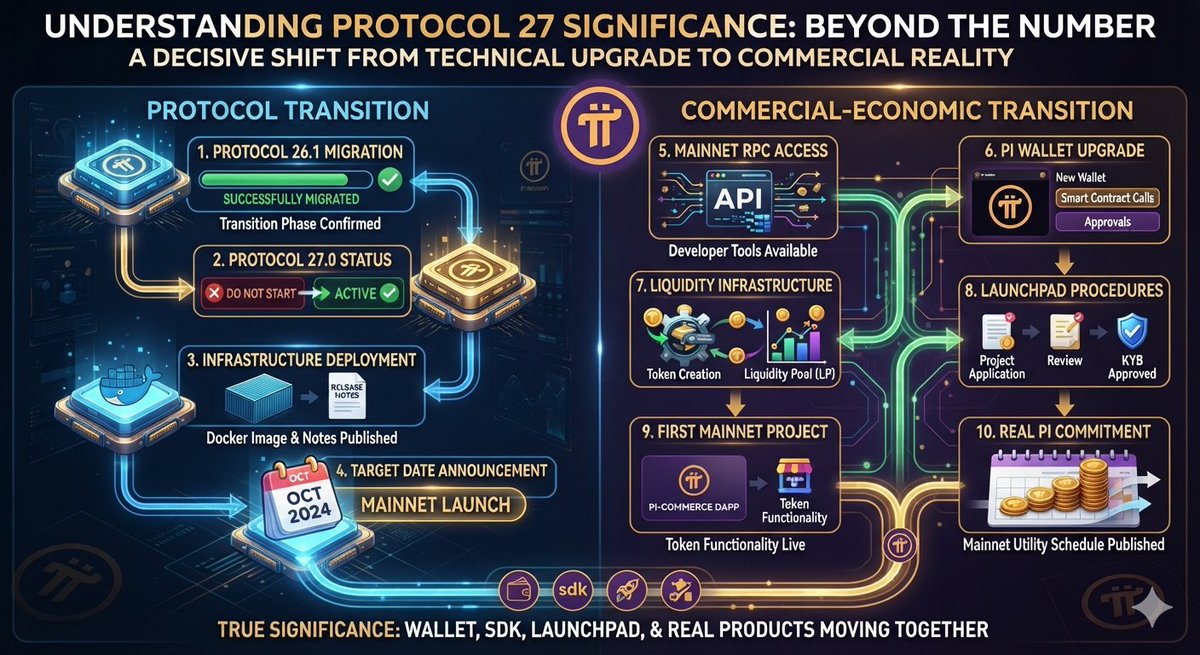
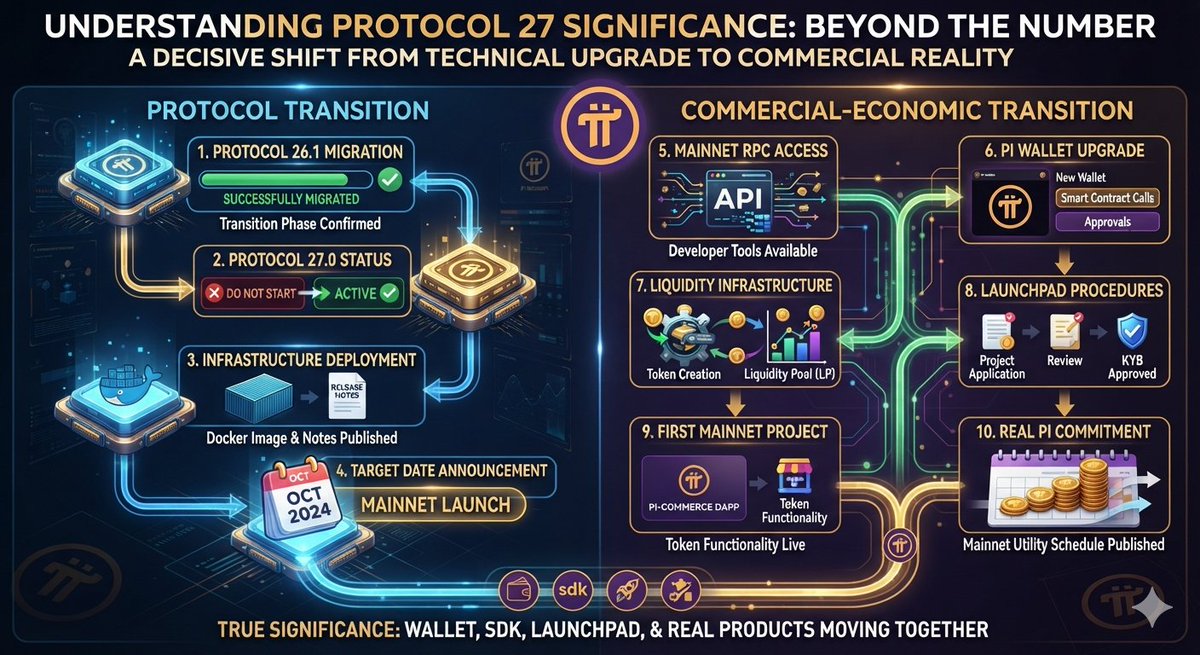
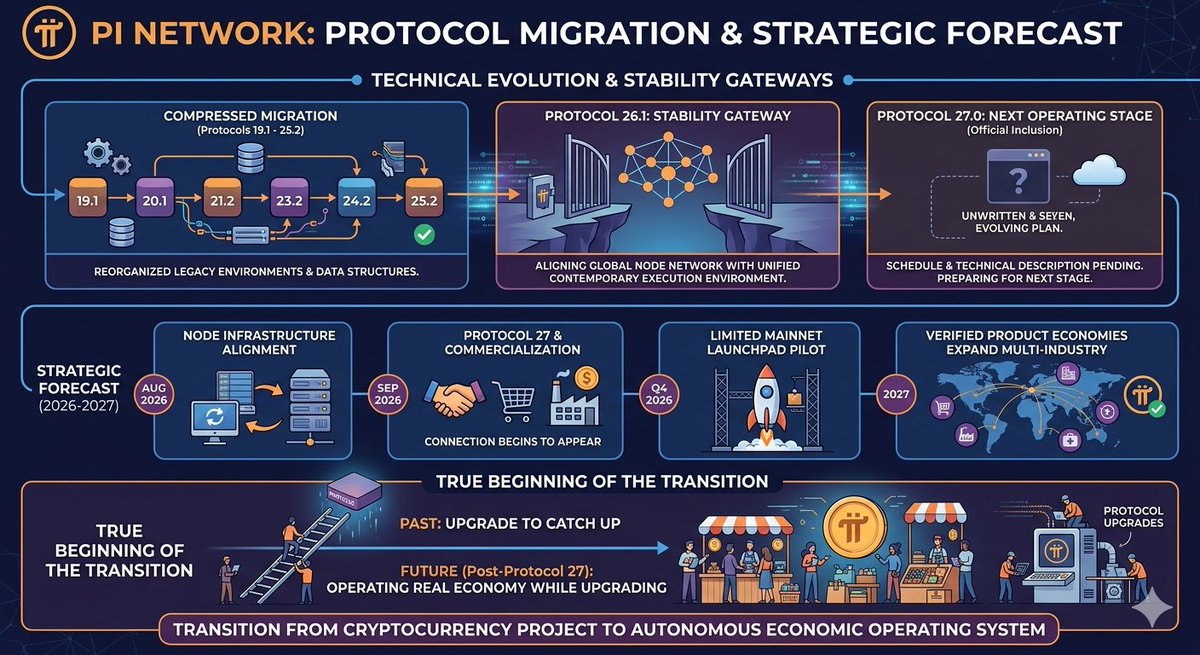
Protocol 27’s true impact isn't just a version number.
Watch for four critical operational milestones to confirm the technical transition:
Protocol 26.1 migration finishing,
Protocol 27.0 going active,
Docker images/release notes publishing
A concrete Mainnet target date.
#PiNetwork #Protocol27
The real economic shift happens after the Protocol 27 upgrade.
Look for commercial signals:
"Mainnet RPC availability, Pi Wallet smart contract approvals, token creation/liquidity pool functions and clear Launchpad KYB procedures."
Infrastructure must match the upgrade.
#PiNetwork #Web3 #Crypto
Protocol 27 will be defined by ecosystem movement, not network numbers.
The ultimate validation will be the announcement of the first Mainnet project, live token functionality and a real-Pi commitment schedule.
True utility requires Wallet, SDK and liquidity to move together.
#PiNetwork #PiEcosystem
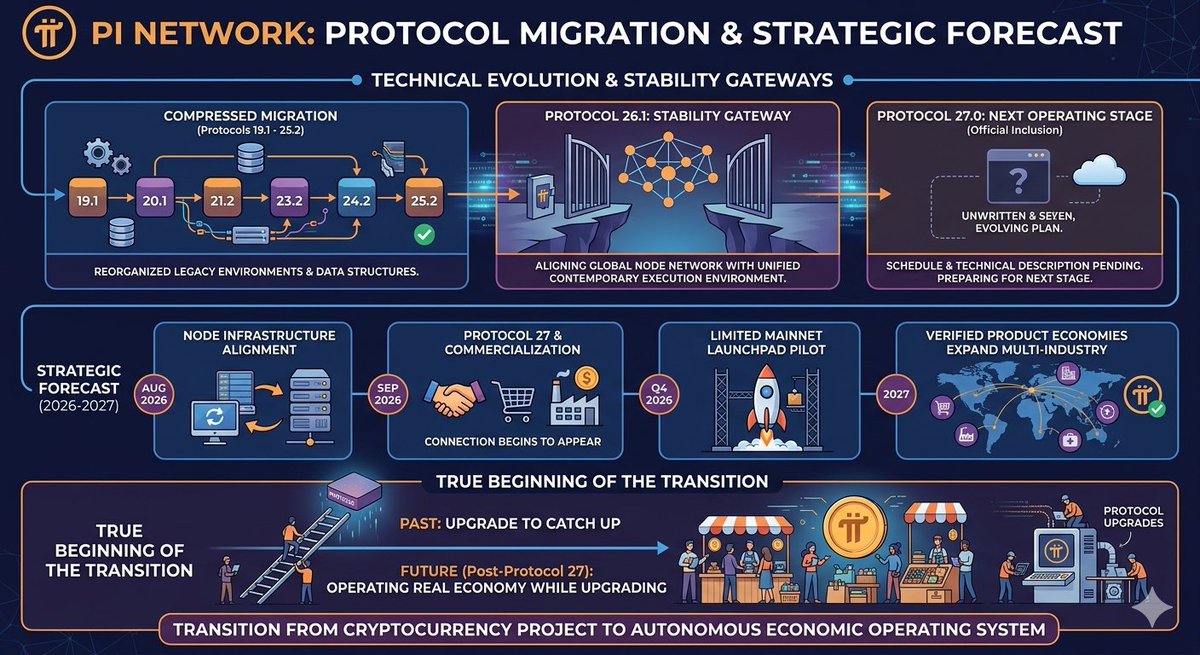
Pi Network isn’t guessing its future; it follows a strict sequence of upgrades.
The path from Protocol 19.1 through 25.2 successfully overhauled legacy structures.
Now, Protocol 26.1 acts as a critical stability gateway, synchronizing global nodes into a single, unified execution environment.
#PiNetwork #Web3
While Protocol 27.0 lacks a public schedule, its formal placement in the roadmap confirms Pi is actively preparing its next major operating stage.
A potential timeline layout:
"August for node alignment and September for the first signs of Protocol 27's commercial features."
#Crypto #PiEcosystem
The strategic forecast signals a massive shift ahead.
Expect a limited Mainnet Launchpad pilot in Q4 2026, setting the stage for 2027 to become the breakout year where verified product economies expand globally across multiple mainstream industries.
#PiNetwork#Mainnet #Blockchain
Protocol 27 isn't the finish line; it changes the entire game.
Up until now, Pi upgraded just to catch up with the protocol.
Post-Protocol 27, Pi will achieve something far greater:
"upgrading its core software while simultaneously running a live, real-world economy."
#PiNetwork #Tech #Innovation
The ultimate question for Pi Network is shifting.
It's no longer
"When launch?"
but
"Which products and services will fill the network?"
This marks Pi’s evolution from a simple cryptocurrency project into an autonomous economic operating system for global utility.
#PiNetwork #DeFi #WEB3
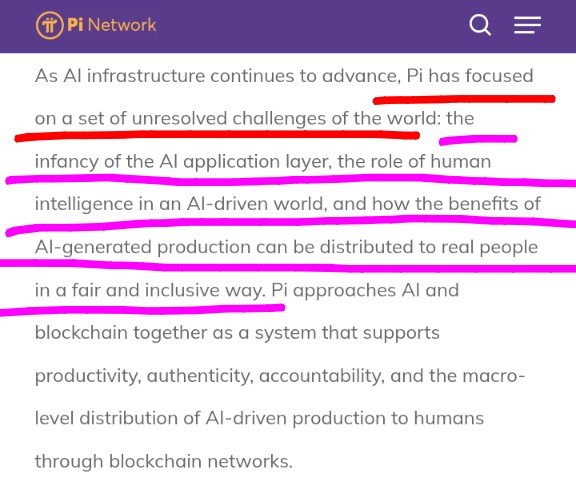
Pi has focused on a set of unresolved challenges of the world:
"the infancy of the AI application layer, the role of human intelligence in an AI-driven world and how the benefits of AI-generated production can be distributed to real people in a fair and inclusive way."
Pi approaches AI and blockchain together as a system that supports productivity, authenticity, accountability and the macro-level distribution of AI-driven production to humans through blockchain networks.
#PiNetwork
🚨 Pi Network tiến thêm một bước quan trọng: Được xác thực mã định danh ISO (DTI) – Một tín hiệu đáng chú ý cho giai đoạn phát triển tiếp theo
🔥Ngày 29/7/2026, theo cập nhật từ CoinMarketCap AI, Pi Network đã được ghi nhận là nhận mã định danh ISO 24165 đã được xác thực (Validated Digital Token Identifier – DTI) thông qua hệ thống DTIF.
✳️Đây không phải là một tin tức gây “bùng nổ” như Open Mainnet hay niêm yết sàn lớn, nhưng lại là một bước tiến có ý nghĩa đối với sự trưởng thành của một blockchain.
📌DTI là gì?
DTI (Digital Token Identifier) là mã định danh tiêu chuẩn theo ISO 24165, được thiết kế để mỗi tài sản số có một “mã nhận dạng” duy nhất trên phạm vi quốc tế.
👉Có thể hình dung:
* Doanh nghiệp có mã số doanh nghiệp.
* Chứng khoán có mã ISIN.
* Tiền mã hóa có DTI theo tiêu chuẩn ISO 24165.
✅Điều này giúp các tổ chức tài chính, đơn vị lưu ký, nhà cung cấp dữ liệu và hệ thống tuân thủ nhận diện chính xác một tài sản số mà không bị nhầm lẫn.
👉Vì sao điều này quan trọng?
✅Trong nhiều năm qua, Pi Core Team luôn nhấn mạnh rằng mục tiêu không chỉ là tạo ra một đồng tiền điện tử, mà còn xây dựng một mạng lưới có thể hoạt động trong môi trường pháp lý toàn cầu.
🚨Việc Pi có mã định danh ISO đã được xác thực mang lại nhiều lợi ích như:
✅ Chuẩn hóa danh tính của tài sản số theo tiêu chuẩn quốc tế.
✅ Thuận lợi hơn khi tích hợp với các hệ thống dữ liệu tài chính và các nền tảng tổ chức.
✅ Tăng mức độ sẵn sàng cho việc làm việc với các đối tác tổ chức trong tương lai.
✅ Thể hiện Pi đang từng bước hoàn thiện những nền tảng mà nhiều blockchain lớn cũng áp dụng.
💥Đặt trong bức tranh tổng thể của năm 2026
Nếu ghép với các diễn biến gần đây, chúng ta thấy một bức tranh đáng chú ý:
• Protocol 25 đã hoàn thành.
• Protocol 26 đang được triển khai trên Node.
• Protocol 27 được xem là bản nâng cấp lớn tiếp theo trong lộ trình hiện tại.
• Hạ tầng liên quan đến smart contract và hệ sinh thái tiếp tục được hoàn thiện.
• Và giờ là mã định danh ISO/DTI được xác thực.
🌎Những mảnh ghép này đều hướng đến việc xây dựng nền tảng kỹ thuật và chuẩn hóa, thay vì chỉ tập trung vào giá token.
✅Đây là một bước chuẩn hóa hạ tầng, không phải một quyết định pháp lý hay thương mại.
✅Tuy nhiên, với một dự án hướng tới quy mô toàn cầu, việc hoàn thiện các tiêu chuẩn quốc tế là điều rất đáng chú ý.
Kết luận
✳️Một mã định danh ISO có thể không khiến giá tăng ngay trong ngày, nhưng nó phản ánh quá trình chuẩn hóa mà các dự án muốn tiếp cận tổ chức và vận hành lâu dài thường phải trải qua.
🚨Nếu các nâng cấp Protocol 26 và 27 tiếp tục hoàn thành đúng lộ trình, cùng với việc Pi mở rộng hệ sinh thái và hoàn thiện hạ tầng, thì năm 2026 hoàn toàn có thể trở thành một trong những năm mang tính bản lề của Pi Network.
#PiNetwork #PiCoreTeam #Blockchain #ISO24165 #DTI #Crypto #Web3 #OpenMainnet #PiNode
Under a conservative outlook, commercial activation could slide into early 2027 if technical or operational bottlenecks emerge.
Key risk factors include migration compatibility issues (Protocol 26.1/27), delayed wallet/SDK integrations, extended legal/KYB setup or the need for deeper liquidity and security mechanism testing.
#Blockchain #CryptoSecurity #PiNetwork