Check out this fascinating work on how firms’ currency mismatch affects sovereign risk following currency depreciations. Great research by Hasan Cetin, a fellow member of our workshop at @UMN_Econ
Does currency mismatch of a country’s firms raise sovereign risk when its currency depreciates?
@UMN_Econ JMC Hasan Cetin builds novel dataset of 42,000 listed nonfinancial firms in 57 countries measuring foreign-currency debt net of foreign assets.
https://t.co/KLom5fuWap
Exciting work on bank runs, bond portfolios, and financial stability by our fellow workshop members Angelo Mendes @angeloahmendes and coauthor Lucas Belmudes. Check it out!
How does run risk shape banks’ demand for long bonds?
@UMN_Econ JMC Angelo Mendes @angeloahmendes and coauthor Lucas Belmudes study model in which banks choose portfolio of short and long bonds and uninsured depositors can run.
https://t.co/Ddyx7K5hXU
How does run risk shape banks’ demand for long bonds?
@UMN_Econ JMC Angelo Mendes @angeloahmendes and coauthor Lucas Belmudes study model in which banks choose portfolio of short and long bonds and uninsured depositors can run.
https://t.co/Ddyx7K5hXU
Maria Cristina De Nardi (@M_De_Nardi) reminds us that Minneapolis woke up to –22 °C this morning.
The best part of doing a Ph.D. in economics at Minnesota?
When it’s that cold, working through Stokey–Lucas–Prescott Recursive Methods in Economic Dynamics actually becomes the most enjoyable activity available.
And then you reread the introduction and smile at this gem:
“The idea of an economic equilibrium has undergone a similar evolution: it no longer carries the connotation of a system at rest.”
(The book came out in 1989, but the notes circulated long before.)
Moments like that are why I am immensely proud to call myself a Minnesota alumnus—and yes, alumnus is the correct singular, masculine, second declension noun.
There are few places on Earth where you learn as much economics as at @UMN_Econ.
And the weather? Honestly—not that bad. You get used to it.
China and Mexico opened up around 1990. Examining why China grew faster than Mexico and continues to grow faster even though it depends less on trade and foreign investment, from @TimTKehoe and @VincentXingXu https://t.co/NqXYC0ik1e
Xing Xu @VincentXingXu, PhD student at @UMN_Econ and research analyst at @MinneapolisFed and I have just finished a study that compares economic experiences of China and Mexico after they opened to international trade and foreign investment.
https://t.co/gPxWLz5qzN
@HellerHurwicz
With great sadness, I announce the passing of my co-author and friend, Marcus Hagedorn. His acerbic wit was as sharp as the vision of Toni Kroos. He attacked big research questions like he tackled the mountains of Mallorca on his bike. He will be missed.
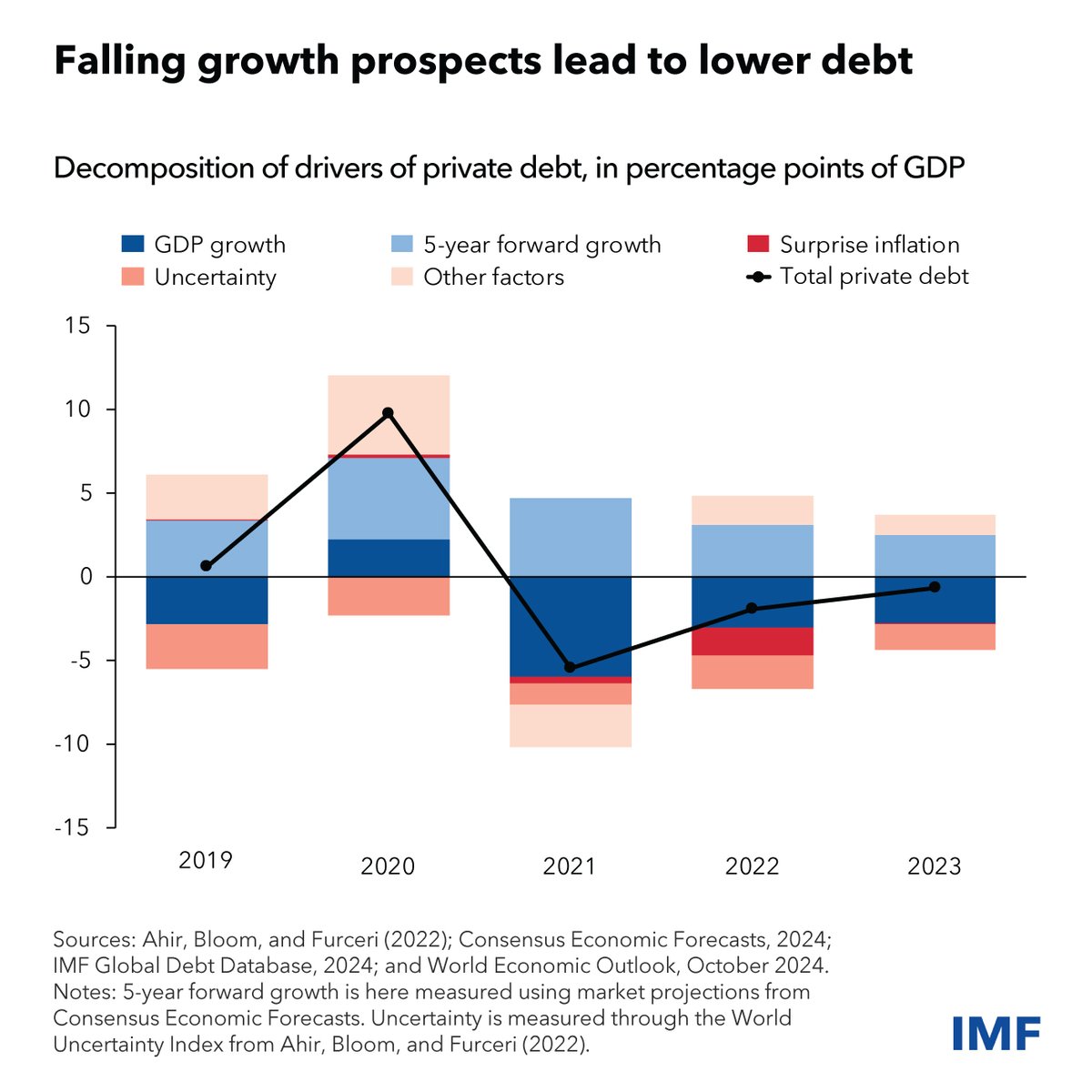
Global private debt fell to 143% of GDP in 2023 driven by weakening economic prospects. Read our latest blog on the IMF Global Debt Database https://t.co/7dVbM370nt
From post-WWII reconstruction to the COVID-19 pandemic and everything in between, the IMF has continuously stepped up to respond to global shocks. But our purpose has remained the same—to bring prosperity to the world. IMF chief @KGeorgieva reflects on the past 80 years.
JUST RELEASED: New research by IMF staff provides analysis and guidance for fiscal policymakers as they prepare for the transformative impact of GenAI. Download the report here: https://t.co/oVYTlyHl5W
The Public Finances in Modern History Database is now updated. It documents two-hundred years of the history of budget deficits and government debts. The current version covers 151 countries over the period 1800–2022, subject to data availability.
https://t.co/raM77yNTny
@IMFNews Very proud to work with a wonderful team on the update of the IMF Global Debt Database that provides the largest coverage of debt statistics, particularly for EMDEs, which are often lacking in most other datasets, especially for SOE and private sector debt.
@IMFNews Super excited to share the latest update of the IMF Global Debt Database! Very proud to work on this! “Despite the economic growth rebound from 2020 and much higher-than-expected inflation, public debt remained stubbornly high. Fiscal deficits kept public debt levels elevated.”
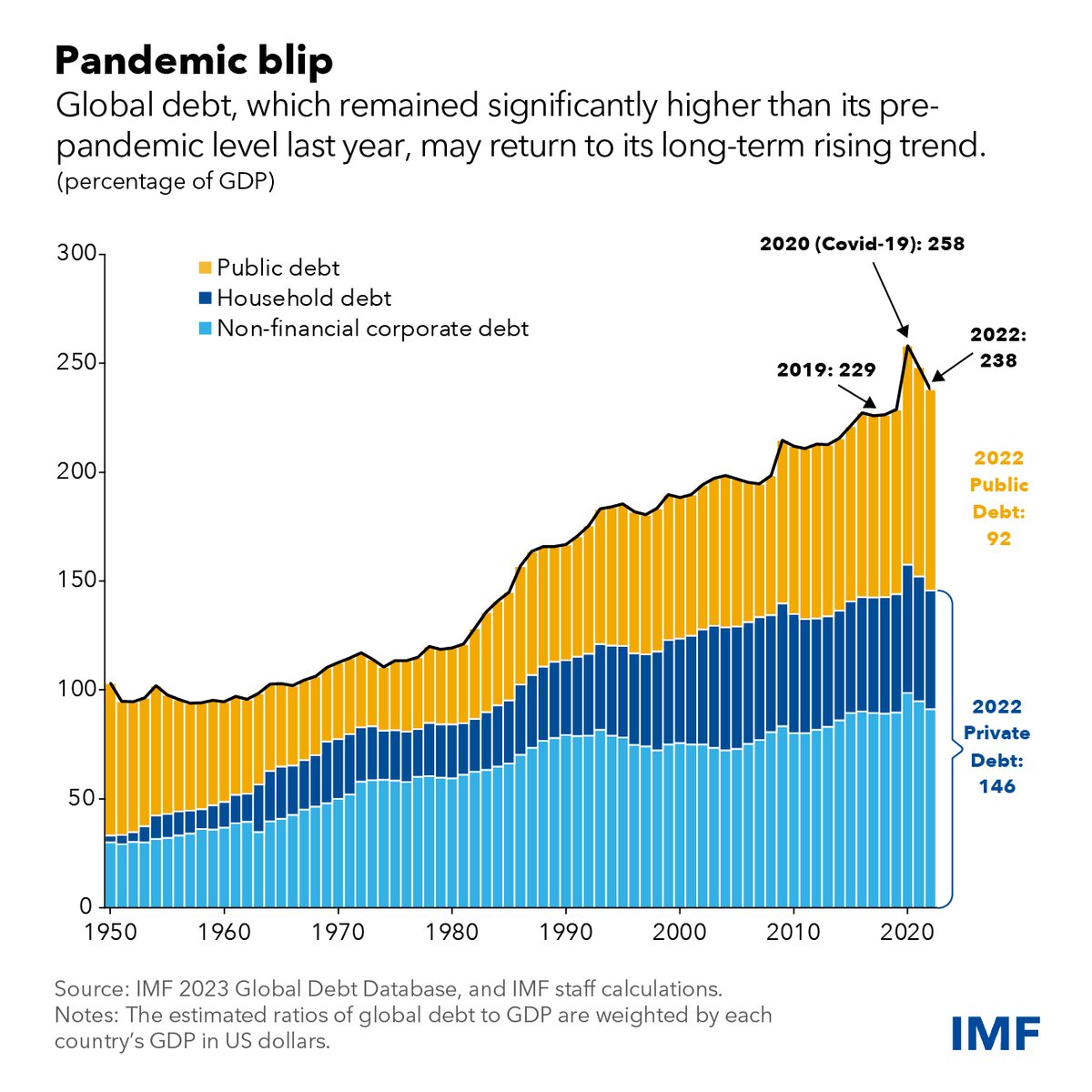
Global debt is returning to its long-term rising trend, and debt sustainability is a concern for some countries, the IMF’s Global Debt Database finds.
https://t.co/u4mQWvNJLu