The 2026 Fields Medals have been awarded at the International Congress of Mathematicians in Philadelphia.
The recipients are:
• Yu Deng (University of Chicago)
• John Pardon (Stony Brook University)
• Hong Wang (New York University & IHES)
• Jacob Tsimerman (University of Toronto)
The Fields Medal recognizes outstanding mathematical achievement by researchers under 40. Each post below summarizes the official citation and key contributions.
Two new referenda on Polkadot's OpenGov, #1909 and #1910, propose a series of staking parameter updates designed to optimize the network security model while reducing overall security costs.
Together, these proposals aim to strengthen validator incentives, enable better user experience and reduce overall risk for the nominators with a 48-hour unbonding period.
Ref #1909 builds on the previously approved 10,000 DOT minimum validator self-stake requirement. It introduces rewards for validator self-stake, sets validator commission to 0%, and enables permissionless chilling of under-bonded validators.
Referendum #1910 specifies changes for nominators. It removes nominator slashing and reduces the unbonding period from approximately 28 days to two days for nominators. These changes will be fully activated upon a successful governance vote and once the validator set has fully adapted to the new staking requirements.
The proposals seek to rebalance staking responsibilities between validators and nominators by increasing incentives for validator self-stake while simplifying participation for nominators.
This is what Playground . dot was made for.
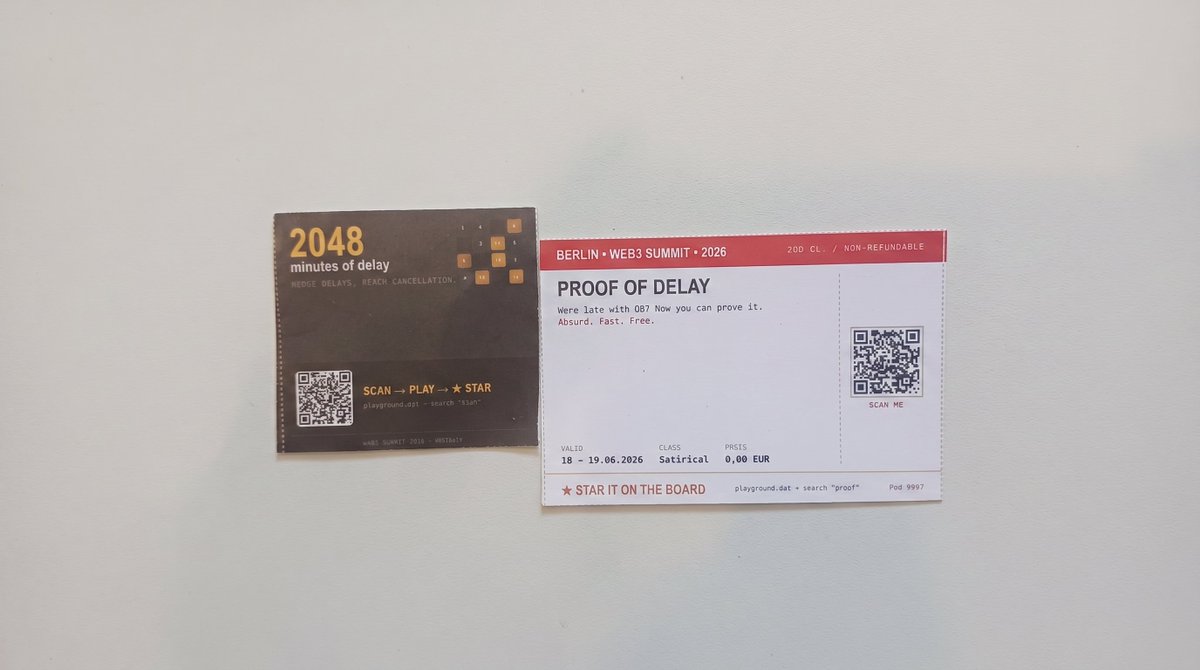
Andrey Dodonov (14 years as a developer, PBA Campus 2025) was stuck in a 4-hour delay with a major German bank. So he built something.
A Proof of Delay app on testnet. Verify your delay on-chain. Generate a certificate. Stack your minutes in a game. An authentic, untamperable dashboard of delays that actually happened.
The next generation of apps comes from human experiences.
Continuous, indefinite execution. High-performance synchronous composition. Vast scale through network parallelization.
This cannot be done with traditional blockchains. Not even parachains.
@gavofyork shares his thoughts on the possibiities of JAM at @Web3summit
How do you prove you are human without handing over your identity?
@KarimJDDA, Director of Product and Engineering at Parity at @Web3summit on building the authentication layer the digital world needs.
Parity's Humanity protocol. Cryptographic. Decentralized. Open. Authentication without identification.
No centralized control. Open protocols. Mathematical guarantees.
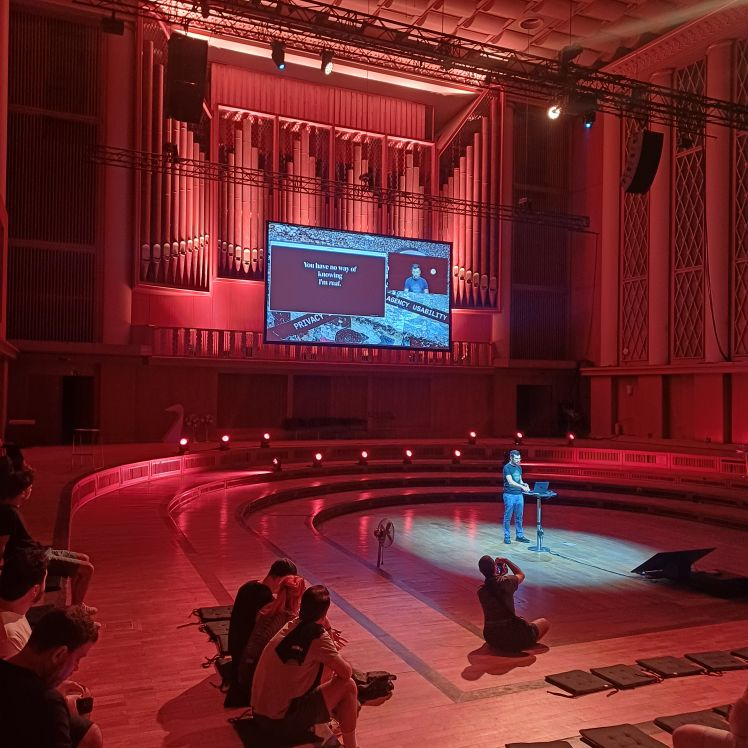
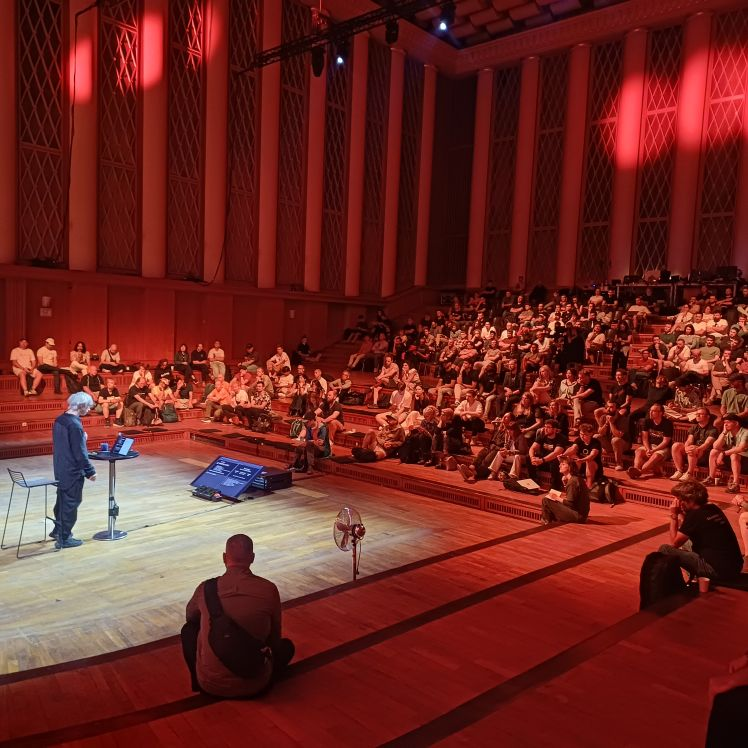
Polkadot outlook by @gavofyork live at the Web3 Summit in Berlin.
Web3 is not a progression of Web2.
These are two opposite approaches. Web2 solved social scale first, while Web3 solved economic functionality.
Polkadot Trinity is being built right now.
We do the hard work in the background, so the product developers don’t have to.
No logins. No install to start using. Comfortable and familiar interfaces. Coherence across devices. No crypto identifiers. No exposure to multiple selves. Mathematically guaranteed privacy and security.
Stay tuned.
Builders, researchers, artists, and digital freedom advocates are gathering in Berlin to explore privacy, ownership, sovereignty, and the future of the internet.
What’s first on your agenda?
https://t.co/GopXjZIO76
"There's an educational need to tell the world that Web3 is really about privacy, ownership and digital freedom, not crypto."
@BillLaboon, Oliver Poole and Heidi Wallace
On stage: @gavofyork at @Web3Summit on what we are building toward.
No logins. No installs. Familiar interfaces. Privacy and security that are mathematically guaranteed rather than simply promised.
Web3 is not a progression of Web2. It is a different answer to the same question.
A human-centric architecture for a world that needs it.
Only during the Web3 Summit.
Playground . dot lets you pick a challenge, remix a working app, deploy your own version, and watch the room come alive as new apps appear in real time.
No blank screens.
No setup headache.
No, “please read these 47 docs first.”
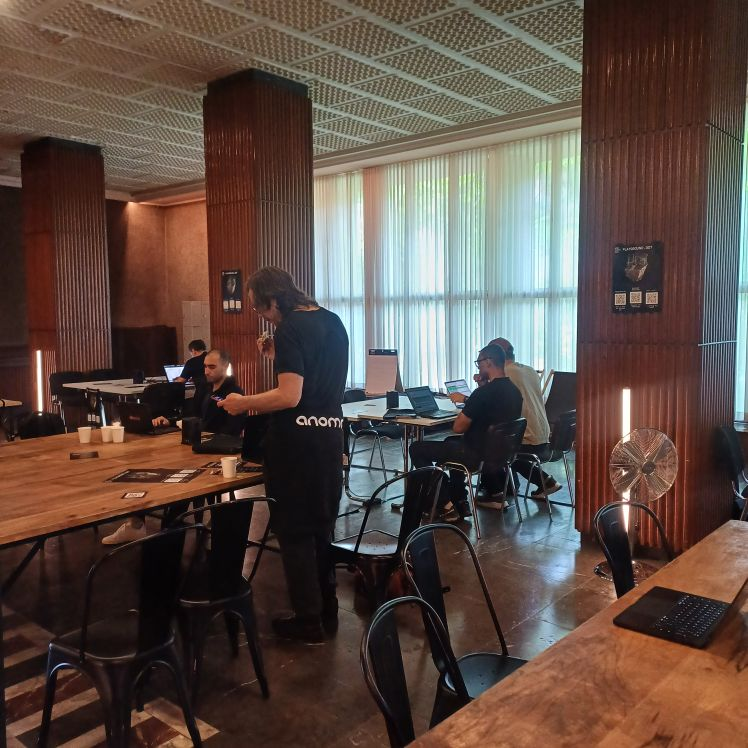
Today and tomorrow at Funkhaus, Berlin.
Your code is your sword and your wit is your compass.
Playground . dot is live at @Web3summit
We're providing event support to @Web3Foundation for this year's edition. To help developers experiment freely, we spun up a time-limited event-specific testnet environment running recent open-source code.
The stack is live, the leaderboard is moving, and our engineers are on the floor.
Come build something. 🛠️
Web3 Summit has started.
Polkadot is building toward a new paradigm for the internet. A new internet.
You don't ask permission for what's already yours.
Day 1 of @Web3Summit kicks off with the hard conversations that matter.
💠The Hidden Price of Free: What Your Data Is Really Worth - Bill Laboon, Oliver Poole & Heidi Mallace
💠More Truth: What Web3 Was Chasing and What Got
💠Away - @andrea_leiter Polkadot 2030 - @gavofyork
💠The Neutral Ground: Money, Power, and the Multipolar Internet - @tw_tter
💠The K-Hole Economy and the Permanent Underclass - @TBSocialist
💠Reclaiming Tech and Digital Freedom - @yanisvaroufakis@nalepastrasse. Today.
Ahead of @Web3Summit, we published a breakdown of the open-source proof-of-concepts powering the event.
Coinage. Bulletin Chain. Technical architecture, implementation details, and the reasoning behind the design decisions.
https://t.co/DLRSMSO628
Polkadot launched in 2020. The brand was born with it.
It was technical, abstract, and built for the people who already got it.
But in 2026, the conversation is bigger. Builders, artists, regulators, gamers. All of them are finding their place in the next generation of the internet.
And the way we tell that story is evolving too.
New visuals. New energy. Same idea at the core: technology should be built for humans, not just for AI models or corporations. It’s people’s privacy, ownership and choices.
That idea has always been the heart of Polkadot.
What's changing isn't the mission. It's how we share it.
The next chapter starts now.