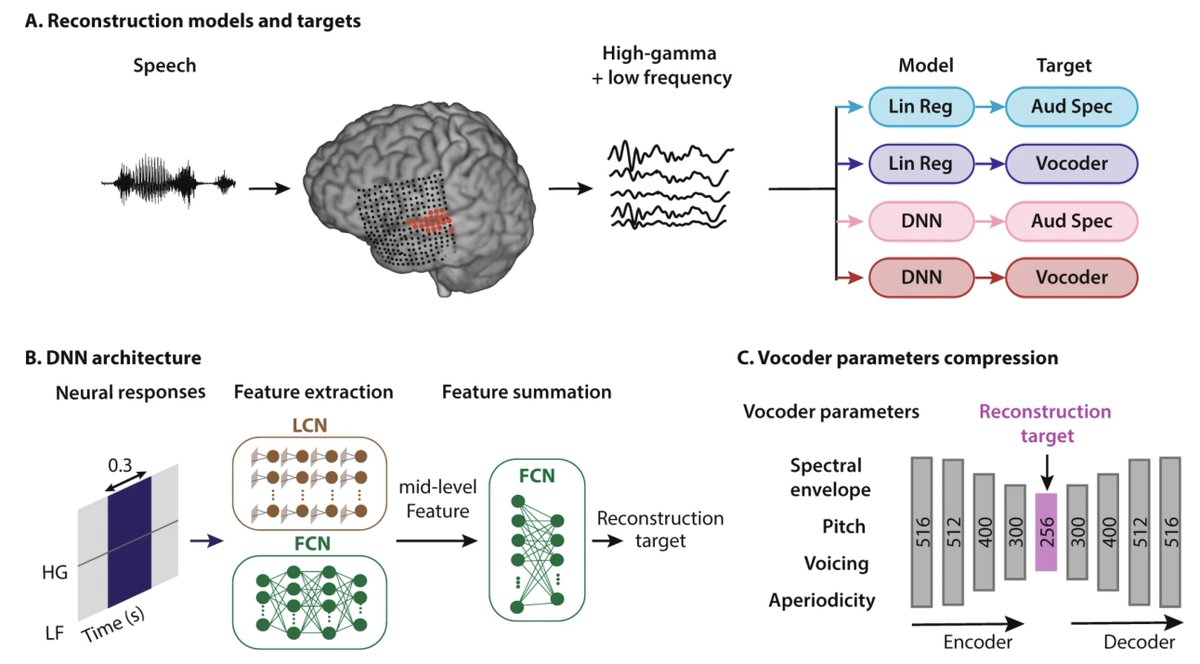
I was always excited about speech synthesis algorithms for designing the next generation of speech Brain-Computer-Interface systems. This will be one of the biggest breakthroughs for human-computer interaction technologies. Not only for paralyzed patients. #neuroscience#tech
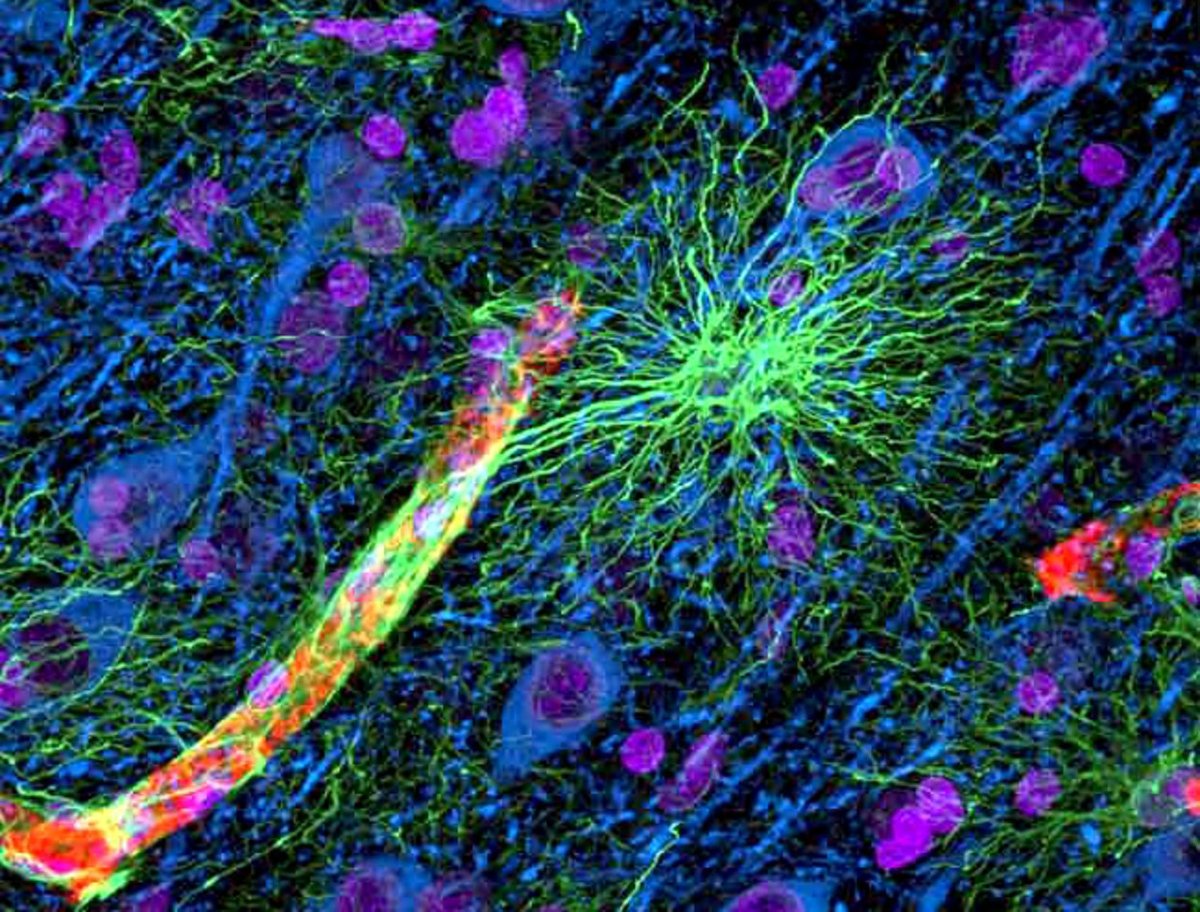
An astrocyte (green) reaching out to a blood vessel (yellow and red). The neurons (blue) are not in direct contact with the vessel and rely on astrocytes for the transport of nutrients of waste.
#Neuroscience#NeuroTwitter#Bioinformatics#Science
Credit: Maiken Nedergaard
Genomic and neurobiological findings support the view that musical abilities are intertwined with speech, language, and reading development over the lifespan
https://t.co/W3AjLLij22
👆A key finding for understanding how language & music (co)evolved
#music#neuroscience
Do you specialize in glial cell development, glia in aging and dementia, glial adaptations to injury and disease or similar research? Then we have a conference for you!
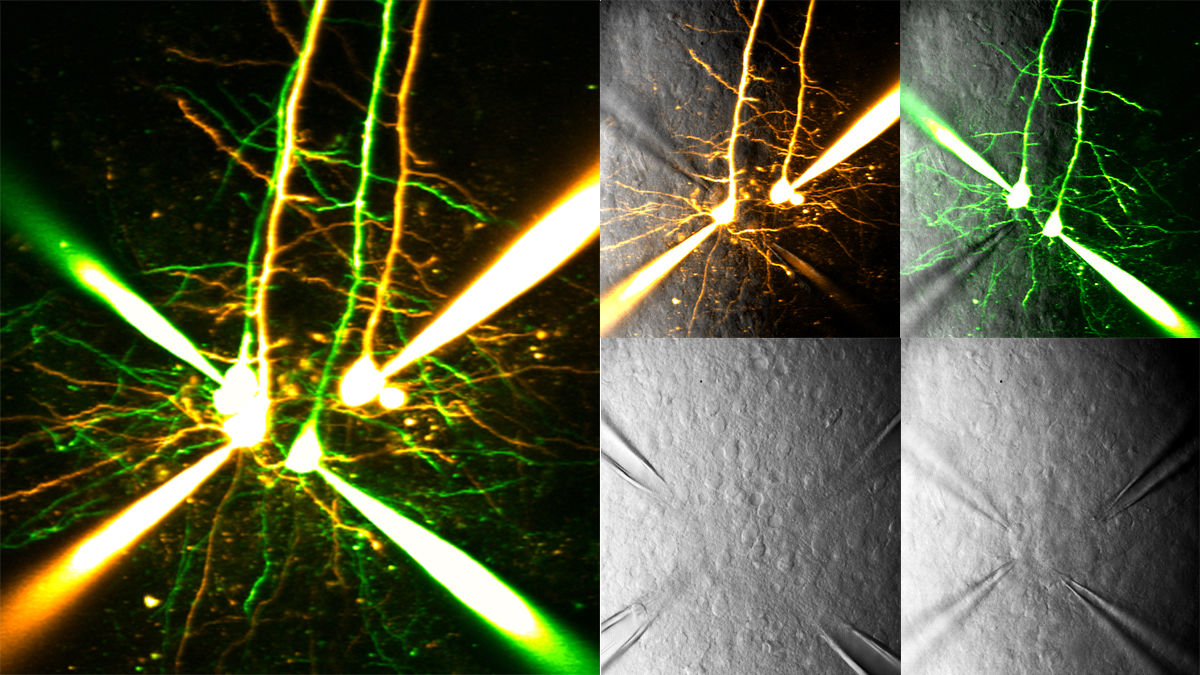
First quadruple neuron recordings since the @mcgillu lockdown in March. Very excited to be back in the @pj_sjostrom lab to study synaptic plasticity and axonal translation!
Our Insight article @eLife is online- "The secret life of memory receptors". https://t.co/pTvuADsgwx
@pj_sjostrom
@LabSjostrom
Introducing the new exciting work on NMDARs by Lituma et al. in the Castillo group. https://t.co/7HNQc4JQc2
Conversion from #MCI to #alzheimerdisease disease is difficult to predict, yet is important for clinical trials. @SebastianPalmqv & team show that #plasma#Ptau in combination with brief & accessible measures predicts future #AD with high accuracy.
https://t.co/rERToFmzfz
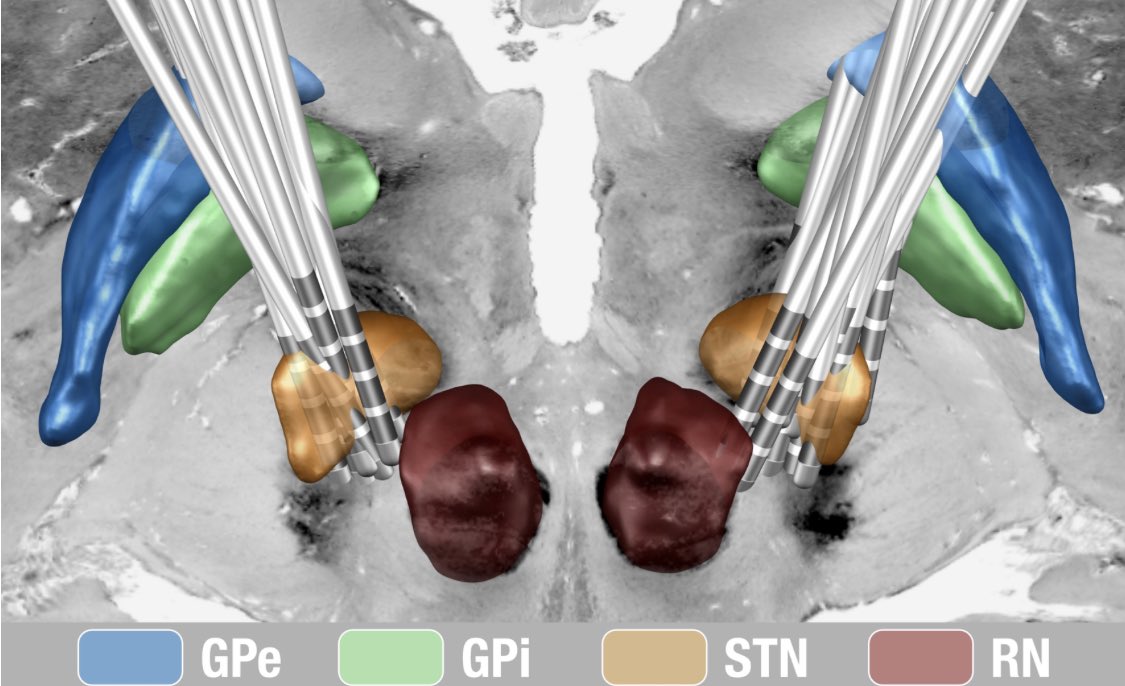
Analyzing network effects of DBS using fNIRS has the huge advantage of no stimulation artifacts. Schumacher et al. explore this & show effects of DBS on PFC organization as a function of disease onset. Relevant for understanding cogn. decline in PD/DBS.
https://t.co/CyEYzrXfD0