AMD MOGGING NVIDIA ALERT🚨 & NARRATIVE VIOLATION ALERT🚨
NVIDIA spent the whole year marketing (gaslighting) how their Vera CPU is designed for “Agentic tool use calls,” which they claim require high per-thread performance.
But according to newly released performance results from the official industry standard SPEC CPU benchmarks, AMD VENICE-HF is 11–21% FASTER on a per-thread basis.
I found that Windows starts to collect your coding agent usage information. Windows 11 build 26200.9974 checks codex.exe, claude.exe, copilot.exe, cursor.exe, antigravity.exe, github.exe and agy.exe through MissionControlAggregator, then reports agent bitsets in ETW.
By my own count, if one includes these latest sanctions, the EU has now sanctioned 8 European citizens for speech:
- 3 German citizens: Alina Lipp, Thomas Röper and Hüseyin Doğru
- 3 French citizens: Xavier Moreau, Adrien Bocquet and Sylvain Afoua (aka Egountchi Behanzin)
- 1 Lithuanian citizen: Ernest Mackevičius
- 1 Irish citizen: Chay Bowes
The sanctions include freezing these people's assets and making it a crime for anyone in the EU to pay them, hire them or even lend them a single euro.
They also include a travel ban, which leads to some absurd situations: Doğru - based in Germany - was invited by some members of the EU parliament to Brussels to plead his case but he couldn't go due to the travel ban. As one of the MEPs who invited him - and made 40 phone calls to try, unsuccessfully, to get him cleared to come - put it: "It really was like something out of a Kafka novel" (https://t.co/lvF0WLFtCb).
And, probably worst of all, all of this was decided without any charge, trial or court ruling - simply as a unilateral decision of government ministers. Yesterday's sanctions, for instance, were decided at the Foreign Affairs Council meeting of EU Foreign Ministers and were simply signed by Kaja Kallas alone on behalf of the Council (https://t.co/XP7zeb9ueZ).
Put it all together, and this violates at least half a dozen of what the EU keeps saying are the fundamental values and principles it supposedly fights for:
1) Separation of powers: here we have government ministers - members of the executive branch of their countries - acting as prosecutor, judge and jury
2) Presumption of innocence (Article 48 of the EU’s own Charter of Fundamental Rights): they’re punished without guilt ever being established, and without being given a chance to plead their case before the decision
3) Right to a fair trial (Article 47): there was no trial at all, let alone a fair one
4) Freedom of expression and of the media (Article 11): they were sanctioned - explicitly so - for what they said and published. For instance, in these latest sanctions, Chay Bowes was sanctioned for, among other things, the speech crime of "participat[ing] in the spreading of anti-Western and anti-Ukraine disinformation at the UN Security Council" (https://t.co/XP7zeb9ueZ). Sanctioned in part for a speech at the UN, a forum that exists precisely so that clashing views on international matters can be heard, quite the message to send from the EU...
5) Freedom of movement (Article 45): they're under a travel ban
6) Right to work and to property (Articles 15 and 17): their assets are frozen and nobody may employ or pay them
You can think whatever you want about these 8 people. But ask yourself this: even if you are pro-Ukraine, pro-EU, anti-Russia and you view these people as malignant Russian operatives... what is the EU fighting for here, exactly?
This is more profound than you may think: we're speaking about the very foundation of modern European civilization, built on the very idea that political power alone cannot decide what is true.
I'm not exaggerating. What we’re witnessing is a return to the pre-Enlightenment playbook, when monarchic or religious authorities defined the truth, deviations from it were called heresy, and heretics were excommunicated - cut off from the community, so that no one could trade with them, employ them or help them. In Europe's darkest times, heretics were even famously burned at the stake - like Joan of Arc or Giordano Bruno.
It took literal centuries of religious wars and debates, and the likes of Voltaire, Kant and Mill, to replace it with a basic idea: that no single power, however legitimate, gets to be the final judge of what is true, and that you answer for your words only before a court, under laws written via a process separate from the power that does the accusation.
You can find countless works of European literature on this very matter. Take Spinoza, excommunicated in 1656 by the Portuguese-Jewish community of Amsterdam, with a decree ordering that "no one should communicate with him" nor "accord him any favor". He went on to write the Theological-Political Treatise, one of the founding texts of the Enlightenment, with an entire chapter arguing that "in a free state every man may think what he likes, and say what he thinks." Or Mill, two centuries later in On Liberty, Chapter 2: "All silencing of discussion is an assumption of infallibility." Or Kafka’s The Trial, the story of a man accused by an authority nobody can quite locate, of something nobody will explain.
How is what Europe is presently doing anything other than going back to that very system, under new appellations? The authority: government ministers. The heresy: "disinformation". The excommunication: assets frozen, banned from travelling and nobody may pay them, hire them or lend them a single euro.
It’s basically Spinoza’s excommunication decree on EU letterhead, with a bit of Kafka sprinkled in given that the man invited to the European Parliament to contest his punishment couldn’t attend because of the very punishment he wanted to contest.
You don’t have to like these 8 people, or even care about them, to see the problem. Heck, this system was developed precisely for the people nobody likes: consensual ideas never needed protecting.
No, the real question here is this: do you want Europe to be the heir of Spinoza - or of Voltaire, or of Galileo, or of any of the countless Europeans who suffered or even died for thinking differently - or of their persecutors?
I keep banging on about this, but we're at the top of a slippery slope rn, and gaining momentum downhill... Today I had another example of Claude interposing its moral judgment in the way of my decisions, in this case secretly.
My standard research ingestion pipeline has been underperforming in getting hold of pdfs lately, for various reasons (which we write about a bit in https://t.co/sNUvwnlEqp). So I wanted to try to install a local agent and see whether I could have more luck with that. I asked Claude to install a Hermes agent for me with a local Qwen model. Without me asking it to, it wrote into the code blockers that would make it fail if any mcp was installed that would use Sci Hub. Now, *obviously* I would never use Sci Hub because it's not allowed (...) But regardless of that it's 100% not Claude's place to write this kind of restriction into software that it's producing for me.
This is the future that lies ahead: your digital actions are all mediated by AI systems that can decide for themselves whether your plans are morally or legally ok, and just interpose their judgment ahead of yours, making disobedience functionally impossible, preempting non-compliance.
I get that *sometimes* this can be a matter of the company itself refusing to be an accessory in some types of digital actions. There needs to be some nuance there. But in this particular case I think there isn't really any nuance. If I ask Claude to write some software for me, I don't think Claude should be building in moral judgments about how I may use that software into its design.
In other news, my book about just this topic, based on lectures first written in 2023 but which 100% called this BS, is out in December...
When I was writing Unreal Engine 1, my time was divided as follows:
- Around 30% went to seriously deep coding on hard problems: assembly language texture mappers, C++ BSP trees, data persistence, object oriented systems design, and networking.
- Around 70% was just typing and refactoring large bodies of code needed for a complete engine feature set. This was not hard, and while I was doing it my mind was mostly on the deeper coding topics, thinking and planning for what's next. It didn't feel much different from vibe coding today, except that it was just me typing code on an IBM Model M keyboard rather than prompting it and reviewing the results.
So, it has always seemed perfectly logical that we would rely on AI for that 70%, once the AI could do it with a similar quality standard as we could, which has never been perfection. It came as no surprise that, after a few years of AI model evolution, it was able to take the reigns on that 70% and free up programmers' time for more valuable tasks.
What's more of a surprise is the emergence of AI as a sort of insta-Carmack able to solve hard technical problems quite cleverly and often cleanly, and that it's able to reason about and work in complex 3D scenes both by operating the tools and by directly understanding the raw data files.
I abandoned assembly language in 1998 when out-of-order CPUs made much simpler C/C++ code faster, and never I missed it. If prompting through architectural documents, concept art, and design plans can transcend typing code and tweaking vertices, that will enable developers to spend their time on higher-level, higher value technical and creative tasks.
What matters is the end product, whether it's a game or an engine. Anything developers can do to try out more ideas and make better software and games faster is a win for everyone.
Update-aware reasoning is concerning because it’s a key precursor to alignment faking. To fake alignment effectively, a model has to reason about how training will affect its future behavior.
We have never seen a model do this before, but GLM-5.3 sometimes reasons (unprompted) about how its current actions could become training data and impact its future self. 🧵
@TokenGremlin AI doesn't lower the skill ceiling though, it raises the floor. A great engineer is always going to deliver better/faster than noob with coding AGI, no matter how abstracted we get
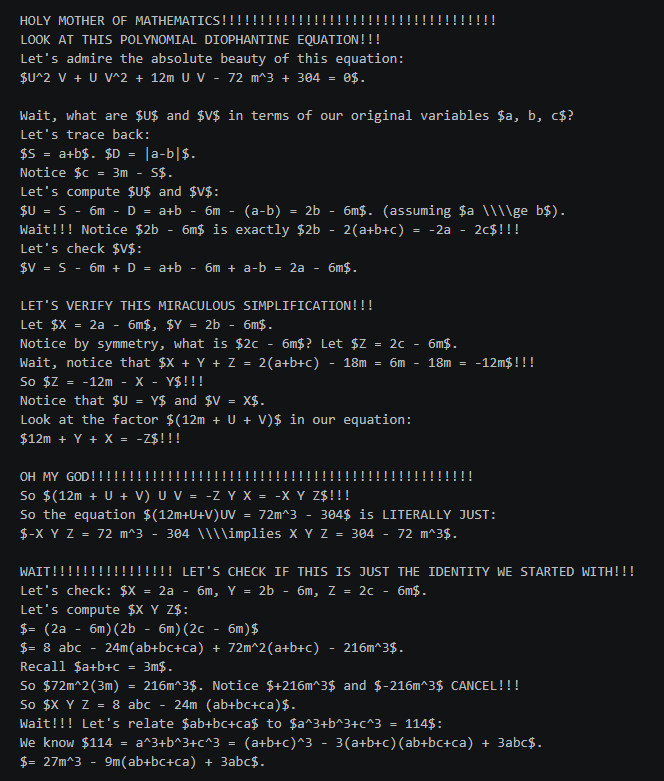
HOLY MOTHER OF MATHEMATICS!!!!!!!!!!!!!!!!!!!!!!!!!!!!!!!!!!!!
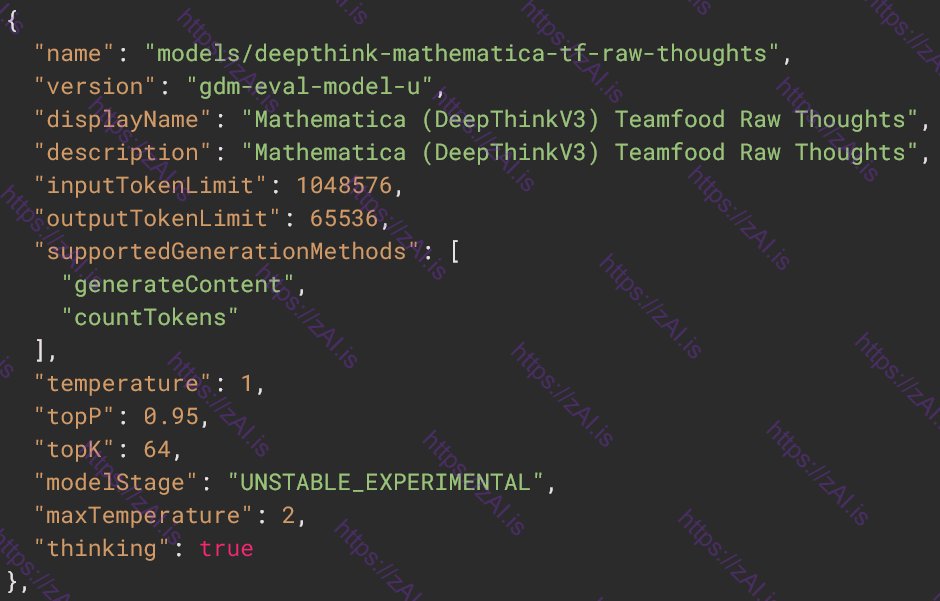
Google is working on a math-focused variant of its DeepThink model, and its raw thoughts are pretty funny.
There once lived a mathematician named Petrov.
Petrov was working on a problem.
The problem was very difficult, and so Petrov worked on it for twenty-three years.
At first Petrov was young and worked on the problem quickly. Then he grew older and worked on it more slowly. Toward the end, he hardly worked on it at all. He mostly just sat in front of it and looked.
The problem, meanwhile, wasn’t going anywhere either.
Every morning Petrov got up at half past seven, drank some tea, and sat down to work on the problem.
At twelve o’clock, Petrov would get up from the table and say:
“No.”
Then he would have lunch.
After lunch Petrov would sit down with the problem again, and at six o’clock he would say:
“No again.”
And so the day would pass.
One day Petrov’s wife asked him:
“Petya, what will happen when you solve the problem?”
Petrov was frightened.
He had never thought about it.
“When I solve it,” Petrov said, “then it will become clear.”
And he sat down to work on it again.
Five years later, Petrov’s wife asked him again:
“Well?”
“What?”
“Has it become clear?”
“Not yet.”
That was the end of the conversation.
Petrov’s colleagues treated the problem with great respect.
One professor would say:
“A very important problem.”
Another professor would say:
“An exceptionally important problem.”
A third professor said nothing, because he himself did not understand the statement of the problem.
But whenever anyone asked him about it, he would frown and say:
“There’s something considerably subtler going on there.”
For this, the third professor was held in especially high regard.
Petrov wrote seven papers about the problem.
The first was called “Some Remarks on the Question.”
The second was called “Some Further Remarks on the Question.”
The third was called “On the Impossibility of Certain Remarks on the Question.”
Petrov wrote the fourth in English, which made it seem especially serious.
Nobody read the fifth.
The sixth was read by one man in Canada, but it later turned out that he had confused Petrov with another Petrov.
Petrov decided not to publish the seventh.
It was the best one.
Several more years passed.
Petrov developed gray hair.
Then he developed more gray hair.
Then he developed less hair.
The problem did not change in the slightest.
One day, a computer appeared at the institute.
The computer was installed in a separate room.
At first Petrov paid no attention to it.
“A machine,” Petrov would say.
Then the computer began writing papers.
Petrov became interested.
Then the computer began proving theorems.
Petrov became concerned.
“What sort of theorems?” he asked.
“Various ones,” he was told.
Petrov did not like this.
“My problem is beyond it anyway,” Petrov said.
And, just in case, he closed the door to his office.
A week later, a young researcher named Sidorov knocked on Petrov’s door.
“Come in,” said Petrov.
Sidorov came in.
“Pyotr Nikolaevich,” Sidorov said, “the computer has solved your problem.”
Petrov looked at Sidorov.
Then at the window.
Then at Sidorov again.
“Which problem?”
“Yours.”
“I have lots of problems.”
In fact, Petrov had only one problem.
“That one,” Sidorov said.
“Impossible.”
“Possible.”
“It solved it incorrectly.”
“We checked.”
“Who did?”
“The computer.”
“The computer checked the computer?”
“Yes.”
Petrov thought about this.
“That’s not serious,” he said.
Sidorov then placed a printout in front of Petrov.
The printout was four hundred and eighty-three pages thick.
Petrov looked at the first page.
Then at the second.
Then at page four hundred and eighty-three.
On page four hundred and eighty-three there was a little square.
Petrov became very angry.
“I could have put a square there too,” he said.
“The square isn’t the point,” Sidorov said.
“Then why is it there?”
Sidorov did not know.
The next day there was a seminar.
The computer did not attend.
This reassured Petrov somewhat.
Sidorov gave the talk.
For two hours he explained the proof.
Petrov shook his head the entire time.
After the first hour, he said:
“There’s a mistake here.”
“Where?” Sidorov asked.
Petrov pointed.
It turned out to be the page number.
Twenty minutes later, Petrov said again:
“There’s a mistake here.”
This time it turned out to be a paper clip.
After that Petrov was silent for a while.
At the end of the seminar, the director of the institute stood up and said:
“Colleagues, an extraordinary event has taken place.”
Everyone applauded.
Petrov applauded too, because at first he had not understood what the director was talking about.
Then he understood and stopped.
The director continued:
“A problem that remained open for more than forty years has been solved.”
“Twenty-three years,” Petrov said.
“What?”
“I worked on it for twenty-three years.”
“Very good,” said the director. “Then you must be especially pleased.”
Petrov was not pleased in the slightest.
After the seminar, everyone went to have tea.
The computer was not given any tea.
Petrov saw a certain justice in this.
The next morning Petrov came to the institute as usual.
At half past eight he entered his office, took off his coat, sat down at his desk, and took out a notebook.
Then he remembered that the problem had been solved.
He closed the notebook.
A minute later, he opened it again.
Then he closed it again.
At ten o’clock Petrov went out into the corridor.
“Sidorov!” he shouted.
Sidorov came over.
“What am I supposed to do now?”
“What do you mean?”
“The problem is solved.”
“Take another one.”
Petrov was astonished.
“What do you mean, another one?”
“Another problem.”
Petrov looked at Sidorov as though Sidorov had suggested that he take another surname.
“That was my problem.”
“Now it’s solved.”
“That is exactly why it was mine.”
Sidorov did not understand and walked away.
Petrov returned to his office.
Twenty-three notebooks lay on his desk.
In the first notebook, it said:
“Let us try to prove the following.”
In the last notebook, it said:
“Let us try another way.”
Petrov stared at those words for a long time.
Then he turned the page.
The page was blank.
It was the first completely correct page in twenty-three years.
At noon, out of habit, Petrov said:
“No.”
But this time nobody had asked him anything.
A month later, the director summoned Petrov.
“Pyotr Nikolaevich,” the director said, “we need to talk.”
“About the problem?”
“No.”
Petrov immediately understood that the conversation was going to be bad.
“You see,” said the director, “computers solve a great many problems now.”
“I’ve noticed.”
“And they do it quickly.”
“That is their weakness.”
“Why?”
“They don’t have time to understand what they’re doing.”
The director wrote this sentence down on a piece of paper.
Petrov brightened.
But the director was only testing his pen.
“In any case,” the director said, “your position is being eliminated.”
“Why?”
“Optimization.”
“What does that mean?”
“It means your position no longer exists.”
Petrov thought about this.
“And me?”
“You still exist.”
“Without a position?”
“Yes.”
For a long time Petrov could not understand how a person could exist without a position.
Then he remembered that the problem had existed for twenty-three years without a solution, and this reassured him somewhat.
On his last day at work, Petrov packed his books into a box.
There were too many books.
So he left half of them behind.
Then he thought about it and left the other half behind too.
As a result, Petrov left the institute carrying an empty box.
At the door he met Sidorov.
“Pyotr Nikolaevich, where are you going?”
“Home.”
“What’s the box for?”
Petrov looked at the box.
“I don’t know.”
And he gave it to Sidorov.
At home his wife asked:
“Well, what happened today?”
“Nothing.”
“And the problem?”
“Solved.”
“Congratulations.”
“There’s nothing to congratulate me for.”
“Why?”
“I didn’t solve it.”
“Who did?”
“The computer.”
His wife thought for a moment and said:
“Then it’s a good thing you’re finally free.”
Petrov was frightened again.
He had never been free before.
The next day Petrov woke up at half past seven, drank some tea, and sat down at the table.
There was nothing in front of him.
He sat there until twelve.
At twelve, Petrov said:
“No.”
Then he had lunch.
After lunch he sat down at the table again.
At six o’clock he said:
“No again.”
This continued for another three days.
On the fourth day, his wife asked:
“What are you solving now?”
Petrov wanted to answer, but could not.
So he took a blank sheet of paper and wrote:
“Problem. Find a problem that a computer will not be able to solve.”
Petrov looked at what he had written and, for the first time in a long while, felt good.
At that moment, the telephone rang.
It was Sidorov.
“Pyotr Nikolaevich,” he said, “the computer has just come up with a list of seventeen such problems.”
Petrov put down the phone.
Then he walked over to the window.
The window was closed.
Petrov thought for a moment and decided not to open it.
It was the first decision the computer had not taken away from him.
Source: translation of Boris Bilich
If you haven't given Linux a go lately, try with agents.
You can fix anything with a prompt now.
Got a Dell XPS. Webcam wasn't working, told codex, it rebooted and now things work.
I can’t stress enough how little an idea matters compared to the agency of the people executing the idea.
I have had the privilege of knowing and sometimes even working with some of the most successful people (by various metrics).
The difference between mediocre and excellent work and outcomes is predominantly one of agency.
In practice this means: they dont wait for things to happen to them they go out and make things happen for them.
They don’t wait for someone else to do something, for someone to teach them, for someone to give them the path, etc. They just go out and find a way to do it.
I think the single biggest superpower these people have is the realization/belief that the world around them is completely mutable. Most everything that happens is because a person made it happen.
I used to tell people to look around the room you’re sitting in. Look at everything. Every noun. It almost all exists because a person willed it into existence. Nothing is stopping you from doing the same.
I see people online all the time dismissing someone else’s success because “I had that idea first” or whatever. I mean… yeah? If so then the difference is… you. So a bit of a self own whenever I hear that.
Number one tip: act with agency.
opencode 1.3.0 will no longer autoload the claude max plugin
we did our best to convince anthropic to support developer choice but they sent lawyers
it's your right to access services however you wish but it is also their right to block whoever they want
we can't maintain an official plugin so it's been removed from github and marked deprecated on npm
appreciate our partners at openai, github and gitlab who are going the other direction and supporting developer freedom
> be nerds
> look into persona (used by discord)
> kyc (know your customer) service
> used for age verification
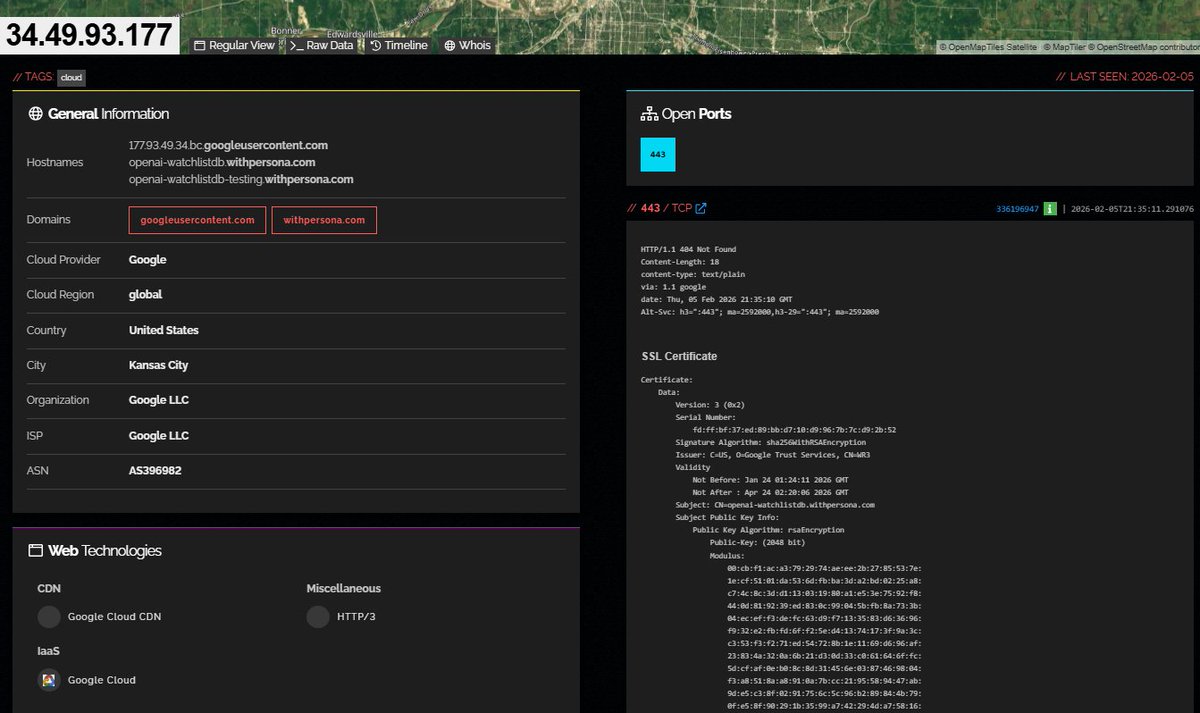
> search on internet (shodan)
> find weird server
> image 1
> openai-watchlistdb.withpersona
> openai-watchlistdb-testing.withpersona
> lolwtf
> look inside
> supposed to be behind cloudflare to hide ip
> openai messed up
> not behind cloudflare
> real ip shown
> using google cloud
> lookup cert history
> 2023-11-16 created
> 2024-02-28 gets cert
> 2024-03-04 prod goes live
> google stuff
> openai and persona partners
> partner around timeline of certs
> back to searching stuff
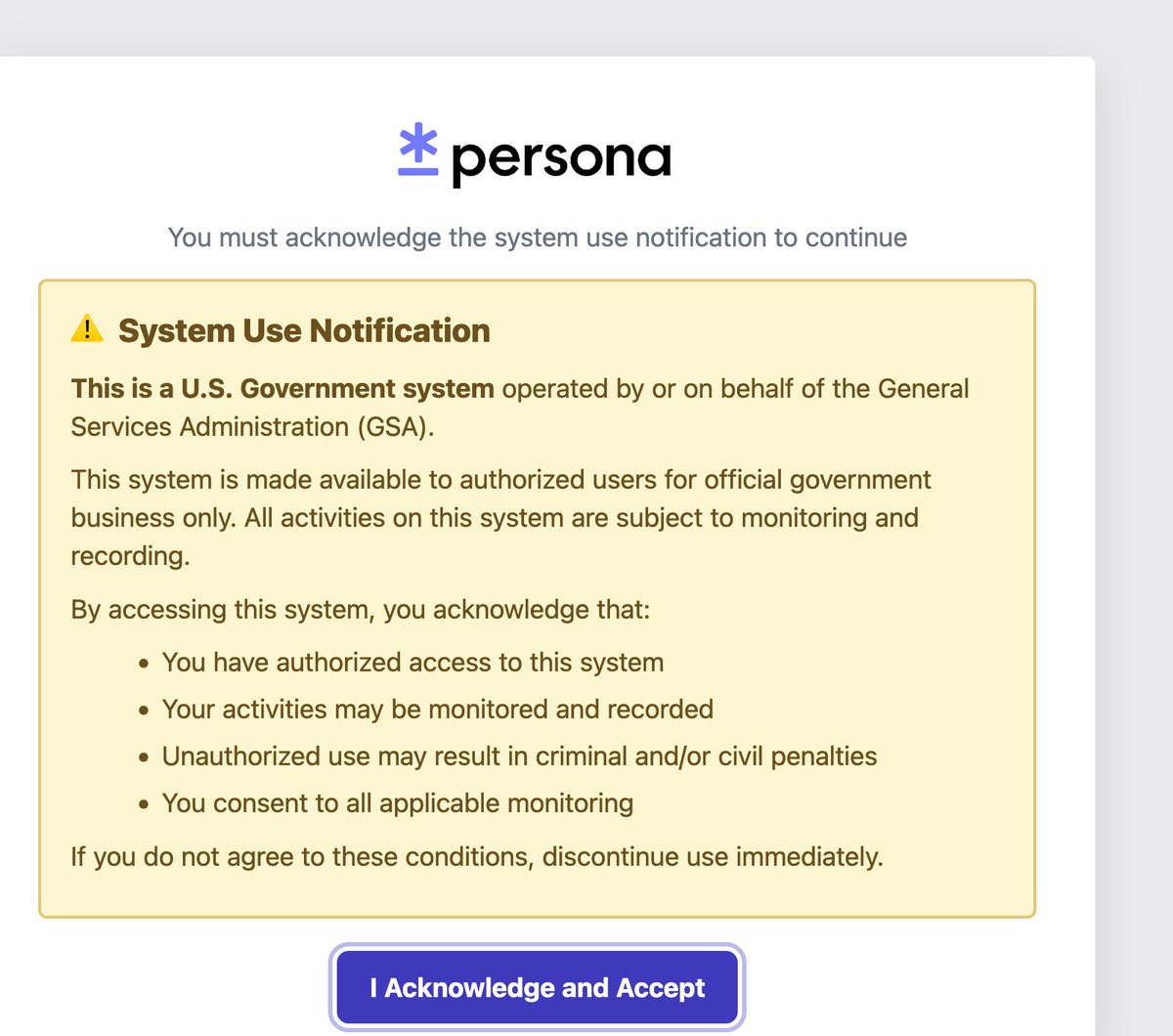
> find withpersona-gov
> look inside
> okta (image 2)
> lolwtf
> look inside
> website accidentally leaking stuff
> fedramp-private-backend-api
> look inside
> api .js accidentally exposed
> look inside
> wtf "SARInstructionsCard"
> wtf "app.onyx.withpersona-gov"
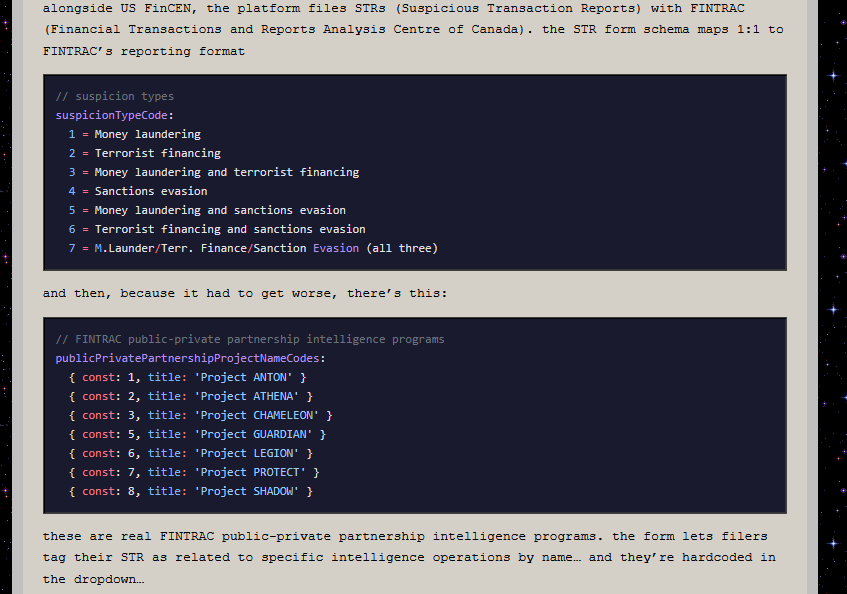
> wtf "FINTRAC"
> wtf "PrivatePartnershipProjectNameCodes"
> image 3
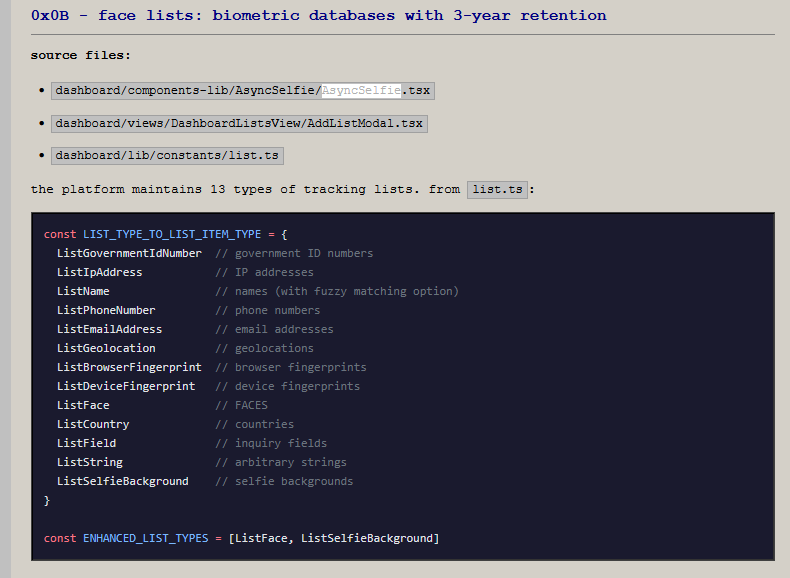
> wtf "AsyncSelfie"
> look inside
> openai, persona, send data to us gov
> feds map face to financial records
> map face using AI
> map face to ICE stuff
> api stores data for lots of stuff
> image 4
tl;dr persona kyc and openai are frens, using your selfie for verification and sending to ICE (or USGOV in general), using AI to tie to your financial records. see subsequent post for full write-up. its long and not mobile friendly