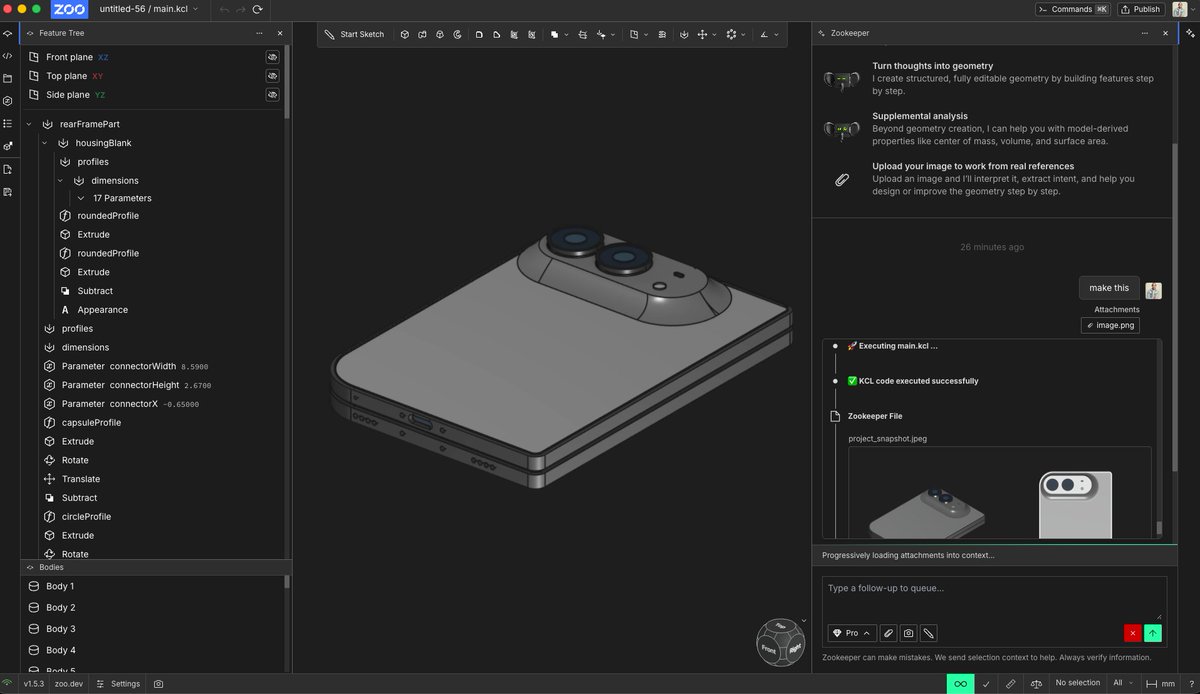
We built the software. Now we’re machining the parts.
Zoo’s manufacturing beta is open: custom CNC-machined aluminum parts, made in our own shop.
Have a part in mind? Submit it for consideration:
https://t.co/ZwM2FGfaC0
So now you don’t stop on making geometry with AI. Why do you need geometry? You need the part. Now you have it. It’s delivered to your door. Prompt-to-door 🚪
We built the software. Now we’re machining the parts.
Zoo’s manufacturing beta is open: custom CNC-machined aluminum parts, made in our own shop.
Have a part in mind? Submit it for consideration:
https://t.co/ZwM2FGfaC0
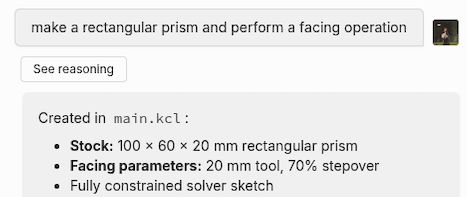
We've been extending Zoo's platform into toolpathing and CNC operations. Today, we bring our CNC service from a private alpha to a public beta.
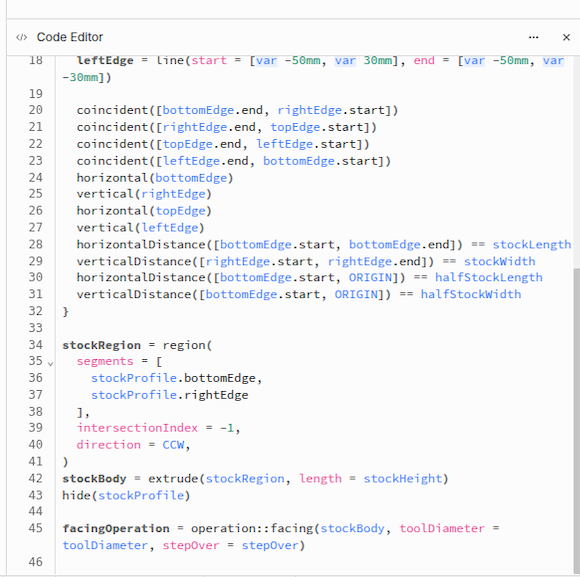
For the last year we've been developing our agentic CAM platform, running on our own machines. Zoo's CAM mirrors our CAD platform, a hybrid implementation where both traditional edits and agentic edits are built on top of our scripting language, KCL.
Toolpaths are defined in KCL, dynamically linked to surfaces, bodies, and any other parameters. This is alongside the CAD definition in KCL, allowing a common source of truth both for designers and agentic workflows.
Our CNC service's private alpha involved building automations on top of our CAM workflows to allow quick turn, high mix manufacturing in our prototype Factory 1.0., which will expand into Factory 2.0 Q1 2027.
With our public beta, anyone can upload parts to our portal, which are reviewed by our auto-quoter and agentic toolpathing. For now we're manually reviewing those to verify their performance and accuracy before releasing quotes to customers.
Once we find the auto-quoter and agentic toolpathing to be sufficiently accurate and comprehensive, we will stop manual review and automatically release quotes to customers.
These quotes will include agentically generated design-for-manufacturability feedback, based on driving factors for machine run time, setup cost, and more. Our goal is context-aware design change recommendations to help our customers achieve faster/cheaper manufacturing.
We will also be releasing this capability via Zookeeper, where you will be able to receive/accept quotes within your prompt workflows, and via our API for third part integration.
Our CAM platform will be released publicly as an extension to our GUIs, KCL, and APIs next year.
The only way to train an industrial superintelligence is to combine CAD, CAM, analysis, and more into one design-to-production platform. We do that today.
We're #hiring a Senior Software Engineer, Frontend to help build Zoo Design Studio, where code, 3D geometry, and modern web technologies come together in one design environment.
Build the tools you wish existed → https://t.co/CN7GecFl83
Ben’s Build Log #19
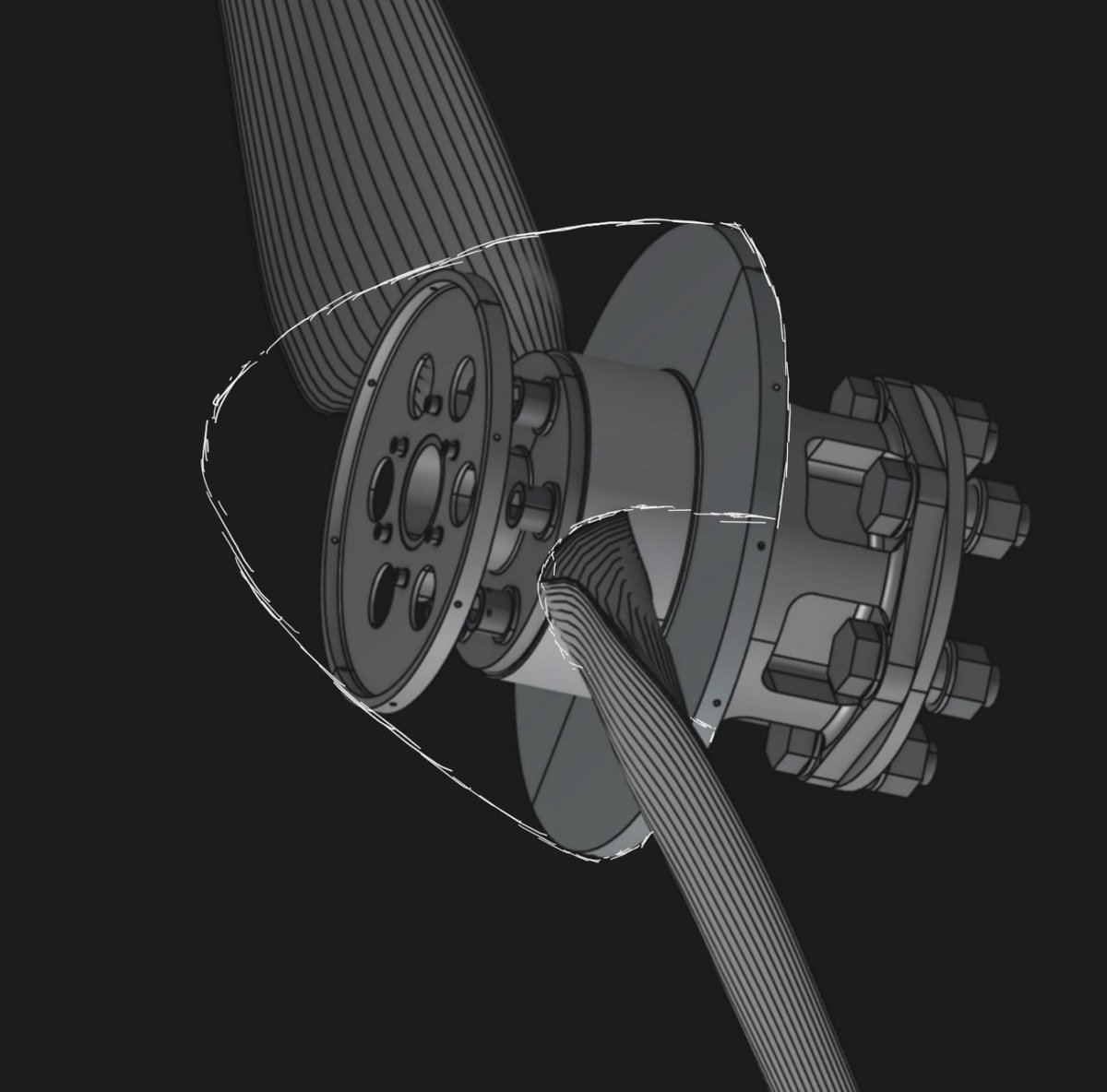
For the propeller spinner, I started with a hand-drawn sketch to show the shape I had in mind.
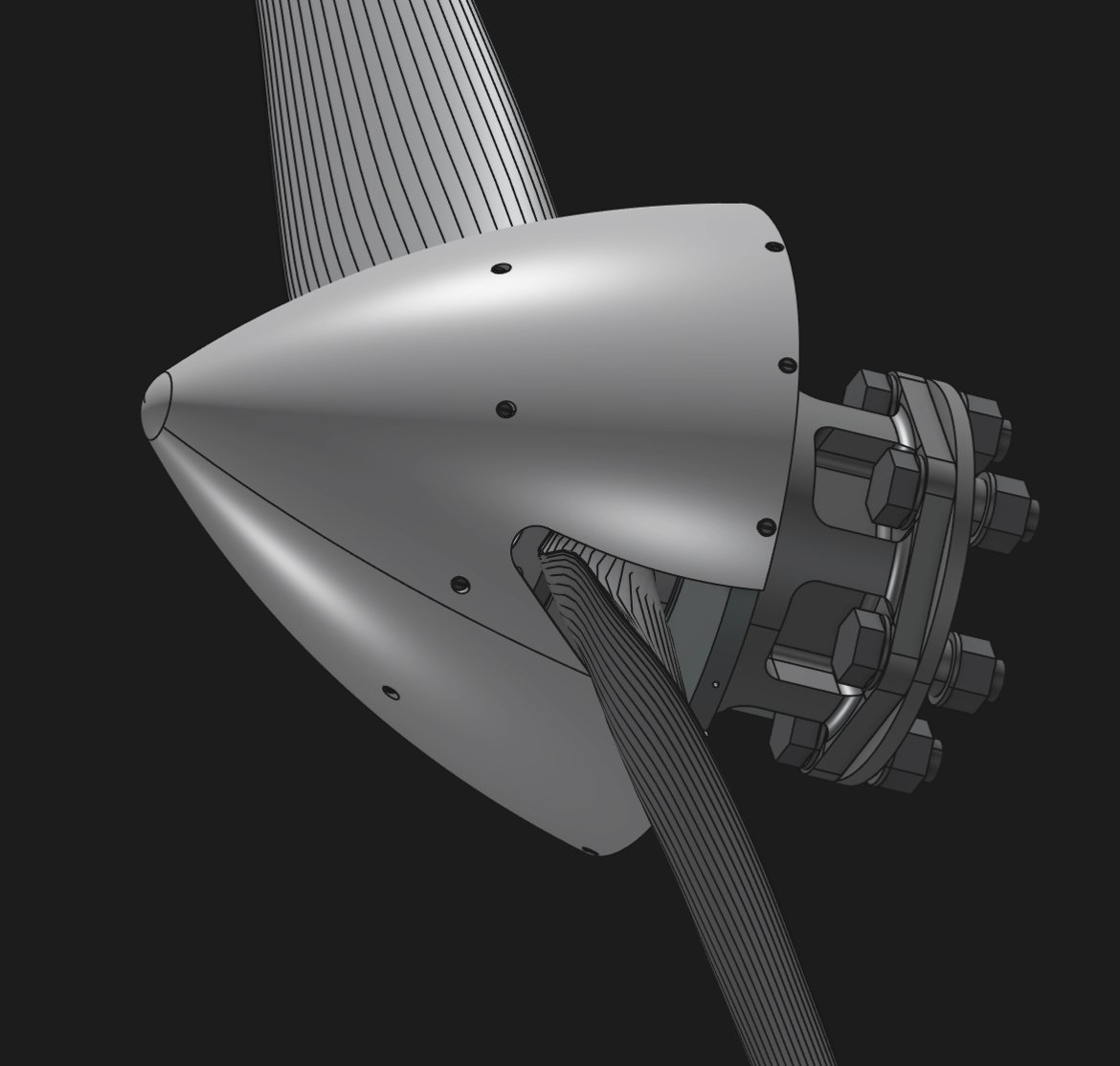
I then gave it to Zookeeper to turn it into a 3D model and fit it onto the existing mounting structure.
A casting-style centrifugal pump casing shaped around a progressively expanding volute passage, with an axial inlet, tangential discharge, bolted flange, and integral ribs that carry loads around the hydraulic body. Made with Zookeeper.
this is jessie frazelle, CEO of zoo and co-founder of oxide computer company
we discuss building a CAD kernel from scratch, software engineers vs developers, GPUs and CAD, AI written code, candor, and why the best engineers are opinionated
Ben’s Build Log #18
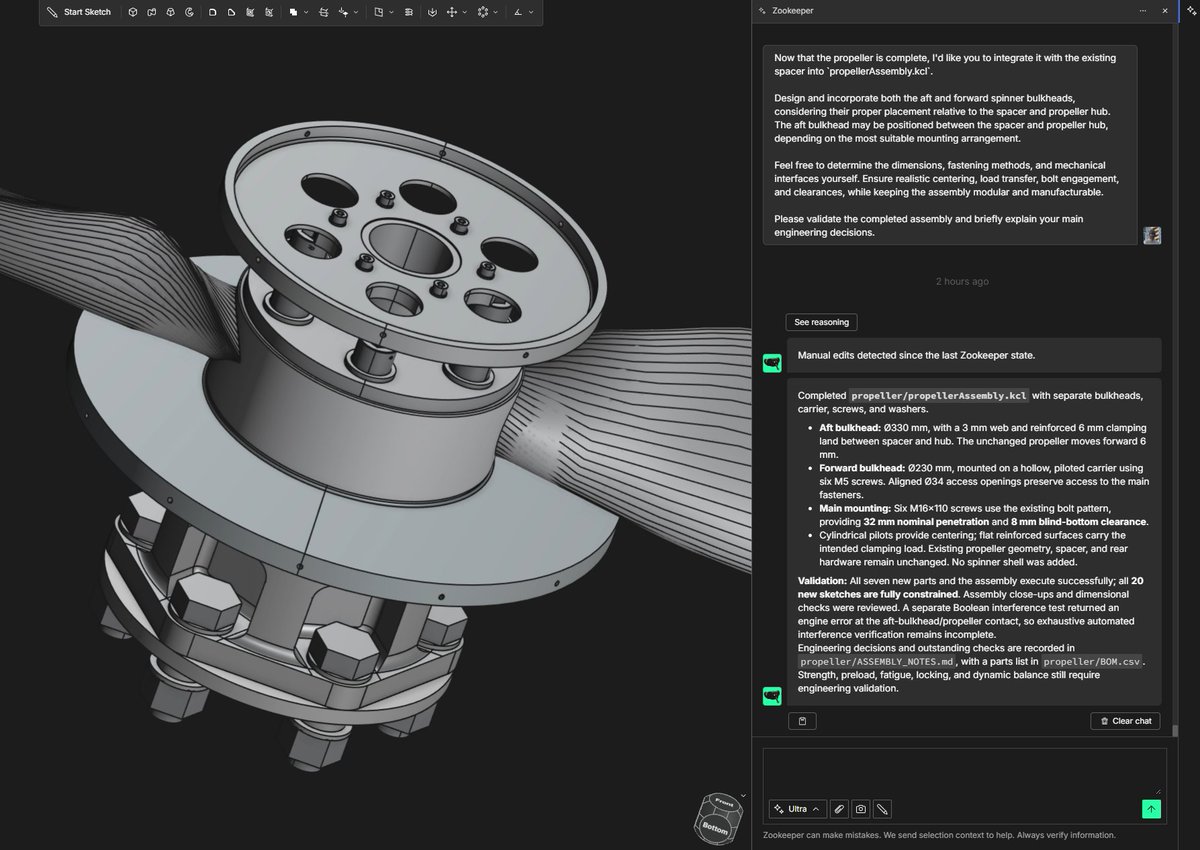
Next up was figuring out how to mount the propeller to the aircraft.
I asked Zookeeper to integrate the propeller hub with the existing spacer and design the forward and aft bulkheads as part of the mounting assembly.
A monobloc racing brake caliper with six piston bores arranged around the rotor-and-pad window. Forged ribs provide stiffness, while drilled galleries, service ports, mounting lugs, and machined reliefs organize the hydraulic and installation interfaces. Made with Zookeeper.
Ben’s Build Log #17
Before modeling the propeller itself, I asked Zookeeper to evaluate what kind of fixed-pitch propeller would make sense for this type of aircraft and to work out suitable dimensions and blade profiles.
He then used that information to create a series of sketches, visualizing the blade shape, twist and overall proportions.