Also if your REALLY invested in learning more, all of the code and data used within this manuscript is available from my github repo: https://t.co/O1akDCjv68
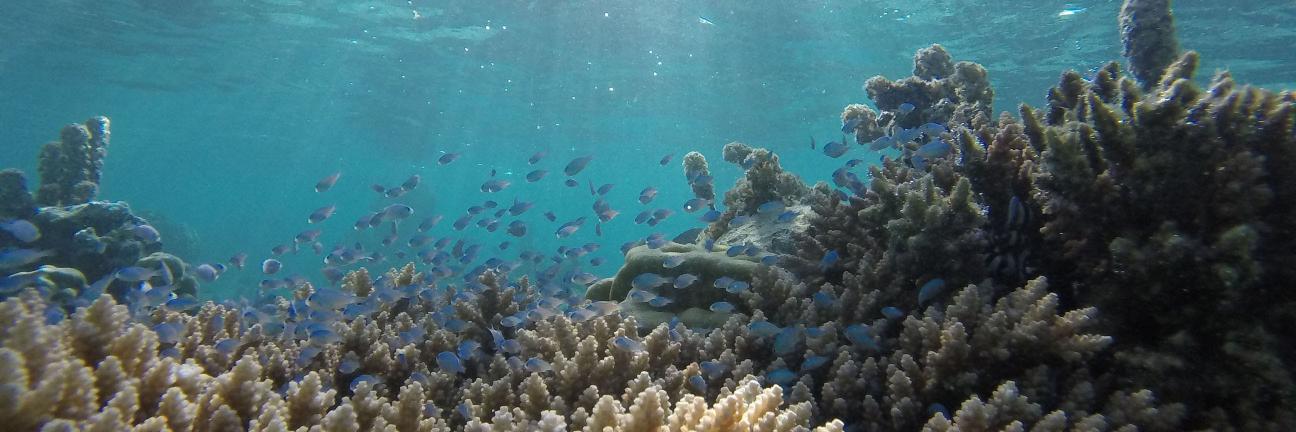
The fifth chapter from my PhD, focussing on the induction of coral larval settlement from metabolites extracted from CCA was just published in @RSocPublishing! https://t.co/69uF4i31FM
We finalize the manuscript with an analysis of the extracted exometabolites using untargeted mass spectrometry (which I will not even attempt to summarize via twitter). If you're interested in learning more, check out the open access paper here: https://t.co/69uF4i31FM
I am defending June 13th at 2p PDT. It will happen in person at SIO in Sumner hall if you want to attend in person or message me if you would like the zoom link :)
@orbuch@_david_ho_ Also within that discussion its vital to talk about when the buyers should pay for third party MRV, especially considering many of these projects will need baseline measurements to make any estimates of additionality and environmental impacts.
@orbuch And that R&D needs to be openly available as it gets done. Eg. Raw data and preliminary take homes presented as data becomes available rather than held private until publication.
@orbuch Could not agree more. But I might go further to say that right now we need investment in the base R&D to even begin understanding how to reduce the cost of MRV. This is especially true in marine CDR verification.
@MPsImpactOceans If all the csvs are in the same folder you can do:
rawCSV <- dir(path = "~/path/to/folder/", pattern = "*.csv")%>%
map(read_csv)
@orbuch Off The top of my head I do not know any examples of experiments where the rate of remineralization at both gradients of salinity and oxygen were tested. I'll do a little digging today and send you what I find.
@orbuch Anoxic conditions simply select for microbes which are adapted to metabolize organic matter utilizing anoxic pathways. Similarly, increased salt concentrations select for halophilic microbes. At least in the ocean neither of these scenarios guarantee DOM recalcitrance.
@MJ99_1 You can also assign new tibble columns if you don't want to override the 'data' tibbles:
mutate(model = map(data, ~ lm(y ~ x, data = .x)),
tidy_model = map(model, ~ tidy(.x)))
@MJ99_1 You can do that all within that mutate using pipes. It would look something like:
mutate(data = map(data, ~ lm(y ~ x, data = .x)%>% tidy()%>% select(p.value)))