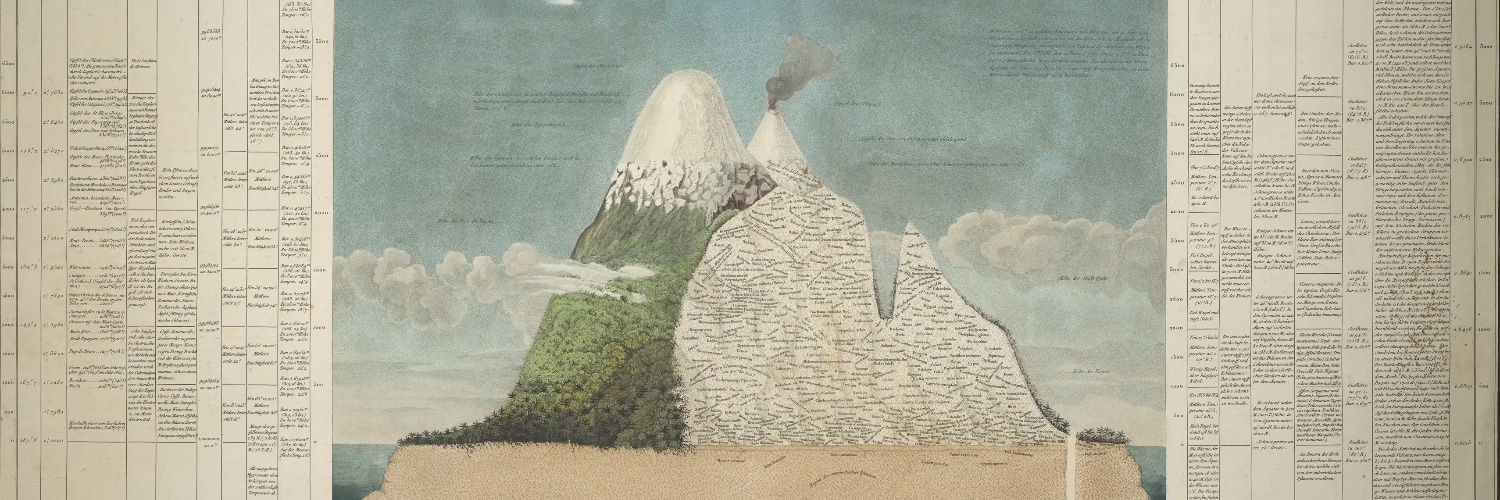
A weird property of the frontier: finding the edge forces a realization that there’s very few people there, the others who’ve found it are tightly clustered and therefore quite happy to see you, and you all can’t help but ask “where is everybody?” in escalating confusion
Documentary recapping Rainmaker's historic accomplishment for the Great Salt Lake this past winter
We are the first company to repeatedly prove we're making it snow
The care, toil, and brilliance of our team was heroic
But we still need more water, the jobs not finished
New blog post: The third wave of American philanthropy
Hundreds of billions of dollars in new philanthropic capital will soon become liquid. The OpenAI Foundation holds 26% of OpenAI, worth about $220B at today’s valuation. Anthropic’s seven co-founders have pledged to give away 80% of their wealth and have instituted the most aggressive donor matching program for employees in tech history.
How much does this all add up to? And how meaningful is that in the context of philanthropy today?
I was doing some simple napkin math to wrap my head around the scale of what’s coming, and radicalized myself in the process. I had dramatically underappreciated the scale of the philanthropic capital that’s about to become available and the corresponding gap in talent and organizations that will be needed to make the most of it.
This piece aims to directionally sketch the scale of what’s coming, the gap in operational capacity needed to absorb it, and what we can do to fill it.
(Link to full post in reply)
Climate activists have spent decades shutting down nuclear, blocking clean energy transmission, and trying to ban research on cooling the planet... but the movement that wins the next century will be led by the people doing the work, not those protesting it. New essay out today👇
Today we're announcing @_panthalassa’s $140M Series B, led by Peter Thiel, with participation from John Doerr and many other incredible investors. The mission: unlock the ocean as another planetary-scale energy resource for humanity. First stop: compute.
1/ @OctopusEnergy is backing Living Carbon with $500M to reforest degraded land and remove CO₂ across North America. This major project financing comes with an additional ~$13M investment in our carbon business.
Living Carbon is putting low quality land back to work. Our innovative reforestation turns low quality land into thriving forests faster to remove carbon or produce sustainable forest products.
Read more about it in today’s @WSJ (link in the comments) →
Mankind has always been at the mercy of the weather.
No longer.
Rainmaker is the first company in history to routinely, unambiguously, modify the weather.
Last quarter, we produced >143MM gallons of unambiguously man-made precipitation.
Here’s how we do it 🧵
In spite of how I present myself on the internet (unhinged, slightly feral) I do Real Work on Cool Things in Various Places and have published a new post to revive my substack / push myself to talk about this more. Link in next post to game the algorithm 👇
So, @_panthalassa operated mostly in secret for a decade. And what it built is nuts.
Massive, massive floating data centers that drive themselves out to sea and then capture water inside of them to spin a turbine and power GPUs. Look at these things.
Full episode on the tech here https://t.co/PsC6YNLXD2
A couple years ago the Ulysses team wheeled a tub of water and their first robot into our SF office. They said they would give humanity the tools to unlock the ocean frontier.
They’re making good on that promise.
Grateful to have backed them since the beginning 🦈
Ulysses has raised $46M led by a16z American Dynamism.
We are building The Ocean Company.
The ocean is 71% of the planet. But it is less explored than Mars, and full of secrets, waiting to be told.
It is the backbone of global defense. Home to the critical infrastructure that powers our world. And the key to the health of our planet.
This frontier needs technology to protect and steward it.
We are building it. And we need more builders
Join us and explore the Great Blue Frontier: https://t.co/bYBDQiTUSM
We waste too much time worrying about short term hype. Hyper-fixating on the news cycle isn’t going to fix the biggest problems facing society in the coming decades.
The world needs more long term thinking.
So we are launching Forecast 2050: a series of conversations with the thinkers, founders, and investors shaping the next 25 years.
Thank you to @tylercowen, Scott Aaronson, @noor_siddiqui_, @soundboy, @matthewclifford, @devonzuegel, @CJHandmer, @MalcolmRifkind, Yanai Yedvab, @viswacolluru, @pablolubroth, and @PhilipJohnston for joining us.
First episode with Tyler drops tomorrow. Stay tuned.
It's actually 1.1 million now 🤭
But in all seriousness, I am so proud of the @stripepress team and our incredible stable of authors. It’s easy to be fatalistic about the state of publishing, but there *is* an audience for books—even ones that are challenging and technical.
New blog post:
There should be ‘general managers’ for more of the world’s important problems
There’s a surprisingly big category of problems that are ‘orphaned.’ By ‘orphaned’ I mean: you can’t point to a specific person or organization who thinks it’s their responsibility to deliver the outcome in its entirety. Lots of people talk about the problem, and often many work on slices of it. But if you asked: ‘is there a hyper-competent person waking up every day feeling accountable for making sure this gets solved?’—the answer is very often, ‘no.’
These problems exist across domains and at a variety of ‘altitudes.’ Indeed, some are perhaps better described as ‘things we want to be true’ rather than ‘problems.’ In any event, a few examples that have been on my mind recently:
(1) Can we prevent infection from all respiratory pathogens (including the common cold)?
(2) Can we make every new building in SF both serve its function and be beautiful?
(3) Can we permanently fix the American west’s water problem?
(4) Can we halve X risk?
(5) Can we eliminate single-use plastic globally without making convenience trade-offs?
(6) Can we make childcare costs so low that they’re a non-factor in deciding whether to have kids?
In my opinion, there should be ‘general managers’—GMs—for problems like these. These are founder-types who feel personally responsible for delivering a specific outcome (vs field-building generally); hyper-competent leaders who will pull whatever levers necessary to achieve the defined outcome. Most companies wouldn’t let an important initiative go unmanned or without a ‘directly responsible individual’ — why are we OK not having GMs for even more wide-reaching problems?
(Link to full post in reply)
This ended up being my favorite interview by a wide margin. Thanks for the great conversation @ti_morse
One step closer to finally explaining we're an airplane company that just so happens to have invented a new kind of engine (and how we’re doing it)