Call for paper: CIRCLE 2022 | 2nd edition of the Joint Conference of the Information Retrieval Communities in Europe, July 4-7, 2022, Samatan, Gers, France
https://t.co/nTXERUtaI2
This weekend, we’re providing a definitive set of tutorials on how to build GraphRAG, step-by-step.
First, check out this video by @fahdmirza on implementing the core components of GraphRAG using an in-memory implementation:
1. Extract entities and relationships using LLMs
2. Partition graph into communities and generate community summaries
3. Query all communities and synthesize into a final answer.
Then, extend this initial in-memory implementation by storing your property graph in a @neo4j graph database. Big shoutout to @ravithejads for the notebook
Video: https://t.co/unDAvDrRCv
V1 Notebook: https://t.co/eJRvyJSe6i
V2 notebook (with @neo4j): https://t.co/B91rH34PIU
Source GraphRAG paper by Edge et al. (+ image credits): https://t.co/bfhihoDYEP
The Llama 3 paper is a must-read for anyone in AI and CS. It’s an absolutely accurate and authoritative take on what it takes to build a leading LLM, the tech behind ChatGPT, Gemini, Copilot, and others.
The AI part might seem small in comparison to the gargantuan work on *data* and *scale engineering*.
I hope professors in distributed systems, high performance computing, algorithms, databases, HCI, etc use it as an example of bleeding edge CS in their classes. So many exciting open problems!
@UBC_CS@CompSciOxford@berkeley_ai@Cambridge_Eng@WitsUniversity@NSERC_CRSNG@NSF@ERC_Research@UKRI_News
Not knowing how to say “NO” caused me being swamped with 21 papers to review for #CIKM conference (different tracks) 😵💫🤯🥴
Even dedicating 2 hours to each paper, is going to consume a regular workweek worth of hours (not the never-ending PhD student week though) 😂
#phdlife
The "Software Engineering at Google" book is now free to read online: https://t.co/cqX79uZNFK. Great insights on improving code quality & scaling engineering teams.
Want to improve your academic writing?
Here are 5 tweets full of excellent writing tips.
Because it’s about time I start sharing all the great tweets I bookmark. @AcademicChatter#AcademicTwitter
Special Issue on Fair and Explainable Information Access Systems for Social Good - Call for papers - Information Processing & Management - Journal - Elsevier, Due: Oct 15, 2021 https://t.co/W1HNEVJIeL
Code, slides and video for our SIGIR long paper "Reinforcement Learning from Reformulations in Conversational QA over KGs" are now available:
Code: https://t.co/9AHVA1N4HO
Slides: https://t.co/jtfiH37mkG
Video: https://t.co/1tChufszMI
@RishirajSahaRoy #sigir21#questionanswering
Struggling to make your #NeurIPS2021 submission look neat and fit on 9 pages? Try putting \looseness=-1 at the beginning of paragraphs that you want Latex to format one line shorter. It's like \vspace{-xmm} but better :D
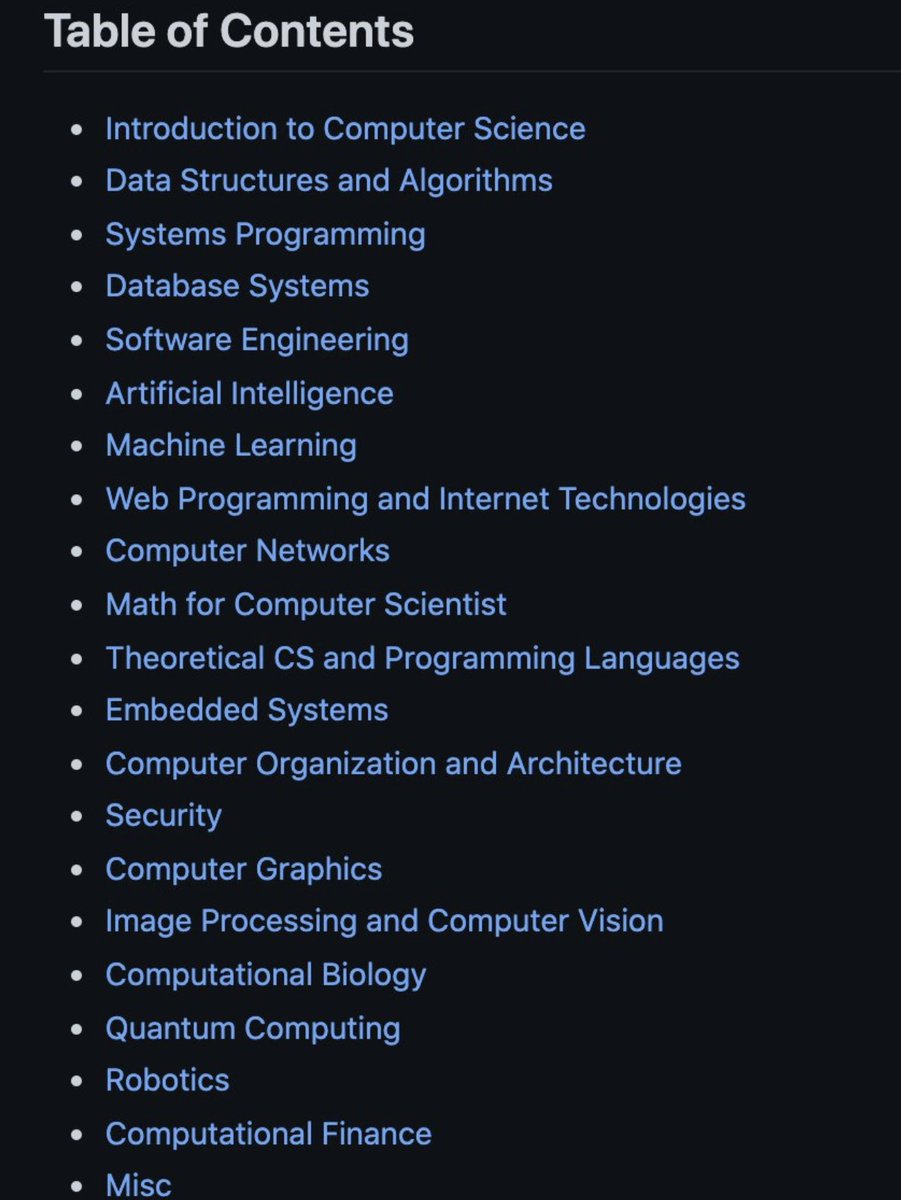
If you are looking to get a background in math before starting with machine learning, here is all the material you need covering the following topics:
• Probabilities & Statistics
• Linear Algebra
• Multivariate Calculus
More than enough to get started.
↓ 1/7
I suspect a lot of students are taking their first information retrieval course this semester, which, at this point, includes PageRank as a core concept. Let's discuss. 🧵 1/n
Parts 1 & 2 of the #BoW2B tutiorial @2021Ecir covered PyTerrier basics and learning-to-rank. Missed it? Catch up w/ slides and notebooks from https://t.co/jwfBYK1oeS.
In 10 mins, @macavaney will start Part 3 discussing neural re-rankers.
@arjenpdevries@lintool Finetuning vs. training? To my understanding, finetuning means you keep the pre-trained weights for the first few layers (as generic) and update the weights of latter layers (as downstream). Training means you update the weights of all layers starting from random or pre-trained.