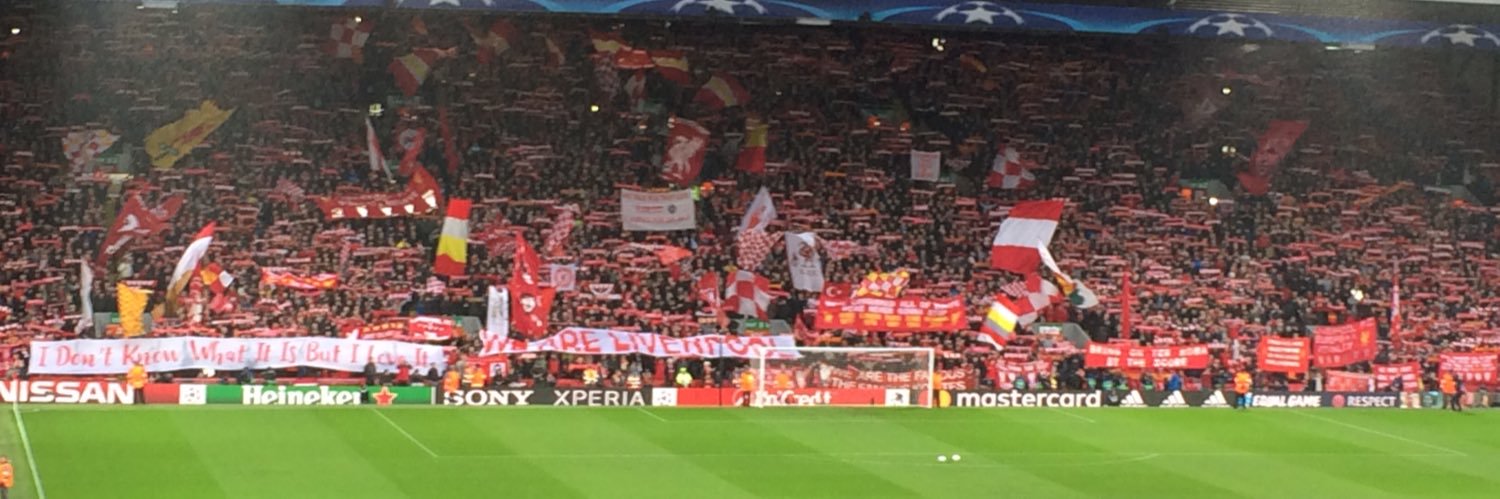
Cambridge city Council I can’t believe you let this happen again. The common is not a small place but to put the main stage outside a restaurant is just Ludacris even after we’ve made contact with you and asked politely if it could be moved to help us all @camcitco@Cambslive
Why can’t we go back to just putting coins in a car parking machine.
I refuse to pay with a parking app.
It’s so hard for elderly people now who are not tech savvy.
The most accurate description of leftists.👇
Pride Month be like:
LGBT: I'm gay
Everyone else: Ok
LGBT: I'm REALLY fucking gay
Everyone else: ok
LGBT: Teach your kids about it or you're a bigot
Everyone else: Okay, that's a little too far—
LGBT: FUCK YOU, YOU TRANSPHOBIC NAZI FASCIST
Everyone else: Yeah… this movement has lost the plot.
LGBT: OmG I'm literally shaking, so oppressed, biggest victim in human history.
And that boys and girls is it in a nutshell.
@Metallica But rubbish this tour as I can’t get a ticket for just one London gig as they are all sold out, however if I want to pay double I can get a 2 day ticket for mega bucks! Bit disappointing and different from Milton Keynes in 93
Let’s nail this state lie once and for all. The government is NOT increasing defence spending by £270 billion during this parliament. It is a ludicrous claim.
Yet one Keir Starmer made to Parliament’s Liaison Committee in March: Labour, he said, will “spend £270 billion MORE (my emphasis) than we would otherwise have done on defence” in this Parliament.
Starmer has always been weak on facts and figures but even by his standards this is a massive porkie.
This is the truth: £270 billion is the total cumulative projected defence spending for the four financial years from 2025/26 up to and including 2028/29 lumped together.
It is NOT even the cumulative increase in defence spending during these years.
Nobody (except perhaps Gordon Brown) speaks about public spending in this way, unless the intention is massively to mislead.
By 28/29 defence spending is projected to be £13 billion a year more than at the start of the period. So not exactly £270 billion. But I guess if you’re going to lie you might as well make it a whopper.
I spent a large part of yesterday trying to explain to people who supposedly are proponents of science what a "confounding variable" is.
Rather than say the same thing again today to about 100 people in about 100 different replies, I'm going to write it all in one place, here.
When scientists do science, in the form of an experiment or study, they will ultimately write it up in a standard report format containing the same sections:
Abstract
Introduction
Method
Results
Discussion
References
One of the most important aspects of the Discussion is a critical analysis of what was done. What went well, what could have been done better, what should be done next time. In particular, the authors attempt to identify if there are any "confounders" which may have influenced the results and rendered them invalid.
Let's take the example of a medicine in a clinical trial. We might, if we are ethical scientists, want to study whether a particular medicine causes adverse effects to those taking it before letting it loose in the wild. So we might recruit some people for a trial, and divide them into two groups. The first receives the actual medicine, the second receives a placebo. We might then monitor the recruits for a few months (or, preferably, a much longer period) on a daily basis and note any illnesses suffered in both groups.
We would then do a statistical analysis on the results from the two groups. If the results of that analysis showed that there was no statistical difference in the levels and types of illness suffered in the two groups, we might then conclude that no adverse effects were caused by the medicine. If, on the other hand, there was a significant difference between the two groups, that would point towards the need for further study and might lead us to conclude that the medicine was the cause of the difference.
The key thing here with our experimental design is that we want to make sure that the two groups in the study - the experimental group who receive the medicine and the control group who do not - are, in every other way, identical. Because if they're not, those differences might have caused the effect we observed, rather than the differences we created in our experiment.
What factors might make these two groups different?
1. Age differences. If one group was older, we might expect they might suffer more illness than the younger group.
2. Gender. Dependent on the medicine, males or females might be more affected. If the groups weren't balanced for gender, this might distort the reported illness results.
3. Health differences. If one group had poorer general health than the other at the beginning of the trial, we might expect them to report more illness during the trial.
These are all examples of "confounding variables". Factors which we did not control but which might influence the outcome and render our results invalid.
So in our experimental design we would want to make sure the experimental group and the control group are closely matched for age, gender and health status.
Which brings me onto climate change.
Climate scientists contend that Carbon Dioxide created by human activity in the industrial age is causing global atmospheric temperatures to increase.
As evidence, they point to an increase in global atmospheric temperatures over the last 200 years or so.
So far so good. Temperatures have, broadly, risen during that time. There are plenty of other things to criticise about this hypothesis and about climate "science" in general but that is for another time.
Yesterday we saw, all over the media, headlines about new record May temperatures of 35 degrees at Kew and Heathrow, and below the headlines was text saying that experts were saying this was another example of evidence of how the climate is warming.
Now I don't deny that it's been hot the last couple of days - where I am it has been around 32 degrees - so I don't doubt that the May record may have been broken somewhere in the country.
But the specific problem I have is with the temperatures at Heathrow and Kew, or indeed anywhere close to London or a big urban area being used as the evidence that the May record has been broken,or that they are evidence of atmospheric warming.
Why? Because of a confounding variable.
When we say a temperature record has been broken, we need to make sure we are comparing apples with apples. So not only do we need to compare temperatures that were measured in the same site using the same type of equipment in both instances - we need to make sure that the sites themselves have not changed.
We know that modern urban areas create a "heat island" effect. The expanses of heat-retaining materials like concrete, asphalt and cement retain heat during the day and release it slowly overnight, leading to higher daytime and nighttime temperatures. Added to which are the many buildings and vehicles in urban areas generating their own heat. All of this means that temperatures in, or close to, an urban area are typically several degrees warmer than in countryside some distance away.
Given the expansion and urbanisation of London over the last century, this effect will only have grown over time.
Arup measured this effect in London and concluded that temperatures there are often 4.5 degrees hotter than in the surrounding countryside (see first comment for link).
This effect obviously varies between different parts of London, as shown on the heat map, and reduces as you move away from central London, but even at Kew, the effect is estimated to cause temperatures to be 0.9 degrees higher than would be the case if Kew was sited in the countryside.
And Heathrow clearly creates its own heat island effect given the scale of the airport and the big expanses of heat absorbing materials there.
So if we are going to use temperatures measured in, or close to, London as evidence of atmospheric warming, we have a problem. We have a significant confounding variable. The warming caused by the heat island effect is going to add to any warming in the atmosphere, and give us an exaggerated result.
You can perhaps forgive tabloid newspapers for running headlines about this, just quoting the raw temperatures measured. They want to make money and it being very hot outside is a great news story. And urban areas becoming increasingly hot in summer is an issue in its own right.
But what is unforgiveable is people who claim to be scientists using these measurements as evidence of atmospheric warming, when there's such a glaring confounding variable influencing the data.
How would a proper scientist deal with this confounder?
Well, they might say "from now on, we will only use temperatures from rural weather stations which are not subject to urban heat island effects, and we will only declare records on the basis of those measurements"
And they might say "we will not use temperature measurements from areas subject to urban heat island effects as evidence of atmospheric warming".
But the Met Office and the climate science people aren't saying that. They're going with the artificially inflated temperatures. Because they have an agenda to push, a vast Net Zero industry to sustain, research grants to chase, and any evidence, however shonky, which backs up the global warming narrative is welcome.
This isn't science!
Winding down the Red Arrows is part of a broader retreat of the armed forces from public life. The Royal Tournament was once a pillar of British culture, as was the great British airshow. There used to be a dozen RAF station open days, but now there is only one official RAF airshow - at which the F35 makes only a cursory appearance, and most of the line up is classic aircraft in private hands. We have stopped showcasing our military. It plays no real part in boyhood anymore - and then the same pinheaded accountant class wonder why nobody wants to join the forces and any sense of national unity is collapsing.
They stopped the Royal Navy's Yeovilton Air Day because of Covid and then never re-started it, and I struggle to think of any military events north of the M62. The BBMF seldom ventures north of Bradford, and the main RAF presence is RIAT which is hundreds of miles away for most people, and costs £70 per adult. The airshow tradition is mainly upheld by small independent events, and though they are excellent, young people don't get the experience of being on an active military base. By the time I was of military age, I'd already been to RAF Valley, Cosford, Leeming, Culdrose, Alconbury, Finningley and Waddington.
Because of this, while I never joined the armed forces, I have maintained a lifelong appreciation for the armed forces and take a keen intertest in defence affairs. Politically, we suffer from defence illiteracy, and we're making it worse because defence of the realm is not integrated into public life.
cc: @thinkdefence@UKDefJournal
🇬🇧 Most British schoolchildren are taught about Magna Carta.
They are taught it was sealed in twelve fifteen at Runnymede.
They are taught it is the foundation of English liberty.
They are taught it is one of the most important documents in human history.
They are not taught what came next.
They are not taught about the eighty years between twelve fifteen and twelve ninety-five when ordinary Englishmen forced three successive kings to write down, for the first time in any kingdom in medieval Europe, what English law was, what English liberty was, and how an English king must govern.
They are not taught about the Charter of the Forest, which restored the right to graze, gather firewood, and live on common land, and which remained in force for seven hundred and fifty-four years.
They are not taught about the Provisions of Oxford in twelve fifty-eight, often called England's first written constitution, which placed the king under a council of fifteen and required Parliament to meet three times a year.
They are not taught about the Provisions of Westminster in twelve fifty-nine, which subjected the barons themselves to the same law they had forced upon the king.
They are not taught about Simon de Montfort, an earl born in France who died for England, who summoned the first Parliament in English history to include ordinary commoners alongside the great lords.
They are not taught about the Statute of Marlborough in twelve sixty-seven, which is the oldest piece of statute law in the United Kingdom still in force today. ⚖️
Seven hundred and fifty-nine years old.
If you've ever taken a debt to court in England, you've used it. 🏠 If you've ever rented a home, you've been protected by it. 👑 If a creditor can't lawfully drag your possessions into the street to settle what you owe, that's because of a law signed seven hundred and fifty-nine years ago.
They are not taught about the Model Parliament of twelve ninety-five, summoned by Edward the First, which became the shape of every English Parliament since.
Eighty years. Three successive kings. The first written constitution in any kingdom in medieval Europe.
It was not given to them. It was not handed down from God or king or Pope.
✍️ It was written. By Englishmen. For England.
🇬🇧 The British write their own history. They always have.
This one needed more than a thread. The full story is in our video, watch it below 👇
Help us remember who we are. Help us remember every British achievement. 👇🙏
👉 https://t.co/rih7iKwnvf 👈
Be part of us. ☝️🇬🇧
Be Proud Of Us. 🙏🇬🇧
New #007FirstLight giveaway!
In collaboration with @IOInteractive, we’re giving away an exclusive James Bond rubber duck 🦆 — not available to buy anywhere.
Follow us & repost this post to enter.
Good duck, Mister Bond.