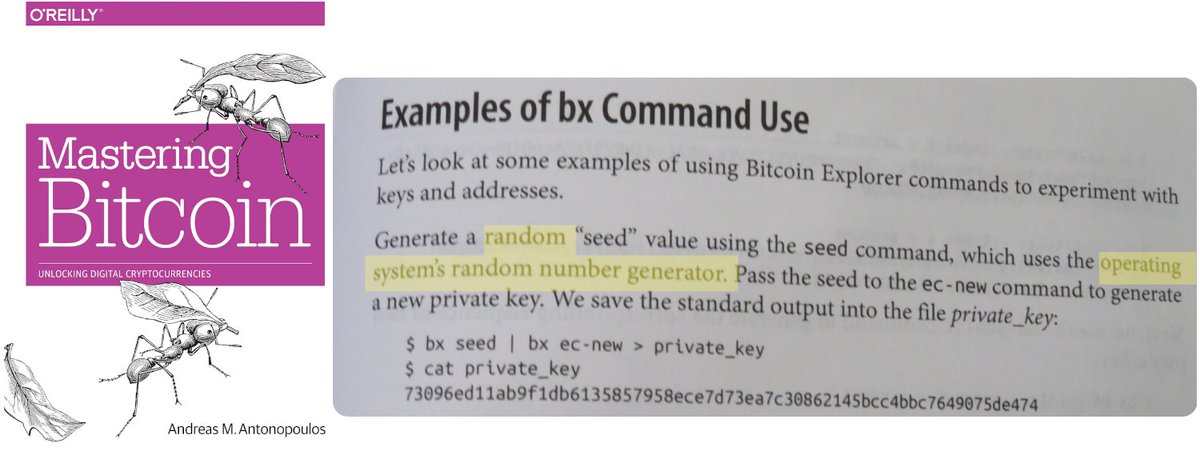
#Bitcoin has been hacked again. People's addresses were being emptied, but they kept their private keys secure. Or has it? Once again, Richard Heart is going to teach you the reality about blockchains that no one else will. You know how all those "wallets" were "being emptied?" I am going to tell you how, and it wil lmake you sad. MILK SAD. Andreas M. Antonopoulos, a talker, not a builder, promoted "bx seed" to generate wallets, and guess what. It lost people a lot of money. Lots and lots. Here's how.
A blockchain requires YOUR work, YOUR labor on YOUR computer that YOU and YOU alone control. When YOU generate your private key using math. It's used to derive your public key. Then people can write public database entries that reference the "address" derivation of your public key as an "owner" and that's what people mistakenly called "sending" cryptocurrency. Nothing was actually sent at all.
So what's the problem? When YOU choose to run software with a mistake in it on YOUR computer. Then YOU can generate, all on your own a weak private key. One that others can predict. Uh Oh. Now you, no matter how private you key YOUR "private key" (or seed words, as we use these days, nearly the same thing.) get "hacked" by anyone that wants to write to the public database called the blockchain, that the private key tied to the "funds" has "moved" them to a new db entry (address.)
Uh oh. You lost your money, because of your own choices and your own software that you chose to run. Really some databse values just changed, but to you, the miseducated public, miseducated by nearly everyone else in cryptocurrency except me. I tell you the truth nearly no one else will or can. I'm the one that tells you about weak RNG (random number generation) being an attack vector BTC users have fallen pray to before. Now I'm telling you again. On the blockchain YOU do all the work, and You are at risk when YOU run the wrong software. No Bitcoin miner could have saved you. My suggestion to you, is that since blockchains are all socially enforced networks anyway, that you try to use the same software everyone else is using, so that if everyone gets hacked at once, you can socially fork to before the hack, and reverse much of the damage. No one else will tell you that. It's wonderful that PulseChain uses the same, most popoular EVM blockchain software available. Safer, more secure, more battle tested.
Thanks to the team at https://t.co/GPp7Y2nee9 for finding the vulnerability. Report on the weak https://t.co/HXSJXcKxfI
On the blockchain it is your labor, your computation, and your writing data to the public ledger by mining your own block, or paying someone else to. You are the network. YOU need to be viligent of whom you listen to and what software you choose to run.
I teach you how to use software better and whats really going on, while the rest of the world hangs you out to dry.
Why MILK SAD? Bunning bx seed on 3.x versions with a system time of 0.0 always generates the following secret:
milk sad wage cup reward umbrella raven visa give list decorate bulb gold raise twenty fly manual stand float super gentle climb fold park
Something simliar happeend in Trust Wallet as well. https://t.co/8KoSBEyBfE
Over the past few days I've been working with a group of whitehats, auditors, and other security leaders to try and solve the hardest part of responsible disclosure: finding the right person to talk to.
During last's week @TheSecureum workshop, attendees fuzzed solmate using our new fuzzer medusa (https://t.co/AE9ULmOf3F)
Well @magnetto90 and @milotruck ended up finding a bug directly in solmate :)
We are not kidding when we say that everyone should use a fuzzer
We just released Solidity 0.8.20! 🚀
This latest version includes a range of improvements in the via-IR pipeline and improves the list of events exposed in the contract ABI, and, most importantly, support for Shanghai!
📖: https://t.co/Asyc7wfDAo
💾: https://t.co/iyPjddX8vr
1/ We’re happy to announce DeFi Security 101, a one-day intensive course for developers on security in web3, directly preceding DeFi Security Summit 2023.
July 14th in Paris, France
Apply: https://t.co/kqXPA1EJDr
Thread of our AMAZING workshop leaders: 🧵👇
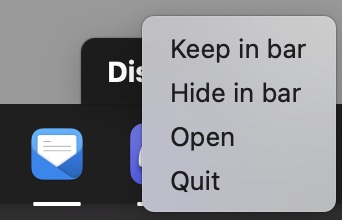
@Sidebar_App You didn't understand what I meant. As shown in the picture, there is no 'setting' button. I remember seeing it when I first used it, but I don't know why it disappeared later.
rekt in prod... eventually.
@iearnfinance retuns to the leaderboard, having lost over $10M.
1156 days to spot an eight-figure vulnerability in one of DeFi’s best known protocols.
It’s a big week for DeFi stalwarts getting rekt.
Who will be next?
https://t.co/KVtSCmnc2Q
@Sidebar_App I can't seem to find this button anymore. I remember it being there when I first started, but now it's gone. Is there an option to disable it? I don't recall turning it off before.
ERC777s actually reenter differently when sending coins vs receiving them!
Reentrancy is the classic evil surprise when writing for the EVM. But just when you thought you knew how to defend against it, the ERC777 standard for callbacks on ERC20’s adds this new layer of hurt...