Governance in Web3 sits at the crossroads of decentralization and speed, and choosing between a full DAO and a lighter “partial governance” model can make or break your project.
Full DAOs promise on-chain transparency and token-weighted voting, but real-world data exposes critical drawbacks. Participation often falls below 10%, leaving proposals vulnerable to low turnout and vote concentration. In September 2023, disgruntled members “rage-quit” Nouns DAO, withdrawing $27M from its $50M treasury in just days. Arbitrum’s DAO even launched a “Watchdog” bounty offering up to $100k per mismanagement report, an expensive remedy for stalled grant votes
Partial governance, multisignature wallets, small councils or founder-led steering committees, strikes a different balance. By limiting critical transactions or pivots to 3–5 trusted signers, you dramatically reduce voter apathy and speed execution from months to days. Multisig setups, for example, guard against hacks and key-person risk by requiring multiple co-signatures, making them one of the safest treasury tools in DeFi.
Full DAOs still excel when broad community ownership and maximal transparency are core to your mission. LidoDAO enforces a 5% quorum on Snapshot votes and a 50% majority threshold, ensuring only proposals with genuine engagement advance. But if your project demands nimble fundraising, rapid product pivots, or compliance simplicity, consider a hybrid: delegate urgent, high-impact decisions to a core council while reserving strategic, lower-frequency votes for the wider tokenholder base.
No one model fits all. Map your governance structure to your project’s scale, maturity and true decentralized ethos, and turn governance from a bottleneck into your competitive edge.
5 Critical Tokenomics Mistakes Still Killing Web3 Projects in 2025
The success of any Web3 project isn't a matter of chance; it's a science. We approach it through the fundamental equation: Success ≈ (Utility × Demand) / Risk. Neglecting any variable in this formula inevitably drives value toward zero. This isn't just theory—it's a conclusion drawn from analyzing the mechanics of over 50+ projects. Our focus is on moving from academic principles to tangible on-chain outcomes.
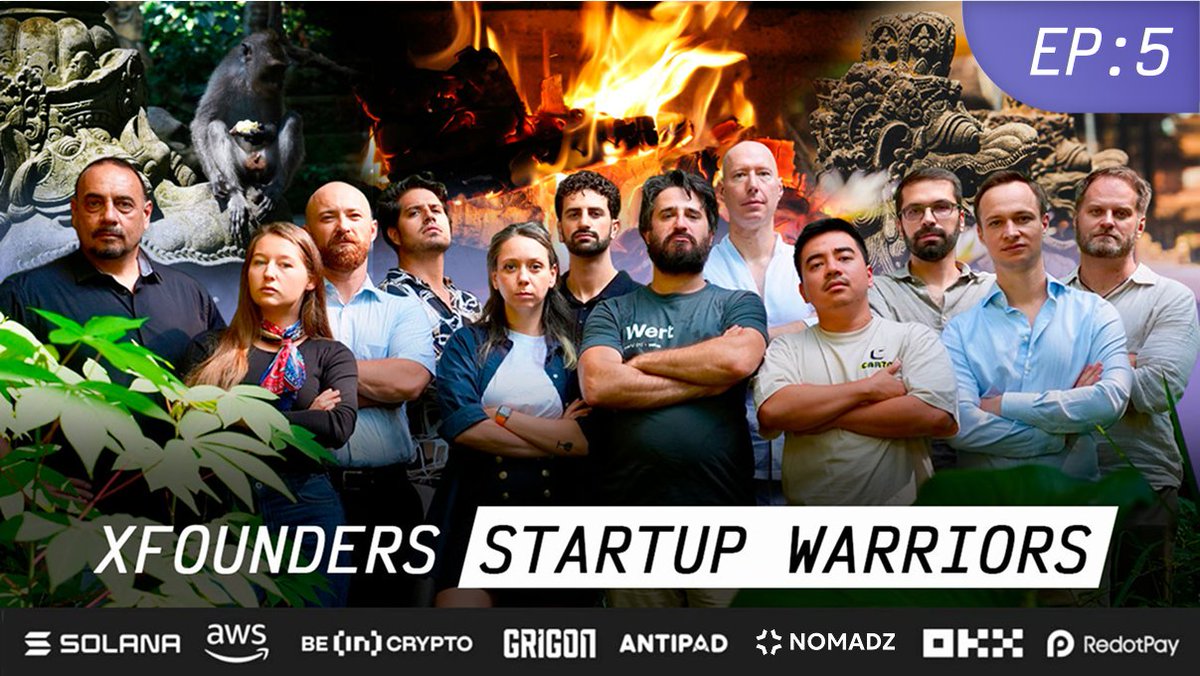
🔥 Episode 5 of Startup Warriors is here — and the pressure is on.
This time, Grigory Gonastarev - founder of @GriGonTok leads the episode, helping founders break down and rethink their tokenomics under expert guidance.
No fluff. No shortcuts. Just hard questions and honest feedback on whether their models can stand the test of #Web3 .
📊 Time to prove it’s more than just hype.
👉 Watch now on YouTube: https://t.co/KYuUVN7UM8
Backed by @SolanaFndn@beincrypto@GriGonTok@RedotPay@okx @Antipad_Web3 @nomadz_co
#web3startup #founderstory #startups #xfounders
@KarlPfleger@Cryptovimmie@privateAIcom If there is a reason why longevity research is not getting the funding and attention it deserves, it's people like Mr. Pfleger. It is disgusting to see someone who is contributing nothing and keeps criticizing people that do. Shame on you!
Interesting insights from $PGPT, appreciate the talk about #FHE front @randhindi. Excited to know that organizations like @coinfun_io are supporting this important tech development.
Excited to talk alongside brilliant people about why #FHE is foundational block of #deAI becoming a reality and how from the corporate giants $APPL & $GOOG to the most innovative #Layer1 everyone including @privateAIcom is adopting it. $PGPT @zama