Ahenk'i yayınladık: açık ağırlıklı, Türkçe metinden sese (TTS) modeli.
Sayıyı, tarihi, fiyatı ve telefon numarasını doğru okuyor. "mı" ile biten sorularda sesi yükseliyor. Talimatla kızgın, neşeli ya da şaşkın konuşuyor, gülebiliyor.
Videodaki bütün sesler Ahenk'in. Sesi açın.
مدير تنزيل اسمه Plexo
يجمع لك أكثر من اتصال إنترنت عشان يسرّع تحميل الملفات
مثلاً عندك واي فاي سرعته 50 ميجابت، ونت جوالك عبر USB سرعته 30 ميجابت، Plexo يستفيد من الشبكتين لتحميل أجزاء مختلفة من الملف، ثم يجمعها لك بملف واحد
مفتوح المصدر
💾 مطور لم يفهم أين تذهب مساحة Mac
نشر مطور على Reddit أن ملفات النظام تأخذ مساحة كبيرة على Mac ولم يفهم السبب.
قضى شهرا يبحث عن هذه الملفات وما يمكن حذفه، ثم نشر MacSpace مجانا ومفتوح المصدر.
يقول المطور إن الأداة تكشف ما يملأ System Data وتحذف ما هو آمن، وتوقف Apple Intelligence وتحذف نماذجها.
ويقول أيضا إنها لا تجمع أي بيانات.
تعمل على macOS 27.
لم يجد المطور جواب جاهز، فصنع الأداة بنفسه.
نقول وداعاً للبرامج، أمزح والله 😂
هذا مشروع اسمه REA، فكرته باختصار أنه يعطي وكيل الذكاء الاصطناعي القدرة على عمل هندسة عكسية للبرامج والتطبيقات حتى لو ما عندك السورس كود.
خلنا نقول إنك تستخدم تطبيق وعجبتك فيه ميزة معينة، وتبي تعرف كيف المطورين سووها عشان تسوي شيء مشابه في مشروعك.
لكن ما عندك السورس كود، فالموضوع يصير أصعب. تحتاج تنبش داخل البرنامج نفسه، وتشوف الملفات والدوال والاستدعاءات وتحاول تفهم كيف الأشياء مرتبطة ببعض.
وهنا دور REA بدل ما أنت تجلس تسوي كل هذا الشغل بنفسك، تخلي الوكيل يطلب من REA يفحص البرنامج ويبحث عن الأشياء المرتبطة بالميزة اللي تسأل عنها، ثم يرجع له بالنتائج والأدلة اللي حصل عليها.
مثلاً تقول للوكيل افهم لي كيف البحث في هذا التطبيق يشتغل، ورني الأدلة، وبعدها سو لي شيء مشابه.
الوكيل يستخدم REA عشان يتتبع الكود والوظائف والاستدعاءات المرتبطة بالبحث، ويحاول يبني صورة واضحة عن طريقة عمل الميزة، وبعدها يقدر يستخدم اللي فهمه في بناء شيء مشابه.
المشروع مب خاص بنوع واحد من البرامج. يقدر يتعامل مع البرامج الأصلية، وتطبيقات JavaScript وElectron، وتطبيقات أندرويد، و.NET، والمواقع، وحتى بعض أنواع الـ Firmware والـ bytecode.
ملاحظة للي ما يعرف أدوات مثل Ghidra وIDA وHopper، هذه أدوات متخصصة في الهندسة العكسية، يستخدمها المطورين والباحثين لتحليل البرامج بدون الحاجة إلى السورس كود.
تقدر من خلالها تشوف أشياء مثل الـ assembly والـ pseudocode والدوال والاستدعاءات، وتحاول تفهم كيف البرنامج يعمل من داخله. REA يستفيد من هذه الأدوات ويجعل وكيل الذكاء الاصطناعي قادراً على استخدامها ضمن عملية التحقيق والتحليل.
ملاحظة أمنية ثانية REA مب sandbox، لذلك إذا كنت بتحلل برنامج مشبوه أو ملف خبيث، لا تفترض أن تشغيله من خلال REA آمن لمجرد أن التحليل يتم محلياً.
بعض عمليات التحليل والتشغيل تستخدم صلاحيات المستخدم نفسه. كذلك REA ما يرفع التطبيق لسيرفراته، لكن نتائج التحليل ممكن تصل لمزود نموذج الذكاء الاصطناعي الذي تستخدمه.
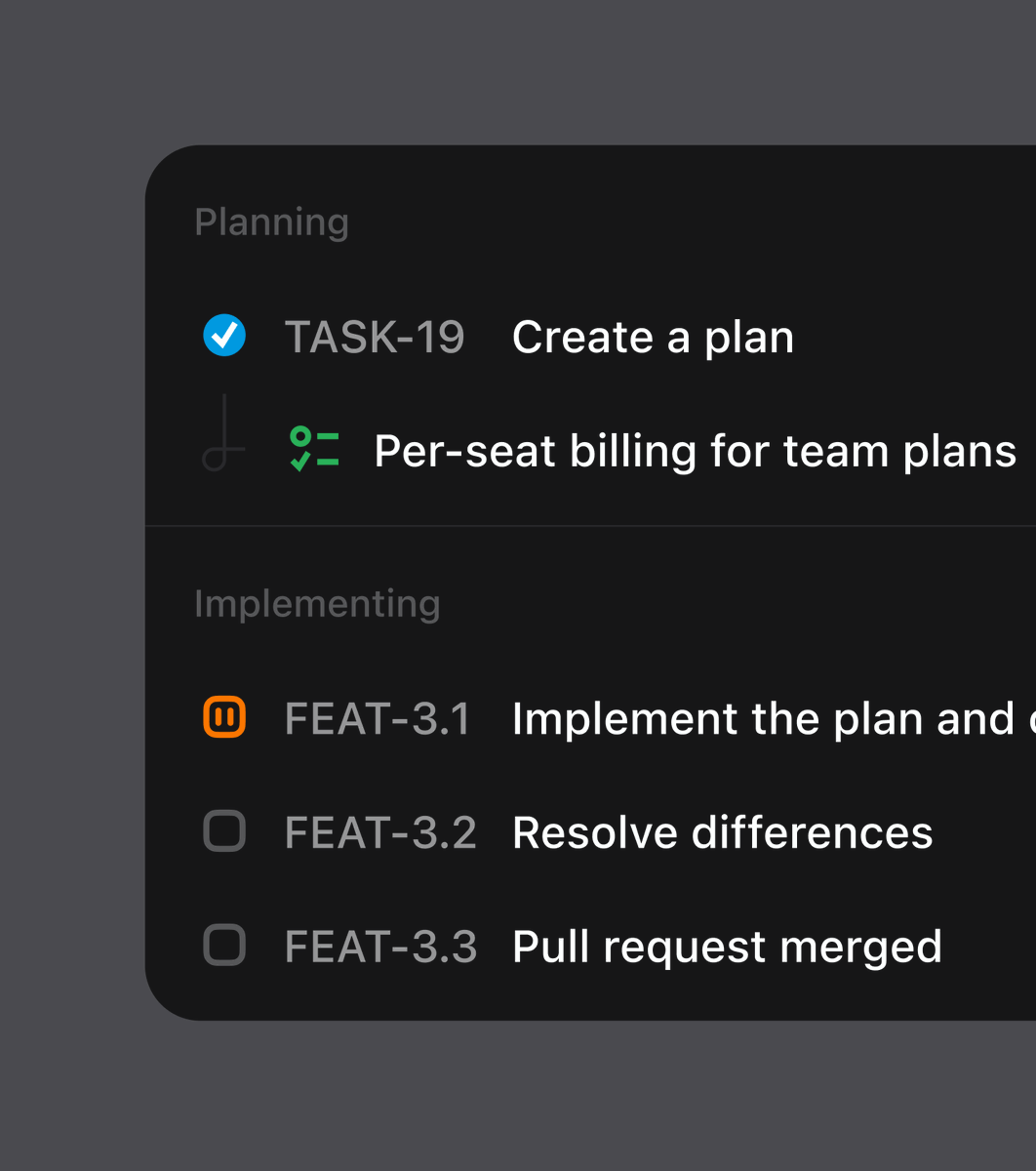
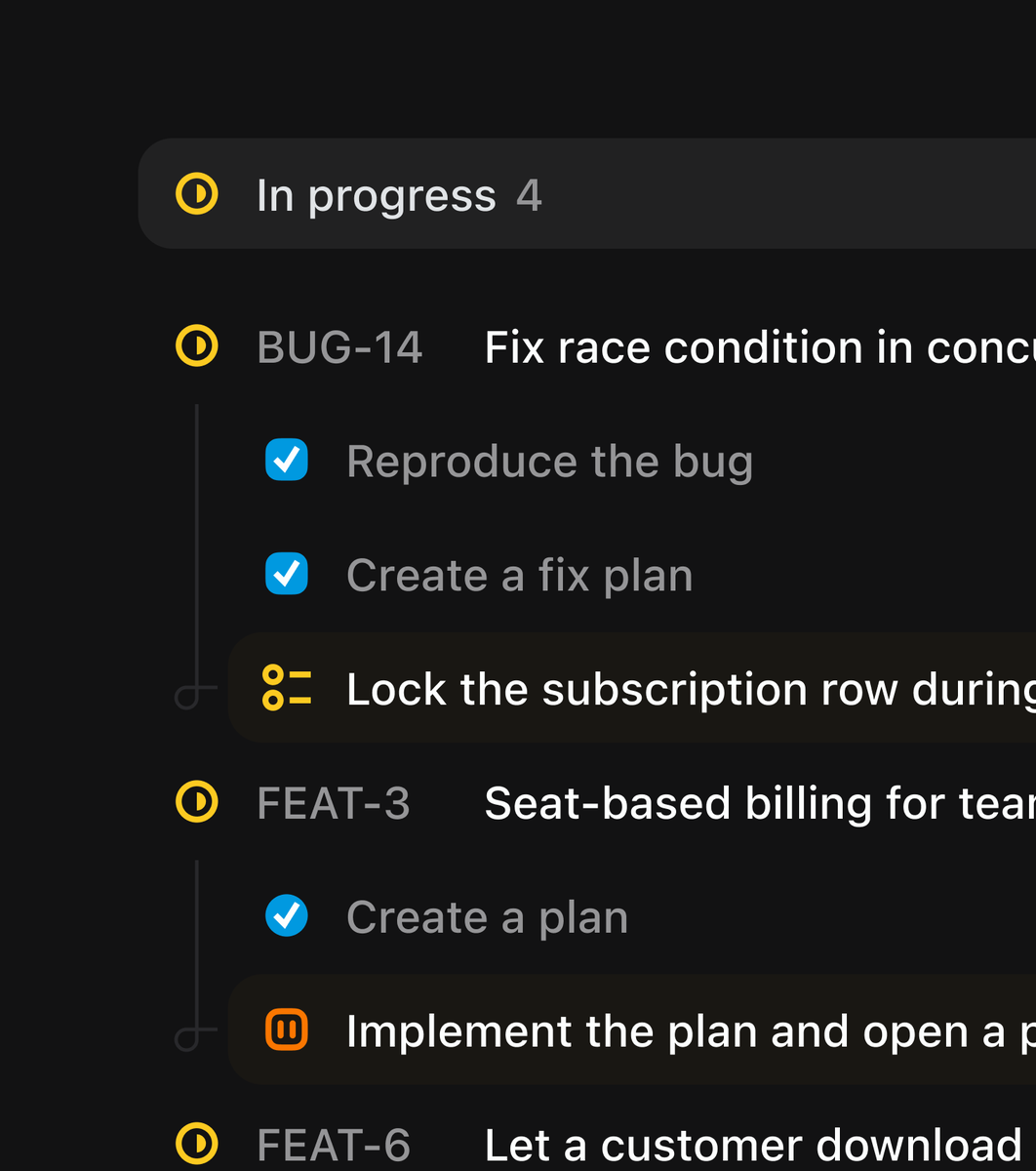
Some details around Tickets. Human tasks, agent jobs and clear indicators what needs action next. The goal is to oversee and unblock, rather than manage.
Today I call upon the blockchain industry to calmly begin planning for "bunker mode". My personal recommendation is to set in motion a controlled mass migration of assets to fresh addresses, i.e. addresses whose pubkeys remain hidden behind a hash.
Holders, starting with large and sophisticated ones, should consider moving the bulk of their funds to addresses that have never signed a transaction. And when they do sign one, they should also move remaining funds to a new address (possibly generated from the same seed phrase).
Don't rush. While I believe there is cause for action a rushed migration would do more harm than good. Don't panic either. Moving assets to protected addresses is a simple, preventative step which does not require new cryptography or new wallets.
IMO it is now reasonable to brace for the possibility that ECDSA breaks before qday, in the worst case in months not years. By "break" I mean fast private key recovery (e.g. in one week) on available hardware (e.g. a large GPU cluster).
Recent days have been humbling for human mathematical intuition. Long-held, unquestioned hypotheses have fallen. This includes the n log(n) bound for integer multiplication and the 3SUM conjecture. In hindsight, May's unexpected disproof of the Erdős unit distance conjecture was our warning shot.
Yesterday's OpenAI drop made it clear that mathematical superintelligence is upon us. They say there are weeks where decades happen. We are about to live through weeks where centuries of mathematical progress happen. Could our magic 64-byte ECDSA signatures be too good to be true? Was it just security through obscurity all this time?
Elliptic curves feel especially vulnerable to superintelligence. Curves carry rich structure, with room for fancy tricks like Schoof, Frobenius, pairings. (By contrast, hashes are designed to minimise algebraic structure.)
Separately, as Ewin Tang can attest, an efficient quantum algorithm sometimes foreshadows an efficient classical one. We should be open to the possibility of a classical counterpart to Shor that breaks elliptic curves and RSA at once.
Also noteworthy is the striking under-representation of cryptographic breakthroughs among the 722 mathematical results OpenAI published. I've witnessed first-hand the US government censoring academic quantum cryptanalysis results. Backroom interventionism is my base case.
I urge large, sophisticated actors to lead by example. Project11's "risq list" (bitcoin-risq-list.projecteleven[.]com) is a great tracker of exposed BTC pubkeys. Binance, Bitbank, Robinhood, Bitfinex, and Tether have an opportunity to harden their cold storage. Next month I'll address institutions in London in a live Q&A (forum.ethereuminstitutional[.]org/london-2026).
Again, please do not rush. Wallets holding under 50 BTC enjoy partial cover from "Satoshi's shield", i.e. his 20K exposed addresses that hold 50 BTC each. Load-bearing signers like oracles and L2 security councils should consider rotating ECDSA pubkeys with every signed message and/or multi-signing with a hash-based schemes like SPHINCS.
Exiting bunker mode safely will require post-AI cryptography. My inclination is to go all-in on hash-based cryptography and avoid structured mathematical assumptions entirely, whether from curves, lattices, or isogenies. A single battle-tested hash (e.g. from the SHA or BLAKE families) yields plausible post-AI security.
The Ethereum roadmap on strawmap[.]org fully embraces hash-based cryptography with end-to-end formal verification as a response to the quantum threat. Those timelines must now be revisited and accelerated in light of mathematical superintelligence. I'll be pushing for maximum defensive acceleration.
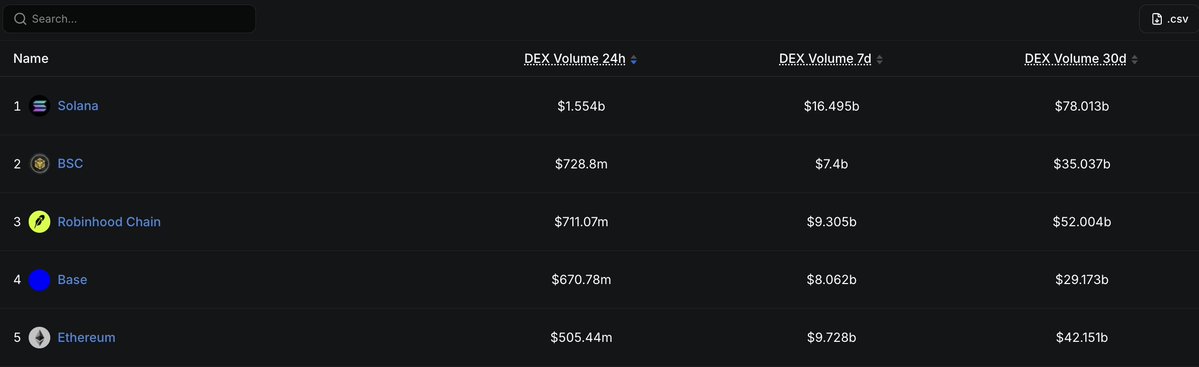
On-chain volume update....
Based on 24hr DEX volume:
1. Solana - $1.554b
2. BNB - $728.8m
3. RH - $711.07m
Based on 7d DEX volume:
1. Solana - $16.495b
2. Ethereum - $9.728b
3. Robinhood- $9.305b
Based on 30d DEX volume:
1. Solana - $78.013b
2. Robinhood - $52.004b
3. Ethereum - $42.151b
Big drop in on-chain volume in the last 24 hrs (to be expected on a weekend). $BNB in second place closed followed by RHC based on 24hr on-chain volume.
ReUI v2.7.0 is live 🚀
Our biggest drop yet bringing the collection to: 1,175 free & open-source components + 629 Pro blocks!
→ Free Signature Pad & Time Picker for @shadcn.
→ 12 free Signature Pad components.
→ 13 free Time Picker components.
→ 17 Pro platform monitoring charts.
→ 5 Pro Rich Text Editor blocks on @tiptap_editor.
→ 2 Pro Whiteboards blocks on @excalidraw.
→ 6 Pro Dev Ops console blocks.
→ 13 Pro slide-over sheet blocks.
→ 7 Pro pricing blocks.
→ Pro AI chat assistant.
→ 2 Pro CRM blocks.
Try it live:
https://t.co/IxsD9Ptc0T
si están diseñando una app grande, pueden pedirle al agente que la implemente usando arquitectura hexagonal.
es una buena forma de evitar que termine mezclando lógica de negocio, infraestructura y frameworks por todos lados, y lo empuja bastante a mantener principios de clean code y SOLID.
El prompt de backend de todo vibe coder:
"Mi app vibecodeada se cae en producción.
- Validá todo lo que entra.
- No concatenes SQL.
- Hasheá las contraseñas.
- Sacá los secretos del repo.
- Poné rate limit en el login.
- Timeouts en cada llamada externa.
- Reintentos solo en errores transitorios.
- Hacé idempotentes los pagos.
- Transacciones donde haya más de una escritura.
- Índices en lo que filtrás.
- Matá los N+1.
- Pool de conexiones, no una por request.
- Migraciones versionadas.
- No borres columnas en el mismo deploy.
- Logs con request id.
- Health check que revise la base.
- 429, no 500, cuando te saturen.
- Backups y un restore probado.
- Entendé el dominio.
- Quedate de guardia el viernes.
Que no se caiga. Sin errores."
Lo gracioso es que eso es el checklist de backend.
Guardalo. Pegalo en tu agente.
Los últimos dos hazlos tuu.