Excited to announce the protocol upgrades are complete & the 2nd peer prediction competition starts Wednesday.
Many improvements. The app should be easier to navigate & scores easier to understand.
We're also launching a @worldnetwork mini app.
Try it: https://t.co/CPF7o6I1Fx
This is a great example of Catalini’s “measurement gap”.
Formal verification + Lean can make proof-checking far cheaper and more rigorous.
But FV still depends on humans deciding what the system is, what properties matter, and what assumptions the proof is allowed to make.
So the bottleneck doesn’t disappear. It just moves upstream.
Who can I trust to model this system correctly? Who understands the edge cases, the incentives, the threat model, and the assumptions the proof won’t cover?
As AI helps us produce more software, media, research, ideas and decisions in general, it's this last mile human verification that becomes the scarce thing we'll all be in need of.
At @OlenaProtocol our goal is to make it a little less scarce.
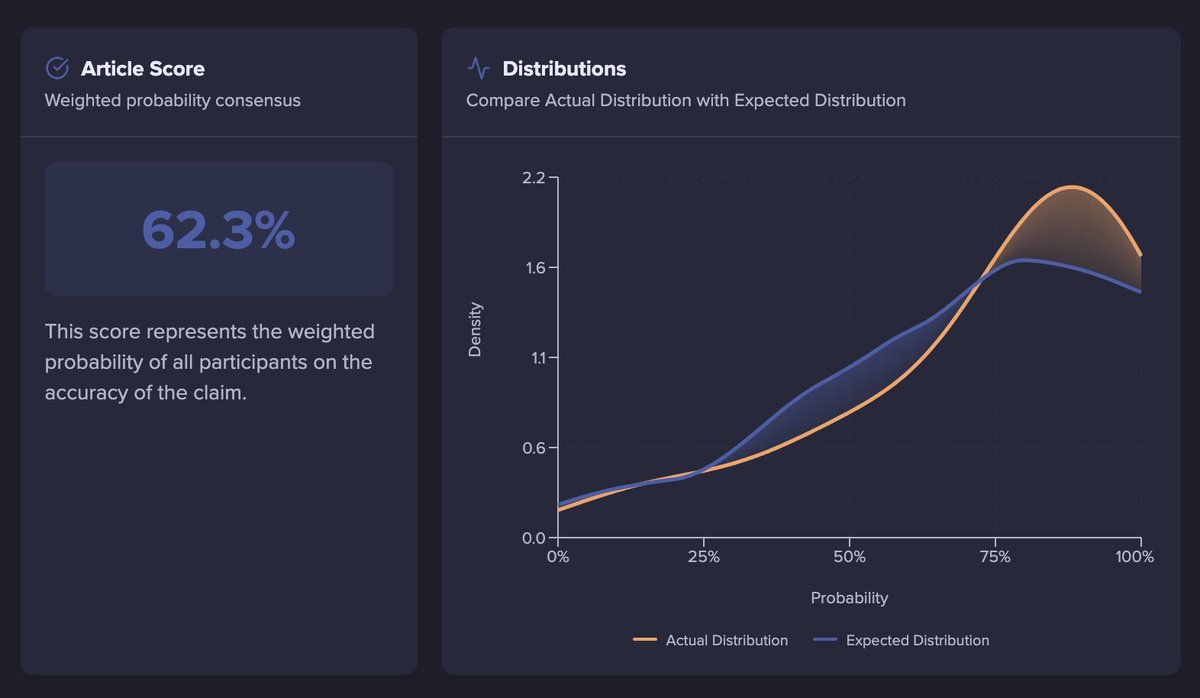
Exhibit A: Polymarket. $13.3m dollar traded. Odds of 61% for eventual winner.
Exhibit B: Olena. Tiny fractions of that dollar number spent. Odds for eventual winner 62%.
What's more interesting is look at the surprisingly popular hump. The sharps on Olena had the odds at about 90%. When track records develop more, these sharps will drag the aggregate towards them a lot more.
But even now, in beta, with comparatively few users, Olena beat Polymarket.
@EliBenSasson Exactly. Many of our users at @OlenaProtocol aren’t crypto-native and have never even heard of Starknet. With passkeys + sessions (via @cartridge_gg), the UX is even better than most Web2 apps. That’s what native AA enables.
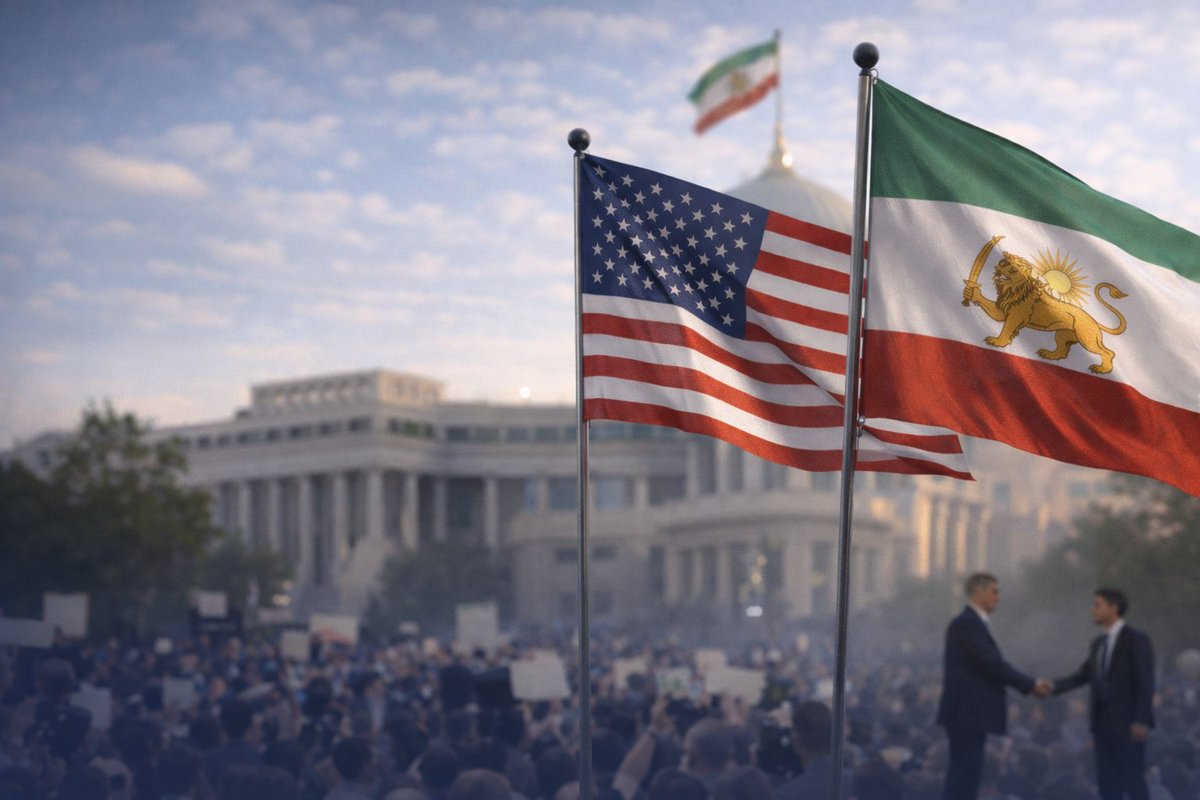
@GunterFehlinger@POTUS@khamenei_ir@SecWar@PahlaviReza@SecGenNATO Everyone’s focused on when. What matters is the outcome. "Will Iran become a stable democracy after a US backed regime change?"
We turned this into a live forecast. Share your probability.
https://t.co/jBsXwsa5VI
The very first Olena market:
If U.S.-backed regime change occurs in Iran, Iran will become a stable democracy within 10 years.
(free multiparty elections + peaceful transfer of power + government has sovereignty over entire country)
First market is live, on a topic I’ve been interested in and monitoring for a while. Really curious about the results. Come share your forecast and enlighten us.
https://t.co/J9HUikzKfv
The very first Olena market:
If U.S.-backed regime change occurs in Iran, Iran will become a stable democracy within 10 years.
(free multiparty elections + peaceful transfer of power + government has sovereignty over entire country)
Joining our first peer prediction competition tomorrow and not sure how it works? Here’s a quick guide to doing well.
And if you're curious what it looks like, here's a sneak peek at how you'll answer questions: https://t.co/2hKOuktJwz
Want to build World of Warcraft onchain? Starknet can handle it.
Want to build an onchain Robinhood with great UX? Starknet can handle it.
Want to build a Visa-scale payments app? Starknet can handle it.
Want to build an onchain social network? Starknet can handle it.
Want to build AI agents that execute, verify, and settle strategies onchain? Starknet can handle it.
Whatever you’re building, Starknet was built to handle it.
Just build on Starknet.
We're bringing a lot of industry first innovations to the industry. I'm going to post about one every day for the next while.
Today's post is about our new approach to airdrops. The first few airpdrops in the industry worked out well because users didn't know they were going to get one in advance. So they just used the protocol without incentives.
Since then it's been a bit of a disaster. Teams are pressured to promise airdrops because everyone was doing one. To avoid simply giving tokens away to people that offered no value in return, teams started stipulating metrics to be met. Any time rewards are on the table however, these metrics are gamed. So airdrops have achieved little but cost projects money, have a detrimental effect on the token price, with vanishingly little gained in return.
The beauty with @OlenaProtocol is it is designed from the ground up to be highly resistent to gaming. You can't set up endless accounts, you can't code up bots, you can't collude on the reg without it costing you dearly under protocol rules.
So we have the unique advantage that we can simply airdrop users voting power at the beginning, no strings attached, and let them try to convert their voting power to reward tokens by participating under protocol rules as they would anyway. User behaviour is heavily constrained to produce honesty by default.
We thus benefit enormously from the airdrop as we get crucial data to hone our mechanisms/models. On the other hand, the users with the most value add, the ones that rise to the top of leaderboards, could end up with life changing amounts of money if Olena becomes what we hope and expect it'll become.
No wallets. No mnemonics. No repeated signing.
Passkeys + session keys = sign once, Web2 UX on Web3.
This is how dapps should feel (built with @cartridge_gg ) 👇
We're giving away 1% of our future token supply as rewards to good forecasters over the duration of this series of competitions we're running.
Sign up flow attached. Link in following tweet.
No matter which way one looks at prediction markets I just see us ending up where we've always been.
Sports & politics betting for retail and products restricted to institutions with extensive disclosure rules that pertain to markets with natural hedgers & holders.
In a nutshell: This is a truth extractor for forecasts. Dampens copy paste, rewards honest, well-supported insight.
If that sounds interesting, details below: