@pilcrowonpaper I like prisma but beware if you need polymorphic associations there’s very very little support (if any, haven’t looked in awhile). Drizzle works best imo
The ACTING HEAD OF THE DOJ CRIMINAL DIVISION just stated the following regarding Section 1960(b)(1)(C) and third-party liability for software developers:
“We may under certain circumstances bring cases under Section 1960(b)(1)(C), which prohibits the transmission of funds that the defendant knows are derived from a criminal offense, or are intended to be used to support unlawful activity. However, going forward, consistent with principles of notice and fairness, let me make the following clear:
Many developers have relied on regulatory guidance, to suggest that, non-custodial cryptocurrency software does not constitute an unlicensed money transmitting business. While that guidance may not be binding on the department, its implications can of course factor into prosecutor’s charging decisions. Therefore, where the evidence shows that software is truly decentralized and solely automates peer-to-peer transactions, and where a third-party does not have custody and control over user assets, new 1960(b)(1)(C) charges against the third-party will not be approved. Though, if criminal intent is present, other charges may be appropriate. All of a subject's conduct and the services they provide end-to-end will be considered.
Generally, developers of neutral tools, with no criminal intent, should not be held responsible for someone else's misuse of those tools. If a third-party's misuse violates criminal law, that third-party should be prosecuted – not a well-intentioned developer.”
@horsemankukka@pilcrowonpaper Correct me if I'm wrong but unless you specify a charset on text/* it must be assumed it is us-ASCII. See here: https://t.co/fmNgUmJ2gX and this one specifies that application/json MUST be utf 8, but back in the day they did allow 16/32 as you say https://t.co/sV9YfDGUtl
I've been working on prediction markets for events whose outcomes aren't just "yes" or "no."
Instead of betting on just one outcome, traders in Distribution Markets can express how likely they think each different possibility is across the whole infinite range of outcomes.
1/
BREAKING: @ensdomains is now integrated into @Venmo and @PayPal
You can now send funds to crypto wallets connected to .eth addresses
Ethereum's adoption continues...
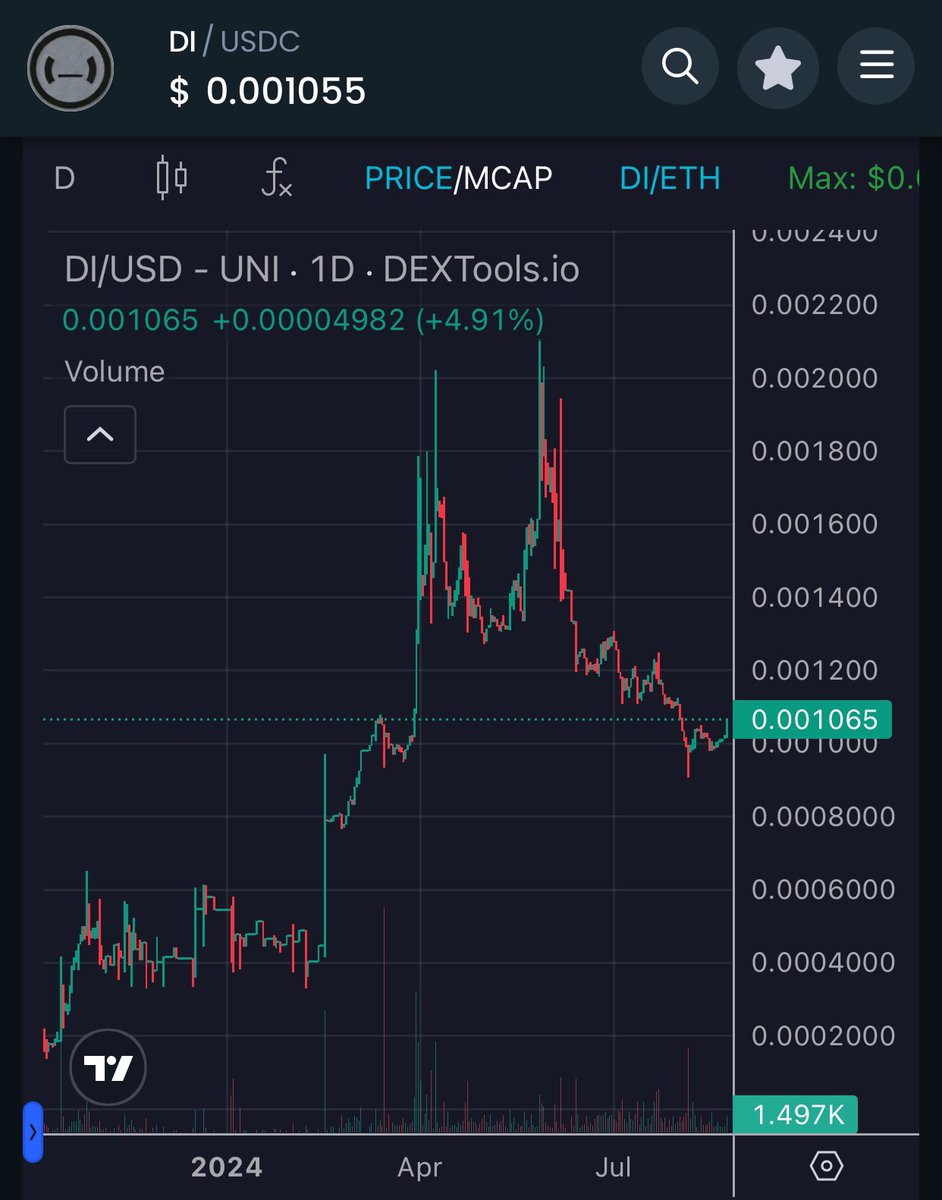
@krugermacro $di
Degen Index
0xff541139c60bb38ce2159a13d656f0f38aa96ff4
No socials, chats, etc. Just a tradable token.
Price action is correlated with the exotic pairs it has with other lowcaps. Results in averaged price action that can serve as a sort of index, for degens, thus the name.
Folks, presales were needed back in the day to fund LP at a 1:1 ratio in a full range LP. That stopped being necessary years ago…
Token taxes were needed back in the day, because there wasn’t really a way to generate revenue unless you traded/sold token. Lp yield was inaccessible unless you pulled. That stopped being necessary years ago as well.
If you are launching tokens with Uniswap v2 lp, you are essentially using Windows ME while windows 10 is available. If your dev is pushing for v2 lp, find a new dev.
I am sick of the outdated copy and paste low effort larp devs running the narrative. They are behind, wrong, and lame. Fired
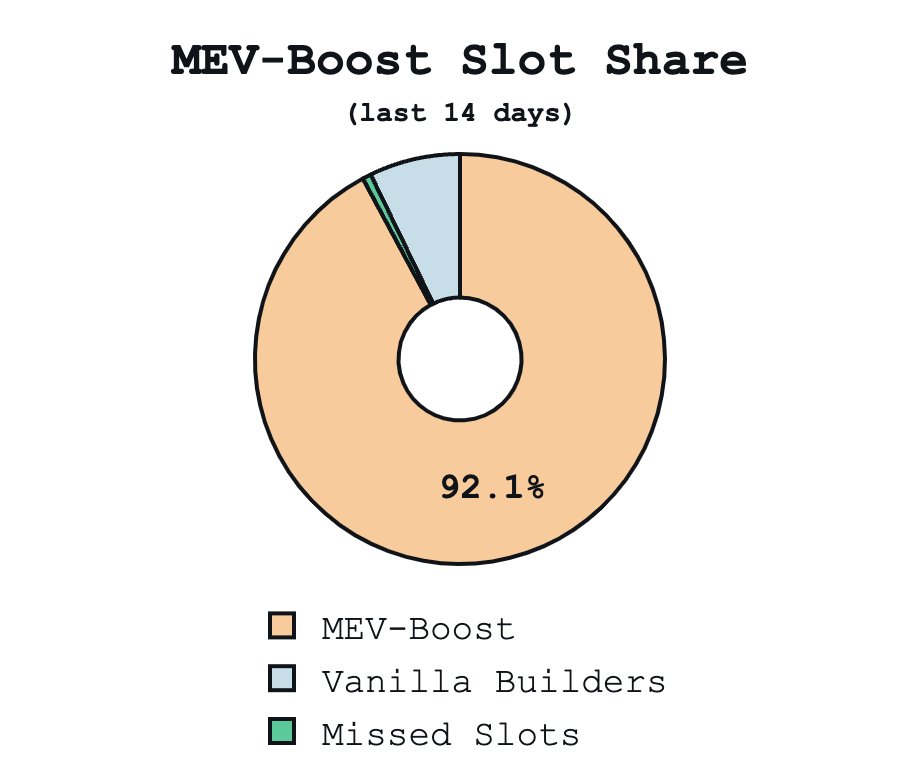
A lot of people don't know this, but over 90% of the blocks in Ethereum are built by MEV block builders.
Sounds scary, but you shouldn't be worried.
An explanation of why this happens, and how it keeps Ethereum decentralized🧵:
Software estimates are one of the oldest lies we tell ourselves.
We all know they don't work, but pretend they mean something and later feel enraged when shit hits the fan.
I focused a big part of my undergrad on software estimation.
After graduating, I wrote plenty about the topic.
Then, I started working for a company where I spent years researching how to make better estimates. We sold multiple millions of dollars of software using the tools I built.
I read everything there's to read. I could recite Steve McConnel's "Software Estimation" book from top to bottom.
Here is the most important lesson I learned:
People can't estimate software. It doesn't matter who they are or how much experience they have.
Estimating software reliably is science fiction.
And the best part:
They will ask you to estimate something. They will tell you they understand it's not exact. They will promise they won't hold you accountable.
And then they will. They always do.
There are two solutions for this. Let's start with my recommendations for those who don't have a choice:
1. Remove "quick," "simple," "straightforward," "easy," and every similar word from your dictionary. Never use them. Don't let others use them when referring to your work.
2. Never volunteer an estimate. Everything you say will be used against you.
3. When forced, estimate work you know you can complete today. Always estimate with a range: "It will take me 2 - 4 hours."
4. Estimate anything you won't do today in days and weeks. Say, "I should finish that feature sometime this week." Do not estimate future work in hours.
But we all know your manager will force you to give an estimate. Here is what you should do:
1. Estimate how long you think it will take you to complete the task.
2. Multiply the number by 3. This will be the lower range of your estimate.
3. Double the lower range of the estimate. This will be the upper range.
Example: If you think something will take you 1 day of work, say "between 3 and 6 days."
Here is the funny part:
It won't take you between 3 - 6 days. This is as much bullshit as any other method you can think of.
The true solution for this problem:
Work for a company that doesn't care about estimates.