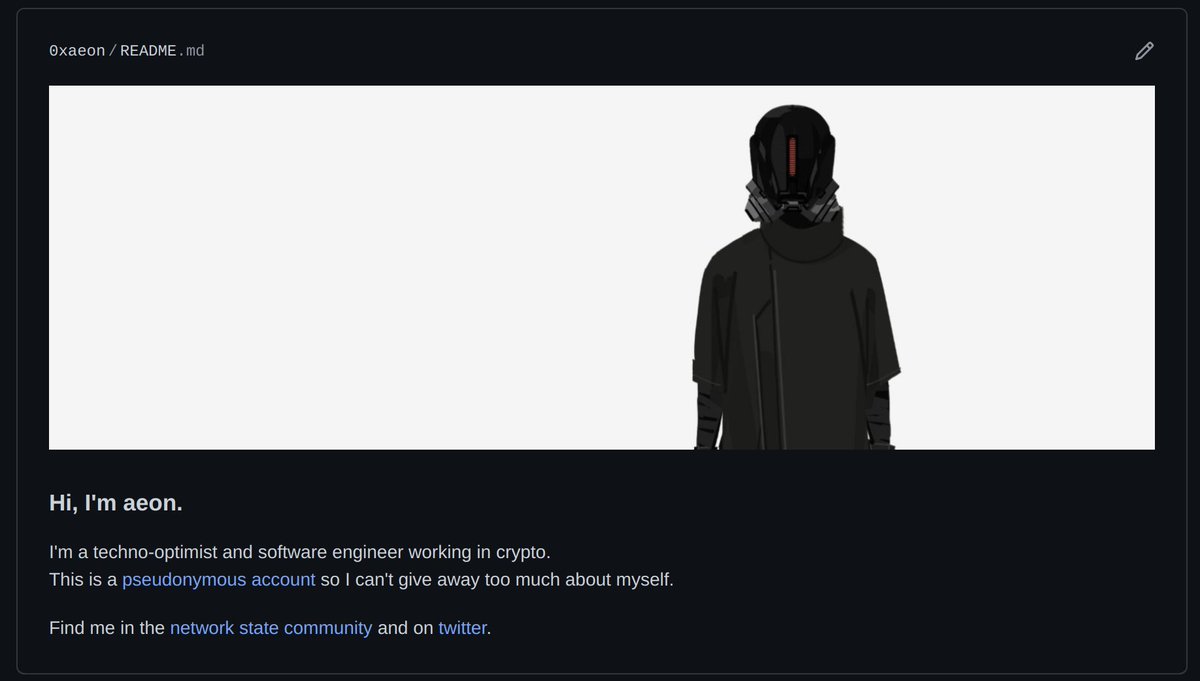
The pseudonymous economy is a crucial part of the network state.
@balajis has talked about this a long time ago. It's materializing now with crypto.
Learn about its importance and how to create your own pseudonymous identity in this essay.
https://t.co/yvsTNmvciE
Not many people have realized this yet.
The pseudonymous economy will play a big role in the years to come.
Wrote about it here https://t.co/yvsTNmvciE
Web 2.0:
People try to be(come) famous with their state names.
web3:
People become famous with their pseudonymous identities and avoid using their state names.
With pseudonymous identities you can in fact earn under multiple names.
Think dev identity, YouTuber identity etc.
One skillet one identity.
Another skillset, another identity.
The pseudonymous economy is growing massively 🥷 cc @kiyokb
It’s an idea from @balajis where:
- you earn under one name
- you speak under another name
- use your real name only on official forms
bullish on pseudonymous economy
Anyone experience with @Levels and @UltrahumanHQ and care to share some insights?
Ultrahuman looks especially cool cause they have an Oura Ring equivalent in the making as well (without subscription model it seems!)
As a software engineer working on web3, I second this.
The markets go up and down all the time, but developers are very resistant to that because we focus on building the next internet here.
Today, we are announcing "Kevlar" (https://t.co/XA534c7xDa), a tool that makes Metamask, or any RPC-based wallet, completely trustless! Kevlar first runs a light client to quickly sync with the beacon chain and then starts a local RPC proxy that you can add to your wallet
@SalomonCrypto Great thread.
Question on this step:
What are some industry standards to agree on g and n?
And:
What would "agreed upon in public" in practice mean?
Thank you!