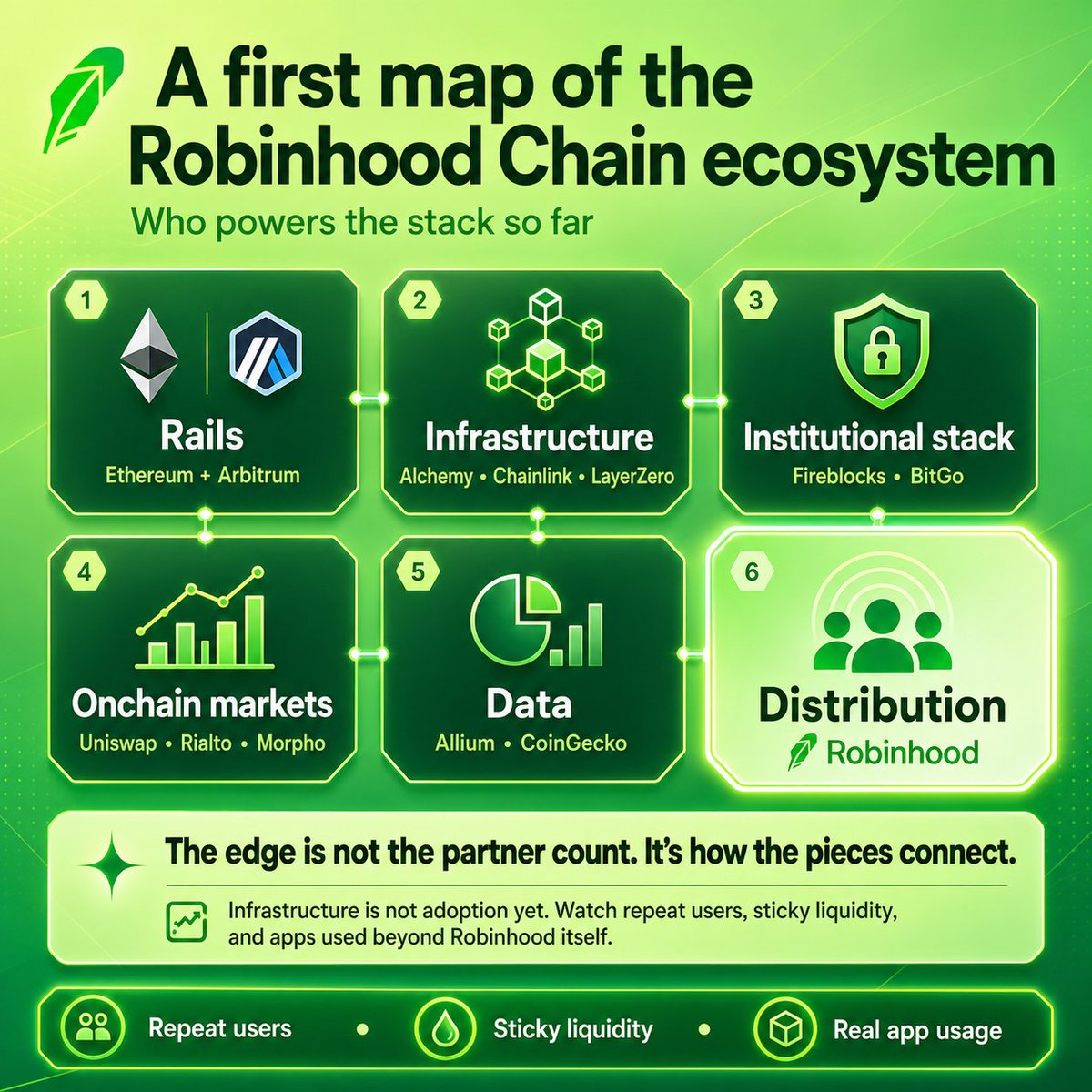
A first map of the Robinhood Chain ecosystem:
⬇️ Rails
Ethereum + Arbitrum
⬇️ Infrastructure
Alchemy, Chainlink, LayerZero
⬇️ Institutional stack
Fireblocks, BitGo
⬇️ Onchain markets
Uniswap, Rialto, Morpho
⬇️ Data
Allium, CoinGecko
⬇️ Distribution
Robinhood
The interesting part is not the number of partners.
It’s how the pieces connect.
Robinhood can hide wallets, bridging and gas behind a familiar product—then route users into trading, lending and tokenized assets onchain.
But this is still infrastructure, not proof of adoption.
The real signal will be repeat users, sticky liquidity and apps people use beyond Robinhood itself.
@WatcherGuru The headline is about the yen, but crypto traders should watch the dollar reaction — any major FX intervention can quickly spill into global liquidity and risk assets
Robinhood didn’t choose Arbitrum + Ethereum by accident.
It chose them because the combo gives it:
1) Ethereum liquidity
2) Arbitrum speed and lower costs
3) EVM compatibility for easy app integration
4) Ethereum-level trust and settlement
5) A strong base for tokenized stocks, RWAs, and onchain finance
The real idea is simple:
Ethereum gives trust.
Arbitrum gives scale.
Robinhood brings distribution.
That’s a much stronger setup than trying to build a totally new chain from zero.
Do you think distribution will be Robinhood Chain’s biggest edge?
@HoodInsider_ The real opportunity is bigger than creating a few millionaires.
Robinhood is building tools that could give millions of people easier access to crypto, tokenized assets, and onchain markets.
Where will liquidity on Robinhood Chain come from?
↓ Robinhood users bringing fresh capital onchain
↓ Tokenized stocks creating new trading markets
↓ Stablecoins used for trading, lending and payments
↓ Assets bridged from Ethereum and Arbitrum
↓ Uniswap, lending protocols and market makers keeping capital active
Robinhood’s advantage is distribution.
It can connect millions of users, familiar assets and DeFi tools inside one network.
That is how Robinhood Chain can turn existing capital into active onchain liquidity.
@TheBlockCo The bigger story is that Robinhood is no longer just a trading app.
Chain infrastructure, tokenized assets, Bitstamp, and yield products could turn it into a full crypto financial platform.
Robinhood Chain explained in 5 simple points:
An Ethereum L2 built with Arbitrum
100ms block times, with ETH used for gas
Permissionless and fully EVM-compatible
Built for tokenized stocks, RWAs and onchain finance
Connected to Robinhood’s nearly 28M customers across 38 countries
The technology matters.
But Robinhood’s real advantage is distribution: it can bring millions onchain without asking them to become crypto experts first
@RobinhoodApp
ethereum:native