이번엔 제가 얍핑할 프로젝트를 찾는 방법을 한번 소개해 볼께요.
우선 저는 얍핑 이전에 에드작을 위주로 하던사람입니다.
에드작을 하시던분이라면 아시겠지만,
어떤 VC한테 얼마나 투자받았는지가 꽤나 중요하죠.
듣도보도 못한 중국 exit용 VC한테 20m 투자받는것 보다,
이름있는 1,2 tier VC한테 5M, 10M 투자받은 프로젝트가
훨씬 제대로 프로젝트를 빌딩하고있을 가능성이 높습니다.
(물론 예외는 있긴합니다)
저는 이부분을 얍핑에 그대로 적용시켰어요.
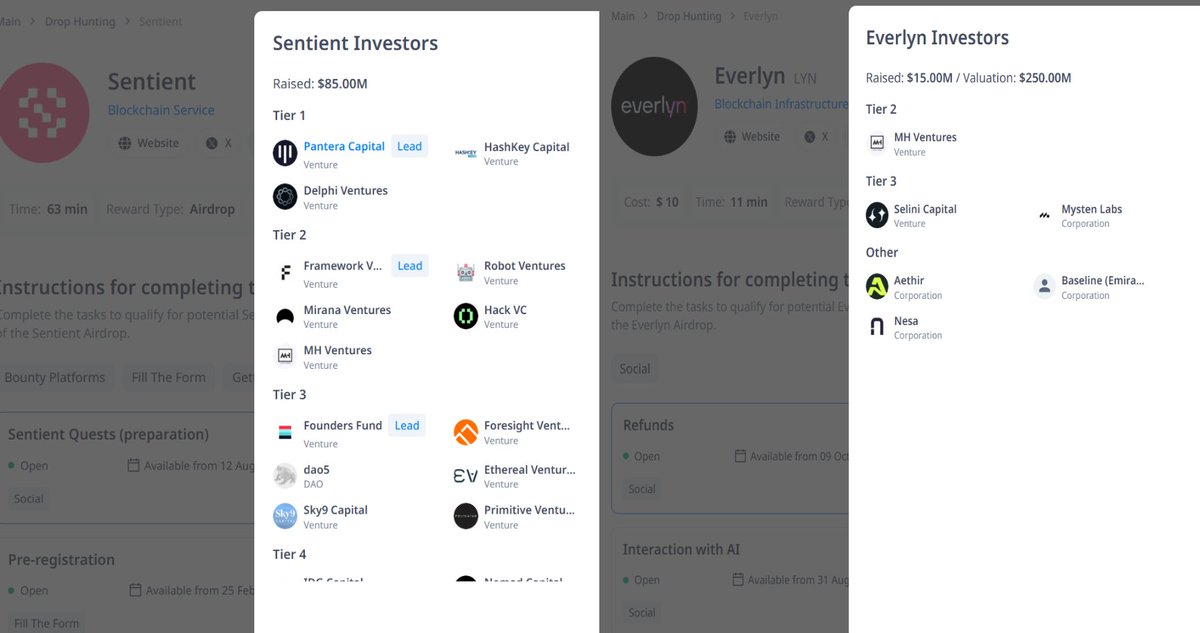
어제 얍퍼/세일참여자들 빅통수를 갈긴 프로젝트를 예시로 보겠습니다.
투자도 2M로 적은데 VC보면 어디서 들어보지도못한 VC들로 차있죠.
다른 얍핑 통수친 프로젝트들 또한 비슷합니다.
솔직히 제가 에드작을한다고치면 일빠따로 거를것 같습니다.
반면에 제가 주력하고있는 @SentientAGI 나 @Everlyn_ai 같은 경우엔 근본 VC로 꽉차있는 모습을 볼 수있습니다.
너무나 당연하게도 이런 프로젝트들 또한 통수를 칠 수있습니다.
XX린이 이미 시즌1에서 통수를 쳤었죠 ㅋㅋ
하지만 투자를 '좋은곳에서 많이'받은 만큼 통수를 칠 확률이 상대적으로 적습니다.
제가 미워도 다시한번을 외치며 얍핑을하고 있는 이유기도 하고요.
맛있게 준다면 falcon/매직뉴턴/0G처럼 줄 확률도 상대적으로 훨씬 크기도 하고요.
여러분들도 얍핑을 하실 때 꼭 프로젝트의 투자내역 한번
훑어보고 시작하시길 권해드리면서 글 마치겠습니다.
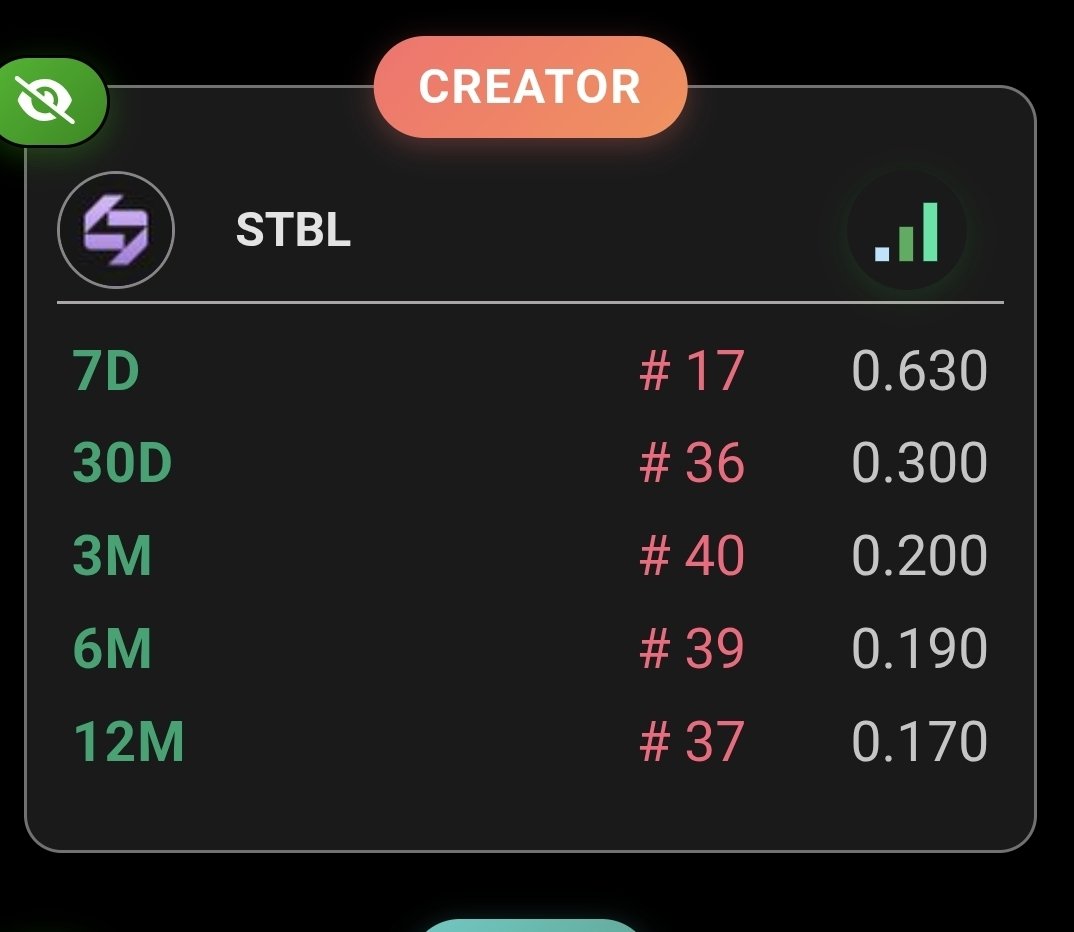
어제오늘 @stbl_official 초기선점 빡쌔게 달린결과 리더보드 파킹 성공했습니다.
stbl 초기선점을 위해 총 2일간 댓들 1500개 정도를 작성하고 글은 4개를 작성했네요.
그만큼 빡쌔게달렸고 알고리즘 타는 운도 좋았네요. 다들 형님들 덕분입니다.
제 얍핑 전략은 이렇습니다.
꾸준히 해야하는 주요프로젝트 2개 (sentient, everlyn)
여기에 추가적으로 간간히 파밍할 서브 프로젝트 1개 (stbl) 로 달리는거죠.
이제 센티언트만 리더보드 들어가면 참 좋겠네요.
형님들도 얍핑하실때 꼭 전략을 세우시고 하시길 바랍니다. ㅎㅎ
India vs West Indies, 4th T20I tomorrow in Hyderabad. 🏏
7 PM IST. Flat deck, short boundaries, dew in the second innings.
Does the toss decide this one before a ball is bowled?
Bat first or chase?
we've spent decades discovering what happens when people can share information.
imagine what we might discover when we can work together without revealing everything ❇
Two important Interfold votes coming up:
1. Constitution (tomorrow)
2. Genesis Ciphernodes rewards
Want a say? Activate your voting power now.
- Liquid $FOLD: lock + delegate
- Bonded/vesting $FOLD: voting power already active (unless held in a Safe)
- $FOLD in a Safe: delegate to an EOA you control
https://t.co/X35E0C7iUF
"A shared obsession" is the only one of these that scales — having a real say and room to be yourself matter, but they only bind people when there's a subject everyone keeps circling back to. Strangers coordinate best around an obsession specific enough to filter for the right people and open enough to keep them arguing productively for years.
Routing by an action's half-life is a sharper primitive than gas-price optimization — most execution frameworks obsess over cost per transaction while the real question is whether the action survives the latency you add. Seconds-old events trading immediacy against settlement outcomes waiting for heavier computation matches how decay actually behaves in production data. Timing-aware execution paths feel like the missing default.
An action’s half-life should determine its execution path.
Across 100,000+ production autonomous resolutions, seconds-old events required immediate execution; settlement outcomes could wait for deeper computation.
The decision is timing, not just cost.
Execution should follow the action’s half-life.
"no ceremony, no announcement, just another saturday" is the most credible launch style there is — shipping a first mainnet E3 into block 26,012,772 without a countdown thread says more about the team's priorities than any launch campaign would. Quiet mainnet births usually mean the builders are already on to the next thing.
Three fixtures, three completely different upset profiles — Leeds at the Emirates is the classic big-club-trap, Spurs under new pressure at Old Trafford is never boring, but Liverpool vs Man City is where a single defensive lapse flips the entire title-race odds. If any result shocks the table it's most likely Sunday. Prediction markets eat weekends like this alive.
The Premier League is back and it isn't easing in. 🔥
⚽️ Sat: Arsenal vs Leeds
⚽️ Sat: Man Utd vs Spurs
⚽️ Sun: Liverpool vs Man City
Three massive games. Which one delivers the upset? 👇
Affiliate performance holding up while the broader tape bleeds is one of the cleanest counter-cyclical signals in the space — bear markets are when attention scrambles for yield narratives and referral funnels actually convert. Affiliate revenue being detached from market direction is a genuinely underrated business model hedge.
"The action window is won before the trigger" applies far beyond trading — most latency-sensitive systems lose the window in queueing and routing overhead, not in the decision itself. Staging always-needed work and only waiting on genuinely signal-dependent inputs is the right split: precompute everything you can, block on nothing you don't have to. Preparation as the real performance boundary is underrated engineering discipline.
Preparation determines action-window performance.
Stage always-needed work; measure signal-dependent inputs; wait for the outcome only when required.
Queueing and routing can consume the window before execution begins.
The action window is won before the trigger.
The ballot framing generalizes better than most privacy metaphors — every example here shares the same structure: aggregate insight stays public while individual inputs stay sealed. Hospitals finding treatment trends without pooling records is the one with real regulatory teeth, and markets clearing winning bids without exposing losing offers would change how auctions leak information today. Small confidential core, large coordination surface.
Secret ballots are just the start.
A ballot demonstrates a broader idea: individual choices can remain private while the collective result is still verifiable.
That same pattern can apply elsewhere:
- Hospitals discovering treatment trends across institutions without pooling patient records.
- Financial institutions spotting shared risk concentrations without exposing individual positions.
- Markets finding winning bids without revealing losing offers.
- AI agents competing for work without revealing their individual offers.
The confidential part can be small. What it enables can be much bigger.
"Data describes a possibility. A resolved quote commits an action" — that's the whole agent UX gap in one line. An agent can read a thousand prices, but without inputs, route, expiry, and output destination bound into one executable object it can't safely commit anything. Treating resolution as the execution-layer step that coordinates those terms across protocols is what turns quotes from reference data into an actual interface agents can act on.