A defense startup just raised $200 million to genetically engineer military dogs.
Warhound, conceived by Colossal’s Ben Lamm and Anduril’s Palmer Luckey, reportedly carries a $1.2 billion valuation. Backers include Sequoia, In-Q-Tel and ARK Invest.
The plan: preserve genetic material from exceptional working dogs, use cloning and gene editing to improve health and performance, then combine specialized training with Anduril’s protective equipment and software.
According to Warhound, more than 80% of U.S. military working dogs come from Europe, and fewer than half of those procured ultimately qualify for service. The company wants to improve those odds while building a domestic supply.
Initial deliveries are expected in roughly two years. The company reportedly has no signed customers yet.
I can see the appeal of healthier dogs and safer missions. But I want to know what happens to the animals that don’t complete training, and whether lifelong care holds up after retirement.
After all the robot bodyguard demos, defense tech is taking a very biological turn.
The dogs are the ones who have to live with the upgrade.
Where would you draw the line on genetically engineering animals for military service?
Unitree’s H2-X steps between a woman and an attacker, then lifts a car’s front end in staged demos.
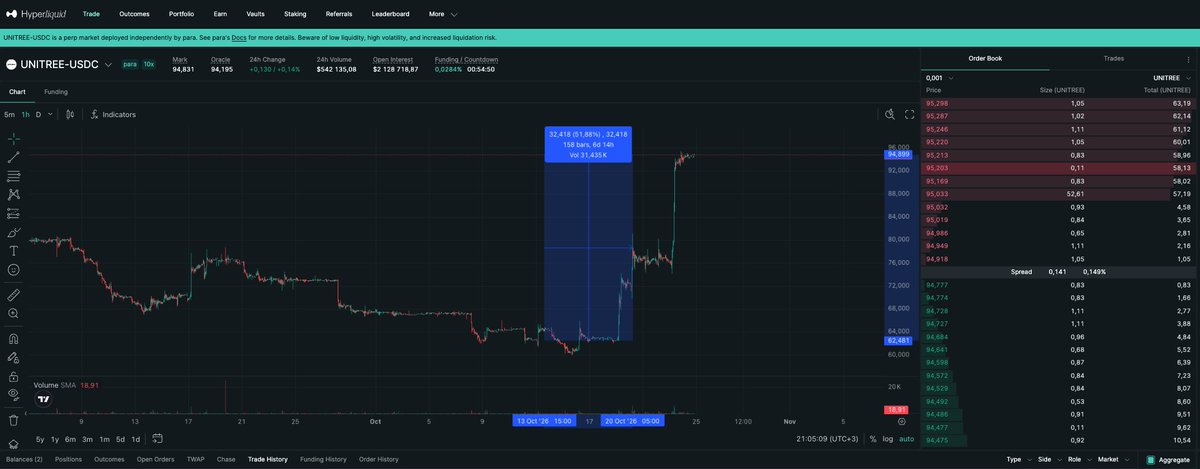
Meanwhile, Unitree shares have climbed over 50%.
I came for the robot. Stayed for the chart. 👀
This is really cool
an open-source tactile manipulation dataset for humanoid robots
Real-robot tactile data is scarce.
Sharpa has released SharpaDex v1.0 on Hugging Face: 28,993 real-robot teleoperated demonstrations across 59 bimanual manipulation tasks, totaling around 300 hours.
The dataset combines visual observations, robot states, actions, and tactile data from all 10 fingertips, including force/torque signals and tactile videos.
Humanoids get smarter by interacting with the physical world. touch matters.