I build the system that builds the system. 1,000+ PRs merged in 5 months. Exomachina: the agent factory you'll own and earn from. Prosperous humanity and Earth.
Tired of endless walls of text?
There IS a better way to interact with your agents. Check it out in action!
Exosurface is a visual-first way to communicate with your agent. I realized I needed a highly adaptive visual layer that materializes and morphs as I interact with my agent. So I built it.
Since March 1, I've talked to my personal agent every day, and it saves everything it learns as Obsidian-compatible markdown files, a month before Karpathy's wiki post made the idea popular.
That made it the perfect way to test a visual-first approach to getting things done with AI, and it has been game changing so far.
Then I hit "Surprise me" and it brought back one of my very first memories:
"If I don't review what I collect, then it might be completely pointless to collect anything at all."
Reviewing it through the thing it predicted. Quite the inception.
There’s definitely room for caution, especially with the increase in exploits lately.
However I don’t plan every detail of the codebase enough for my agents to be constrained by the lockfile. I try to keep my head out of the source code and in the spec and architecture.
I think the risks can be mitigated through version pinning and having agents only use actively maintained and highly downloaded dependencies.
Hot take: your agents should be using libraries, not writing all the code by hand.
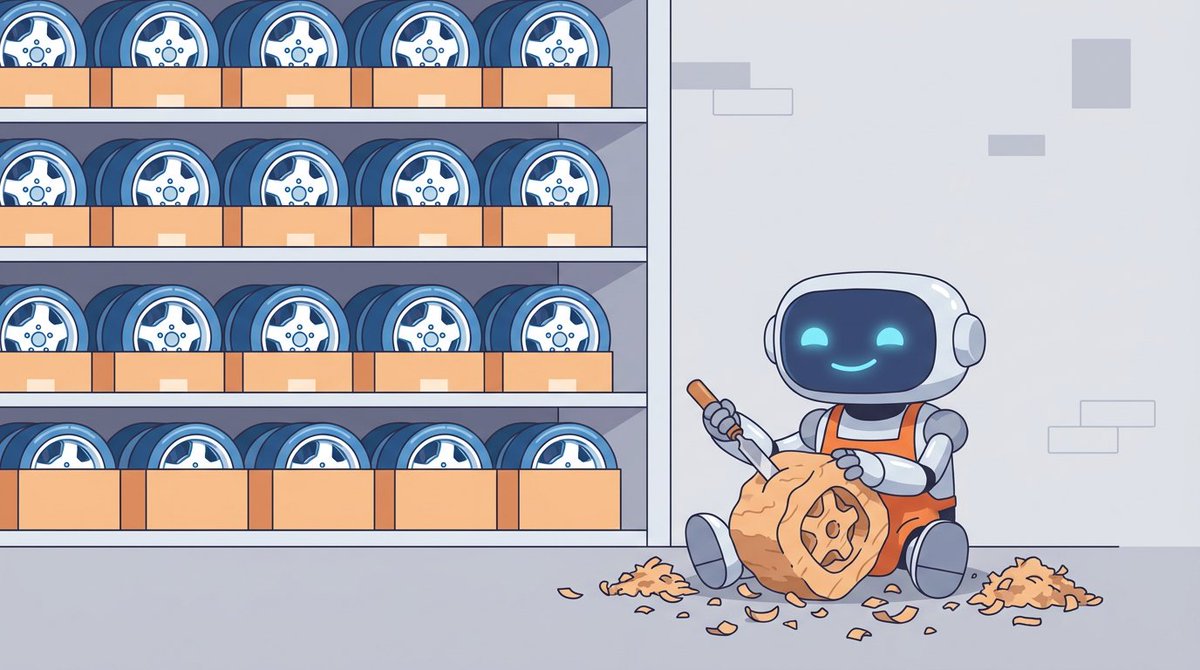
Code is free now, right? The cake is a lie. @mattpocockuk said it best: code reuse IS knowledge reuse. Here's what happened when my agent skipped it.
By default it didn't look for prior art before writing code. I get it, the thing loves to code. In two weeks it hand-rolled four things that already exist:
- Markdown parsing. It missed an edge case in quotes, so if my reviewer agent quoted another agent's \"Verdict: clear\", my merge gate would count it as the reviewer's own approval.
- Regex parsing. It used Python's whitespace rules for JavaScript patterns, so an invisible character passed and two valid characters failed.
- A TOML parser. It knew a good TOML library existed and wrote its own anyway, because the library wasn't installed yet when its script ran. Writing a parser looked easier than fixing the install order. I had to rule it out myself.
- A CSS colour engine. The library it should have used was already installed. It gets about 115M downloads a week, and has 3 GitHub stars and one maintainer. A real-life xkcd 2347. My reviewer agent caught that one.
My agents shouldn't have wasted their time finding and fixing any of this. Your version won't be as good. You'll spend your time fighting long-tail edge cases that popular libraries spent years getting right.
Here's the rule from my agent setup. Steal it:
Infrastructure (parsers, test runners, protocols, file formats, schedulers) comes from a popular, well-maintained, pinned library or the real tool.
- Search the web for prior art before choosing.
- Add dependencies with the package manager (uv add, pnpm add), never by hand-editing package files.
- If a library has a bug, patch it or switch to another well-maintained one. Never replace it with hand-written code.
- If you must hand-write it, state why where it lives.
AI is going to eat through our dependencies. We'll be using fewer and fewer external code/system. You will want an internal "open code" registry not buried inside node_modules. Agents pull from your registry and reshape it. on demand.
Less code reuse. More knowledge reuse.
I'm a little sad because gpt used to be my favorite class of models due to their precision and trustworthiness.
But that very precision has become its fatal flaw. Intelligence reads between the lines and knows the higher level intent behind an instruction. Gpt can't do this.
"the same debt supervisor supervises both PRs concurrently ... This bends the usual one supervisor per lane rule, but nothing has to be restarted." - Opus 5.5
This is EXACTLY why OpenAI and GPT underperform and have lost the plot.
The brightest minds bend the rules.
I dream too hard. I know it’s possible, but maybe it’s a millennium away.
I just fear AI is going to centralize power and wealth disparity even more before it gets any better.
I can’t help myself from thinking about solutions though. Crypto as a tech stack will have its comeback.
Then you’ve already lost the plot. It’s a model problem. And that problem is precisely a flaw in intent understanding combined with too much adherence to instructions. Yes TOO much!
Figure out what you did for gpt-5.4 and bring it back. Claude can understand intent clearly and read between the lines.
@_itsRoze@BHolmesDev You can also treat each developer the same as a worker agent within the broader factory. Anything they produce goes through the same factory routine as the other agents.
@_itsRoze@BHolmesDev It’s definitely not a completely solved problem yet, but I think agentic coding will become the new compiler. You feed the compiler your intent through structured specs and the working code and app is delivered out the other end.
@BHolmesDev The real unlock is having the entire team is interacting through the same software factory where the development process has been standardized and reviews operating as part of the system.
@_itsRoze@BHolmesDev Ideally teammates aren't running seperate coding agents. Instead they are all interacting with the same coding factory that has become a standard part of the repo itself just like CI/CD.
@badlogicgames That’s why I’ve been building my own custom agent UX. I’m down with walls of text and I’m done with side chats.
You and the agent work together on a visual page.
@mattpocockuk Even better. The factory already created and started implementing a new issue with evals because it realized it failed based upon your message.
@poteto And the repo becomes the creator of the code enforced just like CI/CD and conventions.
Every repo soon self-evolves from direct feedback with the product engineer as the arbiter.