Want to build a successful startup? Don't go after a massive Total Addressable Market (TAM).
It sounds crazy. Most investors demand giant markets right out of the gate. But the reality is that chasing a massive TAM early on is a death sentence. Instead, the best founders look for a LAUGHABLY SMALL TAM.
When you are a young startup with limited resources, trying to boil the ocean is a death sentence. The only thing you can realistically dominate is a tiny, hyper-focused niche.
The magic happens after you win that niche. Once you build deep customer love within a laughably small TAM, those customers implicitly permit you to expand into adjacencies.
Look at how some of the successful companies scaled this exact playbook:
👶 Mamaearth: Started strictly as a safe baby products company. Once mothers trusted them, they earned the right to expand into products for mothers, then fathers, and eventually built a multi-brand personal care empire.
💆♂️ Urban Company: They didn't launch as an "everything home service" app. They went deep into a full-stack beauty vertical first. Once that customer love was locked in, expanding into plumbing, electricians, painting, and appliances became natural.
🏷️ Snapdeal: We started with a tiny TAM - just providing digital discount coupons for local restaurants, spas, and salons. Building trust there is what gave us the foundation to eventually pivot and expand into physical e-commerce.
🚚 Shadowfax: 8-9 years ago, they didn't try to build a massive logistics network overnight. They hyper-focused on a specific pain point: reverse logistics for e-commerce. Winning that niche gave them the runway to become a full-blown digital-native logistics giant.
💻 Unicommerce: Began with a tiny TAM - a platform just for online retailers to manage their marketplace sellers. Because those sellers loved the product, they seamlessly adopted Unicommerce's OMS and WMS when they launched. Today, it processes over a billion orders a year globally and is expanding into shipping aggregation via Shipway.
The ecosystem is full of these "Niche to Scale" success stories even in recent times:
- Beco: Moved from eco-friendly tissue papers to building the new-age Reckitt Benckiser of India.
- Anveshan: Started with premium, high-end pure ghee and is now scaling into an FMCG staples major.
- Boba Bhai: Began with bubble tea and has evolved into a QSR major with 100+ outlets, with the majority of sales now coming from food.
- GIVA: Started as an affordable silver pendant company and is now becoming the Pandora of India, expanding into gold and lab-grown diamonds.
Don’t dismiss a startup opportunity just because its day-one market looks microscopic. A small underserved TAM isn't a limitation; it’s a beachhead. If you can dominate a laughably small TAM and build fanatical customer love, the TAM will naturally expand.
@TitanCapitalVC
Most software engineers are facing an identity crisis bordering on depression.
As CTOs aggressively evangelize tokenmaxxing, a class divide ensues.
The lazy. The lazy push code. They don't write it. They don't manually test it. They don't even read it. They're on autopilot. See Jira ticket, prompt for task, submit code. Many of them are barely on their computer the whole day. A comment on the PR asking why they did this? The lazy ask AI. A Slack message? The lazy ask AI. Need to prepare for standup? The lazy ask AI. As long as it sounds enough like them and isn't detected. Some of the lazy are even overemployed, and work multiple jobs. The lazy smart ones get away with this, and even rewarded. After all, software engineering for the lazy is just a dance to convince your colleagues you're smart and hard working.
The craftsmen. The craftsmen are tired. Very tired. 15 PRs in queue. Slack blowing up. The entire burden of review falls on the craftsman. The burden of understanding. They try. They work their way through the code, thoughtfully commenting to improve what ships. The response? A lazy: "That's a clever idea! You're absolutely right." with an incorrect change. It's fine, the craftsman says. I can fix them. They write a doc urging his colleagues to be better. The next day? 20,000 line PR to review. Day after day, their workload grows. Bugs seep into production. No one seems to care. Another round of AI is thrown at it. Their animosity to their colleagues rises. Eventually, they give up. It's just not what it used to be. The craft they loved is dead. They eventually wake up, a lazy.
This isn't all companies. Many companies are genuinely more productive, adopt the right set of principles and practices around AI development and have highly talented teams that trust each other. It tends to happen in bigger companies that are 10+yrs old with a higher talent variance. But it happens. A lot.
This is an unbelievable piece of work by Sarthak and something that requires amplification.
Let me explain what he found, in simple terms.
Sarthak is a Class 12 student from the 2025-26 batch, one of the 17 lakh students whose answer sheets went through CBSE's new On-Screen Marking system.
He spent days reading through CBSE's evaluation tenders, scraped all 576 tenders CBSE has issued, and tracked how the rules changed across three versions of the same tender.
The core finding is that the company that won the contract to scan and grade 17 lakh students' answer sheets is Coempt Eduteck.
Coempt used to be called Globarena Technologies. Globarena was the company behind the 2019 Telangana intermediate exam disaster, where software failures led to 3.8 lakh students getting wrong or missing marks, and 23 students died by suicide.
A government committee found systemic failure and negligence. Six months later, Globarena rebranded to Coempt Eduteck.
So a company with that track record won a contract to handle 17 lakh CBSE students. Sarthak's investigation is about how the rules were rewritten to let that happen.
The tender was issued three times.
> First tender, February 2025. It existed, then disappeared from the public GeM portal. Sarthak scraped all 576 CBSE tenders and this one was missing from the archive entirely.
> Second tender, May 2025. Four companies applied including TCS and Coempt. All four failed the technical evaluation. Cancelled.
> Third tender, August 2025. Coempt won. Between the second and third tender, a series of rule changes happened, and every single one made it easier for Coempt to qualify.
Here is what changed, one by one.
01. The old rules disqualified any company with a history of abandoning work, failing to complete contracts, or financial weakness. The new rules deleted this clause entirely. Coempt's Telangana history stopped being a barrier.
02. The old rules disqualified any company that was "blacklisted earlier." The new rules changed this to "currently blacklisted." Because Globarena rebranded after Telangana, removing the word "earlier" effectively erased their past.
03. The rules required Rs 50 crore average turnover over three years. Coempt's exact average came to Rs 50.86 crore. They cleared the bar by less than 1%. Earlier, a smaller company had asked CBSE to lower the bar to Rs 30 crore for fairer competition. CBSE refused. So the bar was kept high enough to block small players, but sat exactly low enough for Coempt to scrape through.
04. Software maturity is measured on the CMMI scale, 1 to 5. The old rules required Level 5. The new rules dropped it to Level 3. Coempt is a Level 3 company.
05. The cooling-off period for engaging retired CBSE officials was cut from two years to one. This makes it easier to use recently retired insiders to influence the process.
06. The old rules required experience with large projects of at least 5 lakh students each. The new rules removed the student count and counted cumulative answer-book volume across small projects instead. Coempt has many small fragmented university contracts. This helped Coempt and hurt TCS.
07. The old rules required bidders to own their own data centre and disaster recovery centre on Indian soil. The new rules allowed third-party MeitY-empanelled cloud hosting. Coempt runs on AWS and Azure. This helped Coempt and hurt TCS, which owns its own data centres. It also means student data is no longer on sovereign, Indian infrastructure.
08. The old rules required the bidder to own or control the complete source code of its software. The new rules deleted this. Coempt's platform runs on Microsoft's proprietary IIS, which they don't own.
09. A last-minute corrigendum, issued right before bid submission, removed CBSE's own power to blacklist the firm if its software failed catastrophically. So even a Telangana-scale failure couldn't get Coempt banned from future government tenders.
10. The penalty structure shifted from punishing mistakes to punishing delays. The old rules fined the vendor for wrong scanning, merged pages, and unscanned books. The new rules dropped those and instead levied Rs 50,000 per day for delays. This incentivises rushed scanning over accurate scanning.
11. The old rules had a hard accuracy threshold, error rate not to exceed 0.5%. The new rules removed this number entirely.
12. The old rules specified proper book and robotics scanners. The new rules just say "sufficient scanners." The definition was vague enough that, as Sarthak notes, the scanning could be done with a phone on a stand.
13. On the security side, the contract required a VAPT (vulnerability and penetration test) certified by CERT-In before go-live, and a restricted beta phase before launch. The system clearly wasn't restricted, because the other researcher, Nisarga, was able to access it and find vulnerabilities four days before go-live. So the mandatory security audit appears to have been bypassed.
These are more than a dozen rule changes, all between the failed tender and the winning tender, all pushing in the same direction, all benefiting the one company with the worst track record in the field.
The security holes Nisarga found last week now have an explanation. The system was built by a vendor that was specifically allowed to skip the security certification, the source code ownership, the data sovereignty, and the quality thresholds the original rules demanded.
Following things need to happen immediately;
1. An immediate CAG audit of the tender process.
2. A parliamentary debate on the topic.
3. An independent investigation into
> Why the first tender vanished?
> Why the disqualification clauses were deleted?
> Why the turnover bar was held exactly where it was?
> Why the security level was dropped?
> Why the blacklisting power was removed at the last moment?
Sarthak, this is genuinely exceptional investigative work. Far better than most journalists with full resources ever manage. Take a bow. :)
Pronto in India does this with paid help. Shift in NYC does it free.
Same fundamental problem (embodied/physical AI needs real-world data), solved with inverted unit economics. In India the customer pays for the service, and the data is the byproduct. In NYC, the data pays for the service, and the customer gets it free.
Andy is a smart man borderline genius. But starting a conversation with "Do you trust your wife" with a mad captain was insane.
The drinking beer on the roof scene is so good that you almost wish you were there in person. Amazing Classic
Today, the peak power demand (solar hours) of 260.45 GW was met succesfully at 15:40 hrs.
This is a new high surpassing yesterday's peak demand (solar hours) of 257.37 GW which was also successfully met.
"पिछली बार जैसे बाड़मेर मेडिकल कॉलेज है, इसमें 50 सीट प्राइवेट की हैं, 50 सरकारी की हैं। जिसकी फीस ₹1 करोड़ है, और जिसके 720 में से मात्र 170 नंबर आए हैं, वह भी एमबीबीएस (MBBS) कर रहा है क्योंकि वह अमीर घर में पैदा हुआ है।
वहीं दूसरी ओर, जिसके 550 नंबर आए थे, उसका 'गुनाह' बस इतना था कि वह गरीब घर में पैदा हुआ, इसलिए वह एमबीबीएस नहीं कर पा रहा है। आखिर यह भेदभाव क्यों?”
I think I missed the Discovery of India type travelling experience by 10 years. All the local cultures are now overwhelmed by the explosion of reels mainly. My privilege of being an explorer is now lost because everyone is now on the internet ecosystem and busy on their phones.
This is why we started this movement
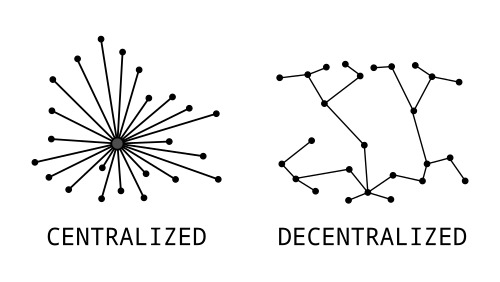
In China, 51% of the total government spending is controlled at the city level, 27% in the US, whereas in India it is mere 3%
This makes India far more centralised than nearly all countries in the world
We have to decentralise power back to the cities, we have to retain most taxes at the city level, we have to empower Municipal Corporations
We will be fighting to make this happen, if you want the same
Join the movement !
🚨 More than half of India's data centres already face temperatures above 35°C for over 90 days a year. By 2040, nearly 90% could.
India's data centres are growing in number and scale. At the same time, climate change is making the regions they sit in significantly hotter. CRAVIS maps how the two trajectories meet by 2040.
Planning data centres alongside energy, water, and land-use systems can help ensure India’s digital growth strengthens resilience, rather than creating new points of stress.
https://t.co/vwLogaCJOg lets you explore heat, water, and energy risk across India's districts and climate scenarios. Try it and tell us: what surprised you? #AskCRAVIS
Let me explain what just happened today because it deserves so much recognition.
GalaxEye is a Bengaluru startup founded in 2021 by IIT Madras engineers. Today they launched Mission Drishti on a SpaceX Falcon 9. It is India's largest privately built satellite at 190 kg. And it carries a technology that no commercial satellite has ever carried before.
Normal satellites take photos of the Earth using optical cameras. Like your phone camera, but from 500 km up. The problem is obvious. Clouds. Night. Fog. Smoke. If any of these are in the way, the photo is useless. India has monsoon cover for 4 months a year. That is 4 months where optical satellites are partially or fully blind over large parts of the country.
The alternative is SAR. Synthetic Aperture Radar. Instead of taking photos with light, it sends radar waves down and reads what bounces back. Radar goes through clouds, through darkness, through smoke. A SAR satellite can image a flooded village at 2 AM during a cyclone when no optical satellite can see anything.
The problem with SAR is that the images look nothing like photos. They look like grainy black-and-white radar maps. A military analyst or a trained geospatial engineer can read them. A farmer, a disaster response team, or a city planner cannot.
Until today, if you wanted both optical and SAR data for the same location, you needed two different satellites, passing over at different times, at different angles. Then someone had to manually align and fuse the two datasets. Expensive, slow, and the data never perfectly matched because the satellites saw the same spot minutes or hours apart.
GalaxEye put both sensors on one satellite. Optical and SAR, fused into what they call OptoSAR. Three times more information than a single sensor. Processed onboard by an NVIDIA AI chip at 1.8 metre resolution.
Now in practice, during the next cyclone hitting Odisha, one satellite pass gives you a clear image of which villages are flooded, which roads are cut, and which buildings are standing. Day or night. Cloud or clear. In near real-time.
For defence, it means you can monitor a border area 24/7 regardless of weather. For agriculture, it means tracking crop health across an entire monsoon season without a single cloud gap. For infrastructure, it means monitoring construction progress on highways and bridges without waiting for a clear day.
GalaxEye tested their SAR tech on ISRO's POEM orbital platform. The satellite was tested at ISRO facilities. IN-SPACe provided regulatory clearance. NSIL, ISRO's commercial arm, will distribute the imagery globally. And it launched on SpaceX because ISRO's PSLV doesn't have the right orbit slot for this mission.
Yes, four IIT Madras graduates built a world-first satellite in 4 years in Bengaluru.
Take a bow!
We are excited to announce that Sarvam is partnering with @PixxelSpace to power the AI backbone of India's first orbital data centre satellite.
This is a first for the country, with India-built AI models running on an India-built satellite and both training and inference happening directly in orbit, without any dependence on foreign cloud or ground infrastructure.