@KatochPrakash sir task force on border management formed post Kargil talks in detail about migration. Gen. Sinha as Assam governor called this demographic invasion. Ex-IB chief TV Rajeshwar as wb governor wrote even grimmer details. the reports are frightening & shocking, alas they are buried.
@KatochPrakash Sir, as always hitting the bull's eye. In the eye of the Taliban anyone who doesn't follow them is an infidel. In 1989, Abdullah Azzam, Haqqani & Gulbadin declared India, West, USSR, Benazir, Hosni Mubarak, Arafat, Iraq, Syria, as infidels. We must be very cautious with them.
@the_gaurss During my primary education days, I also used to sit on bori (gunny bag). Also, my maths teacher who taught me and my friends used to make us sit on DAP katta/bori. We used slate-batti for calculation and had a pristine view of our farmland.
Indeed those were glorious days.
Trump says he’s ready to tackle the Pentagon, which has failed seven audits in a row. He says America might save “trillions” after effective audits.
The Pentagon budget currently sits at roughly $900 billion for this fiscal year, representing more than half of federal discretionary spending. This vast sum doesn’t include (among other things) Homeland Security, nuclear weapons covered by the Department of Energy, the VA (Veterans Administration), and interest on the national debt due to wasteful failed wars in places like Afghanistan and Iraq.
The U.S. system may in theory rest on civilian control of the military, but the military has been out of control since at least 1947, when it rebranded itself as the “Department of Defense” instead of the old War Department. Not coincidentally, every war America has fought since then has been undeclared, i.e. lacking a formal Congressional declaration of war.
America has fought a mind-blowing number of wasteful and illegal wars that have been sold to the people through lies, whether in Vietnam (“The Pentagon Papers”), Iraq (No WMD), Afghanistan (“The Afghan War Papers”), and elsewhere.
Will it happen?
Hayashi (2005, p. 363) states that the Śulba Sūtras include the world's earliest known verbal formulation of the Pythagorean Theorem, which was previously understood by the Old Babylonians. The text describes,
"The diagonal rope (akṣṇayā-rajju) of a rectangle (oblong) generates an area that is equal to the areas produced separately by the side (flank) (pārśvamāni) and the width (horizontal) (tiryaṇmānī) ropes."
📷 Page from Lilavati, the first vol. of Siddhānta Śiromaṇī.
“It hurts western nations if the Indian economy grows as India will then have a share in the resources that western nations have been using.” An important point made by @Vikram_Sood, former head of R&AW, at the @mlrlitfest.
Resources - physical, human and digital - feed power, and controlling these resources is part of a zero sum game. Globalization, trade integration and technology cooperation without adequate guardrails to ensure self sufficiency ends up weakening the nation’s strategic autonomy. More subtly, over the long term, it alters the public’s mindscape with significant consequences in a democratic setup.
Dependencies get built under the pressure of a multi-pronged, good cop-bad-cop strategy mounted by hegemonic powers. This strategy is underpinned by asymmetric money power and a web of narratives and transnational influences. Countering this while preserving freedom of expression at home involves building a set of indigenous narratives, rooted in truth and the country’s native culture. Importantly, it must be backed by hard power and a rapid rise in CNP.
https://t.co/w4gGAlkqEl
You are absolutely correct. What is the guarantee that Pakistan and Taliban led Afghanistan will not get together as it is now happening in Bangladesh. Preventing Pakistan having depth is a very narrow view of the policy.
The larger aim ought to have been to get a government that is elected by the people which will force those in power to seek the good will of the people and caring for them rather than allowing the rulers to dictate terms to the people.
A people elected government will be a better bet for regional security and for the long term interests of India. Added to it the jihadis are ideology bound. No point hoping they will reform over a period of time or by constant persuasion. @PMOIndia@DrSJaishankar@gauravcsawant@adgpi
Historical relics from the Hindu Chăm Dynasty are scattered across Vietnam’s central and southeastern regions, with some destroyed by reckless American bombing during the Vietnam War and some whose artifacts were stolen during French colonial rule. The original Shiva statue from this Sanctuary Tower at the late 11th century Banh It temple complex in Binh Dinh province is now at Paris’s Guimet Museum. This temple complex is listed in the book “1001 Buildings You Must See Before You Die.”
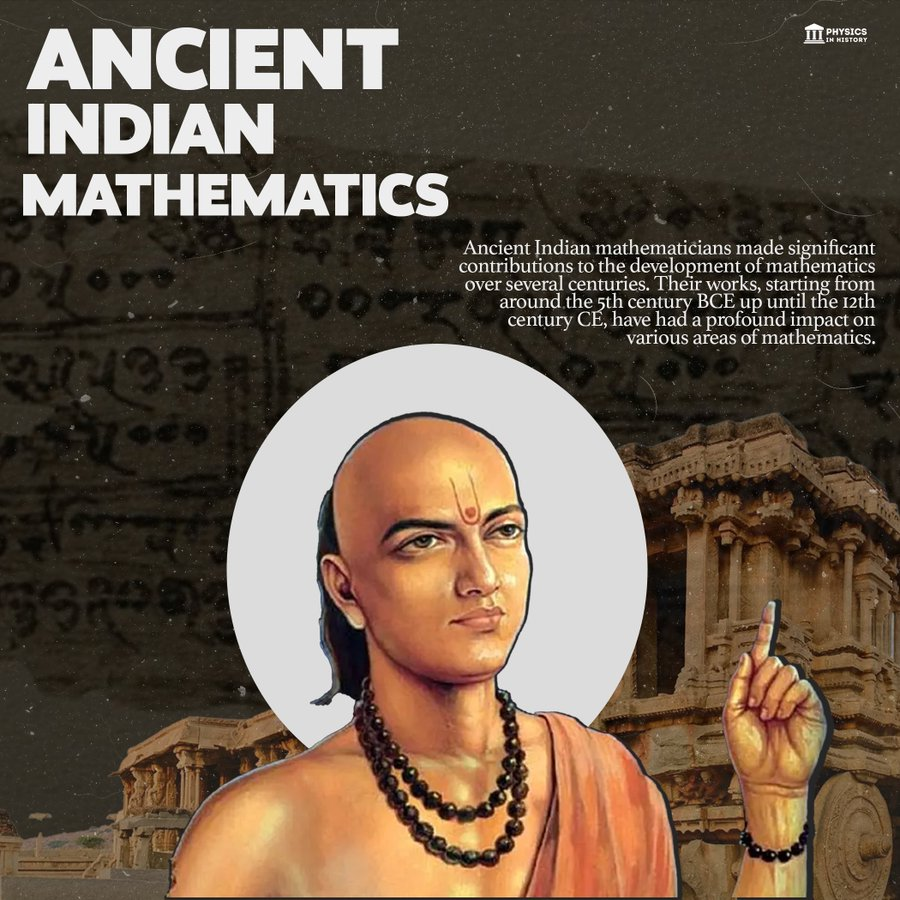
Ancient Indian Mathematics 📜
Ancient Indian mathematicians made groundbreaking contributions to the development of modern mathematics. They invented the decimal system and introduced zero as a placeholder, revolutionizing arithmetic. Algebra flourished with solutions to linear and quadratic equations. Trigonometry and trigonometric functions were developed, and π was approximated with remarkable accuracy. Remarkable Indian mathematicians who made these discoveries, such as Aryabhata, Brahmagupta, Bhaskara II, Madhava, and Ramanujan have left a lasting legacy of cultural influence and inspiration.
Vedic number words and geometry: The earliest traces of mathematical activity in India can be found in the Vedas, the ancient religious texts of Hinduism. The Vedas contain number words for large numbers, such as shankha (10¹⁷) and padma (10¹⁴), as well as geometric constructions for altars and fire rituals.
Decimal place-value system and zero: The Indians were among the first to develop a decimal place-value system for writing numbers, using symbols for nine digits and a dot or a small circle for zero. The earliest known inscription of this system dates from the 5th century CE, but it may have been used earlier in astronomical texts. The concept of zero as a number, as well as its algebraic and arithmetic properties, was also explored by Indian mathematicians.
Arithmetic and algebra: They developed various methods for performing arithmetic operations, such as addition, subtraction, multiplication, division, square roots, and cube roots. They also invented algorithms for finding solutions to linear and quadratic equations, as well as indeterminate equations of the form ax + by = c. Some of the notable mathematicians who contributed to this field were Aryabhata (5th century CE), Brahmagupta (7th century CE), Bhaskara II (12th century CE), and Mahavira (9th century CE).
Trigonometry: Ancient Indian mathematicians made significant advances in trigonometry, the study of the relations between angles and sides of triangles. They defined the six trigonometric functions (sine, cosine, tangent, cotangent, secant, and cosecant) and derived formulas for calculating their values for various angles. They also developed methods for finding the sines and cosines of multiple and submultiple angles, as well as the inverse trigonometric functions. Some of the prominent mathematicians who worked on trigonometry were Varahamihira (6th century CE), Aryabhata, Brahmagupta, Bhaskara II, and Madhava of Sangamagrama (14th century CE).
Calculus: They were pioneers in the development of calculus, the branch of mathematics that deals with rates of change, limits, infinite series, and integrals. They discovered many infinite series expansions for trigonometric functions, logarithms, and π, using techniques such as term-by-term differentiation and integration. They also applied calculus to problems in astronomy, geometry, and physics. Some of the remarkable mathematicians who contributed to calculus were Madhava, Nilakantha Somayaji (15th century CE), Jyesthadeva (16th century CE), and Srinivasa Ramanujan (19th-20th century CE).
Geometry, number theory, combinatorics, and the concept of infinity were also explored. Their work spread globally, influencing mathematics in other civilizations and laying the foundation for future discoveries, making ancient Indian mathematicians indispensable in the development of mathematics.
Absence of a defined and credible national security strategy till date is case in point. A nation which votes on rhetoric and sleeps in fake dreamland rather than wake up to harsh reality is only paving its path to ignominy and slavery. We have reached economic one by China ...
US President-elect Donald Trump is set to recognize Somaliland as an independent state. This unprecedented decision, revealed by former British Defense Secretary Gavin Williamson and reported by Semafor, could dramatically reshape geopolitics in the Horn of Africa and the waterways of West Asia. If US recognises Somaliland, its allies are likely to follow suit, just as they did with Kosovo in 2008.
Positioned near the Arabian Peninsula, Somaliland’s recognition would give the west a new strategic foothold in its war against Yemen, which has since October 2023 blockaded ships heading to Israel. However, this move risks straining US relations with key regional allies like Egypt and Turkey, both of whom maintain strong ties with Somalia.
Somaliland declared independence from Somalia in 1991 but remains unrecognised by any sovereign state. Strategically located near the Gulf of Aden, it commands a crucial maritime corridor for vessels heading to the Suez Canal and Yemen. Home to a third of Somalia’s population, Somaliland has maintained relative stability, unlike its war-torn neighbor.
Since the onset of the 2014 Yemen War, the UAE has sought partners in the Horn of Africa against the Ansarallah-dominated government in Sanaa. In 2016, the UAE signed a $442 million deal to build a port in the Somaliland city of Berbera, which is only 260 kilometers away from the Yemeni port city of Aden.
A year later, the port was expanded to include a naval and airbase and, since 2018, has been used to strike inside Yemen. The military base continues to expand, with hangars under construction for more planes.
The UAE is now reportedly working on securing a deal between Somaliland and Israel. Interested in securing a foothold near the Red Sea and the Gulf of Aden, Israel became one of only a few countries to establish diplomatic relations with Somaliland in 2010, though without formal recognition. Under the UAE-brokered deal, Israel would establish a military base in Somaliland in return for recognition. This foothold would allow Tel Aviv to respond directly to Yemen instead of relying on western countries to do so.
Israel maintains a joint military and intelligence presence with the UAE on the occupied Yemeni island of Socotra. maintains a joint military and intelligence presence with the UAE on the occupied Yemeni island of Socotra.
Fellow NATO member Turkiye, another key regional player, has invested heavily in Somalia, including establishing its largest foreign military base in Mogadishu, and providing $1 billion in aid to Somalia between 2011 and 2022. In return, Turkiye was given preferential treatment with oil exploration contracts.
China’s growing presence in the Horn of Africa is a significant factor in US interests in Somaliland. Since 2017, China has operated a major military base in Djibouti – its first in the world – which borders Somaliland and is a key player in the region’s geopolitics.
Once a stronghold for western bases, Djibouti has aligned closely with Beijing, even supporting China’s actions in Hong Kong and allowing Iranian ships to dock at its port. Djibouti has also requested the US not to conduct airstrikes on Yemen.
Like China, Russia has also increased its role in Africa, with a Russian navy base now being established in Port Sudan on the Red Sea. Russia has played a limited role in Somalia but recently offered military support against Al-Shabab extremists.
On December 16, the Israeli Defense Forces (IDF) launched a powerful airstrike on a weapons depot in Tartus, Syria, destroying a Scud missile facility. However, reports suggest the damage might be far more extensive, with speculation that a small nuclear weapon could have been used in the attack.
The strike caused a massive explosion, triggering a 3.0 magnitude earthquake that was felt as far away as Iznik, Turkey, located 820 kilometers from Tartus. Russian media outlet Sputnik reported that Israel used a new missile launched from a warship. Some reports also claim that the B61 nuclear bomb, developed by the United States, might have been involved.
The European Union’s Radioactive Environmental Monitoring detected increased radiation levels in Turkey and Cyprus approximately 20 hours after the blast. This finding has raised fears of a potential nuclear incident.
https://t.co/ltZBdI96lE
According to reports the newly-uncovered files reveal how International Republican Institute (IRI) spent millions in the lead-up to Hasina’s overthrow covertly coaching opposition parties and establishing a regime change network concentrated among the country’s urban youth.
Among the GOP-run Institute’s front line foot soldiers were rappers, ethnic minority leaders, LGBT activists hosting “transgender dance performances” in the presence of US embassy officials – all groomed to facilitate what the US intelligence cutout called a “power shift” in Bangladesh.
IRI is a Republican Party-run subsidiary of the National Endowment for Democracy, which has fueled an array of regime change operations across the globe since it was conceived in the office of CIA Director William Casey over forty years ago.
The documents make abundantly clear, IRI has funded and trained a wide-ranging shadow political structure, comprising NGOs, activist groups, politicians, and even musical and visual artists, which can be deployed to stir up unrest if Bangladesh’s government refuses to act as required. @DrSJaishankar@PMOIndia@antonioguterres@adgpi
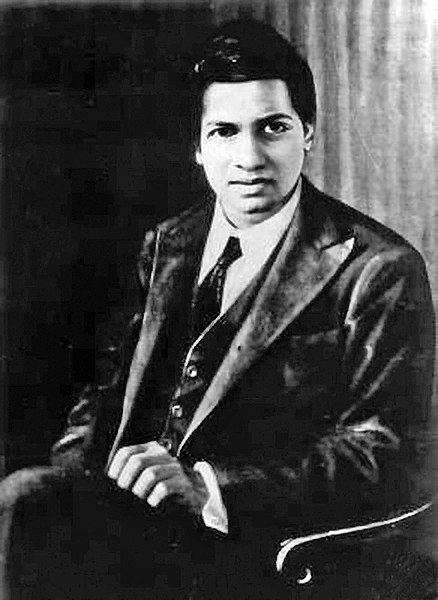
Ramanujan's Divine Inspiration ✍️
“While asleep, I had an unusual experience. There was a red screen formed by flowing blood, as it were. I was observing it. Suddenly a hand began to write on the screen. I became all attention. That hand wrote a number of elliptic integrals. They stuck to my mind. As soon as I woke up, I committed them to writing.”
- Srinivasa Ramanujan
Ramanujan’s lost notebook is a trove of around 600 mathematical formulas, discovered in 1976 by the mathematician George Andrews. The manuscript, spanning 87 unpaginated, disheveled sheets, had remained hidden in the depths of the Trinity College library in Cambridge until Andrews stumbled upon it. The findings brought to light another dimension of Ramanujan’s mathematical prowess that had remained untapped and unexplored for decades.
Srinivasa Ramanujan was an observant Hindu, adept at dream interpretation and astrology. Growing up, he learned to worship Namagiri, the Hindu goddess of creativity, who is also known as Namagiri Thayar or Namakkal. She is the consort of Narasimha, an avatar of Vishnu, who is depicted as a lion-headed man. Namagiri is said to bestow wisdom, knowledge, and artistic skills to her devotees.
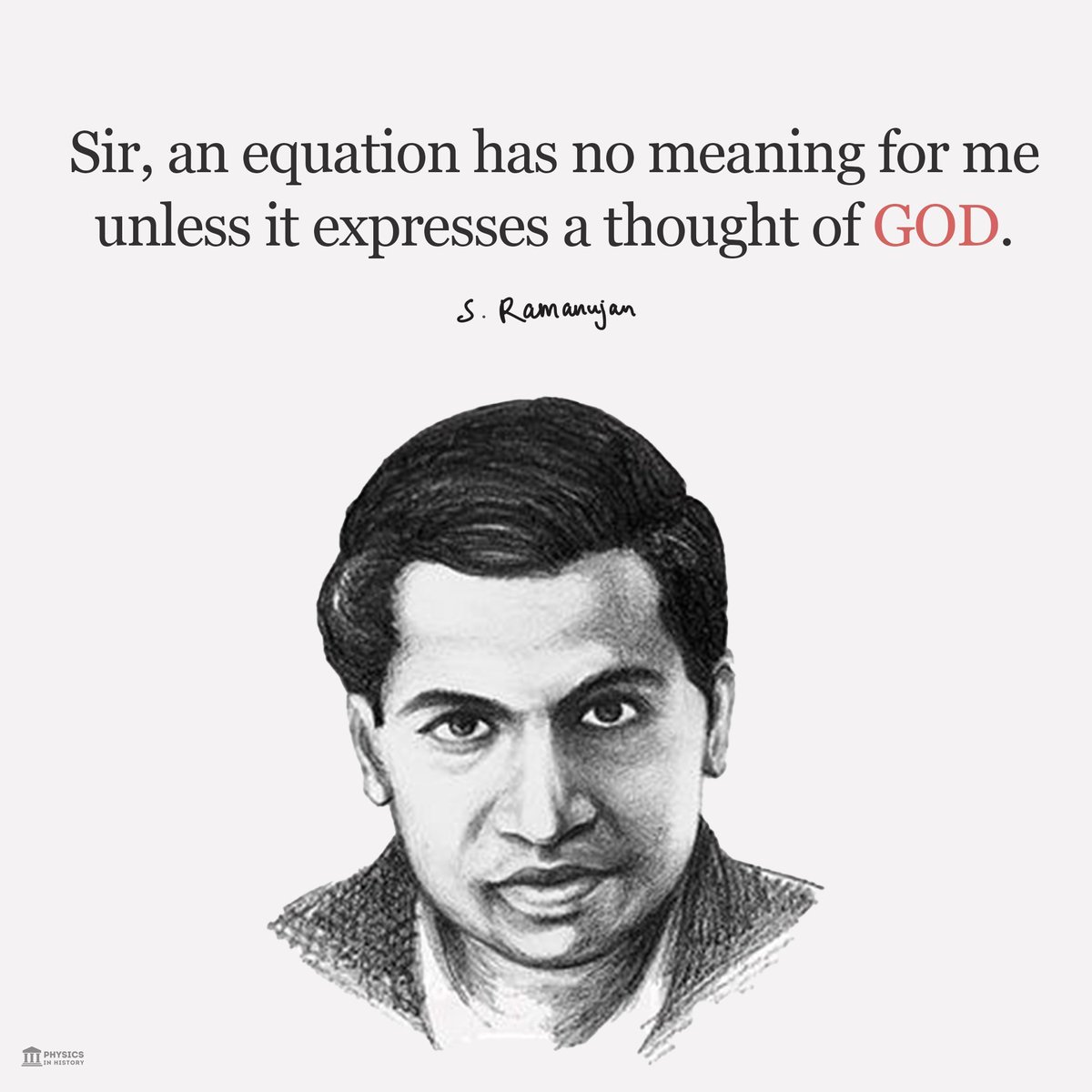
He often understood mathematics and spirituality as one. He believed that an equation had no meaning unless it revealed the mind of God. He also said that Namagiri would appear in his dreams and place equations on his tongue, which he would later write down when he woke up. Some of these equations were so novel and complex that they baffled his contemporaries and mentors, such as G. H. Hardy. Even today, some of Ramanujan’s discoveries are still being explored and proved by mathematicians and physicists
Ramanujan’s belief in the Hindu goddess was not a mere superstition or a psychological crutch. It was a source of inspiration and intuition that guided him to explore the hidden patterns and symmetries of the mathematical universe. He saw the divine feminine as the mind beyond the mind, the awakening that happens when awareness is raised to the highest possible state. He also followed the Visishtadvaita philosophy of Sri Ramanuja, which asserts that the individual soul is not separate from the supreme soul, but rather a part of it. Ramanujan’s faith in Namagiri was a manifestation of his non-dualistic worldview, where mathematics and mysticism were intertwined.
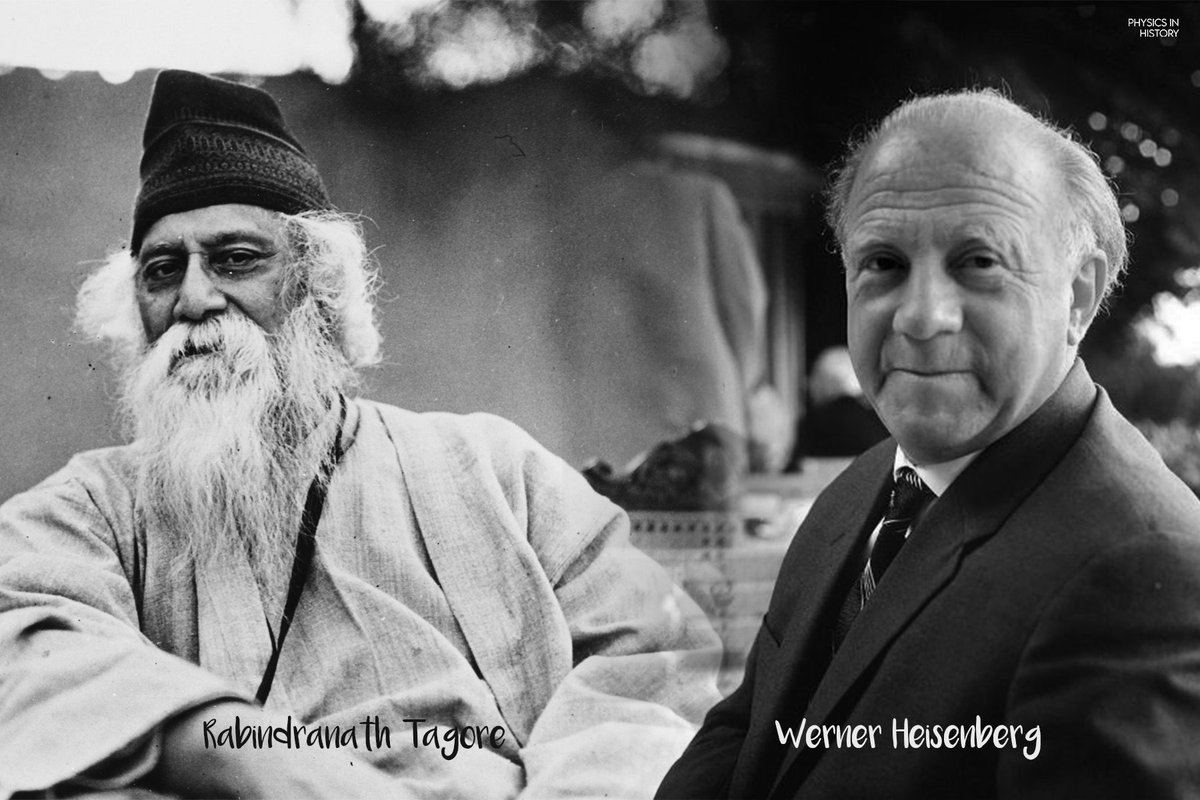
In 1929, Heisenberg spent some time in India as the guest of the celebrated Indian poet Rabindranath Tagore, with whom he had long conversations about science and Indian philosophy. This introduction to Indian thought brought Heisenberg great comfort, he told me. He began to see that the recognition of relativity, interconnectedness, and impermanence as fundamental aspects of physical reality, which had been so difficult for himself and his fellow physicists, was the very basis of the Indian spiritual traditions.
“After these conversations with Tagore,” he said, “some of the ideas that had seemed so crazy suddenly made much more sense. That was a great help for me.”
- Fritjof Capra