@johnrmyers@timleunig Do we also need to believe covered interest parity no longer holds? Theory suggests markets expect sterling to weaken given the interest rate differential, which will make those eur bonds pricier to pay off in £ terms
Compulsory voting reflects a moral argument about the society we want to live in: enjoying the benefits of a democracy should come with a responsibility to uphold it.
Oz suggests it can even make it more fun. 4/n
New paper: Your Democracy Needs You: the Labour case for compulsory voting
An ageing population, geopolitical breakdown, a loopy infosphere...our political institutions need to do a better job of helping politicians make tough long term decisions 1/n
https://t.co/c8zcsh4ckV
Essentially, we should establish an Australian-style legal duty to vote.
- a £10 fine for those who don’t vote.
- a “Democracy Day” bank holiday for general elections
a “None of the Above” option to ballot papers. 3/n
What if the residents of a street could collectively decide to build more homes on it - and share directly in the benefits?
That's street votes. In our new paper with @LabourTogether we set out how community-led street votes could help @SteveReedMP build 1.5 million new homes.
https://t.co/sAz7BwOpKS
Street votes let neighbours come together, work with an architect, agree a new plan for their street, and vote. If they say yes, building happens with their consent, on their terms, with benefits flowing to the people who already live there.
Building in towns and cities is vital - it adds much-needed homes where people want to live, it’s more sustainable and it grows a more resilient local economy. But building in cities and towns is difficult. Under street votes, instead of builders, councils, and residents fighting each other, the community can push for more homes themselves. And because ordinary people are driving the change on small sites, new homes can be built faster than the big schemes relying on big developers.
Street votes learn from international schemes that have delivered tens of thousands of homes a year in cities like Seoul and Tel Aviv. Applied here, the evidence suggests up to 30,000 new homes a year in the places we need them most - with the first homes delivered before the end of this Parliament.
Much of the work has already been done to put communities in the driver’s seat with street votes. MHCLG just needs to implement the rules. In this paper, @1jamesHowat, @KaneEmerson & @dc_lawrence set out the final steps that the Government should take to build thousands of new homes with popular support.
What if the residents of a street could collectively decide to build more homes on it - and share directly in the benefits? That's street votes. In our new paper with
@BritishProgress we set out how community-led street votes could help @SteveReedMP build 1.5 million new homes.
What if the residents of a street could collectively decide to build more homes on it - and share directly in the benefits?
That's street votes. In our new paper with @LabourTogether we set out how community-led street votes could help @SteveReedMP build 1.5 million new homes.
https://t.co/sAz7BwOpKS
Street votes let neighbours come together, work with an architect, agree a new plan for their street, and vote. If they say yes, building happens with their consent, on their terms, with benefits flowing to the people who already live there.
Building in towns and cities is vital - it adds much-needed homes where people want to live, it’s more sustainable and it grows a more resilient local economy. But building in cities and towns is difficult. Under street votes, instead of builders, councils, and residents fighting each other, the community can push for more homes themselves. And because ordinary people are driving the change on small sites, new homes can be built faster than the big schemes relying on big developers.
Street votes learn from international schemes that have delivered tens of thousands of homes a year in cities like Seoul and Tel Aviv. Applied here, the evidence suggests up to 30,000 new homes a year in the places we need them most - with the first homes delivered before the end of this Parliament.
Much of the work has already been done to put communities in the driver’s seat with street votes. MHCLG just needs to implement the rules. In this paper, @1jamesHowat, @KaneEmerson & @dc_lawrence set out the final steps that the Government should take to build thousands of new homes with popular support.
@theobertram @LabourTogether @SMFthinktank@theobertram you're right! You've done great work in this area and our chats have been very helpful for this report. We're putting in an acknowledgement now.
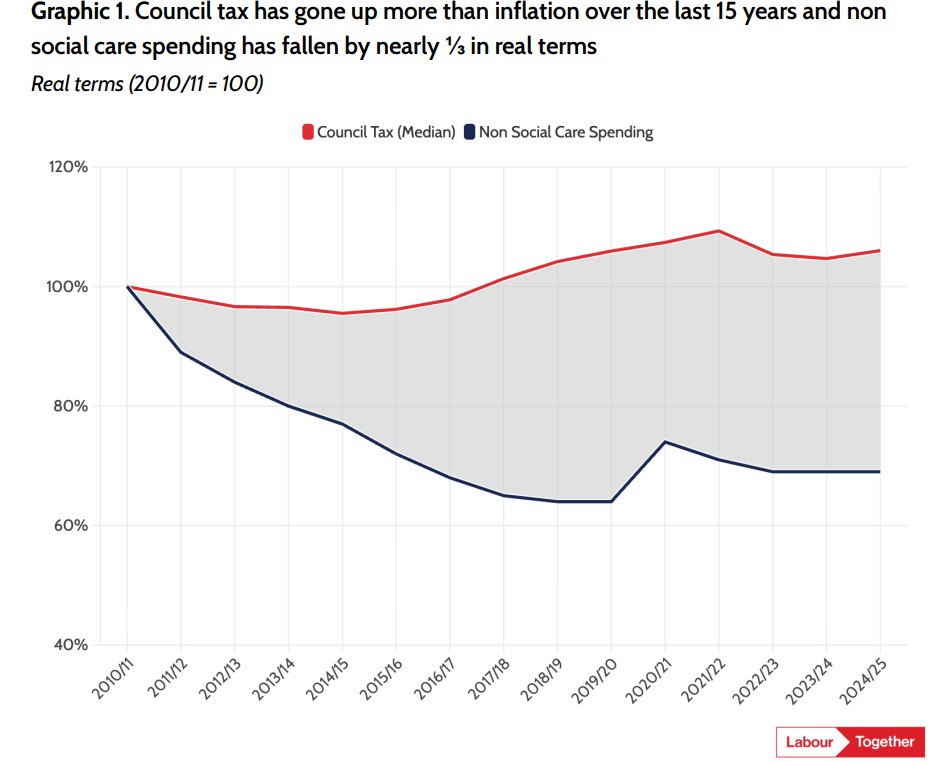
When that bloke from the Inbetweeners goes viral complaining about council tax, you know something has gone badly wrong with the contract between councils and their residents. Labour Together's NEW PAPER is about how to fix it.
1/n
https://t.co/jvPpFqugQu
If a council wants to raise taxes to fund more bins or playgrounds, it can do it without £ going into ASC that most people don't see. If it redevelops an area and grow its tax base, it keeps the £ it creates. This is how we improve the retail end of the state
5/n
Thames Water should be allowed to go down the drain.
Labour Together's new paper argues this will show voters that Labour is taking on a rigged system in which 'heads', investors win, 'tails', billpayers lose.
It is also crucial for suring up investor confidence. 🧵
Allowing Thames to go into administration may need some temporary £ from HMT. But it will be the senior creditor and can charge a premium rate of interest. So the taxpayer is almost guaranteed to be made whole, or better. God made fiscal headroom for moments like this