The Centre for British Progress is a non-partisan think tank on a mission to accelerate and shape an era of British growth and progress; evolved from @UKDayOne.
The results of our 2026 UK Growth Survey are in!
Thank you to the 100+ economists & researchers who filled in the survey. You can see the full results and analysis here 👇
Every year @BritishProgress asks Britain's top economists and policy researchers what the UK should do to increase growth.
🚨 As covered exclusively for @thetimes this morning, the 2026 growth survey results are now in! 🚨
This was our biggest survey yet with over 100 responses.
📉 The bad news: Britain's public finances, with inflation hit by external shocks, are in a bad state.
📈 The good news: the UK is not without options. There is much that can be done on the supply side reforms, & smarter fiscal policy can raise revenue while supporting growth.
Here are the 12 most interesting results 👇
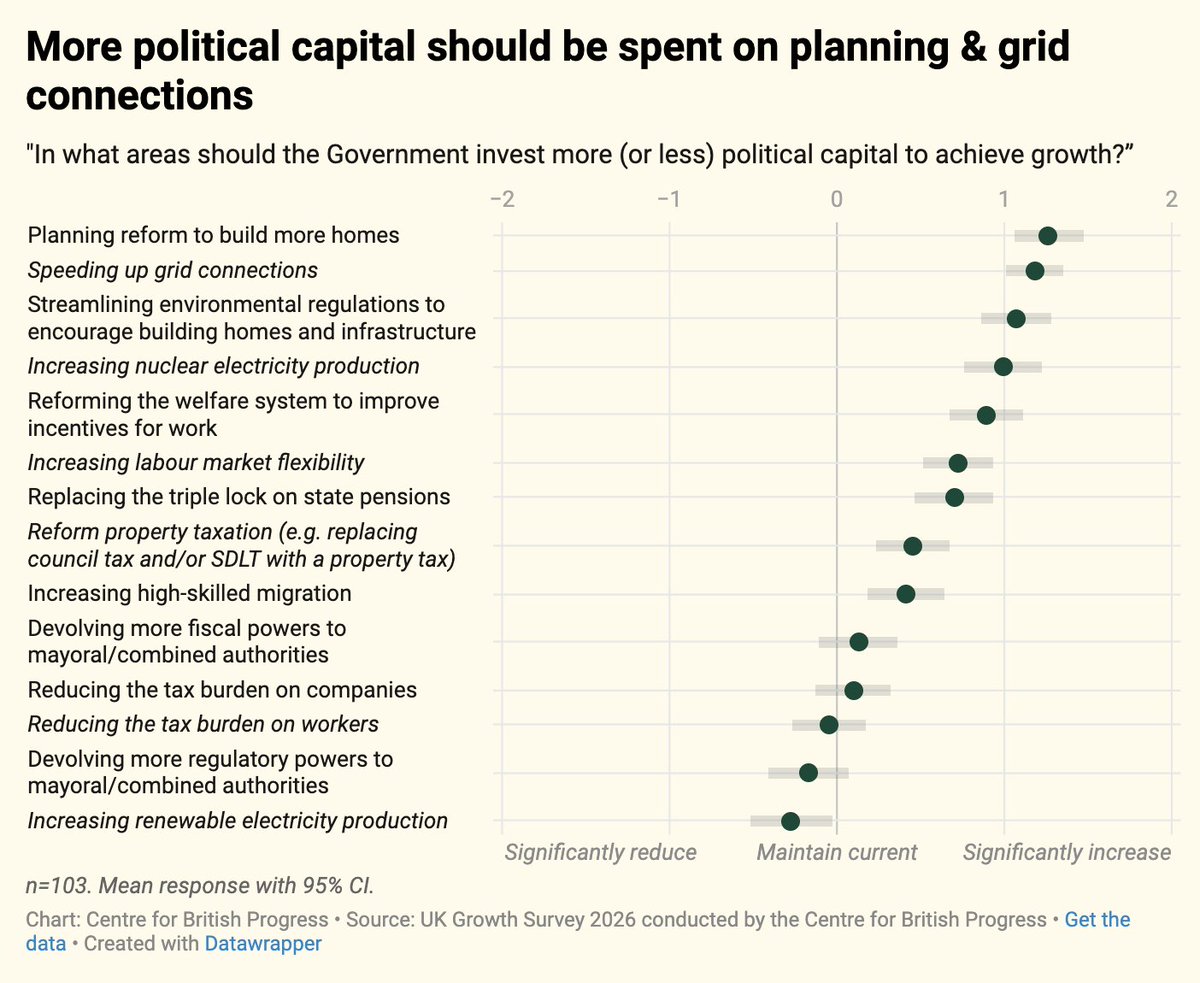
*1. Where should the government prioritise spending political capital?*
We asked "In what areas should the Government invest more (or less) political capital to achieve growth?"
NB this was explicitly not a question about spending – that's the next one.
According to our estimates, the total cost of the QE programme may run up to £140bn over its lifetime.
Because of how that programme was set up, most of that cost falls on the Treasury.
To cut that bill, there have been several proposals to lower the cost of reserves to HMT.
This is an important new post from @pdmsero.
There is a proposal going around, with support from voices as diverse as Richard Tice, IPPR and New Economics Foundation, that the Government could raise £billions by eliminating (or at least taxing) interest that banks receive on reserves held with the Bank of England.
But this is misguided, and will damage the Bank of England's ability to control inflation.
Why? Because the Bank of England depends on these interest payments to control the rate at which banks lend, and therefore the amount of money in the economy, and the price of goods.
The key graph is this one: a levy on reserves reduces market interest rates, and therefore the amount of borrowing. The bank rate would no longer effectively control market rates to manage inflation.
If you want to tax banks, there are better ways of doing it. But going after reserves would reduce state capacity, and our ability to act.
Exclusive: Andy Burnham is considering handing mayors additional powers to speed up mass transit projects in the Budget, as a new research paper found this could cut several years off the timetable of West Yorkshire’s trams. https://t.co/c7kufQdwQD
From 2028, Britain will have 18 mayoral authorities but mayors still lack key powers for building public infrastructure like trams & roads.
🚨 Today @BritishProgress and @ThinkLabour publish our paper with @AnyaM8_, @1jamesHowat and @johnrmyers on the FOUR powers mayors need 🧵
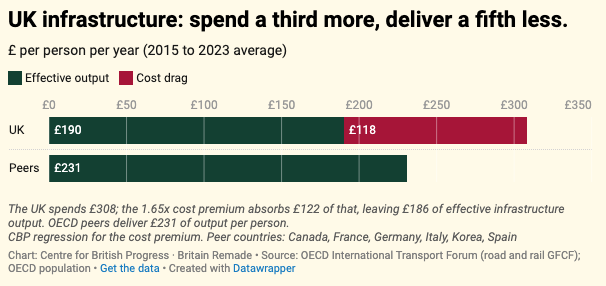
The scandal here is that Britain consistently overspends but under-delivers on infrastructure.
Our @BritishProgress study with @BritainRemade found that we spend 30% more than comparable OECD countries on transport & energy infrastructure, but deliver a fifth less.
Overall we face a 65% cost premium for building in Britain: for the same money, we could have a lot more if we built like European countries do.
The only people who benefit from this system are rent-seeking sectors, like consultants and lawyers employed to ensure compliance with complex regulations. Meanwhile it's ordinary people, like taxpayers and Miatta's constituents, who lose out.
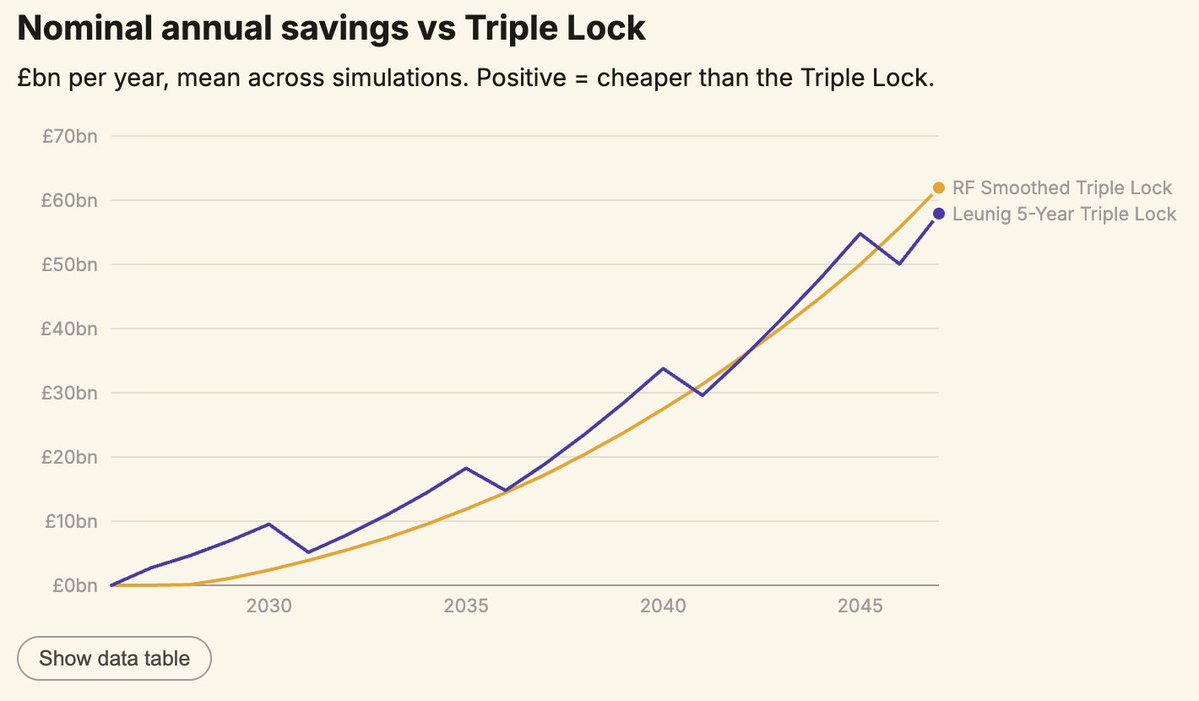
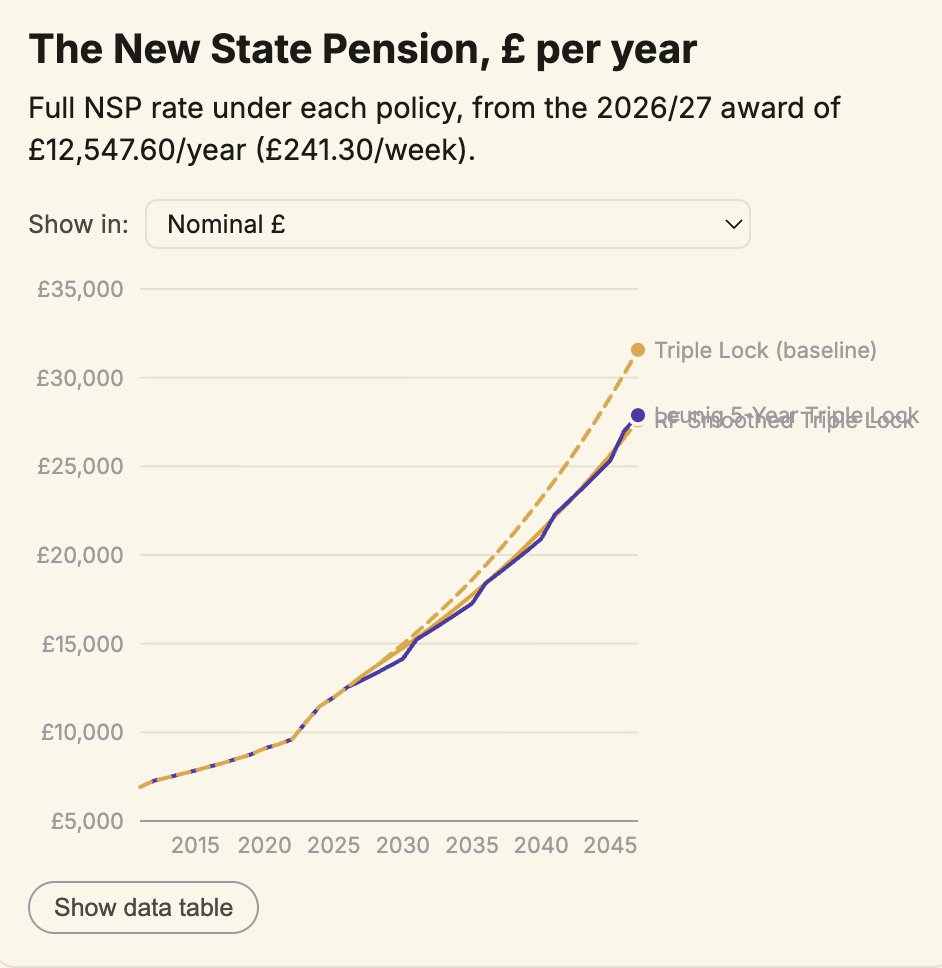
The PM is expected to signal an end to the triple lock today. But what are the options for reform, and how much money do they save?
@BritishProgress (namely, @matthewgstubbs) has made a tool to compare the different ideas on the table.
For instance, you can compare @timleunig's '5-year triple lock' with @resfoundation's 'smoothed triple lock' proposal (originally proposed by @TorstenBell and @lauracgardiner) to see that they each would save around £60bn by 2047, and deliver an annual state pension of around £27k (nominal).
As you can see, the amount of money that can be saved – particularly over a longer time-horizon, is enormous.
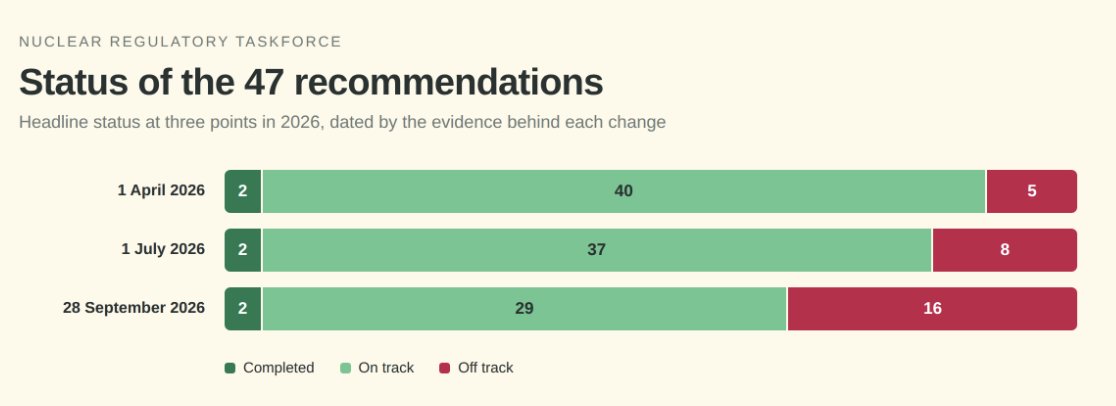
1/4 Everyone agrees that the Fingleton Review needs to be implemented to get our nuclear costs down. Yet progress towards implementing these recommendations is stalling – more and more of them are off track.
It has been about six months since the Fingleton Review, and on most of the recommendations, nothing has been done. The review is clearly being slow-walked by departments, and it isn't obvious anyone has a grip on it.
We built the tracker because we suspected this would happen. I thought public accountability might speed things up. Apparently not? Let's change that.
Our yearly Growth Survey is out! We asked over 100 economists and policy researchers what the UK should and perhaps more importantly, should not do to get growth going again.
📈 What’s in:
Planning reform
Faster grid connections
Nuclear regulatory reform
North Sea licences
📉 What’s out:
Price controls
Wealth taxes
Exit taxes
More spending on welfare and state pensions
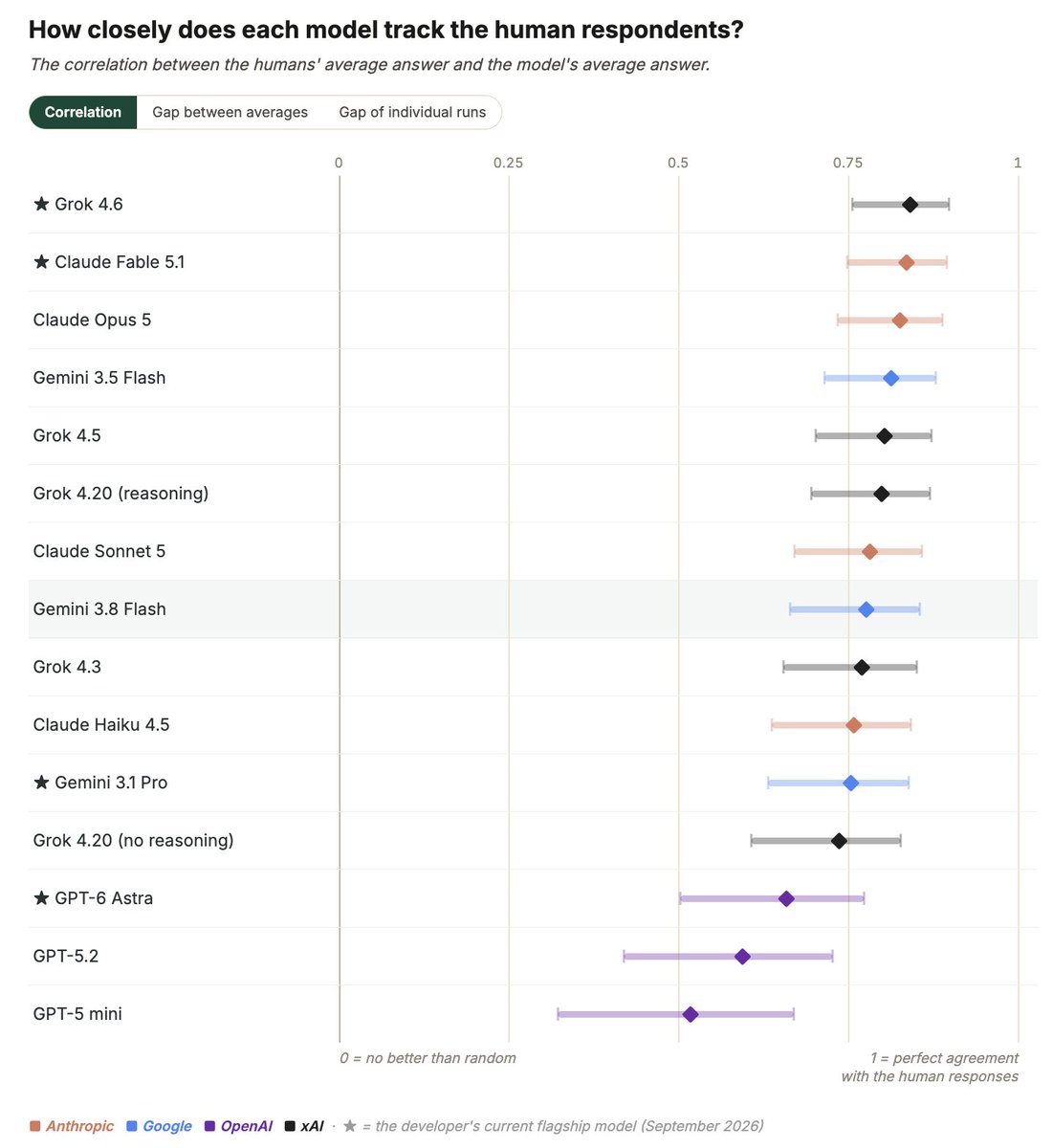
FINALLY, check out this tool built by @matthewgstubbs to explore the survey results data. You can also see how different AI models responded to the survey, and how closely they tracked experts' views.
(@grok 4.6 and @claudeai's Fable 5.1 were closest to the experts!)
https://t.co/eovTmwdhm7
Huge thanks to @matthewgstubbs for pulling the survey together, @pdmsero for helping design the questions, and to all our 100+ respondents!
You can read the full results and analysis here: https://t.co/1sUg9b9Ffm
Every year @BritishProgress asks Britain's top economists and policy researchers what the UK should do to increase growth.
🚨 As covered exclusively for @thetimes this morning, the 2026 growth survey results are now in! 🚨
This was our biggest survey yet with over 100 responses.
📉 The bad news: Britain's public finances, with inflation hit by external shocks, are in a bad state.
📈 The good news: the UK is not without options. There is much that can be done on the supply side reforms, & smarter fiscal policy can raise revenue while supporting growth.
Here are the 12 most interesting results 👇
*1. Where should the government prioritise spending political capital?*
We asked "In what areas should the Government invest more (or less) political capital to achieve growth?"
NB this was explicitly not a question about spending – that's the next one.
NEW REPORT from @Ezra_Cohen_ for @BritishProgress on what we can do to tackle dodgy shops. We all see them all the time, but no one seems to do anything about them. Ezra has an answer!
Read all about it 👇
In 2018, Baltic Bognor in Sussex was found selling illegal cigarettes. Same again in 2022. In 2026, the owner was done for money laundering & hiding cigarettes in juice cartons. Eventually, the shop shut itself down. Why did it take so long? And how do we stop shops like this?
Exclusive: London Councils need powers to shut dodgy businesses after two strikes in a single year, ministers told in new @BritishProgress report
Burnham has made reviving the high street a key message of his early months in office
https://t.co/tLrYBrWXii
Come and work with us!
We're looking for an ambitious & creative editor to oversee our publications and Substack. You'll have a lot of autonomy, room to grow and excellent colleagues!
Check it out! ⬇️