In 1971, the Pakistan Army burned the historic 60-foot Rath of the Dhamrai Rath Yatra, and it continued burning for seven days.
The chief patron of the Dhamrai Rath Yatra, Ranada Prasad Saha, disappeared during Operation Searchlight.
@Shh_Shaili uncovers the grandeur of the Dhamrai Rath Yatra and the tragic story behind the event that forever changed its legacy.
International media in the last 30 days: "India Hunger strike", "protests in India", "Floods in India."
🇮🇳India in the last 30 days:
July 19, 2026: Indian Gen-Z team wins 4 gold medals (top rank) at International Chemistry Olympiad and medals at the International Biology Olympiad.
July 18, 2026: Young Indians working at Skyroot Aerospace successfully launch Vikram-1, India’s first privately developed orbital-class rocket, from Sriharikota, placing payloads into Low Earth Orbit.
July 17, 2026: PM Modi flags off India’s first indigenous hydrogen-powered passenger train (10-coach set) from Jind station, Haryana, on the Jind-Sonipat route as an inaugural service.
July 14, 2026: DRDO completes successful military field trials of an indigenous scalable fiber-based Quantum Key Distribution (QKD) system for secure strategic communications.
July 13, 2026: Lucknow-Kanpur Expressway (63 km), India’s first barrier-free expressway with satellite-based tolling, opens to traffic.
July 12, 2026: Young Indian team wins 5 gold medals at the 56th International Physics Olympiad (IPhO 2026) in Colombia, securing joint world #1 rank.
July 11, 2026: RM Rajnath commissions INS Mahendragiri, the sixth Project 17A stealth frigate, in Visakhapatnam (~75% indigenous content).
Early–mid July 2026: Vimag Labs (Bengaluru) secures its 5th Indian patent for the Virtual Magnet Synchronous Motor (VMSM), a software-defined rare-earth-free electric motor platform.
Early July 2026: ISRO announces plans for a new Satellite Earth Station campus near Ledo in Assam to strengthen space communication in the Northeast.
Early July 2026: IIT Gandhinagar team wins a grant for developing indigenous liquid cooling plates for AI data centres, EVs, and high-performance electronics.
June 26, 2026: Nuclear heat-based hydrogen production facility (copper-chlorine thermochemical cycle) commissioned at Kalpakkam using Fast Breeder Reactor process heat.
June 24, 2026: ISRO successfully conducts hot test of semi-cryogenic engine power head at 175 tonnes thrust level.
June 24, 2026: RDSO (with ARAI) successfully conducts full-scale crashworthiness testing of LHB coaches for enhanced passenger safety.
June 21, 2026: PM Modi commissions three indigenously built warships in Kolkata: INS Dunagiri (Project 17A stealth frigate), INS Sanshodhak (hydrographic survey vessel), and INS Agray (ASW shallow water craft).
June 15, 2026: DRDO successfully flight-tests the indigenous Long Range Land Attack Cruise Missile (LRLACM) from Odisha; all objectives met.
June 10–11, 2026: DRDO conducts successful Phase-2 Ballistic Missile Defence (BMD) trials and anti-ship missile tests, demonstrating capabilities against long-range ballistic threats including ICBM-class.
Mid-June 2026: India’s defence production reaches a record ₹1.78 lakh crore in FY 2025-26.
Mid-June 2026: Maiden flight of the indigenous C-295 military transport aircraft highlighted as a major self-reliance milestone in aviation (with 40 aircraft under production in India).
June 13, 2026: First batch of women cadets trained at NDA commissioned into the defence forces. Marking the start of an women empowered era in defence.
Power outage in baner sus area for last 5 hours (from 10:30pm) , no response on registered complaint and no-one picking phone on 24x7 helpline either for update after a huge ivr call sections..
Sending details in DM
@MSEDCL
‘RETWEET’ this tweet first when it comes to your timeline.
Now read this carefully.
Why do patriot SM accounts have lower reach than propaganda accounts?
The reason is ‘Reaction’
Most of the Patriot audience just reads and scrolls down, while on the other side, they react to tweets and reels.
They do share, like, and comment.
Ultimately, you don't get patriot accounts on your timeline because you ignore them, and the algorithm adjusts accordingly.
There are many factors as well for their greater reach, like👇
1. Paid content
2. Greater audience from neighboring countries.
3. Use of bots heavily.
So please start reacting to the content of nationalist accounts.
Thank you 🙏
It is incredibly frustrating to watch celebrity chefs & pop-history influencers look directly into a camera & confidently state, "Did you know our favorite South Indian staple, the Idli, actually came from Indonesia?" This entire narrative is a colossal house of cards. It is a classic case of academic confirmation bias that transformed into viral disinformation.
When an entire nation is taught to believe that they could not even figure out how to steam w/o foreign intervention, we have to look at the raw data to puncture the bubble.
Almost every single article/tweet/celebrity chef video claiming that the idli is Indonesian can be traced back to exactly 1 source: a single speculative paragraph written by the late food historian K.T. Achaya in his 1994 book, Indian Food: A Historical Companion. Achaya theorized that between 800-1200 CE, Indonesian kings traveling to India brought royal chefs who introduced a fermented, steamed dish called "Kedli."
Yrs after this book was published, investigative food journalists (such as Janaki Lenin) & linguistic researchers actually went to Indonesia to look for this legendary precursor. The word "Kedli" does not exist in any Indonesian language/dialect/historical dictionary. There is no historical record/recipe/anthropological trace of an ancient Indonesian dish called "Kedli." Achaya completely misread/manufactured the term based on a loose phonetic guess, yet it became an accepted "fact" because no 1 bothered to check the data.
The claim that India did not have idlis until the 12th century is thoroughly obliterated by our own ancient libraries. The evolution of the idli is meticulously recorded in indigenous Indian encyclopedias & literature centuries before Achaya’s timeline:
- 920 CE (Vaddaradhane): A classical Kannada text by the Jain monk Shivakotiacharya explicitly details a dish called Iddalige. It was a staple food item offered to Jain ascetics. - 1025 CE (Lokopakara): The earliest available Kannada encyclopedia, written by Chavundaraya II, gives a literal recipe for it: soaking split black gram (Urad Dal) in buttermilk, grinding it into a fine paste, mixing it with spices & the clear water of curd.
- 1130 CE (Manasollasa): The Western Chalukya King Someshvara III wrote a monumental Sanskrit encyclopedia detailing royal cuisine. He explicitly gives the recipe for Iddarikā describing how the urad dal cakes are prepared & cooked.
When skeptics are confronted with these ancient texts, they quickly shift the goalposts. They argue: Okay, fine, India had Iddalige, but it was just made of Urad Dal. It did not use rice/long fermentation/steaming... those techniques came from Indonesia! This is textually & technologically false.
Critics often cite the 7th-century Chinese traveler Xuanzang, who claimed India did not use steaming vessels. But we do not need a specialized metallic Chinese steam-cooker to steam food. For millennia, Indians practiced Kopotapaka & basket-steaming, tying a thin muslin cloth over a standard clay pot (Kunda) filled with boiling water, placing the batter on top & covering it with a lid. In fact, the Kanchipuram Idli is still steamed in traditional bamboo baskets lined with Mandhara leaves.
To say India did not understand fermentation until the 12th century is a historical joke. India is the cradle of complex biomaterial fermentation. The Rigveda & Ayurvedic Samhitas from 1000s of yrs ago are packed with advanced formulas for fermenting grains, herbs & dairy to create Asavas, Arishtas, Kanji & Dahi (Curd). The natural wild bacteria (Leuconostoc mesenteroides) required to leaven idli batter live natively on the husks of black gram found right here in the subcontinent.
Why do celebrity chefs keep repeating this lie? Because of a deeply ingrained post-colonial inferiority complex that dominates modern food media. There is a structural bias that assumes any advanced, scientific culinary technique, like molecular leavening/pasteurization/specialized steaming must have been imported to India from somewhere else. It sounds edgy, counter-intuitive & intellectual for a chef to tell an Indian audience that their national breakfast is not actually theirs.
The idli is a native, organic, ground-up evolutionary masterpiece of South Indian kitchen science. It evolved naturally from the lentil-based Iddalige of the 9th century into the perfectly balanced rice & lentil fluffy wonder we eat today. The next time a chef tries to tell you the idli is from Indonesia, ask them to show you the recipe for "Kedli." Watch how fast they fold.
The global audience viewing these exhibits has absolutely zero clue that the entire spiritual, philosophical & anatomical framework of this relaxed posture was systematically engineered in India.
Rājalīlāsana (The posture of Royal Ease) got rebranded to Zizai Zuò (The posture of Comfort/Freedom) & for West it is a unique innovation of Chinese Song Dynasty art.
Because India’s post-independence cultural ministries treated these exports as dead history rather than active civilizational assets, countries like China & Japan completely independent-ized the narrative. When a tourist stands in front of that statue in a New York museum, the plaque reads "Chinese, Song Dynasty." It never mentions that the sculptor was executing a precise aesthetic manual mapped out in ancient Indian texts like the Chitra Sutra of the Vishnudharmottara Purana.
Italy fiercely protects the provenance of the Renaissance & Greece claims ownership over every pillar of Western democratic aesthetics, India has historically been incredibly passive. We look at our own masterpieces in the Ajanta/Ellora/Badami caves as localized tourist spots rather than the fountainhead of a pan-Asian artistic superpower.
Because we do not aggressively fund global exhibitions/write the textbook chapters for Western universities/build a cohesive narrative linking Ajanta directly to the wooden sculptures of Kyoto & the stone carvings of Dunhuang, India remains invisible. We allowed our civilizational gold to be treated as raw material that only became refined art once it reached foreign shores.
An Indian Berkeley-Stanford chemist went to prison for loving India.
He came out and built a raincoat empire from a shed in Calcutta.
That brand still protects our fighter pilots & navy commandos today.
Most Indians have worn it. Almost none know this story.
The Duckback saga nobody told you about 👇
If we open almost any global culinary history book, we will find a common narrative: Ancient Europeans & Mesopotamians were the masters of baking bread, while ancient Indians only knew how to boil grains/fry them on a flat griddle. Baking, we are told, was introduced to India much later through Middle Eastern & Central Asian migrations.
This is a complete historical distortion.
Long before the 1st medieval wood-fired ovens of Europe were built, the chefs & engineers of the Indus Valley Civilization had already mastered the physics of thermal radiation, refractory clay engineering & controlled baking.
The ultimate weapon against the imported baking myth lies buried in the soil of Kalibangan (an ancient Indus Valley city in modern-day Rajasthan) & Harappa. During excavations, archaeologists unearthed several perfectly preserved, subterranean (underground) & overground cylindrical clay ovens dating back to 2500 BCE.
These ovens are structurally identical to the modern Indian tandoor. They feature thick, smooth clay walls designed to trap a massive amount of heat from a bed of charcoal/wood embers at the base.
We do not build a sophisticated, structurally reinforced vertical clay cylinder just to boil water/roast a piece of meat on a stick. The physical architecture of a vertical cylindrical oven serves exactly 1 scientific purpose: to trap hot air, creating a convection & radiant heat environment, which is the exact thermodynamic definition of baking.
Baking requires an incredibly high level of metallurgical & ceramic sophistication. If we take regular river clay, build an oven & subject it to intense, direct fire, the moisture inside the clay expands rapidly, causing the walls to crack/collapse/explode. The Harappans solved this through advanced material science:
They blended their clay with precise ratios of sand, quartz & organic binders like cattle dung/husk. This created what modern engineers call refractory ceramics, materials that can absorb immense thermal energy w/o structurally failing.
The interior walls were finished with a smooth, fine slips so that raw dough could be slapped directly onto the hot vertical surface, baking it via conduction on 1 side & intense radiant air heat on the other.
Now, to bake, we need a grain that can form a cohesive dough. While India later became synonymous with rice, the Indus Valley Civilization was heavily reliant on wheat & barley. Archaeologists have found massive public granaries packed with carbonized remains of Triticum aestivum (bread wheat) & barley.
They did not just boil these grains into porridge. The discovery of heavy stone saddle querns (grinding stones) & flat mullers at every residential unit proves that grains were systematically milled into fine flour. This flour was kneaded with water, shaped into flat/raised loaves & baked inside those ancient clay ovens.
When we look at the modern Indian kitchen today, whether it is a rustic village chulha/a tandoor in a dhaba/the traditional baked breads of North & Western India, we are not looking at borrowed traditions from the West/the Middle East. Our ancestors were masters of the oven when the Pyramids were still being built. They mapped out how clay interacts with fire, how dough behaves under radiant heat & built a baking legacy that has remained unbroken for 1000s yrs.
The next time someone claims baking is a Western/foreign concept, tell them about the ancient clay ovens of Kalibangan.
We live in an era obsessed with "up-skilling," "loading data" & "learning." Our minds are treated like hard drives that we constantly stuff with external opinions, societal programming & algorithmic noise. But the most powerful mind is not the 1 that knows everything. It is the 1 that knows how to empty itself.
If we want to truly master our life, we do not need more learning. We need Unlearning & the blueprint for this was perfected 1000s of yrs ago in India.
In the Western world, unlearning is often treated as a psychological hack. In the Indian knowledge system, it is treated as a precise, logical science called Apavada (de-superimposition).
Think of a classic metaphor used by ancient gurus: We are walking in the dark & we see a coiled shape on the ground. We panic, thinking it is a snake. Our heart rates spikes, fear kicks in. Then, someone flashes a torch. We realize it was just a rope.
We did not have to learn how to handle the snake. We just had to unlearn the illusion of the snake to see the reality of the rope. Most of our modern anxieties, limiting beliefs & dogmatic political views are snakes: false identities we have superimposed over our true capacity. Unlearning is the torch that reveals the rope.
Our ancestors did not just give us the philosophy; they gave us a flawless, logical execution loop to clear the mind:
- Shravana (Active Auditing): Before we can unlearn, we must observe what we have consumed. Look at our deepest biases, whether they are about money/relationships/politics/self-worth. Ask ourself: "Is this thought actually mine/did I copy-paste it from a headline/a parent/a textbook?"
- Manana (The Neti Neti Sieve): This is the ultimate logical razor of the Upanishads: Neti, Neti (Not this, not that). When an old conditioning/emotional trigger arises, we mentally strip it away. "I am feeling a massive failure right now."
Neti Neti. "I am the witness of the feeling of failure, but I am not the failure itself." By saying not this, we systematically uninstall the corrupted software running in our subconscious mind.
- Nididhyasana (Resting in the Blank Space): Once we strip away the false definitions, we do not immediately rush to fill it with a new ideology. We learn to sit in the quiet, unconditioned space of pure awareness. This is where true, original creativity & 1st principles thinking are born.
Education teaches us how to remember, but wisdom is knowing how to forget. Unlearning is not about losing our intelligence; it is about reclaiming our freedom. It is the transition from being a programmed bio-computer to becoming a conscious human being.
To change our life, stop asking: "What else do I need to know?" Start asking: "What do I need to let go of?"
When the West tries to explain the mind, we usually fall back on Sigmund Freud’s clinical trinity: the Id, the Ego & the Superego. But 1000s of yrs before Western psychoanalysis was even a concept, the Vedic rishis had already mapped this entire system with a far cleaner, multi-layered software architecture called the Antahkarana (the inner instrument).
Think of our mind as a hyper-advanced corporate enterprise. The ancient texts break it down into 4 distinct departments:
- 1st, there is Chitta, the hard drive. This is the vast, silent storage room holding every memory, trauma & hidden subconscious impression (Samskaras) we have ever accumulated. It is the ultimate cosmic database.
- Next is Manas, the sensory processor. This is the restless, reactive lower mind connected directly to our 5 senses. It operates entirely on immediate comfort & raw desire, constantly looping in a state of "I want this, I like that, let me avoid pain."
- Then comes Ahankara, the I-Maker/identity filter. It takes the raw data from our senses & our db & draws a protective boundary around it. It claims ownership, stating, "This is my body, this is my opinion, this belongs to me." It creates the concept of personal separation.
- Finally, at the top, sits Buddhi, the CEO. This is our highest intellectual faculty, our capacity for logic, deep wisdom & moral discrimination. While Manas screams, "I want to eat that entire plate of Jalebis right now!", Buddhi steps in as the rational judge & says, "No, it compromises our health goals."
When Sigmund Freud arrived in the 20th century to study human neurosis, he essentially attempted to translate this ancient machinery into a clinical framework. The parallels are striking:
- The ID is purely Manas: Freud's Id is the primitive, unconscious pleasure-seeker driven by basic biological instincts. This is exactly how Manas behaves when left completely unsupervised by higher intelligence reacting impulsively to sensory inputs.
- The SUPEREGO is the high-level Buddhi: The Superego acts as our internal moral compass, enforcing ethics & checking our impulses. In the Indian stack, this is the precise function of a refined Buddhi, which understands the difference b/w Preyas (what is temporarily pleasant) & Shreyas (what is fundamentally good for us).
- The EGO is Ahankara mixed with lower Buddhi: Freud’s Ego is the practical mediator trying to navigate daily reality. It is anchored by Ahankara creating the boundary of the self, using the analytical, survival-based calculations of Buddhi to manage external expectations.
More importantly, Freud assumed that the conscious Ego was the absolute highest peak of human identity. The rishis smiled at this limitation. They understood that the entire mind stack: the memory, the senses, the ego & even the intellect is just material software.
The true us is not the mind. The true us is the Atman: the silent, unchanging, cosmic consciousness that sits quietly above the entire machinery, watching the software run.
Namaste friends, please retweet this unusual request to maximize reach.
Sri @annamalai_k ji is at important crossroads & the next year is a BIG ONE for him. IF you care for him, BJP & TN, please do the prayers I am suggesting below, at the times mentioned below, with the sankalpa mentioned below.
(1) Solar New Year
TIME: 2026 June 4, 4:45-5:15 pm IST (please convert to local time if you live outside of India)
PRAYER: Chant Durga Saptashloki once, chant the pair (Lakshmi Ashtottara Shata Nama Stotra, followed by Vishnu Sahasra Nama Stotra) as many times as you can (each time repeat the pair), Lakshmi Ashtottara Shata Nama Stotra one last time and then Durga Saptashloki once at the end.
SANKALPA: Say this before the chanting:
शिव गोत्रोद्भवस्य आश्रेषानक्षत्रे कर्कराशौ कन्यालग्ने जातस्य कुप्पुसामि अन्नामलै नामधेयस्य शीघ्रमेव तमिळराज्याधीशत्व सिद्ध्यर्थं दुर्गालक्ष्मीविष्णुध्यानकर्म यथाशक्ति करिष्ये।
ஶிவ கொத்ரொத்பவஸ்ய ஆஶ்ரெஷானக்ஷத்ரெ கர்கராஶௌ கன்யாலக்னெ ஜாதஸ்ய குப்புஸாமி அன்னாமலை னாமதெயஸ்ய ஶீக்ரமெவ தமிளராஜ்யாதீஶத்வ ஸித்த்யர்தம் துர்காலக்ஷ்மீவிஷ்ணுத்யானகர்ம யதாஶக்தி கரிஷ்யெ|
śiva gotrodbhavasya āśreṣānakṣatre karkarāśau kanyālagne jātasya kuppusāmi annāmalai nāmadheyasya śīghrameva tamiḻarājyādhīśatva siddhyarthaṁ durgālakṣmīviṣṇudhyānakarma yathāśakti kariṣye|
(2) Soli-lunar New Year
TIME: 2026 June 19, 2:15-2:45 pm IST (please convert to local time if you live outside of India)
PRAYER: Chant Durga Saptashloki as many times as you can.
SANKALPA: Say this before the chanting:
शिव गोत्रोद्भवस्य आश्रेषानक्षत्रे कर्कराशौ कन्यालग्ने जातस्य कुप्पुसामि अन्नामलै नामधेयस्य शीघ्रमेव तमिळराज्याधीशत्व सिद्ध्यर्थं दुर्गाध्यानकर्म यथाशक्ति करिष्ये।
ஶிவ கொத்ரொத்பவஸ்ய ஆஶ்ரெஷானக்ஷத்ரெ கர்கராஶௌ கன்யாலக்னெ ஜாதஸ்ய குப்புஸாமி அன்னாமலை னாமதெயஸ்ய ஶீக்ரமெவ தமிளராஜ்யாதீஶத்வ ஸித்த்யர்தம் துர்காத்யானகர்ம யதாஶக்தி கரிஷ்யெ|
śiva gotrodbhavasya āśreṣānakṣatre karkarāśau kanyālagne jātasya kuppusāmi annāmalai nāmadheyasya śīghrameva tamiḻarājyādhīśatva siddhyarthaṁ durgādhyānakarma yathāśakti kariṣye|
The reason I am suggesting this is that his Tajak Varshaphal chart for 2026-27 has 5th lord Rahu in 5th and lagna lord Venus and 9th lord Mercury in 9th. That chart takes effect at the time above. His Tithi Pravesh chart for 2026-27 also has 5th lord Rahu in 5th.
PS: I never made such suggestions/requests in the past for anyone else. But I am 100% confident that Annamalai ji is a sincere, selfless, dharmik & highly competent leader with deep love for TN & India. I am also confident that praying for his success is highly dharmik and WILL benefit TN and India, IRRESPECTIVE of whether he leads a new party that aligns with BJP later or remains with BJP after some drama and a fortified image pleasing people of TN.
PPS: You can start earlier than the time I mentioned and end later than the time I mentioned, but the actual time the new solar/lunar year starts for him is in the middle of the window I gave.
@annamalai_k brother,
I wish you great success for bringing the vision you have had in dreams to front-seat. One day I'd see you as our honorable PM too.
Wish you all the best if you are forming a new party.
In our ancient texts, when the rishis mapped the internal enemies of human consciousness (Shadripu), they listed things like lust (Kama), anger (Krodha) & greed (Lobha). But the ultimate, most subtle virus they identified was Matsarya (मात्सर्य).
Modern dictionaries loosely translate Matsarya as jealousy. In Sankhya philosophy, Matsarya is much more sinister. It is defined as the inability to bear the presence/happiness/rise of another being. It is the pain our ego feels simply because someone else exists & is being noticed.
X is a platform designed entirely to trigger Matsarya. Every time an individual posts a success/an opinion/a moment of spotlight, it lands directly on the feeds of 1000s of others whose minds are in a state of Asat (restlessness).
The ego cannot process the other person's space, so it immediately weaponizes Krodha (anger) as a self-defense mechanism to pull them down. The hatred on X is nothing but millions of bruised egos experiencing Matsarya simultaneously in a digital public square.
This is an extremely important thread for the Indian Gen Z.
1 Why is the Cockroach Janta Party a threat to national security?
Why are they operating from the USA?
Who is behind Abhijit Dipke and his party?
Keep reading this thread for the complete answer.
@gmail my friend forgot her gmail password which she realized when her phone was damaged badly.
she is trying to recover account ,but surprisingly after phone based code verification.. the next step says code is sent to gmail id(which is being recovered). How to proceed on that
Imagine sitting in a high-stakes board exam, your palms sweating as the ticking clock echoes through the silent hall, when suddenly your pen hits a microscopic air pocket, the steel scratch slices through the paper, & a massive, ugly glob of blue ink explodes across your answer sheet, ruining months of brutal preparation in a single, terrifying second.
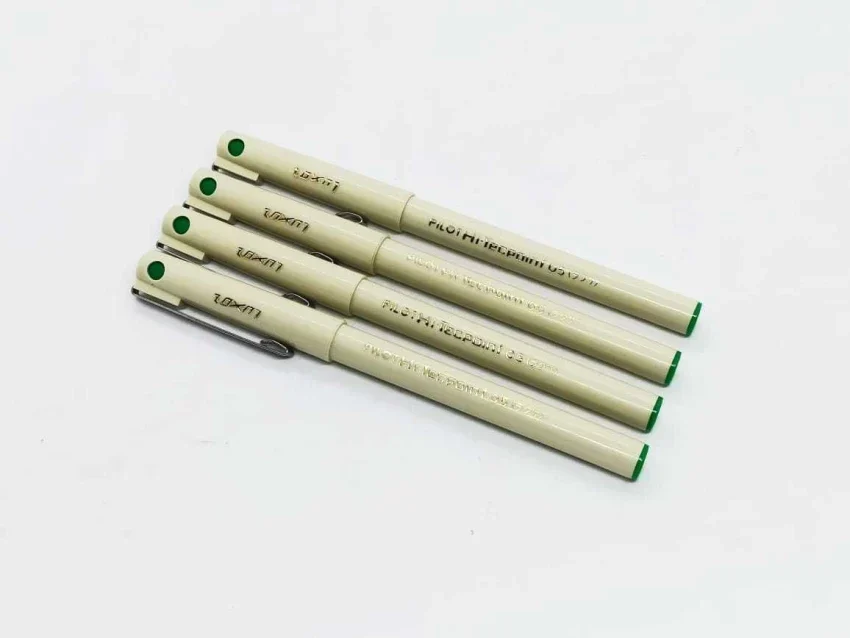
The name evokes images of a daring fighter pilot soaring through the clouds. But in the 1980s & 90s, the Pilot Pen was not famous for flying high; it was the ultimate, elite weapon of survival for every ambitious Indian student trying to conquer the grueling board exams. It was a status symbol, a security blanket, & the only pen trusted not to bleed to death on the cheap, rough recycled paper of an Indian examination booklet.
But behind the clinical, flawless engineering of that iconic needle-point tip lies a 40 yr story of an audacious Indian businessman who bet his entire life savings on a Japanese mechanism that the rest of the world thought was a gimmick.
In 1963, a young entrepreneur named Davinder Kumar Jain known to the industry simply as D.K. Jain started a tiny stationery business in New Delhi with an initial investment of just ₹5K & five employees. He named his brand Luxor.
At the time, the Indian market was fiercely divided. On 1 end were messy, leaky fountain pens that required constant, blue-stained refills; on the other were cheap, scratchy ballpoint pens that skipped words & forced students to press down so hard their wrists cramped. Jain realized that Indian students were desperate for a writing instrument that combined the fluid, effortless glide of a fountain pen with the clean convenience of a ballpoint.
In 1980s, Jain flew to Tokyo & knocked on the doors of the Pilot Pen Corporation, a Japanese giant founded in 1918 by a marine professor named Ryosuke Namiki.
The Japanese engineers had just perfected a radical piece of technology: a micro-engineered, ultra-fine liquid ink rollerball pen with a needle-point tip. Instead of a traditional thick ball, the ink flowed through a precision-cut tube made of stainless steel, delivering a perfectly regulated, mathematically exact line of water-based ink.
Jain looked at it & knew it was the holy grail for India.
He signed a historic partnership to bring Pilot to India under the Luxor umbrella. But when the 1st shipments landed, Indian shopkeepers were horrified by the price. In an era where a standard Reynolds ballpen cost ₹2, the new Pilot Hi-Tecpoint V5 & V7 series were priced at a staggering ₹15-20. Shopkeepers openly laughed at Jain. "Who will pay the price of a full meal just for a single pen?" they asked.
Jain refused to blink. He knew the Indian middle class: parents would skimp on their own clothes & food, but they would spend their last rupee if it gave their child an edge in education.
Luxor launched a massive, targeted marketing campaign aimed straight at the anxieties of students & parents. They positioned the Pilot pen not as stationery, but as an investment in a child’s future. The tagline promised flawless flow, zero smudge, & a tip that would never scratch/tear the paper during the most critical 3 hrs of a student's life.
The gamble paid off spectacularly. By the late 1980s, owning a Pilot V5/V7 became a rite of passage. Passing from the 7th to the 8th standard did not just mean a new grade; it meant your parents finally trusted you with a Pilot pen. Students would clip them proudly to their school uniform pockets like a badge of honor. The distinct, translucent cap with its metallic clip became the universal sign of an intellectual.
For 4+ decades, the partnership b/w Luxor & Pilot ruled the premium writing market in India. It survived the invasion of cheap gel pens, the rise of computers, & the decline of the traditional fountain pen.
But as the decades rolled on, a quiet corporate friction began to brew in the shadows. Luxor, while managing Pilot, had also grown into a massive empire selling its own homegrown pens, alongside other licensed global giants like Parker & Waterman. The Japanese executives at Pilot headquarters in Tokyo felt their legendary products were no longer getting the exclusive spotlight they deserved in the booming Indian economy.
In a stunning corporate twist, Pilot Corporation decided it was time to cut the cord. After a historic, unbroken 40 yr marriage, Pilot officially ended its partnership with Luxor.
Instead of retreating, the Japanese titan doubled down on its belief in the Indian writer. They poured ₹70 crore into setting up their own massive, state of the art manufacturing plant right on Indian soil, launching an aggressive solo journey to penetrate deep into Tier-II & Tier-III towns, vowing to put a high-tech needle-point pen into the hands of a whole new generation.
Pilot did not capture the Indian heart because of aggressive corporate discounts/flashy western aesthetics. It conquered the nation because a visionary Indian businessman recognized that in a country obsessed with academic excellence, a pen that never skips a drop of ink is a holy relic.
The next time you sign a contract/watch a student frantically scribbling notes in a cafe, take a moment to look at the tip of the pen; for that tiny, gleaming silver needle is not just holding a drop of liquid ink, it is holding the collective, anxious memories of millions of Indian children who stared down the terror of a blank exam sheet, & wrote their way into the future.
In the late 1800s, while the West claimed that India was a land of mysticism & snake charmers, 1 man was proving that ancient India had mastered the Atomic Theory & Calculus centuries before Europe. Brajendra Nath Seal was not just a scientist; he was a Universal Mind who encoded the logic of the past to build the lab of the future. He was the silent mentor who sat in a room filled with smoke & ancient scrolls, handing out the mathematical keys that allowed India’s greatest scientists to unlock the secrets of plants and chemicals.
Seal was a polyglot who mastered nearly every branch of human knowledge, from deep-sea biology to advanced mechanics. J.C. Bose drew on the intellectual currents of Bengal’s renaissance, including the philosophical insights of scholars like Brajendranath Seal. Seal’s deep studies of Samkhya & ancient Indian positive sciences offered frameworks of continuity b/w matter & life that resonated with Bose’s experiments on plant responses
In 1915, Seal published a masterpiece called The Positive Sciences of the Ancient Hindus. He did not just make vague claims. He used rigorous mathematics to prove that ancient Indian thinkers had calculated the size of an atom & understood the circulation of blood & nervous system long before the Renaissance.
This was not just pride; it was a scientific weapon. It gave Indian scientists the intellectual permission to compete with the British as equals, not as students.
A young P.C. Mahalanobis (the founder of ISI Kolkata) once went to Seal for advice. Mahalanobis was obsessed with the Anthropometric data of different tribes. Seal warned him that his math was too simple & introduced him to the concept of Biometry.
W/o Seal’s Hidden Hand, the Indian Statistical Institute might never have reached the level of global rigor it did.
Seal worked closely with P.C. Ray (the father of Indian Chemistry). While Ray was in the lab boiling nitrates, Seal was in the library deciphering 10th century Sanskrit texts on metallurgy. He provided the formulas for ancient chemical processes that Ray then used to manufacture world-class medicines in India.
Seal was so respected that he was asked to lead the Mysore University as Vice-Chancellor. He transformed it from a sleepy provincial college into a powerhouse of research. Despite being the Brain of Bengal, he never chased patents/fame. He gave his ideas away for free. He was a Knowledge Infra, the solid ground upon which the towers of Indian science were built.
Brajendranath Seal was the Operating System upon which the greatest Bengali minds ran their software. He proved that an Indian did not need to become Western'to be scientific; they just needed to remember who they were. He remains the Ghost of the Library, the man who knew everything so that India could become anything.
Imagine a man surrounded by 10000 books in 10 different languages, pointing a finger at a complex equation & telling a Nobel-caliber scientist, "You are looking at it wrong. The answer was written 2000 yrs ago, you just need to translate it into math."