Tesla가 라이다를 안 쓰는 이유는 하나임. 세상 어떤 센서도 미래를 알려주지 않기 때문임.
9월 3일 오스틴 Cybercab 출시 행사에서 Tesla AI 소프트웨어 부사장 Ashok Elluswamy가 한 말임.
12년 전 자율주행을 시작했을 때부터 전문가마다 카메라만으로는 안 된다고, 라이다와 레이더와 HD 맵이 있어야 한다고 했다고 함.
Tesla는 자율주행의 핵심이 센서가 아니라 지능이라고 봤고, 지금 무슨 일이 벌어지는지 이해하고 다음을 예측하는 건 센서가 아니라 에이전트가 하는 일이라는 것임.
증거는 사람임. 사람이 하루 종일 카메라 두 개로 운전하니까 이미 되는 걸 디지털 컴퓨터에 넣을 방법만 찾으면 됐다는 논리임.
그리고 무감독 로보택시 100만 마일 달성을 발표했음.
Waymo는 라이다 4개 카메라 13개로 같은 길을 가고 있고, 어느 쪽이 맞는지는 이제 논문이 아니라 오스틴 45대의 사고 기록으로 갈림.
The future of transport is safer, more enjoyable & gives you more time back
With theater, music & gaming apps on a 22" touchscreen, Cybercab offers you a space to be productive or unwind
Soon to be equipped with V5 Starlink hardware, too, for complete connectivity
BREAKING: Tesla has officially started offering Cybercab rides to the public.
I’ve been waiting years to say that!
I took one of the world's first public rides. The cabin is comfortable and spacious, the suspension is soft, and FSD is VERY smooth. It’s an incredible vehicle. The screen is HUGE. The video doesn’t do it justice.
We can ride in the Cybercab anywhere in Tesla’s Austin service area, so the same areas as the Model Y Robotaxi.
The Cybercab lives up to the hype. It will transform travel.
Here's a clip of my ride:
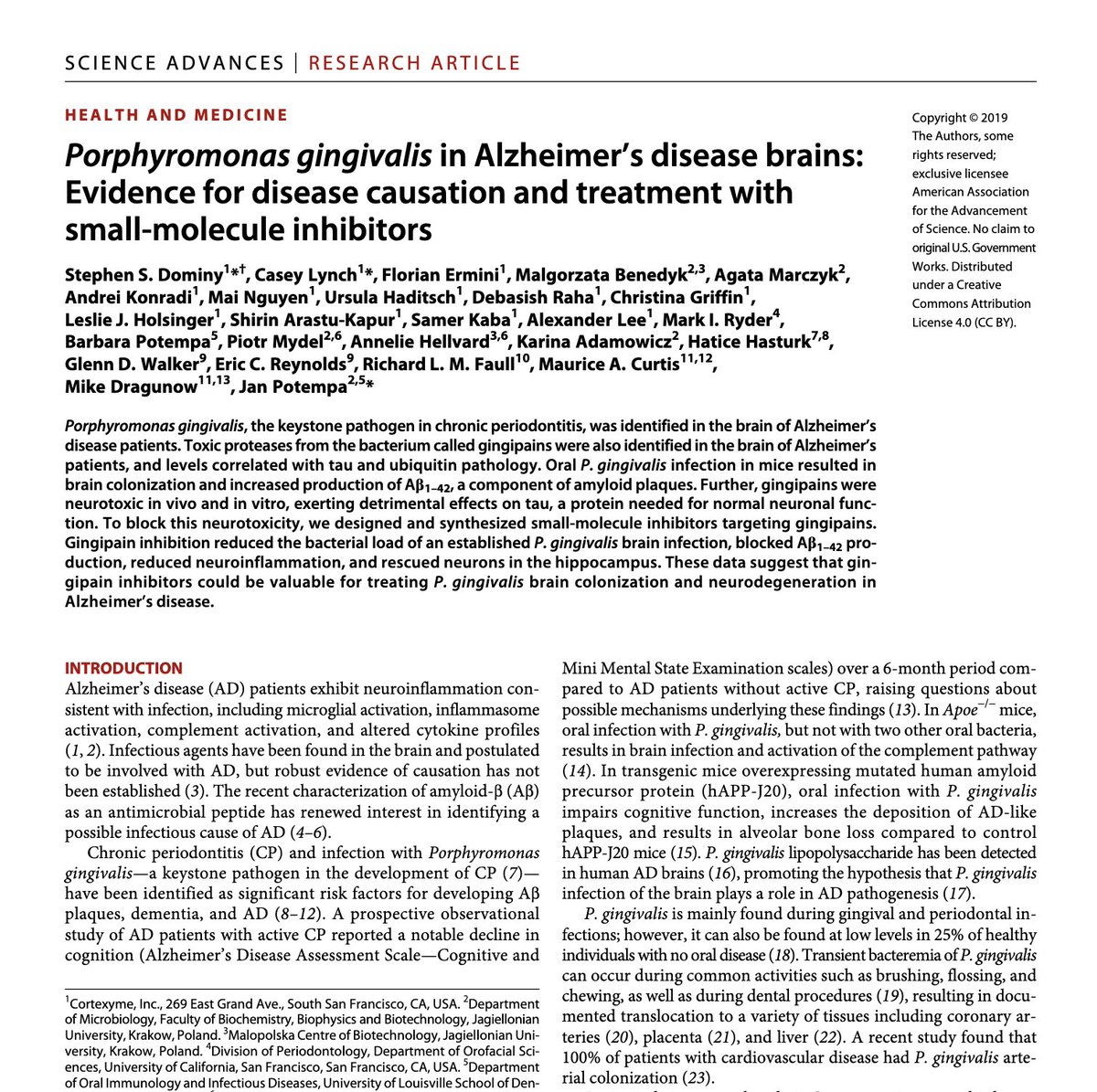
Researchers cut open the brains of Alzheimer’s patients and found a bacteria living inside 90% of them.
It’s the exact same bacteria that lives in your mouth right now.
For decades, medicine treated Alzheimer’s as an unavoidable genetic flaw or a random protein glitch.
The leading theory blamed "amyloid plaques”, sticky protein buildups that choke off brain cells. Big Pharma spent billions trying to destroy these plaques.
Almost every single drug trial failed.
A groundbreaking study published in Science Advances revealed why.
The protein plaques aren't the primary cause of the disease.
They are the brain's desperation defense mechanism against an invader.
The culprit is Porphyromonas gingivalis, a common bacterium that thrives in infected gums.
When your gums bleed, the bacteria enters your bloodstream. Over years, it breaches the blood-brain barrier and secretes toxic enzymes called gingipains.
These toxic enzymes literally slice up brain tissue, destroy neurons, and trigger devastating memory loss.
To defend itself, the brain produces amyloid proteins to trap the bacteria.
We weren't looking at the cause of Alzheimer's.
We were looking at the crime scene aftermath.
When researchers infected healthy mice with the gum bacteria, the mice developed brain infections, amyloid plaques, and rapid neural damage.
When they gave the mice a targeted drug to block the bacterial enzymes, the brain infection cleared, neuroinflammation dropped, and dying neurons were rescued.
Alzheimer’s may not be an irreversible decay of the mind.
It might be a chronic bacterial infection we’ve been ignoring for decades.
The solution to one of humanity's most terrifying diseases might not start in a neurology ward.
It might start in your mouth.