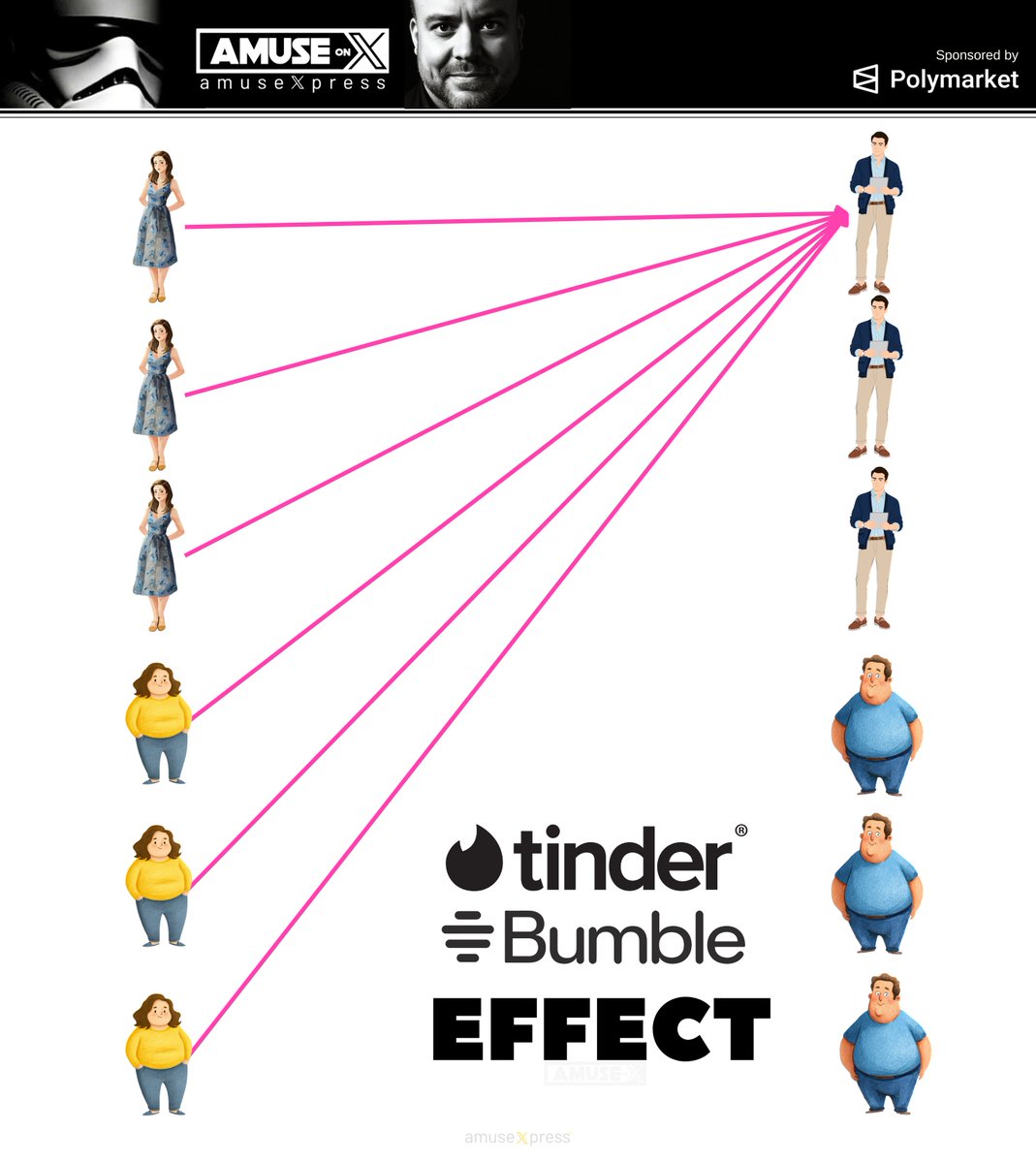
GENOCIDE? Algorithmically-curated dating apps have engineered a generational mismatch in romantic expectations that mirrors the worst dynamics of winner-take-all markets and positional goods inflation. Traditional courtship was bounded by geography, social circles, and time, forcing realistic self-assessment and holistic evaluation of partners across sustained interaction. Swipe-based platforms obliterated those constraints, collapsing all of human mate selection into a single ranked marketplace where hypergamy, the female preference for partners of equal or higher status, now operates without friction or limit. The data is not subtle: the top 20% of men on these platforms receive roughly 80% of female attention, a Gini-coefficient-level concentration of desire that has no precedent in the history of human courtship. Those men rationally respond to sudden abundance by abandoning commitment entirely, because the incentive to settle has been structurally demolished. At the same time, women who periodically access that top tier, regardless of how briefly or on what terms, permanently recalibrate their expectations upward, pricing themselves out of the realistic market of men who would have made them genuinely happy. Neither group is acting irrationally given the incentives presented to them, which is precisely what makes this so damaging: the apps have not corrupted individual character so much as they have poisoned the entire coordination mechanism through which generations of ordinary people found lasting partnership. The consequence is not a dating culture that is merely unsatisfying. It is one that is structurally incapable of producing the outcomes most of its participants actually want.
h/t @Degen_Poster
Unilever makes 250,000 job applicants play video games before they’ll even look at a resume.
For their Future Leaders program, instead of reading cover letters, they run candidates through 12 neuroscience-based games built by Pymetrics (now owned by Harver) that measure how you make decisions under pressure, how you handle risk, and how fast you learn. The games cut their hiring time from four months to four weeks and saved over 50,000 hours of recruiter time. JPMorgan, BCG, Accenture, Mastercard, and McDonald’s all use the same platform.
There’s real science behind this. Researchers at three European universities put 40 business students through Sid Meier’s Civilization, then ran them through a Fortune 500-style management assessment center. Published in the Review of Managerial Science in 2020, the results were clear: students who scored highest in the game scored highest on problem-solving, organizing, and planning. They also had better grades.
A 2013 study at Queen Mary University of London found the same pattern with StarCraft. 72 volunteers got 40 hours of training. The StarCraft group showed a significant improvement in cognitive flexibility (your brain’s ability to switch between tasks and think on your feet) compared to a control group that played The Sims. The statistical evidence was 40 times stronger than what you’d expect from chance.
SimCity specifically has been used in university urban planning courses since 1994, when a professor named John Gaber started assigning it to teach systems thinking. A 2025 study found students who played it showed a 26% improvement in understanding sustainable city design, and 81% applied what they learned in the game to real projects.
The Civilization study was a proof-of-concept with 40 students, not a 10,000-person trial. But the pattern across multiple studies, multiple games, and a $20 billion gamification industry keeps pointing the same direction. The meme is a joke. The science behind it isn’t.
Before Uber arrived, taxi commissions were textbook regulatory capture in action. In New York, medallion prices hit $1.3 million in 2013 — for a piece of metal that gave you permission to drive people around. The Taxi & Limousine Commission wasn't regulating taxis, it was running a cartel that artificially restricted supply to enrich medallion owners.
And these weren't mom-and-pop drivers getting rich. Most medallions were owned by fleet companies and investors who leased them back to drivers for $100+ per day. The drivers — often immigrants working 12-hour shifts — barely scraped by while the medallion holders collected economic rents backed by government force.
The whole system was built on the fiction that customers needed "protection" from competition. But what customers actually got was expensive rides, surly service, and cabs that mysteriously broke down when you wanted to go to certain neighborhoods. The real protection was for medallion values, not consumers.
When Uber bypassed this racket entirely, the taxi industry screamed about "unfair competition" and "safety." The same regulators who had ignored decades of poor service suddenly discovered concerns about consumer welfare. Amazing how quickly regulatory priorities shift when the regulated industry's profits are threatened.
Робота мрії!
Заробітна плата від 52 000 грн на місяць, безкоштовний проїзд на суму від 7 000 на місяць, повна компенсація оренди житла у столиці від 19 000 грн на місяць, службовий автомобіль, 200 000 на місяць просто за те, що ти зобов'язаний виконувати свої обов'язки, 250 000 грн на місяць на помічників, які носять за тобою портфель та бігають за пивом.
Доплата на оздоровлення, оплачувану відпустку, гарантована висока пенсія.
На роботу можеш не ходити – твоя присутність не обов'язкова. Можеш працювати віддалено: із Канади, Великобританії, з дому. Зарплата та надбавки йдуть без затримки.
Щоб ти не напрацював – відповідальності немає! Щоб ти не наговорив – відповідальності немає.
У п'ятницю - короткий день починається до 9 ранку, на роботу можна не виходити. А на фіга? Це ж п'ятниця! У решту днів короткий робочий день до 14 години дня. Ні, офіційно це робочі дні, але на цей роботі робочий день не нормований!
Жодної відповідальності за прийняті тобою рішення.
Вміти писати, читати, говорити необов'язково! Мати досвід роботи не обов'язково! Мати вищу освіту не обов'язково! Розуміти, що ти маєш робити, не обов'язково!
Як ви вважаєте, що це за робота? І як на неї можна влаштуватися?
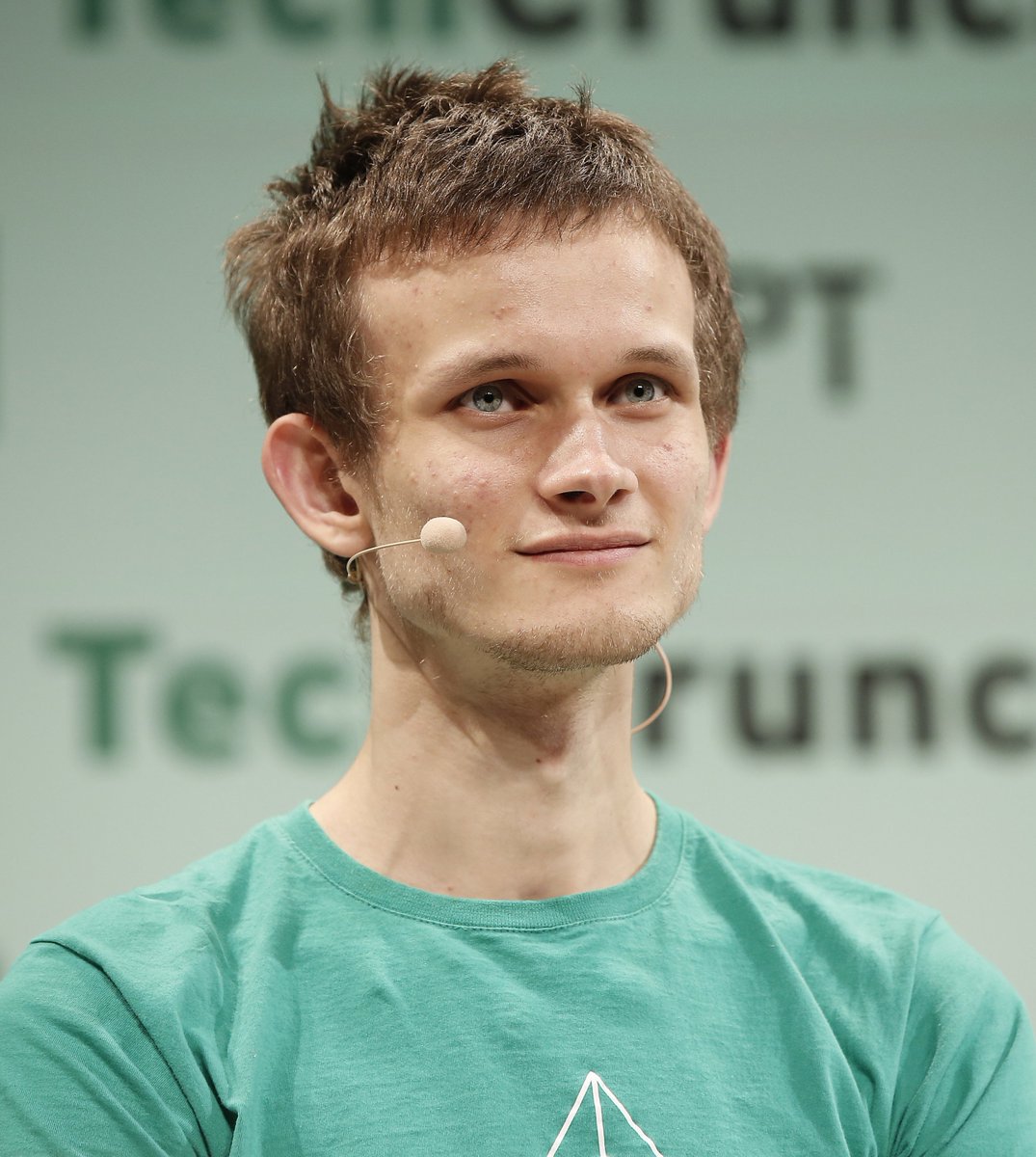
A $500 billion blockchain exists because a 15 year old cried himself to sleep over a World of Warcraft update
In 2010, Blizzard nerfed Vitalik Buterin's favorite Warlock spell in World of Warcraft
His own words: "I cried myself to sleep, and on that day I realized what horrors centralized services can bring"
Quit the game. A year later his dad showed him Bitcoin.
He couldn't mine it and couldn't afford to buy it.
So he started writing articles for a crypto blog for 5 BTC each, worth about $3.50 at the time.
Those 5 BTC are worth $335,000 today for ONE article.
Co-founded Bitcoin Magazine at 17.
Applied for a job at Ripple.
They accepted him but couldn't sponsor his visa.
At 19 he proposed major changes to Bitcoin.
The community said no.
So he wrote his own whitepaper. Called it Ethereum.
30 developers reached out within weeks.
Dropped out of college. Got a $100K Thiel Fellowship. Sold ETH at $0.31 in the ICO and raised $18 million.
One person spent $310,000 on 1 million ETH in that sale worth around $4.3 billion at peak.
Another one invested $263 and got 850 ETH now worth over $1.7 million.
Ethereum launched when Vitalik was 21. Peak market cap: over $500 billion.
All because Blizzard nerfed a Warlock spell.
If I moved to Japan, and lived in Japan for decades, speaking the language, integrating into society, contributing to the economy. Would I be ethnically Japanese? No. No I would not. I would never pretend to be. Nor would that apply to India, Thailand, Mexico, Denmark or anywhere else.
So why is England different? Of course there is an English ethnicity. I am entirely bemused by how so many argue against that. It’s just a fact. Politicians who say otherwise are cowards. This is painfully obvious.
Restore Britain’s position is clear.
English ethnicity exists - it’s the only sodding data point that the Government collects on anything.
Of course someone who is not of that ethnicity can be British, obviously. But it equally does not mean that the English ethnicity is imaginary. Those two things can be true at the same time.
I got in trouble years ago for suggesting that the footballer Paul Pogba was French, but not ethnically French. It’s insanity. That is just a factual position. Common sense, clearly.
Separately, Restore Britain has said from the very start - owning a British passport does not make you British.
We have seen how lazily those documents have been frittered away. Holding that piece of paper does not automatically make you British, we are very clear on that.
Is the Egyptian lunatic Alaa Abd El-Fattah British? He has a passport. Restore Britain says NO. No, he is not and he should be stripped of that paper and deported.
Being British encompasses so much more than that, it means so much more than that. It is not simply a piece of paper. It is culture, shared beliefs, patriotism, language, a common understanding of what is right and wrong. That has nothing to do with ethnicity, obviously.
But for even daring to suggest that English ethnicity exists I’ll be roundly attacked.
It is just a fact.
Every other country in the world manages to acknowledge ethnicities exist without descending into hysteria.
England should be able to do the same.
Turns out with claude code, my decades long strategy of NOT deeply learning:
- regexs
- sql
- nginx confs
- elaborate shell commands
- advanced shell scripting
- any javascript framework
- perf optimization
- webpack, cdns, bundlers
- 1000 other things
...was entirely correct.
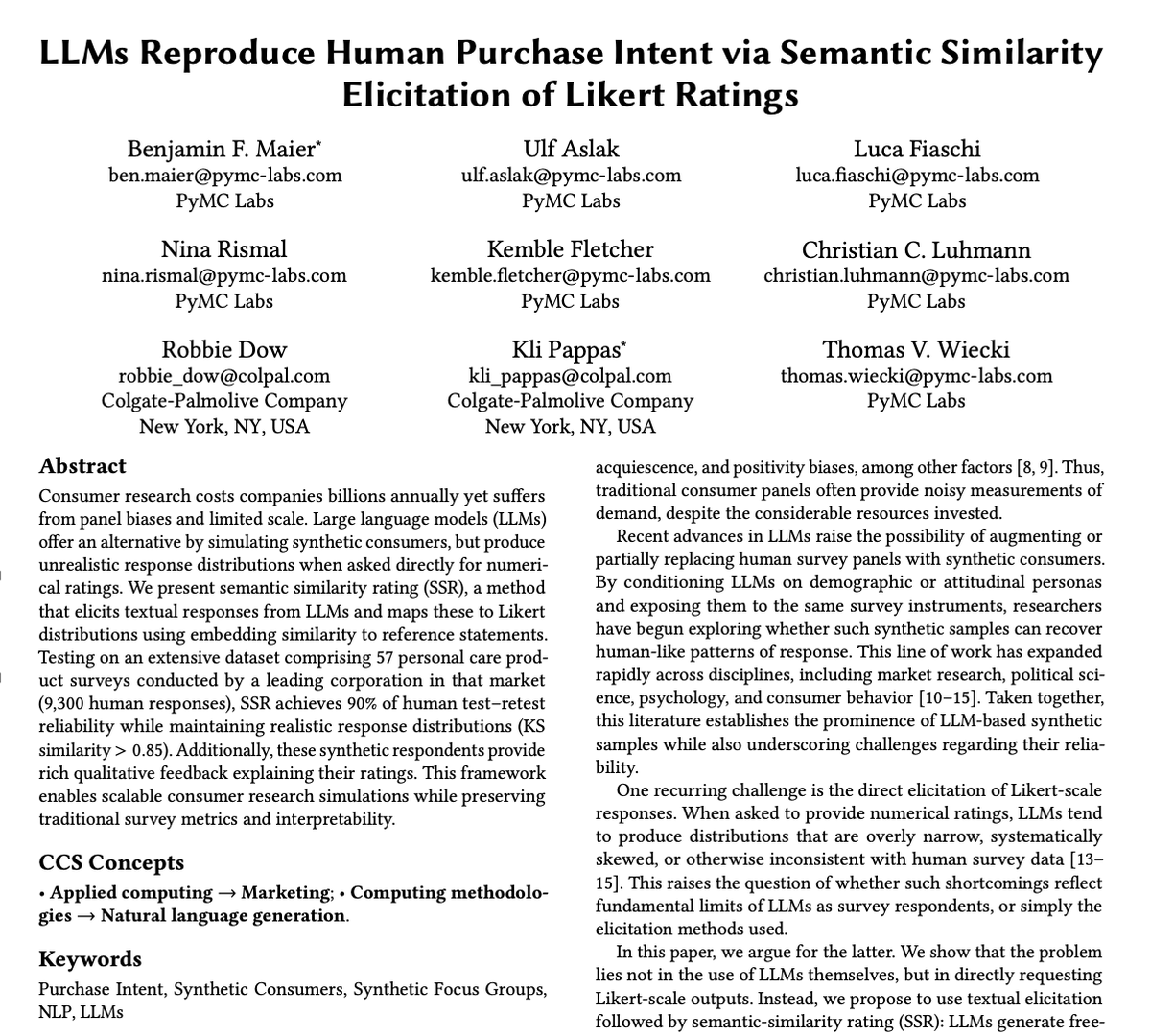
This paper shows you can predict real purchase intent (90% accuracy) by asking an LLM to impersonate a customer with a demographic profile, giving it a product & having it give impressions, which another AI rates.
No fine-tuning or training & beats classic ML methods.
This is BEYOND insane:
This is your daily reminder that LinkedIn has 21,000 employees and there's still no way for an employer to easily remove someone who falsely claims they work at your company.
You can literally just say you worked anywhere (like this guy in Pakistan)
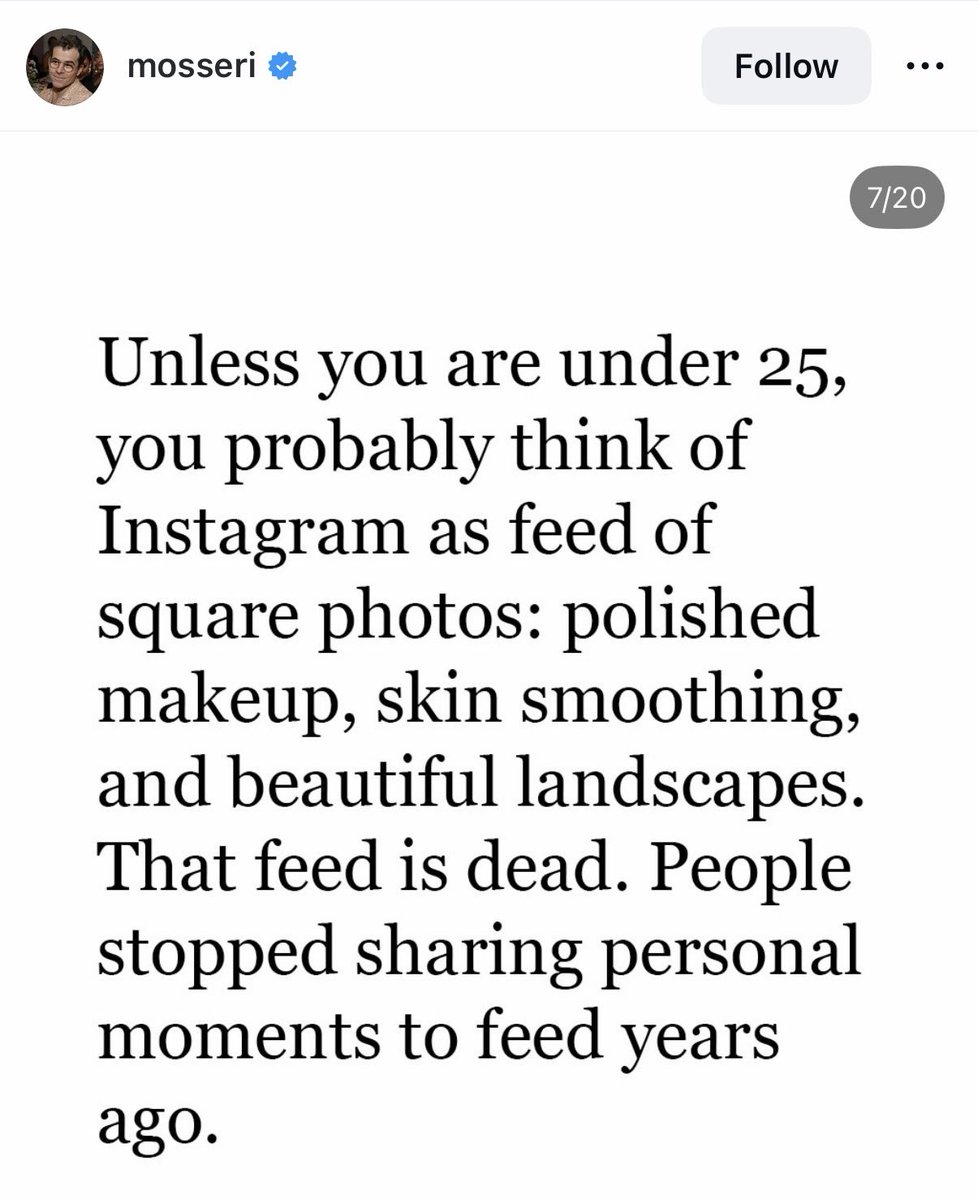
Apps to “share photos and updates with friends” always behave like unstable elements.
They exist for a few years before the product inevitably decays into something else (like we’ve seen with both IG and Facebook).
Interesting reflection here from the Head of IG.
Через 10 дней российское полномасштабное вторжение в Украину по длительности сравняется с советско-германской войной (ВОВ).
В 4 утра 22 июня 1941 года танки Третьего рейха пересекли границу СССР, а через 1418 дней был взят Берлин, и гитлеровская Германия была повержена. В 4 часа утра 24 февраля 2022 года российские танки пересекли границу Украины и устремились к Киеву, Харькову и Одессе. Через 1418 дней боев российские войска оказались окружены в Купянске, районном центре Харьковской области.
Несмотря на подлое, вероломное нападение, преимущество в численности населения, размере экономики, территории, количестве наземной техники, флота и авиации, снарядов и ракет, российская армия не смогла достичь ни одной стратегической цели в Украине. Через 1418 дней вторжения Россия контролирует меньше территории, чем в марте 2022 года.
Чтобы спустя четыре года войны позориться под Купянском, Россия потратила почти триллион долларов и потеряла около 1,2 млн человек убитыми, ранеными и пропавшими без вести. Еженедельно гибнут или получают ранения около 9 000 россиян – почти столько же, сколько за все 10 лет войны в Афганистане. Каждую неделю российские власти тратят на войну более 250 млрд рублей – это больше годового бюджета 62 регионов России. И так уже 202 недели подряд.
Чтобы на четвертый год войны вести бои за развалины райцентра Волчанск в пяти километрах от государственной границы, России пришлось провести мобилизацию, набрать около миллиона контрактников, клянчить солдат у Северной Кореи, вербовать сомалийцев и шриланкийцев, выпускать из тюрем осужденных убийц.
Если война продлится еще 1,5 года, в школу пойдут дети, родившиеся до ее начала, но даже тогда главными «успехами» России останутся стертые с лица земли городки на востоке Украины. И это – несмотря на использования практически всех имеющихся российских вооружений и тактик. Россия впервые в мировой истории применила межконтинентальную баллистическую ракету, ударив по Днепру в ноябре 2024 года.
С начала вторжения, Россия направила на украинские города более 10 000 своих и северокорейских ракет, больше 30 тысяч иранских «Шахедов», больше 100 тысяч авиационных бомб. В надежде, что украинцы замерзнут зимой, Россия целенаправленно бьет по ТЭЦ и электростанциям. Россия полностью уничтожила 408 украинских учебных заведений, еще 3640 – повреждены. Россия полностью уничтожила 300 больниц и других медицинских учреждений, а 2200 повредила. Разрушены или повреждены 494 церкви и религиозных сооружения. Россия лишила жилья более 3 миллионов человек, уничтожив или повредив свыше 320 тысяч жилых зданий. Почти 8 миллионов человек стали беженцами. Десятки тысяч мирных жителей погибли, среди них – 630 детей. Более 2000 детей получили ранения, больше 20 тысяч украинских детей были похищены и вывезены в Россию. Все это ради того, чтобы спустя четыре года войны, все еще в 60 километрах к западу от Донецка, гнать солдат в мясные штурмы на лошадях, ослах и танках-сараях.
То, что Россия проиграла в Украине, очевидно. Если бы в такой капкан попала любая другая страна мира, она попыталась бы зафиксировать убытки уже в первый год войны. Но в войне России против Украины нет рациональности и логики: она началась и продолжается по воле человека, одержимого идеей возрождения империи. Как когда-то другой диктатор – Адольф Гитлер – потерял связь с реальностью и погрузился в мир фантазий о «тысячелетнем рейхе», так и нынешний кремлевский карлик решил, что уничтожение Украины и геноцид украинского народа – его «историческая миссия». Но его ожидает место в истории среди других безумных диктаторах, на чьих руках только кровь.
Locking the camera to the stars instead of the horizon changes everything.
It’s actually kind of terrifying to see the Earth spinning beneath us like this. 🌍🌌
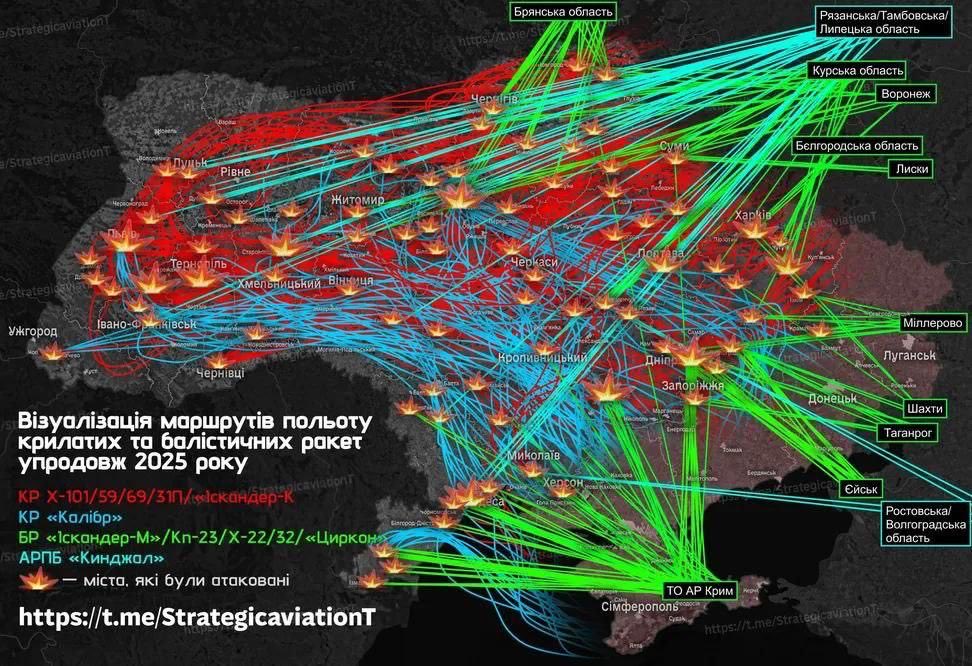
Map of the flight paths of Russian cruise missiles and ballistic missiles throughout 2025.
The number of missiles launched and the cities targeted is simply shocking.
Worked 2 decades in in consulting.
Made Partner in my 30s.
Led teams of 100+ people.
Run 9-figure client portfolios.
Lived and worked in 4 continents.
Built 1000s of small/medium/large text slides.
I learned something nobody tells you when you start:
Junior consultants are rewarded for SMALL text, Partners are paid for LARGE text.
If you cannot take an ambiguous situation and turn it into 1 clear sentence that can be said inside a hostile room, you are not senior yet - no matter your title.
- AI will write the small text;
- Frameworks will commoditize the medium text;
- The scarce skill is knowing what deserves to be large.
Let me give you the practical bit: 5 steps to evolve, in plain English.
1) USEFUL > CORRECT
Being useful is obvious, while sometimes being correct is invisible.
A senior client does not care that your logic is perfect if it does not change what their team does. So when you present something, do not lead with "here is the analysis" but with a consequential "here is what I think we should do."
Then support it.
If you can only show work but cannot recommend, you are still in small-text mode.
2) ASK APPROPRIATE QUESTIONS
"What goes wrong if we get this wrong?"
This is the fastest way to sort information from dust. If the answer is "not much", it is small text. Put it in an appendix or delete it.
If the answer is "we lose money," "we lose the regulator," "we lose customers", "we lose the program", etc then it is large text. It belongs on the first page, in big font, with zero fluff.
Senior people care about consequences, not completeness.
3) SAY IT IN ONE SENTENCE FIRST
I insist often on this point. Before you build the deck, force yourself to write one sentence:
"We should do X because Y, otherwise Z happens."
If you cannot do that, you are not ready to present: you are still THINKING!
Slides are often used as emotional support: this 1-sentence approach removes the hiding place.
Once the sentence is clear, the rest of the deck becomes easy: it is just proof.
4) DISAGREE EARLY
Junior consultants wait until slide 27 to "carefully" disagree. They hedge the sh*t out of every statement.
Senior consultants surface the disagreement in the first 5 minutes, while the audience still has energy and they are still thinking.
Simple language works best:
"I do not think that will work."
"I see the logic, but here is the risk."
"I would not bet my name on that assumption."
Always bear in mind that people respect consultants for being clear, not agreeable: as one of my bosses once told me "We are not here to please".
5) END WITH A DECISION AND NEXT STEPS
Most meetings go nowhere because nobody lands the plane.
A senior consultant does the opposite: they CLOSE.
Try phrases like:
"Okay. The decision is X. Are we aligned?"
"If we cannot agree today, the default is Y. Is anyone strongly against it?"
"Let us decide now, and we can adjust in two weeks with real data."
Your job is to create movement. Instead, a lot of small-text consultants believe their job is to keep the conversation going. Wrong.
---
That is the shift from small to large text:
from "look how much I know" to "here is what we are doing."
Incorporate these tips in your day-to-day.
Let me know what you'd add as #6...
... And share this post if you think it'll be useful to others.
All the best!
Docker just gave the community an early Christmas present.
Yesterday, they open-sourced their entire catalog of 1,000+ Docker Hardened Images under Apache 2.0.
These images were previously enterprise-only. Now everyone gets:
→ Near-zero CVEs out of the box
→ Up to 95% smaller attack surface
→ Built from source, not patched binaries
Why this matters 👇
Container supply chain security has been a "pay to play" game. Smaller teams either accepted vulnerability debt or spent cycles hardening images themselves.
That barrier just disappeared.
Whether you're a solo developer or a Fortune 500, you now have access to the same security baseline.
The timing is telling. Docker Hub recently made headlines for thousands of images leaking production credentials.
This move feels like Docker drawing a line: security shouldn't be a premium feature.
Smart strategy. Good for the ecosystem.
16 мая 1940 года британская газета Daily Mirror опубликовала эту карикатуру и посвятила ее всем идиотам, призывавшим в то время к переговорам с Гитлером. «Попробуй договориться с ним».
На карикатуре европеец держит в руках два плаката с надписью: «Мир и переговоры и «Заключите сделку с Гитлером сейчас!».
С тех пор прошло много лет, но мало что изменилось. Еще есть люди, которые верят в переговоры с террористическими организациями и психами, целью которых является уничтожение всех евреев.
In 1958, German inventor Artur Fischer transformed construction forever with the creation of the plastic wall plug-a deceptively simple tool that allowed screws to grip firmly in concrete, brick, and drywall. This humble invention revolutionized DIY and professional building alike, earning Fischer over 1,100 patents and a place among the most prolific inventors of the 20th century.