I have a Bitcoin client
who just lost all his Bitcoin.
He isn't wealthy.
He finally made it to 1 BTC.
I celebrated with him over the phone.
But within days of him finally leaving Coinbase to setup a distributed multi-key security and inheritance protocol, he was approached by a “trader” who told him he could double his money.
On top of that the trader was an attractive woman who fell in love with him. They were set to spend Christmas together.
Since I had recently spent hours getting him set up with his own private keys distributed into a multisig setup with @TheBTCAdviser and @unchained I knew he was beyond safe from silly scams.
He can do whatever he wants whenever he wants. He just has them separated for security and inheritance.
But as a safety precaution, red flags went up when he requested that BOTH companies sign (rare and odd).
That implies that a client lost their single key since only two keys are needed to send or spend his bitcoin.
@PeterBTCAdviser (The Bitcoin Adviser) sent me a quick message to make sure my new client knew what he was doing.
Why wouldn’t he just use his own key? If he lost it, we would want to help him set up a new 2 off 3 wallet before doing anything.
And separately Unchained also found it odd and didn’t sign until they could reach the client for confirmation.
My client was falling for a pig butchering scam.
I had numerous phone calls (hours!) and a string of text messages with him because he refused to believe me.
No matter how much I begged and tried to get as respectfully aggressive as I could he was convinced this was for real, said he was a big boy, and it was his Bitcoin and he wanted to send it to this woman.
He was recently divorced with a young daughter, barely had any money except for this Bitcoin, and this woman “loved” him so much that she wanted to help him make quick gains… and then they could be together (he bought her a plane ticket).
So I let both companies know that regardless of the purpose the client was requesting these transactions and to lift the red flags.
Peter and I had a phone call and said this is just so sad. He’s going to lose all of his bitcoin. But we are not here to censor or judge how people spend their own money. All we could do is impose a delay and try to educate.
To hopefully cool him off a little bit and give me more time to talk to him. I had him set up a single signature wallet separately.
I said, if you’re sending out of your multi signature wallet let’s at least send whatever you wanna give to this woman to your own wallet first and then from there you can do what you want.
And so that bought us a few days with his busy schedule. For a moment had hope.
During this time, I sent him articles about the scam. I reminded him about the properties of Bitcoin and what he had… and that he was about to fumble generational wealth for him and his daughter.
But he can do what he wants.
Bitcoin is permissionless.
And as of last night while out to dinner, I received a devastating text message from him saying he had lost it all.
* I post this as a warning to anyone else you might know who falls victim to this scam. Bitcoin can’t magically double, and and it certainly can’t double by someone you haven’t met who is also falling in love with you.
Bit Bonds, are they coming?
The proposed 10-year Bit-Bonds, as suggested by Newmarket Capital CEO Andrew Hohns, represent an innovative approach to government financing and Bitcoin acquisition. Here are the key aspects of this concept:
Structure and Purpose
1. Bit-Bonds would be a new type of U.S. Treasury bond incorporating Bitcoin.
2. The proposal suggests issuing about $2 trillion in Bit-Bonds.
3. 90% of funds would be for government use, while 10% would be used to purchase Bitcoin.
Financial Benefits
1. Lower interest rates: Bit-Bonds would offer 1% per year compared to 4.5% for traditional U.S. Treasuries.
2. Potential savings: The government could save $554 billion in 10-year interest rates.
3. Bitcoin acquisition: At current prices, this could allow the U.S. to acquire about 2.22 million Bitcoin.
Investor Incentives
1. Tax-free status: Proposed to be free of income and capital gains tax for American citizens.
2. Attractive returns: Investors could potentially earn 7% to 17% annually, depending on Bitcoin's performance.
3. Dual benefit: Fixed return of 4.5% compound annual growth rate, plus 50% share of Bitcoin's upside.
Strategic Implications
1. National debt reduction: The plan aims to potentially *defease the federal debt by 2045.
2. Strategic reserve: Building a significant Bitcoin reserve for the U.S. government.
3. Inflation hedge: Presented as a tool for American families to defend against inflation.
Potential Impact
1. Institutional adoption: Could attract foreign investors and serve as collateral for various financial arrangements.
2. Market influence: Large-scale government involvement could significantly impact Bitcoin's price and adoption.
While the Bit-Bond concept presents an intriguing approach to government finance and cryptocurrency integration, it's important to note that this is currently just a proposal and would require significant legislative and regulatory changes to implement1.
*"Defease" means to defeat, annul, or render void a contract, deed, or other legal instrument, often used in the context of property law or debt obligations.
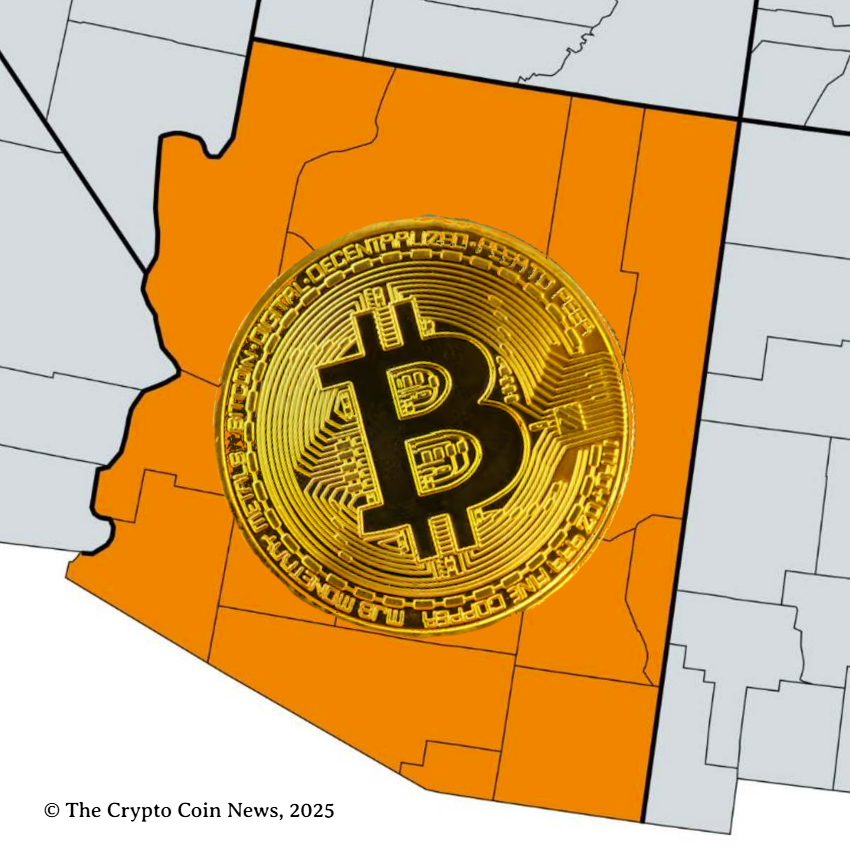
Arizona Advances Bitcoin Reserve Bills, Leading State-Level BTC Adoption
Two Strategic Bitcoin Reserve (SBR) bills successfully passed the Arizona House Rules Committee on March 24, positioning the state as a frontrunner in the movement to integrate Bitcoin (BTC) into government-held reserves. The bills—Senate Bill 1373 (SB 1373) and the Arizona Strategic Bitcoin Reserve Act (SB 1025)—will now proceed to the House of Representatives for a full vote.
Arizona’s Push for a Bitcoin Reserve
In a post on X, the watchdog account Bitcoin Laws (@Bitcoin_Laws) confirmed the committee’s approval, stating: “Arizona’s House Rules Committee passed both SBR bills (SB1373 and SB1025), ruling them ‘constitutional and in proper form.’ The bills have now passed their assigned committees, meaning they should be headed for a full floor vote.”
Despite this progress, Governor Katie Hobbs (D) could be a significant obstacle to the bills’ enactment. She has a well-documented history of vetoing Republican-led legislation, having rejected 73 out of 330 bills in 2024—a veto rate of 22%, the highest in the nation. With Republicans holding a narrow 33-27 majority in the Arizona House, the bills’ passage remains uncertain.
Understanding SB 1373 and SB 1025
SB 1373, known as the Strategic Digital Assets Reserve Bill, proposes the establishment of a state-managed digital assets reserve funded primarily by assets seized in criminal proceedings. The Arizona state treasurer would oversee the reserve, investing no more than 10% of its total value per fiscal year. Additionally, the bill allows for the lending of these assets to generate returns while ensuring financial stability.
SB 1025, the Arizona Strategic Bitcoin Reserve Act, is more specific to BTC investments. It would empower the Arizona Treasury and the state’s retirement system to allocate up to 10% of available funds into Bitcoin. The legislation also outlines provisions for securely storing these holdings in a segregated account within a federal reserve facility, should such an infrastructure ever be established.
The National Bitcoin Reserve Race
With these bills advancing, Arizona is leading a nationwide race among states to integrate BTC into their strategic reserves. However, it is not alone in this effort:
Oklahoma: On the same day, the Oklahoma House of Representatives passed HB 1203 by a 77-15 vote, moving the bill to the Senate.
Texas: Earlier this month, the Texas Senate approved SB 21 with a 25-5 vote, sending it to the House. However, Democratic Representative Ron Reynolds has proposed capping the reserve at $250 million, sparking further debate.
Utah: The state has passed SBR legislation through one legislative chamber, placing it among the handful of states nearing full legislative approval.
Bitcoin Laws highlighted Arizona’s position in the race, stating, “Oklahoma joins Texas, Arizona, and Utah as the only state legislatures to pass Bitcoin Reserve legislation through one chamber. Arizona remains in the lead.”
At the time of writing, Bitcoin is trading at $88,070.41, underscoring the growing momentum for state-level BTC adoption.
@TheCryptoSquire please practice what you recommend in your bio... "DYOR'!
Your post is very incorrect, so here's a little lesson on BlackRock:
Their market capitalization (net worth) is approximately $147.7 billion.
Here's a more detailed breakdown:
Market Cap: BlackRock's market cap, or net worth, is $147.7 billion.
Market Cap Rank: BlackRock is not the richest company in the world, with Apple being the largest by market cap at $3.7 trillion. BlackRock is ranked at No. 97.
Asset Under Management: BlackRock manages a total of $11.6 trillion in assets under management.
Growth: BlackRock's market cap has increased by 18.25% in one year.
Long-Term Growth: Since October 1, 1999, BlackRock's market cap has increased from $904.10 million to $146.98 billion, an increase of 16,156.62%, which is a compound annual growth rate of 22.11%.
Therefore, Apple couldn't buy that much either 🤔 👉 DYOR
Will XRP surpass Ethereum in market value according to recent analyses and market trends? Let's break it dawn...
1. Institutional Adoption and Real-World Utility:
• Cross-border payment solutions: XRP's primary use case in facilitating fast, low-cost international transactions positions it for institutional adoption through Ripple's partnerships with financial institutions 14.
• ETF speculation: Analysts suggest XRP-focused investment products could emerge if regulatory clarity improves, mirroring the institutional interest seen with Bitcoin and Ethereum ETFs 13.
2. Regulatory Developments
•Legal resolution: XRP's partial victory against the SEC in 2023 removed major regulatory uncertainty, giving it an advantage over projects still facing legal challenges 46.
•Pro-crypto policies: Potential tax incentives for U.S. crypto projects and anticipated regulatory guidance under the Trump administration could favor XRP 35.
3. Market Dynamics
•Historical price patterns: Technical analysis shows XRP approaching critical resistance levels that previously preceded 160%+ surges against Ethereum. A break above $200B market cap could trigger parabolic growth 46.
•Ethereum's challenges: ETH has underperformed other Layer-1 blockchains in 2025 (-42.94% YTD), facing competition from Solana and challenges in balancing decentralization with L2 scalability solutions 45.
4. Political Catalysts
•U.S. election impacts: XRP surged 460% following Trump's 2024 re-election, with analysts predicting further gains around his 2025 inauguration due to anticipated pro-crypto policies 34.
•Tax policy changes: Proposed elimination of capital gains taxes for U.S. companies holding crypto could disproportionately benefit XRP as a domestic project 5.
5. Technical Factors
Metric:
XRP; Current Price (March 2025) $2.43
Ethereum; $2,800
Market Cap:
XRP; $133B-$200B
Ethereum; $227B-$400B
Key Resistance:
XRP; $200B market cap
Ethereum; L2 scalability challenges
Growth Driver:
XRP; Payment infrastructure
Ethereum; DeFi/NFT ecosystems
To surpass Ethereum's market cap, XRP would need to reach approximately $3.94-$5.85 per token (from current $2.43), requiring an 80-140% price increase 24.
This could occur through:
•Increased trading volume: XRP needs to boost liquidity to match Ethereum's $15B+ daily volume 2
•Ecosystem expansion: While Ethereum dominates DeFi ($60B+ TVL), XRP could capture market share through CBDC partnerships and tokenized assets
15
Challenges to Consider
•Ethereum's network effects: ETH maintains dominance in smart contracts with 3,400+ DApps vs. XRP's focus on payments 2
•Technical risks: XRP must hold critical support at $2.00 to avoid potential drops below $1.2024
Analysts at Messari and TradingView suggest a 35-50% probability of XRP flipping ETH by late 2025, contingent on political developments and sustained institutional interest 35.
Citations:
1.https://t.co/aqowuBl8to
2.https://t.co/0QHFk6fRuv
3.https://t.co/74kgbFR0RH
4.https://t.co/51oFgUcioJ
5.https://t.co/shhj6rZXgV
6.https://t.co/JfcvWsSEFq
7.https://t.co/pGMuFe2N4J
8.https://t.co/AVUkhn872x
________________________________________
The Crypto Coin News, 2025
Lawmaker Opposes Trump’s Bitcoin Reserve Concerns over ethics and fiscal risks rise as Congress questions the proposed crypto reserve's benefits to taxpayers.
BREAKING!
The 🇺🇸SEC releases clarification on the potential roles of different cryptocurrencies within the U.S. Government
$XRP - For state-level financial transactions, optimizing government payments and interbank liquidity.
$ADA - Best suited for academic credentialing, smart contracts for government services, and secure infrastructure management.
$SOL - High-speed blockchain applications, such as real-time government databases, secure voting mechanisms, & digital identity management.
#XRP #ADA #Solana