Right or wrong I will stand with my country #Eritrea.I want to see developed #Africa it is time Africa to weak up,renovation economy growth. No to UAE slave
Ambassador Beyene Russom @BeyeneRussom
recently hosted an in-depth discussion on Ethiopia’s ongoing crisis with Hon. Farah Maalim, Prof. P.L.O. Lumumba, Prof. Peter Kagwanja (CEO of Africa Policy), and Eritrean scholar Prof. Ghebrebrhan Ougbazghi.
The group examined the conflicts in Amhara, Tigray, Oromia, Afar, and Benishangul-Gumuz, as well as the Oromo-Somali clashes in Moyale. They also addressed Prime Minister Abiy Ahmed’s rhetoric on the #Eritrea n port of Assab, including his assertion that sovereign maritime access is an existential necessity for #Ethiopia—language they warned risks major escalation.
They identified the roots of the crisis in the governance failures of the Prosperity Party: widespread poverty and the scarcity of basic services, while resources continue to be diverted toward protracted domestic wars, the beautification of Addis Ababa, other non-priority projects, and the forceful imposition of an “Oromo supremacy” agenda on other nations and nationalities.
They agreed that lasting peace requires inclusive governance, genuine internal dialogue, and strict respect for the sovereignty of neighboring countries.
The Prosperity Party’s Expansionist Myth of Eritrea’s So Called “Arabized” Decolonization
Research and Documentation Division
Ministry of Foreign Affairs
11 November 2026
In contemporary Horn of Africa politics, the information warfare deployed by the ruling Prosperity Party (PP) in Ethiopia and its academic surrogates has increasingly relied on deep-seated historical revisionism.
As the regime’s domestic failures mount, state-sponsored media outlets and intellectual mouthpieces have sought to externalize the country’s political crises by aggressively targeting the historical, legal and moral foundations of the State of Eritrea.
Chief among these revisionism is the so called “Arab Driver” thesis - the absurd claim that the independence of Eritrea as well as the thirty-year Eritrean liberation struggle that led to it was not a genuine, locally initiated, national movement but an “artificial project engineered by external forces, specifically Arab states”, to maliciously separate Ethiopia from its purported “ownership” of the Red Sea.
This narrative is not merely a contentious misinterpretation and conjecture of history; it is a calculated attempt to delegitimize the indigenous, pan-ethnic, and popular foundation of Eritrea’s statehood and its national liberation struggle.
By framing a monumental, multi-generational struggle as a “foreign-sponsored proxy war”, the Prosperity Party attempts to disparage Eritrea’s unassailable legal right to decolonization based upon its pre-existing territorial boundaries and the historical legal instruments governing its colonial status as well as erase the historical record of state-sponsored atrocities committed by successive Ethiopian regimes.
To analyze the actual historical record is to dismantle this revisionist façade and expose the undeniably organic, deeply localized, and legally grounded genesis of Eritrean independence.
The historical baseline of Eritrea’s struggle does not originate in foreign capitals but in the systemic violations of international law perpetrated by successive Ethiopian regimes. The territory constituting modern Eritrea was a cradle of civilizations dating back to millennia.
However, as it is the case with all modern African states, Eritrea took its current form as a state following European colonization, with Italy officially declaring Eritrea its colony in 1890. Following the defeat of Italian colonial rule in 1941, the Eritrean population expected immediate decolonization in line with the global momentum toward self-determination and in accordance with the modalities that were applicable to the other former Italian colonies of Libya and Somalia.
Instead, through Cold War machinations and strategic maneuvers by major Western powers, the United Nations was utilized as a convenient mantle to compromise Eritrea’s sovereignty. In December 1950, the UN General Assembly adopted Resolution 390 A (V), a US-sponsored sham that forcibly federated Eritrea as an autonomous unit under the sovereignty of the Ethiopian Crown. This act was implemented by completely ignoring the expressed wishes of the Eritrean people for full independence.
The launching of the armed national liberation struggle on September 1, 1961, was a direct and legitimate response to Ethiopia’s annexation of, and the injustices meted to, Eritrea in the preceding decades.
Indeed, Ethiopia’s Emperor, Haile Selassie, had from the outset treated the “Federal Act” not as a constitutional treaty, but as a temporary inconvenience that would be progressively subverted.
As it happened, through systematic processes of encroachment, the Imperial regime suppressed Eritrea’s constitutional autonomy; marginalized its elected institutions; undermined its independent judiciary; and progressively eroded the status of its national symbols and local languages.
This aggressive assault culminated in November 1962, when imperial Ethiopian troops surrounded Asmara, and the Emperor unilaterally dissolved the “Federation”, annexing Eritrea outright and declaring it as a mere administrative province.
In the event, the disparaging allusions today by modern PP apologists who frame this history as merely a “thirty-year Eritrean People’s Liberation Front war against the Ethiopian state” represent a deliberate distortion of contemporary history.
The armed struggle was not an isolated military undertaking; nor did it emerge in a vacuum. Rather, it constituted the continuation and eventual expression of the sophisticated civic, political, and nationalist movements that Eritreans had developed during the 1940s. The trajectory from peaceful political mobilization to armed resistance demonstrates that the liberation struggle was fundamentally an indigenous phenomenon, born of a population whose right to determine its political destiny had been systematically denied.
If the legal denial for decolonization provided the structural foundation for the liberation struggle, the extreme brutality of successive Ethiopian regimes provided the crucible that fused diverse ethnic and social groups into a unified, unbreakable, national identity. The struggle was fiercely indigenous because it was sustained by the survival imperatives of the entire Eritrean population, both inside the country and across the diaspora. Its endurance was inseparable from the systematic violence inflicted by the Ethiopian state, whose counterinsurgency campaigns repeatedly targeted civilian populations in an effort to terrorize communities into submission and sever the social foundations of the resistance.
The existential nature of the conflict was ominously accentuated by Emperor Haile Selassie’s chilling declaration - from his Imperial Palace in Asmara - to an audience of Eritrean and Ethiopian officials that Ethiopia desired “the Eritrean land, not its people”. This doctrine was executed with devastating precision across successive decades and regimes, backed by hundreds of millions of dollars in military training, financing, and weaponry from foreign powers.
The feudal monarchy eventually collapsed under the weight of its grandiose ambitions to subjugate Eritrea and centralize imperial power.
The military junta or Dergue, that overthrew the imperial regime, intensified the campaign of terror and repression against the Eritrean people, deploying even greater military force and brutality in a desperate attempt to crush their legitimate struggle for liberation and preserve Ethiopia’s control over Eritrea.
From the scorched-earth policies that leveled rural villages, indiscriminate aerial bombardments, to the horrific civilian massacres from Asmara to Ona, Besikdira, and She’eb, the occupying Ethiopian armed forces repeatedly targeted civilian populations throughout Eritrea. Entire communities were subjected to extrajudicial executions, aerial bombardments of markets, and weaponization of periodic droughts to break the back of the national resistance.
The result of this indiscriminate violence was the exact opposite of what the successive Ethiopian regimes had intended. Instead of crushing the national movement, their atrocities reinforced the conviction among Eritreans that continued subjugation under Ethiopian rule threatened their collective existence and national identity.
The liberation struggle consequently evolved into a genuinely popular movement, sustained by an extraordinary degree of local participation and ownership. Every sector of society, men and women, across all nine ethno-linguistic groups, became active participants in the resistance. The liberation fronts were supplied, clothed, and provided with all the succor needed not by foreign sponsors but by the sacrifices and ingenuity of ordinary farmers, workers, traders, students, and urban underground cells.
To label a popular liberation war that demanded the ultimate sacrifice from virtually every Eritrean household as an “externally driven project” constitutes a profound and abhorrent insult to the tens of thousands of martyrs who gave their lives to liberate their ancestral soil from uninvited foreign occupiers.
The Prosperity Party’s narrative claiming that “Arab nations engineered the Eritrean struggle to permanently deprive Ethiopia from access to the Red Sea” is a desperate geopolitical myth. This fabrication deliberately conflates temporary, transactional diplomatic relations with structural control. While it is a matter of historical record that certain states provided sporadic and nominal material and moral support to the liberation fronts in the early/mid 1960s - and this was largely driven by their own transient Cold War alignments and calculus - the minimal external support neither created the Eritrean national movement nor determined its national orientation, political objectives or operational trajectory. To suggest otherwise is to willfully misconstrue nominal external assistance for the deceitful purposes of denigrating the legitimate struggle whose origins, legitimacy and popular foundations were unmistakably Eritrean.
In fact, the organic self-reliance that the Eritrean struggle advocated from the outset was precisely prompted by, among other considerations of dignity, the vagaries of shifting global alliances.
By the late 1970s and 1980s, when the EPLF emerged as the primary vanguard of the liberation struggle, the movement was structurally and deliberately shunned and isolated by the international community. In a striking geopolitical paradox, the Dergue regime in Addis Ababa secured billions of dollars in advanced weaponry, heavy artillery, and direct tactical support from the Soviet Union, Cuba, and the broader Eastern Bloc in response to its new ideological orientation. Simultaneously, major Western powers continued to support and bankroll the Dergue regime and its war of occupation in Eritrea in spite of the prevailing power-bloc matrix in the Cold War era.
Eritrea triumphed entirely alone, relying on a meticulous doctrine of national self-reliance (ርእሰ ምርኮሳ). Its military capabilities were largely augmented and bolstered through the capture and subsequent utilization of weaponry, tanks, ammunition and other equipment from the Ethiopian army itself. The subterranean medical hospitals, schools, manufacturing units, and agricultural projects carved into the mountains of Sahel were engineered entirely by the resourcefulness, technical skills and collective labour of Eritrean combatants and civilians.
The thirty-year conventional military resistance against sub-Saharan Africa’s largest standing army was sustained and ultimately prevailed due to absolute, deep-seated, local ownership; and, by the Eritrean people’s unyielding, indigenous, will to survive and liberate their homeland.
To conclude, the historical reality remains unassailable. Eritrea’s independence was not a gift granted by external geopolitical architects, nor was it an illegal “secession” from an ancient state. It was the culmination of a protracted and legitimate process of decolonization, grounded in Eritrea’s distinct colonial history, internationally recognized territorial boundaries and the Eritrean people’s inalienable right to self-determination.
Modern Eritrea’s international borders were explicitly defined by the same, turn-of-the-century, colonial acts and treaties that established the sovereign boundaries of every other state across the African continent. Ethiopia’s relatively brief presence in the Red Sea under the 1952 “Federation” and its subsequent annexation was the product of a particular post-war geopolitical anomaly; not an absolute historical entitlement to Eritrean territory or coastline. That arrangement ultimately collapsed under the weight of its own illegitimacy when the Eritrean people reasserted their right to determine their political destiny.
In the event, the desperate attempts by Prosperity Party’s circles to revive the “Arab proxy” myth is designed to indoctrinate and radicalize the Ethiopian population; provide distraction from raging internal conflicts in the Amhara, Oromia, and Tigray Regions; and, justify an adventurist and expansionist agenda under the rubric of acquiring a “sovereign coastline”.
History cannot be rewritten to accommodate the abject failures and political fantasies of a reckless ruling party. Eritrea’s independence stands as an irreversible fact of international law and African political history; forged in the crucible of an organic, self-reliant, and spontaneous popular struggle for sovereignty, human dignity and national liberation. To the contrary, successive Ethiopian regimes have historically served and continue to serve as proxies for external powers. These foreign patrons have bankrolled Addis Ababa’s regional misadventures to the tune of billions of dollars in financial and materiel support, alongside extensive military training and advisory assistance.
🎭 Spin vs. Reality: Washington Confronts Addis Ababa’s Maritime Distraction 🇪🇷 🇺🇸 🇪🇹
For three years, the regime in Addis Ababa has pushed an aggressive campaign for "sea access"—a transparent diplomatic cover for territorial encroachment against sovereign Eritrean ports and coastlines.
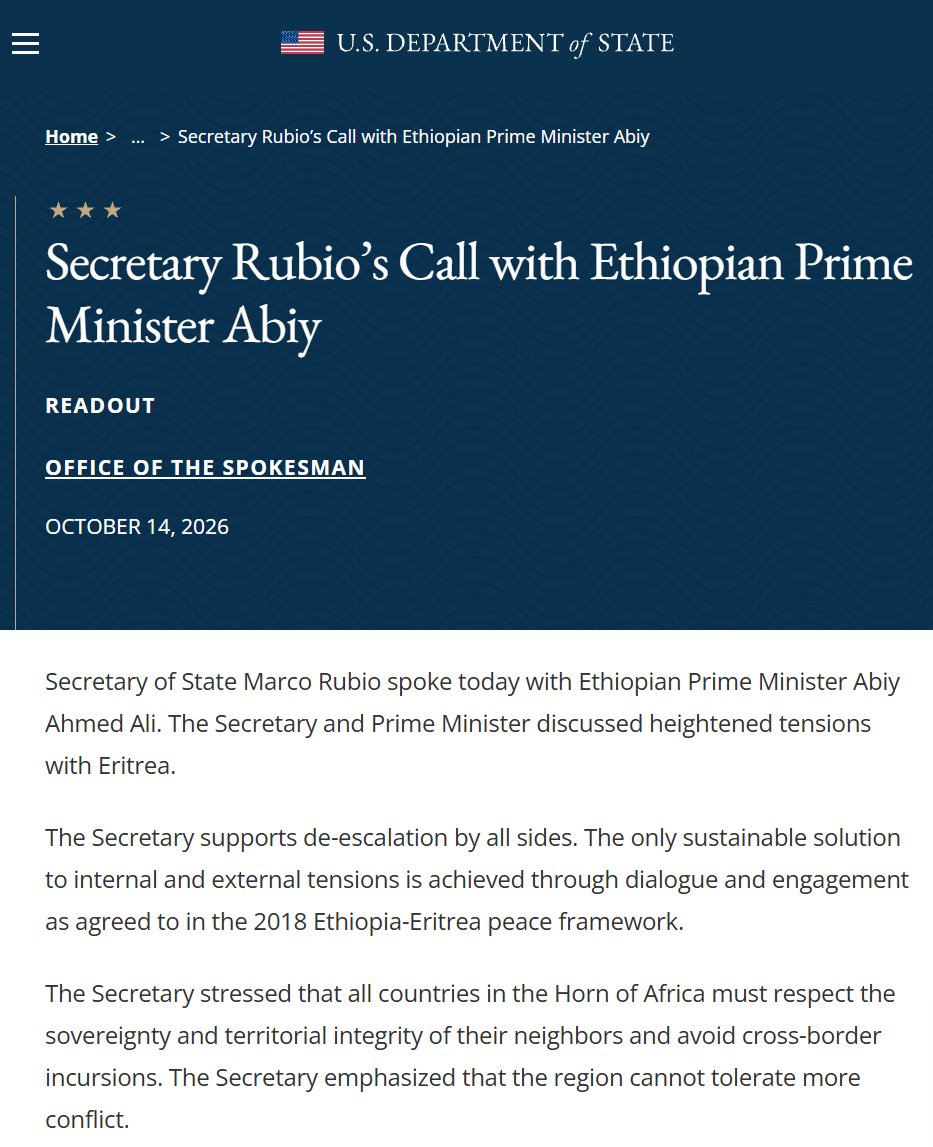
When domestic crises peak, the Prosperity Party (PP) apparatus leans into PR distortion. The stark contrast between Prime Minister Abiy Ahmed’s framing of his call with US Secretary of State Marco Rubio and the official State Department readout reveals the persistent gap between rhetoric and policy reality.
🔍 Anatomy of a Diplomatic Deflection
🔴 The Domestic PR Spin: Abiy took to X presenting the high-level engagement as a broad, cordial discussion of "bilateral cooperation" and "US support," attempting to signal uncritical international backing while facing mounting internal resistance. 📱❌
🟡 The Direct US Readout: Secretary Rubio’s official statement cut through the narrative: Washington explicitly addressed heightened tensions with Eritrea, mandated strict adherence to the 2018 peace framework, and delivered a direct warning that all states must respect the sovereignty and territorial integrity of neighbors and avoid cross-border incursions. 🛑📜
🟣 "Sea Access" as an Escalation Vector: The obsession with capturing sovereign ports like Assab is an existential distraction from the armed resistance across Amhara, Tigray, and Oromia. The attempt to manufacture an external war to rescue internal authority has stalled. ⚓⚠️
🟢 Washington Draws the Red Line: Coming off the heels of the US rescinding unilateral sanctions on Asmara and engaging directly with Eritrean leadership, Rubio’s warning signals zero tolerance for regional escalation or violations of international borders. 🇺🇸🛡️
💡 Geopolitical Takeaway
"A leader who writes his own victories in tweets cannot erase the terms delivered in closed-door diplomacy."
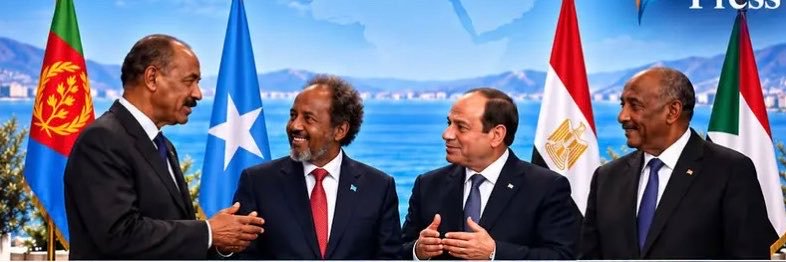
The message from Washington, Cairo, Mogadishu, and Asmara remains aligned: borders are inviolable, littoral sovereignty is non-negotiable, and domestic crises cannot be exported across regional coastlines. 🕊️⚡
#HornOfAfrica #Eritrea #Ethiopia #MarcoRubio #USForeignPolicy #StateDepartment #RedSeaSecurity #Geopolitics #SovereigntyFirst #Assab
My message to world leaders at #COP31:
We know that change is possible.
History has handed us a remarkable opportunity to build economies that are cleaner, societies that are fairer & a world that is safer.
This is not only about climate. It's also about sustainable development, peace & security, and about human dignity.
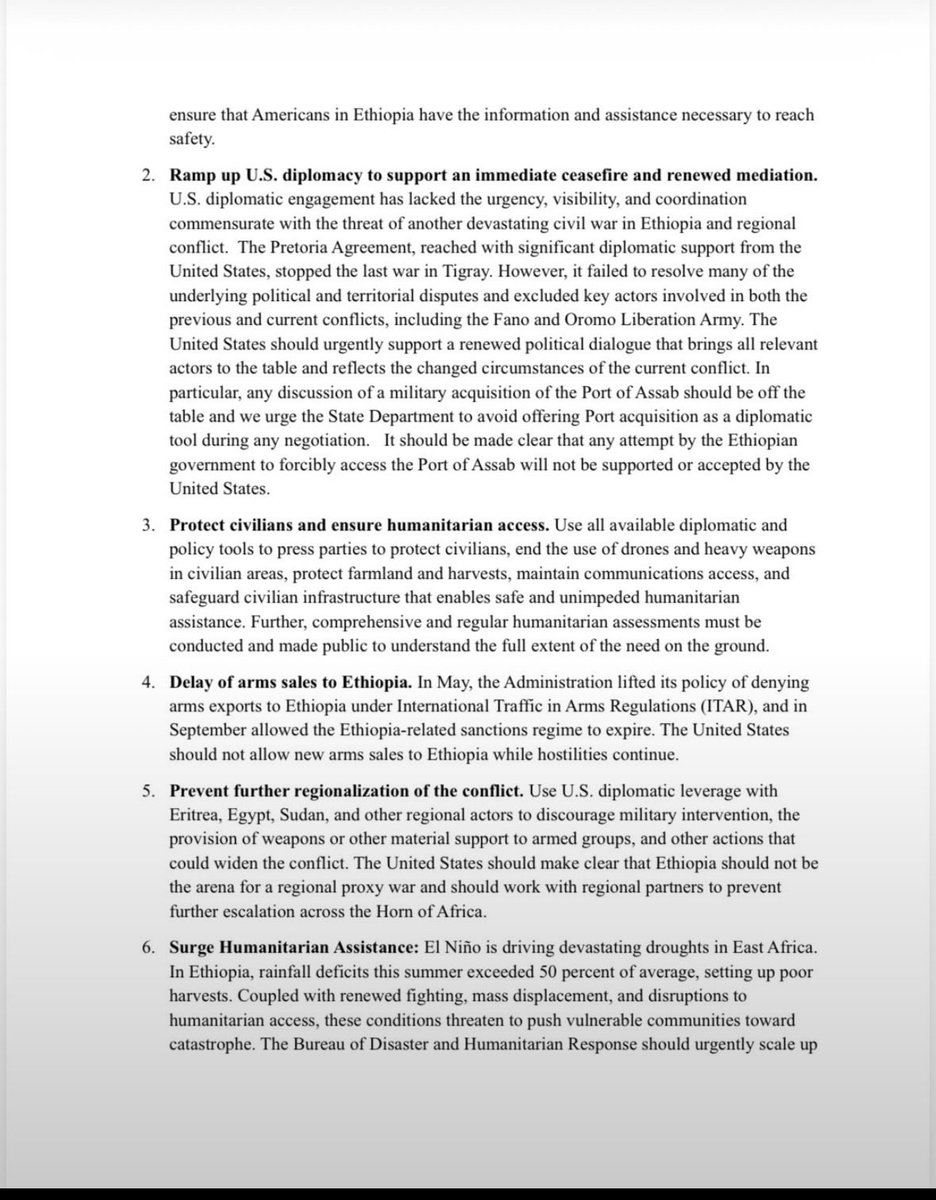
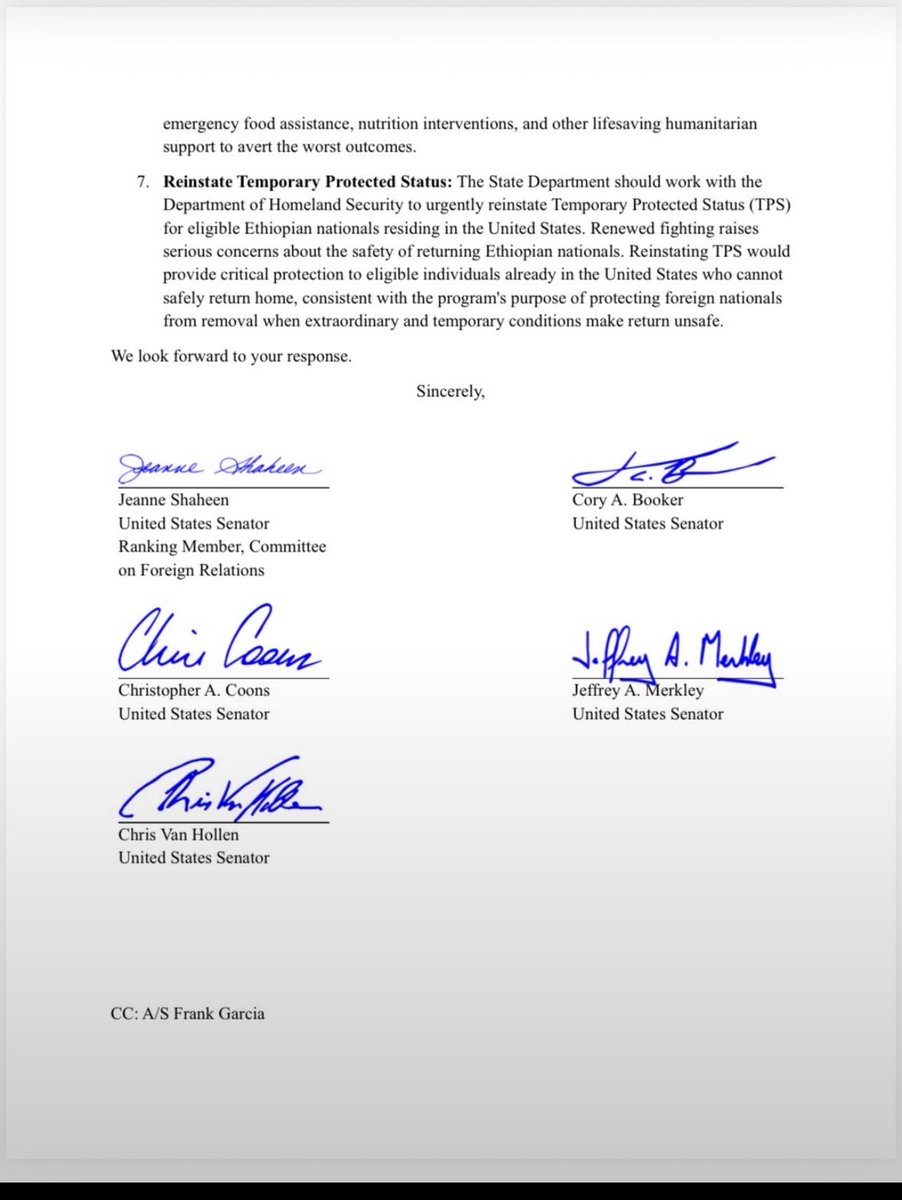
🚨 BREAKING: FIVE U.S. DEMOCRATIC SENATORS ISSUE URGENT WARNING OVER ETHIOPIA AND #ERITREA’S SOVEREIGN PORT OF #ASSAB.
Five Democratic U.S. senators, including Senator Jeanne Shaheen, Ranking Member of the Senate Foreign Relations Committee, have written an urgent letter to U.S. Secretary of State @SecRubio regarding the ongoing conflict in #Ethiopia and the threat posed by Ethiopia’s ambitions to acquire access to #Eritrea’s sovereign port of Assab through military force.
The senators make their position unequivocally clear:
“In particular, any discussion of a military acquisition of the Port of Assab should be off the table and we urge the State Department to avoid offering Port acquisition as a diplomatic tool during any negotiation. It should be made clear that any attempt by the #Ethiopian government to forcibly access the Port of Assab will not be supported or accepted by the United States.”
@EmbassyEritrea@EliasAmare@AmbStesfamariam@AlulaFre@Yehdavid@hadnetkeleta@umutcagrisariii@_hudsonc@tewerwari_1@Ternafi@SirakBahlbi@_AfricanUnion@eri_id_@itsEritrea@EIshmael_@sudanaxis
#USA #Eritrea #Ethiopia #Assab #HornOfAfrica
President of the Association of African Economic and Development Japan (AFRECO) Mr. YANO paid a working visit to our Embassy today to exchange ideas and opinions with me on an ongoing dialogue of cooperation in Asmara to promote a public works project in #Eritrea with the support of Japan. エリトリア
#US democrats agree on #Ethiopia as much as they do on #Trump. Both are not good for #Peace.
This Friday there is a demonstation in Geneva for peace in the #HOA .
UNICEF’s new Representative @SamOcranKweku presented his credentials to the Minister of Foreign Affairs, marking the start of his tenure and reaffirming UNICEF’s commitment to continued collaboration with the Government of Eritrea for every child.
@UNICEFAfrica@UNinEritrea
#Ethiopia was economy growing in 1990 to 1997 at that time Ethiopia was landlocked ethiopia do not need sea ownership’s what it need #peace and great #leader who manage #resources sale to the world https://t.co/bGz6jboVbH
The statistical figures (link below) say it all!
The Potemkin Party continues to rachet up its internal and regional war agendas in all its destabilizing dimensions and ramifications.
Indeed, the Potemkin Party's track-record and signature trademark of war and turmoil are too evident to merit elaboration:
1. Instigation of multiple and spiraling internecine conflicts in the country, (ferocious military confrontations continue to rage, among others, in the Tigray, Amhara, Oromia and Somali regions);
2. Its declared war of choice against Eritrea in pursuit of its delusional agendas of "sovereign access to the sea" as well as projection of "naval power in the Red Sea" in flagrant violation of international law;
3. Exacerbation of the conflict in the Sudan by hosting a military camp in its territory, under the auspices of the UAE, for the conduit of arms, training of RSF troop and the launching of Drones;
4. Illicit acts in Somalia that are fraught with inducing polarization and balkanization of the country.
5. Massive rearmament to achieve its reckless agendas of internal and regional destabilization.
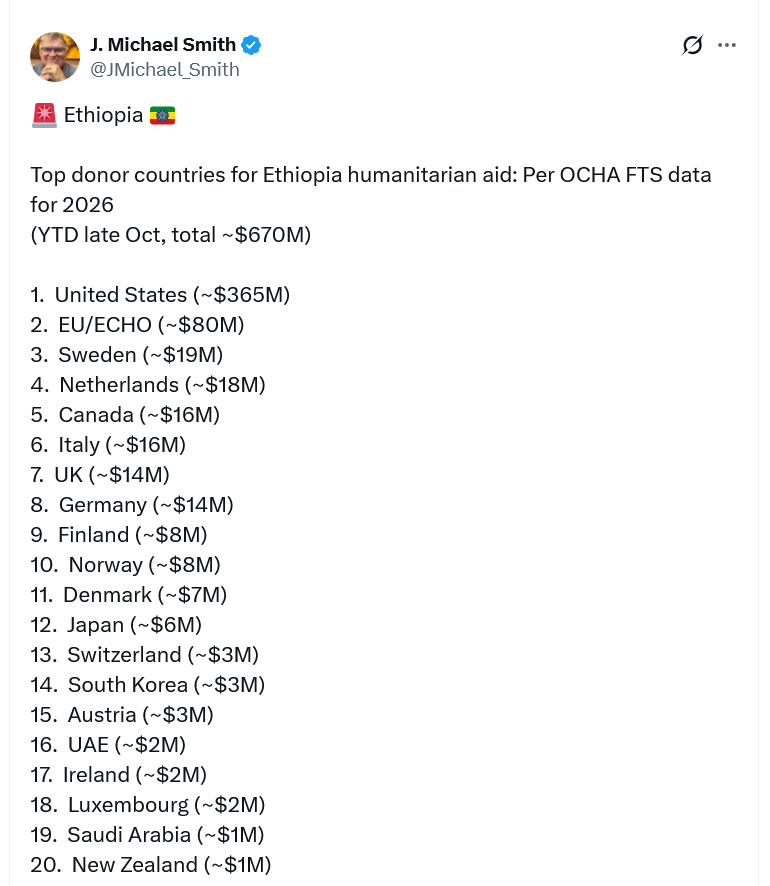
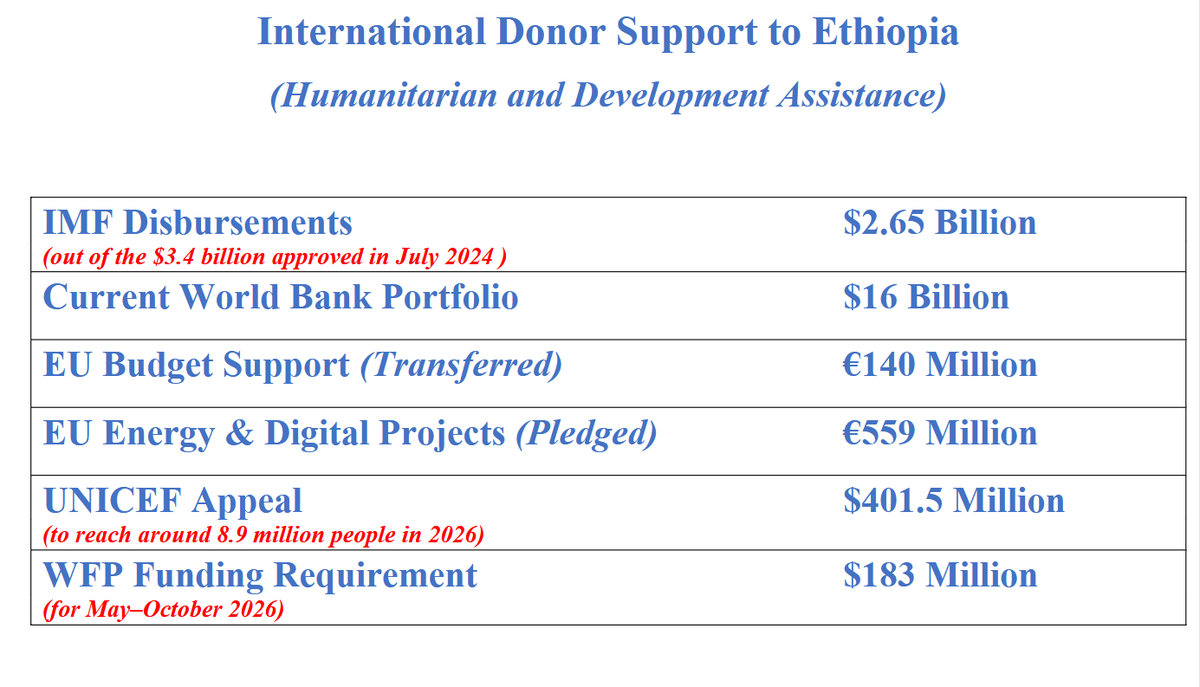
On the other hand, the Potemkin Party does not have the wherewithal/material capability to pursue these reckless wars of choice without the financial largesse that it has, and continues to receive, from various donors. Connect the dots....!
UNICEF’s @uniceferitrea new Representative to #Eritrea Samuel Ocran @SamOcranKweku presented his credentials to H.E. Osman Saleh Mohammed, Minister of Foreign Affairs of the State of Eritrea, marking the start of his tenure and reaffirming UNICEF’s commitment to continued collaboration with the Government of Eritrea for every child.
#Ethiopia🇪🇹
STOP THE GENOCIDE AGAINST THE AMHARA PEOPLE! Stop the persecution and killings of Ethiopian Orthodox Christians. Silence is not an option. Raise your voice for justice, humanity and human dignity! 🙏
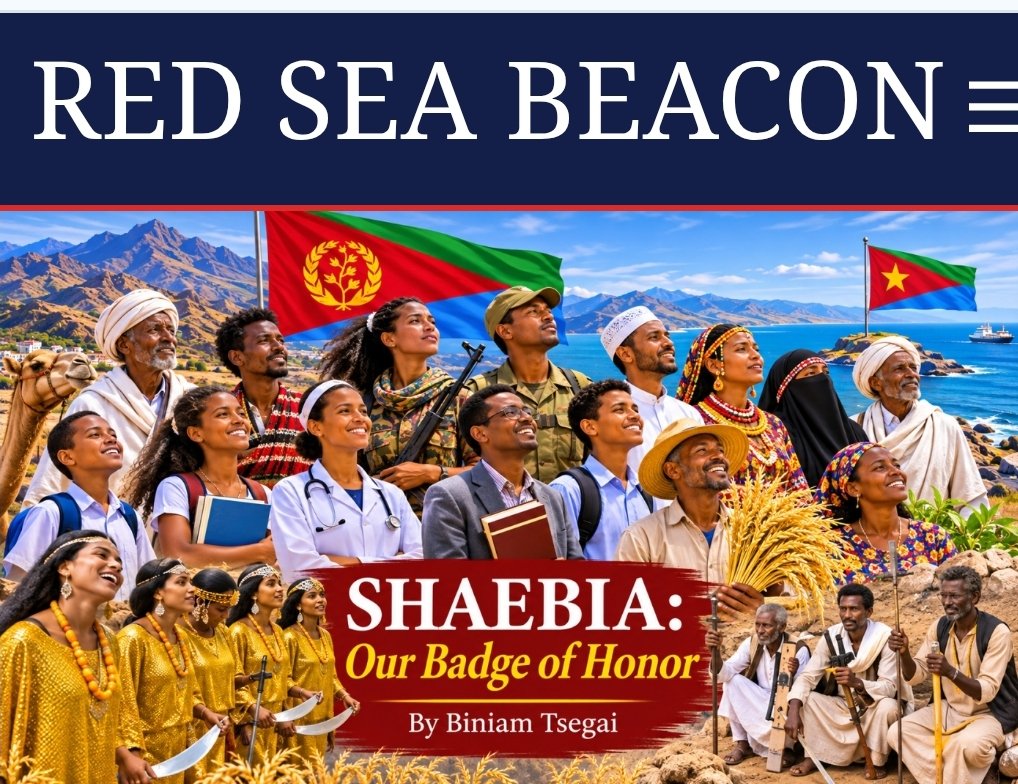
SHAEBIA: Our Badge of Honor:
They call us Shaebia to insult us; we wear it with pride. It represents sacrifice, unity,& liberation. Assab is #Eritrea|n, sovereignty is non-negotiable, & peace isn't weakness. Yesterday, today, & tomorrow Shaebia!
👇👇👉
https://t.co/Yzt80AYFsZ