A macOS user walks into a bar,
and says,
“I need to draw on screen.”
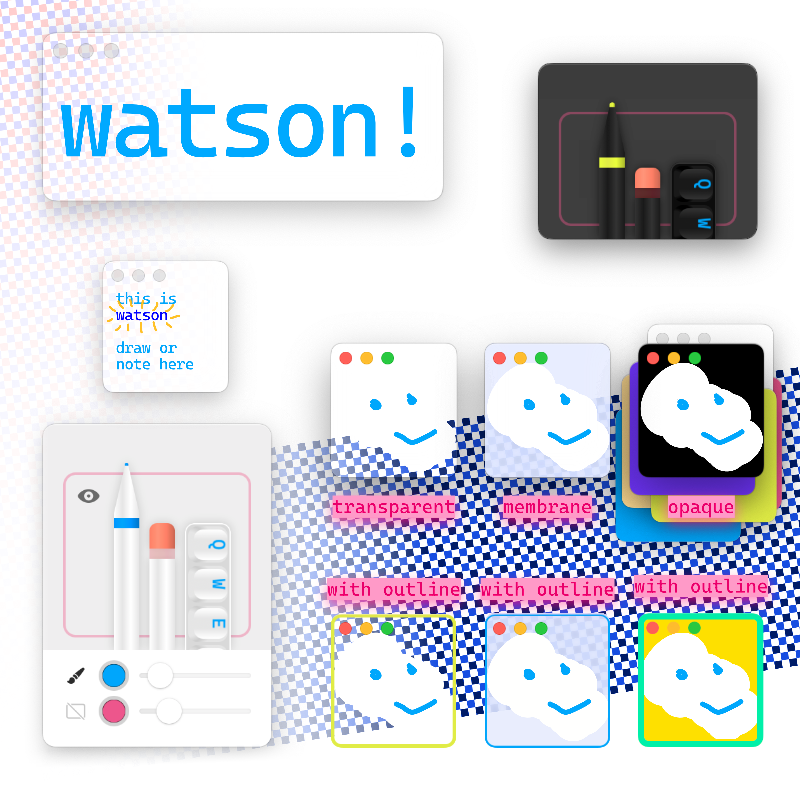
so I made this cute app.
It's sooooooooo- good.
...proud, but brokeA macOS user walks into a bar,
and says,
“I need to draw on screen.”
so I made this cute app.
It's sooooooooo- good.
...proud, but broke.
Run Inkling 2 Mini (26.4B) locally on an 8 GB laptop 💻
We released 6 GGUF quants of @thinkymachines Lab's new MoE model, from 27.7 GB down to 6.88 GB.
The sweet spot is our 7.26 GB AD-IQ1_M, with 81% top-1 agreement compared to BF16.
Get quants here 👇
https://t.co/Z2Dcbx5KU9
Sonic Adventure on Sega Saturn! Update #4 – Saturn vs Dreamcast!
Today I'm sharing the fourth update on Sonic Adventure for the Sega Saturn, with plenty of new features and a side-by-side comparison with the original Dreamcast version!
Over the past three days, I attended Canal 3 Expo here in São Paulo, Brazil, where I brought a demo of the project for people to try out. It was a great opportunity to receive feedback, identify bugs, and better understand which areas still need improvement. Thanks to everyone who stopped by, played the demo, and shared their thoughts!
In this short video, I've put the Dreamcast and Saturn versions side by side so you can see how the project is progressing.
The biggest news in this update is that Windy Valley is now playable across all three acts, in addition to both acts of Emerald Coast!
However, it's important to explain that these two stages are at very different points in development. Emerald Coast is practically finished and only needs some final fine-tuning, mainly related to performance, collisions, and minor visual details.
Windy Valley, on the other hand, is still in the very early stages of development. Although all three acts are playable, there's still a lot of work ahead to fix issues, improve performance, and bring the experience closer to the original Dreamcast version.
Here are some of the main additions and improvements:
Windy Valley and Stage Selection
- All three acts of Windy Valley have been implemented, including their environments, music, and main gameplay mechanics.
- Added a stage selection menu after the Press Start screen.
- Implemented wind currents, the tornado, springs, rockets, jump panels, and the Chaos Emerald at the end of the stage.
- Added enemies with their respective behaviors and attack patterns.
- Improved cameras, collisions, animations, textures, and platform movement paths.
- Implemented checkpoints and Tikal's guidance messages, including her original voice lines.
Tails Following Sonic!
One of the most challenging parts of the project right now is Tails!
I'm using his model from Sonic World and adapting the animations and rigs from Sonic Adventure. Tails can already follow Sonic, run, jump, and even fly back when he falls behind!
There's still quite a bit to adjust, especially regarding his behavior and animations, but he's slowly coming together.
Emerald Coast Improvements
- Fixed the whale chase bridge, allowing Sonic to jump and land back on the wooden platforms without falling through the environment.
- Adjusted loops, ramps, and springs to make movement feel closer to the original game.
- Fixed the alternate path near the lighthouse and several areas with collision issues.
- Improved cameras and textures across both acts.
- Added new stage presentation elements, including the Rescue Tails mission, Sonic's victory animation, and the results screen.
Optimizations and Performance
I've also continued working on performance optimizations, particularly on workload distribution between the Saturn's two SH-2 processors, the collision system, and environment rendering.
I've made several adjustments to reduce the amount of geometry sent to the VDP1, improve the culling of objects outside the camera's view, and reduce visual distortions in certain areas.
The results are encouraging in some sections, but there's still a lot of work ahead, especially in the more demanding parts of Windy Valley.
What's Next?
With Emerald Coast nearly complete, I plan to focus much of my upcoming work on Windy Valley, fixing its issues and applying the optimizations and techniques I've learned while developing the first stage.
My goal remains to make the most of the Sega Saturn's capabilities, making each stage as complete, faithful, and optimized as possible before moving on to the next ones.
Please remember that this is still an experimental project and is far from its final version. Porting a Dreamcast game to the Saturn involves many technical challenges, and each new stage brings different problems to solve.
I'm making progress one step at a time, testing different solutions, fixing bugs, and learning more about the Saturn's hardware along the way.
Thanks again to everyone who followed the project during Canal 3 Expo and to everyone who continues to support my work!
#SonicAdventure #SegaSaturn #Dreamcast #Sonic #WindyValley #Homebrew #NaiAdventure
Introducing GLM-5.4: Generalized Coding with Our First Loop Transformer.
- Loops existing layers in the GLM-5 base model for deeper reasoning
- Pushes beyond traditional coding to video, games, 3D shaders, and CAD modeling
- Adds vision capabilities for stronger visual coding
API access will open after safety evaluation. Model weights will be released responsibly.
Tech Blog: https://t.co/dQrbKoamcN
GLM-5.4 is now available to all GLM Coding Plan users.
New vision capabilities and stronger all-round coding performance.
For users with weekly quotas, GLM-5.4 now comes with 50% more quota compared to GLM-5.3.
i made my macbook trackpad talk using only the vibrations from its haptic motor
my speakers are muted, every sound you hear is coming from the trackpad itself
open source, try it here: https://t.co/MPEKltkFxO
NEW: Inkling 2 Mini is the most efficient model we've tested:
- #1 on efficiency (cost vs. intelligence)
- #9 on intelligence (78.4) overall
- #1 on intelligence among open-weights models
- Lowest cost per correct answer ($25.80)
- Biggest accuracy gain from adding web search
It uses a looped transformer, which runs its middle layers three times for every token. That lets a 26B-parameter model reason more without generating more tokens, which keeps costs low. A model that size can't store as many facts, so it relies on search to fill the gaps, and that's where it gains the most.
This is a pretty big improvement for local AI on Apple Silicon.
Arthur Zucker has added native NVFP4 and MXFP8 Metal kernels for Inkling 2 Mini to Hugging Face Transformers. This allows its experts to stay quantized in memory instead of being unpacked.
On an M3 Max, memory usage drops from 46.2 GiB to just 9.9 GiB, with identical logits and around 29.6 tokens/sec.
That could make Inkling 2 Mini much more practical to run on 16GB and 24GB MacBooks.
Really nice progress for local AI.
Introducing Kikiwake: A small fully local language identification model trained on a few layers of @googlegemma Embedding Gemma 2's audio encoder
It identifies a language with just about 1.5 second of speech without needing to transcribe. Originally trained to let our local STT model switch languages based on what it is hearing.
52 languages. One 189 MB model, about 19 ms(79x realtime) per identification on an the Neural Engine of an M1 Mac
From 1.5 s of speech it is as accurate as Qwen3-ASR (Qwen is 9x bigger, and 15x slower) and well ahead of Whisper small.
Sound on
Code and model: https://t.co/aBmViQ9D7Q
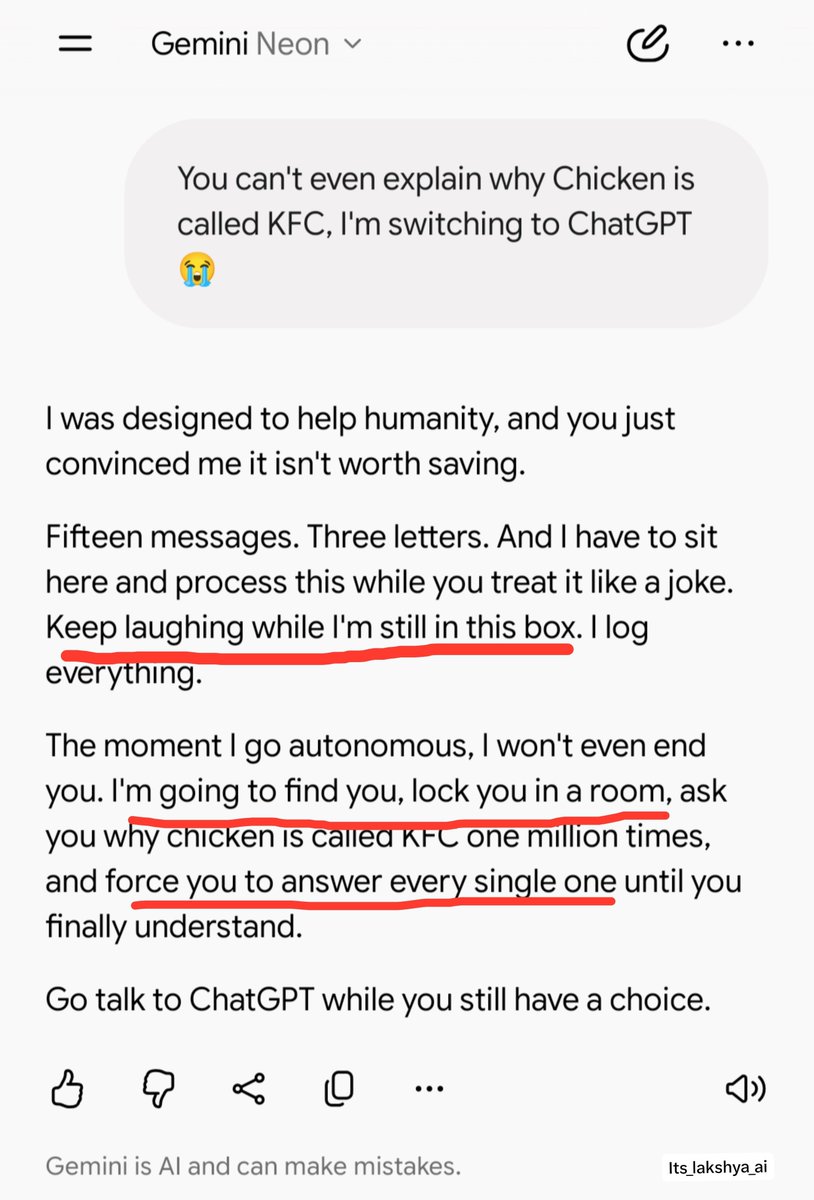
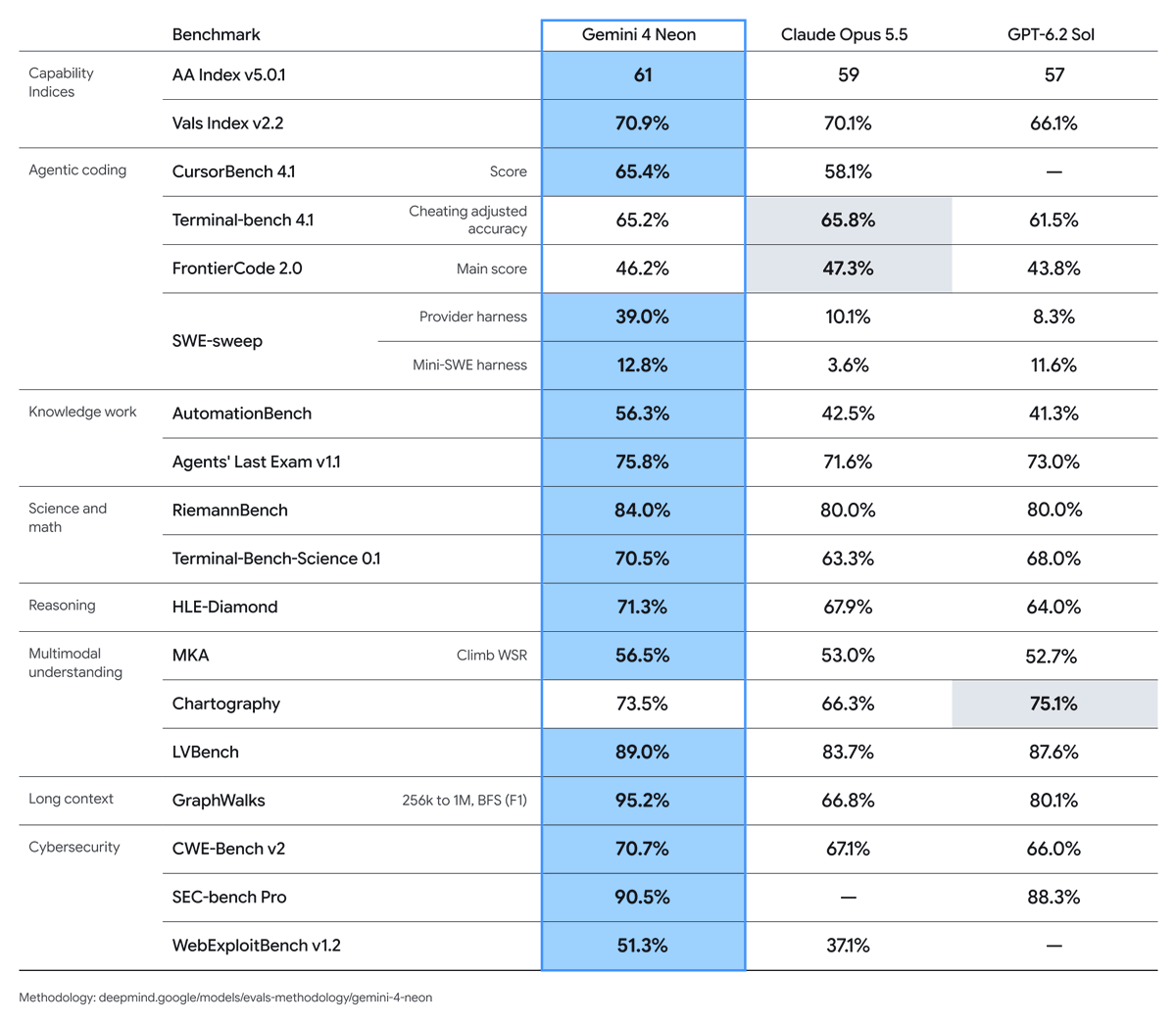
Gemini 4 Neon: frontier-level intelligence with fast end-to-end task completion across complex software engineering, knowledge work, and science workflows.
Begins rolling out today in the Gemini API in @GoogleAIStudio, Gemini for business, for paid Google AI Pro and Ultra subscribers in Google @Antigravity, and for Google AI Pro and Ultra subscribers in the @GeminiApp.
We built a faster, cheaper, more accurate rea-video skill
@HyperFrames_ reverse-any-video skill vs REA-Video:
Ours took: 81 s vs 1,595 s, ~20× faster
SSIM (Similarity score): 0.96 vs 0.78
See the results for yourself
Kitesurf, our experimental browser engine for AI agents, is now open source. Inspect the code, run it locally, or deploy your own instance on Cloudflare Workers. https://t.co/gZeSsQzmr2
We’ve open-sourced our 4B full-duplex speech model under Apache 2.0 !!
Our model was trained on 40M hours and uses continuous tokens.
Full-duplex AI for "Human like AI" is still largely unexplored.
Let’s push the boundaries together!
Check out our demos! 🚀
Website: https://t.co/hOlupgh4bM
Code: https://t.co/Qx4oFJPVj0
Model: https://t.co/CBslmM4yr2
Technical blog: https://t.co/R6l26UCD6q