Our #SfN2026 takeaway: better, more complex biological models need richer functional readouts. That’s where #HDMEA and CorePlate™ can make a difference, from disease phenotyping to drug discovery.
See you at #SfN2027 in Chicago.
From disease models to drug discovery: where does HD-MEA fit?
Join Amber Jolly today at #SfN2026 for real examples of phenotypic assays, disease models & drug discovery.
11:30 AM EST, Focused Theater #1
Missed it? Find us at Booth 811.
#HDMEA #neuroscience #3Brain #DrugDiscovery
𝟮𝟬 𝘆𝗲𝗮𝗿𝘀 𝗮𝗴𝗼, 𝗼𝘂𝗿 𝗼𝗻𝗹𝘆 𝘄𝗲𝗮𝗸𝗻𝗲𝘀𝘀 𝘄𝗮𝘀 𝗱𝗲𝘀𝗶𝗴𝗻.
We chose high density more than two decades ago. Today, HD-MEA is having a moment, and the rest of the MEA field is following our lead.
From our first HD-MEA chips to CorePlate™, HD is in our DNA. HD-MEA is our identity.
See where 20+ years of innovation have taken us at #SfN2026, Booth 811.
#HDMEA #CorePlate #Electrophysiology #3Brain #HDMEAexperts #HDMEAinnovators
From the first idea in 2004, to the first commercial CMOS HD-MEA in 2011, to the first 3D HD-MEA in 2021, to high-density, high-throughput HD-MEA in 2024… and more to come.
20+ years of pushing the boundaries of MEA technology.
See what’s next at #SfN2026, Booth 811.
When HD-MEA meets AI.
Big neuronal data is a great fuel for AI-driven analysis. HD-MEAs can capture the activity of large neuronal populations at high spatial and temporal resolution, generating rich datasets that are particularly well suited to advanced computational analysis.
At #SfN2026, Neuroservices Alliance (@NeuroservicesA) is presenting a poster with a good example of this combination.
Using 3Brain HD-MEA technology together with a custom machine-learning algorithm, the team investigated spontaneous activity across large populations of cerebellar Purkinje cells and identified regional differences in baclofen sensitivity across cerebellar cortex.
As AI, Synthetic Biological Intelligence (SBI) and Organoid Intelligence (OI) gain momentum in neuroscience, rich neuronal data from HD-MEAs is becoming more valuable than ever.
#SfN2026 #Neuroscience #Electrophysiology #HDMEA #MachineLearning #Cerebellum #PurkinjeCells #Neurotechnology #3Brain
The countdown is on, #SfN2026 is almost here!
Only four days to go, and the 3Brain team is getting ready.
Visit us at booth 811 to discover how CorePlate™ HD-MEAs combine high-density electrophysiology with multi-well formats to support neuronal screening, drug discovery, and NAM development.
You can also catch our team at our poster presentations. Check the images for details.
See you at #SfN2026.
#Neuroscience #Electrophysiology #HDMEA #Neurotech
Advancing Drug Discovery with Functional Screening: High Throughput, High Resolution
Heading to #SfN2026? We have a packed program this year, from our booth to our product theatre presentation and scientific posters, giving you the opportunity to discover how 3Brain's CorePlate™ enabled 96-well HD-MEAs are accelerating drug discovery and neurotoxicity screening.
Keep an eye on our upcoming posts for more details. In the meantime, make sure to put our product theatre presentation in your calendar! You'll have the chance to learn how scalable functional recordings can enhance every stage of your drug discovery workflow.
Title: HD-MEA in Drug Discovery: From Phenotypic Screening to Lead Optimization
Speaker: Amber Jolly
Date & Time: 16th Nov, 11:30 AM EST
Location: Focused Theater #1
Can't make the presentation? No problem. Visit us at Booth 811 to learn how CorePlate™ is reshaping electrophysiology for high-throughput drug discovery and neurotoxicity screening.
#SfN2026 #Neuroscience #Electrophysiology #HDMEA #Neurotech
Not All Cholesterol Is Bad News
When discussing cholesterol, neuroprotection is probably not the first thing that comes to mind.
However, a new study from Lenci, Villa et al. demonstrates how cholesterol supplementation can help restore synaptic density and connectivity in Huntington's disease, a condition characterized by early network dysfunction and the progressive disconnection of neural circuits.
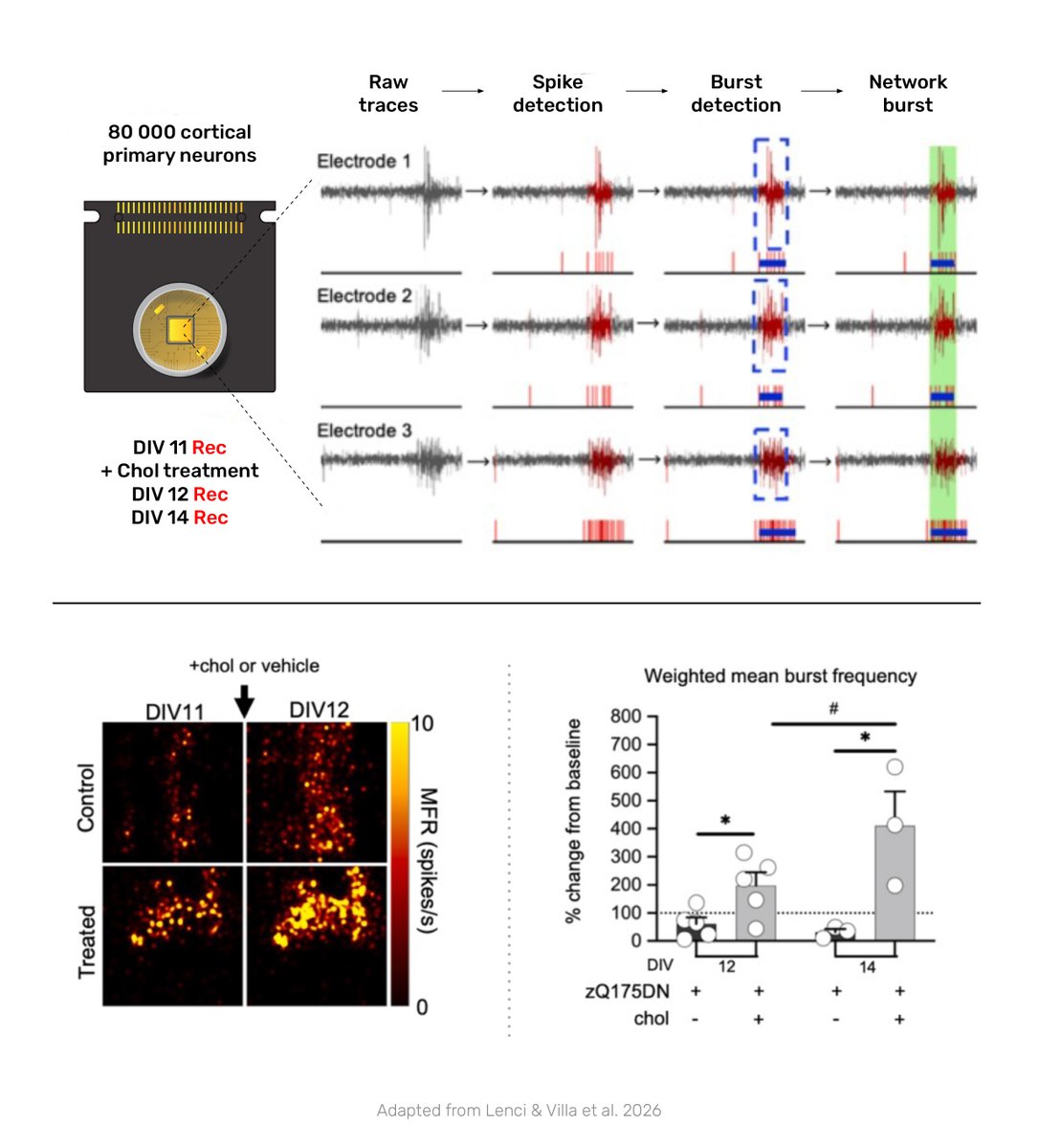
Using CorePlate™ 1W 38/60 with its 4,096 simultaneously recording electrodes, the researchers monitored neuronal activity of primary cortical neurons from zQ175DN mouse embryos (HD mice) at high resolution and found that cholesterol treatment increased burst activity and promoted synchronized network bursts.
The study also revealed that cholesterol replenishment restored excitatory synapse density both in vivo and in vitro, highlighting a potential mechanism through which cholesterol supports synaptic resilience and recovery.
Congratulations to Allegra Lenci, Michela Villa, Andrea Scolz, Giulia Birolini, Paola Conforti, Giuseppe Pepe, Antonio Nicolas Castagno, Christian Cassarino, Laura Colombo, Monica Favagrossa, Antonino Polimeno, Linda Ottoboni, Stefania Corti, Alba Di Pardo, Mario Salmona, Vittorio Maglione, Chiara Zuccato, Elena Cattaneo on their publication in Pharmacological Research.
Read the full paper here: https://t.co/RInfIULNF5
#3Brain #Neuroscience #HDMEA #HuntingtonsDisease #Neurodegeneration #SynapticPlasticity #Electrophysiology #DiseaseModeling #BrainResearch
We’re excited to announce that 3Brain will be attending The Brain & Mind Symposium 2026, a key Finnish Neuroscience meeting where all aspects of neuroscience, from molecular and cellular mechanisms to systems and cognition are discussed.
Different models. Different scales. What are you recording? Our CorePlate™-enabled HD-MEA platforms capture high-resolution, label-free activity in iPSC-derived neurons, brain organoids, and brain slices, with formats spanning 1–96 wells for in vitro and ex vivo research.
Working on neural circuits, brain development, or disease modeling? Come and meet Adil Gabarli to discuss where HD-MEA recordings could fit into your next experiment.
#3Brain #HDMEA #Neuroscience #Electrophysiology #BrainOrganoids #InVitroModels #Neurotechnology
What if dying neurons help build the retina?
In a new publication from Savage and colleagues, the team uncovers a fascinating link between spontaneous neural activity, cell death, immune cells, and blood vessel growth in the developing retina.
With the help of all 4,096 simultaneous recording electrodes, and the large recording area of CorePlate™ 1W 51/81, they were able to record from the activity of the entire retina. Combining this with large-scale calcium imaging, single-cell RNA sequencing and immunohistochemistry, the team mapped spontaneous retinal waves across the entire retina.
They discovered that wave initiation follows a structured centrifugal expansion, challenging long-standing assumptions that these early neural waves occur randomly. They showed that dying retinal ganglion cells are not passive, and that they actively direct development, generating local retinal waves and creating local hypoxia that guides blood vessel growth, signal microglia to engulf the dying cells and form distinct autofluorescent cluster complexes.
Together, the study presents a new framework in which neural activity, programmed cell death, immune responses, and vascular development are coordinated, ensuring that neural circuits and their supporting blood supply mature in synchrony.
Congratulations to Michael A Savage, Cori Bertram, Jean de Montigny, Courtney A Thorne, Rachel Queen, Majlinda Lako, Gerrit Hilgen, Evelyne Sernagor on this publication in eLife.
Read the full paper here: https://t.co/8yLu8WjQ9t
#3Brain #HDMEA #Electrophysiology #Retina #Neuroscience #Microglia #Angiogenesis #DevelopmentalBiology #NeuralDevelopment #VisionScience
Building a neuronal bridge across a broken spinal cord.
In a new publication from Wei et al., the team presents a novel approach for developing human induced pluripotent stem cell (hiPSC)-derived neuronal tissueoids (Ntoids) as improved cell-based treatments for spinal cord injury (SCI). The study demonstrates how functional neuronal tissueoids can serve as a neuronal relay, helping to reconstruct damaged neural pathways and restore motor function following complete spinal cord injury in rats.
To characterize the functional activity and network connectivity of the engineered neuronal tissueoids, the team used the HyperCAM Alpha paired with the CorePlate™ 6W-3D, which features 13,824 3D simultaneously recording electrodes across all six wells. Their findings demonstrated robust neuronal activity and functional network formation, confirming the tissueoids' maturation and functionality prior to transplantation.
Following transplantation, the neuronal tissueoids showed remarkable donor cell survival, innervation of the injury site, and partial integration with host neural circuits, with treated animals exhibiting improved motor recovery and electrophysiological performance. Further to this, in a separate experiment, the authors also demonstrated the ability of the neuronal tissueoids to form synaptic connections with human brain organoids.
Congratulations to Qing-shuai Wei, Quan-ying Xing, Yuan-huan Ma, Ke-jun Zhang, Wen-tao Ma, Mei-ling Zhang, Hui-juan Shi, Li-zhi Peng, Jun-hua Wang, Qi-xing Hu, Hou-ge Li, Ying Liu, Bi-qin Lai, Ge Li, Ying Ding, Yuan-shan Zeng, and Xiang Zeng on their publication in the Chemical Engineering Journal.
Read the full paper here:
https://t.co/kD8LaWyPBu
#3Brain #Neuroscience #CorePlate #HDMEA #StemCells #iPSC #Organoids #SpinalCordInjury #Electrophysiology #RegenerativeMedicine
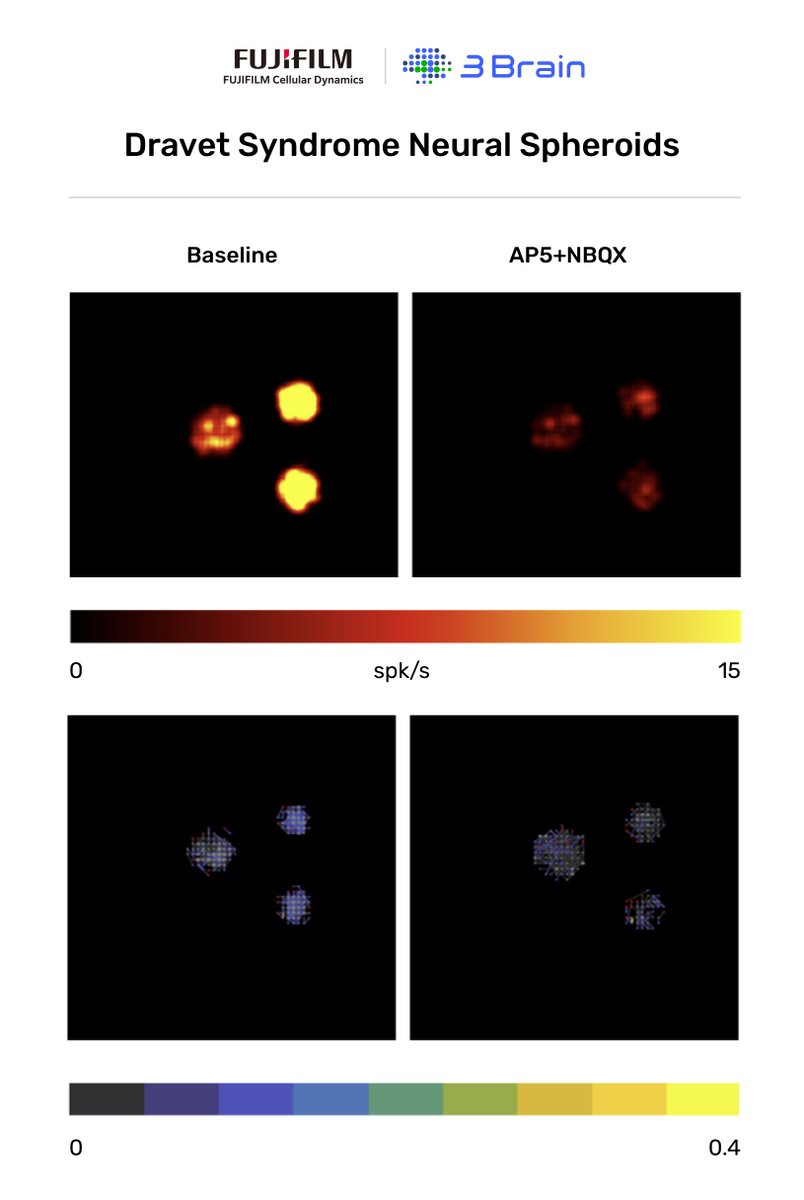
Interested in hiPSC disease modelling? Our new Application Note is now available: High-Resolution Electrophysiological Profiling of Healthy and Dravet Syndrome Human iPSC-derived Neural Spheroids on CorePlate™ HD-MEAs.
Human iPSC-derived neural spheroids are powerful 3D models for studying neuronal function, disease mechanisms, and neuropharmacological responses. In this application note, we show how CorePlate™ enabled HD-MEAs enable high-resolution functional characterization of healthy and SCN1A heterozygous knockout Dravet syndrome neural spheroids from @FUJIFILM Cellular Dynamics.
By evaluating spontaneous and pharmacologically modulated activity, we reveal genotype-dependent differences in baseline activity, bursting behavior, network characteristics and functional connectivity, demonstrating the power of HD-MEAs for disease modeling and drug discovery.
Whether you're investigating neuronal function, exploring disease models, or screening therapeutic candidates, this application note highlights how CorePlate™ enabled HD-MEAs provide a powerful platform for functional assessments of hiPSC 3D neural models.
Check out the application note: https://t.co/vN1ABGsLjA
Final Call, Applications Close Today!
Don’t miss your chance to apply for the 3Brain - Massimo Grattarola Award:
• €15,000 to support your neuroscience research
• Free to apply
•Quick & easy application process
• Deadline: 17:00 CEST today, October 1, 2026
Apply now: https://t.co/MuXy6mduSb
Applications for the 3Brain Massimo Grattarola Award close tomorrow!
Don't miss your chance to apply for the €15,000 award.
It's easy, free, and quick to apply.
Apply now: https://t.co/dM2seGZnGf
#Neuroscience#Organoids#Spheroids#ResearchFunding#3DCellCulture #ResearchSupport #3Brain #HDMEA
Only 3 days left to Apply for the €15,000 Award!
Applications for the 3Brain – Massimo Grattarola Award close on October 1, 2026.
Its easy, free and quick to apply for! https://t.co/uEuKpule9c
#Neuroscience#Organoids#Spheroids#ResearchFunding#3DCellCulture #ResearchSupport #3Brain #HDMEA
Last Chance to Apply for the €15,000 Award!
Applications for the 3Brain – Massimo Grattarola Award close on October 1, 2026.
Win €15,000 towards your neuroscience research!
Its easy, free and quick to apply for!
👉https://t.co/SuUEf2jFfU
#Neuroscience#Organoids#Spheroids #ResearchFunding #3DCellCulture #ResearchSupport #3Brain #HDMEA
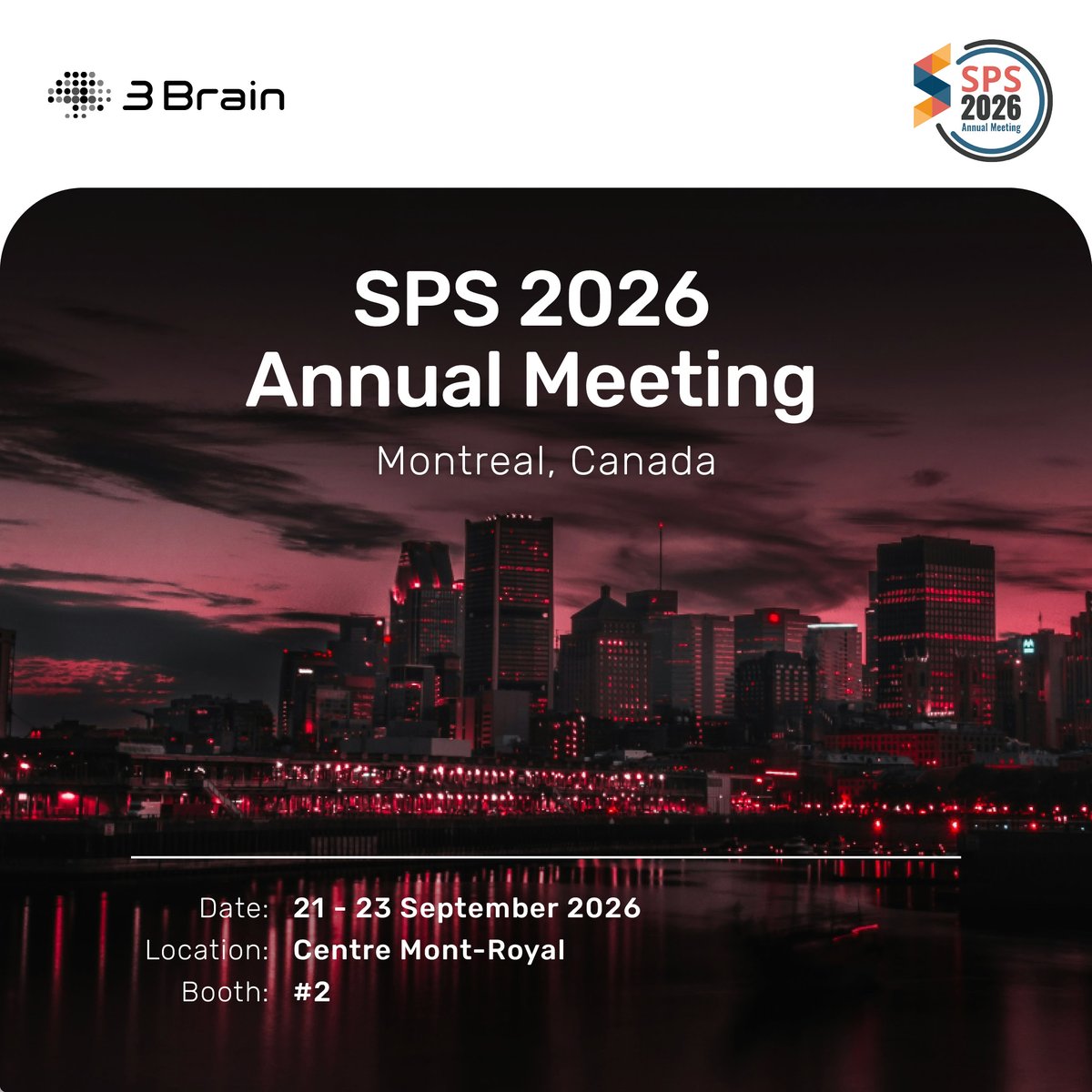
The 2026 SPS Annual Meeting is here! We're excited to discuss the latest advances in neuronal and cardiac functional screening and how this is helping to drive safer drug development. Join us and the global safety pharmacology community in Montréal, Canada.
As novel therapeutic modalities and increasingly complex in vitro models continue to transform drug development, high-quality functional data is more important than ever. Whether you're evaluating compound safety on iPSC-derived neuronal and cardiac cells or investigating responses in advanced 3D models such as brain organoids, 3Brain's CorePlate™ enabled HD-MEAs deliver high-resolution, label-free functional insights in formats up to 96 well, helping researchers generate robust and scalable data for preclinical safety assessment.
Stop by Booth #2 to learn how HD-MEA technology is enabling more predictive and informative safety pharmacology workflows.
See you in Montréal!
#3Brain #HDMEA #SPS2026 #SafetyPharmacology #DrugDevelopment #PreclinicalResearch #Neuroscience #Cardiotoxicity #Organoids #DrugSafety #HighThroughputScreening
Measuring Function, Revealing Dysfunction: HD-MEAs in ALS Research
Understanding the cellular and network-level mechanisms underlying neurodegenerative diseases such as Amyotrophic Lateral Sclerosis (ALS) is fundamental to advancing our knowledge of disease progression and neuronal dysfunction.
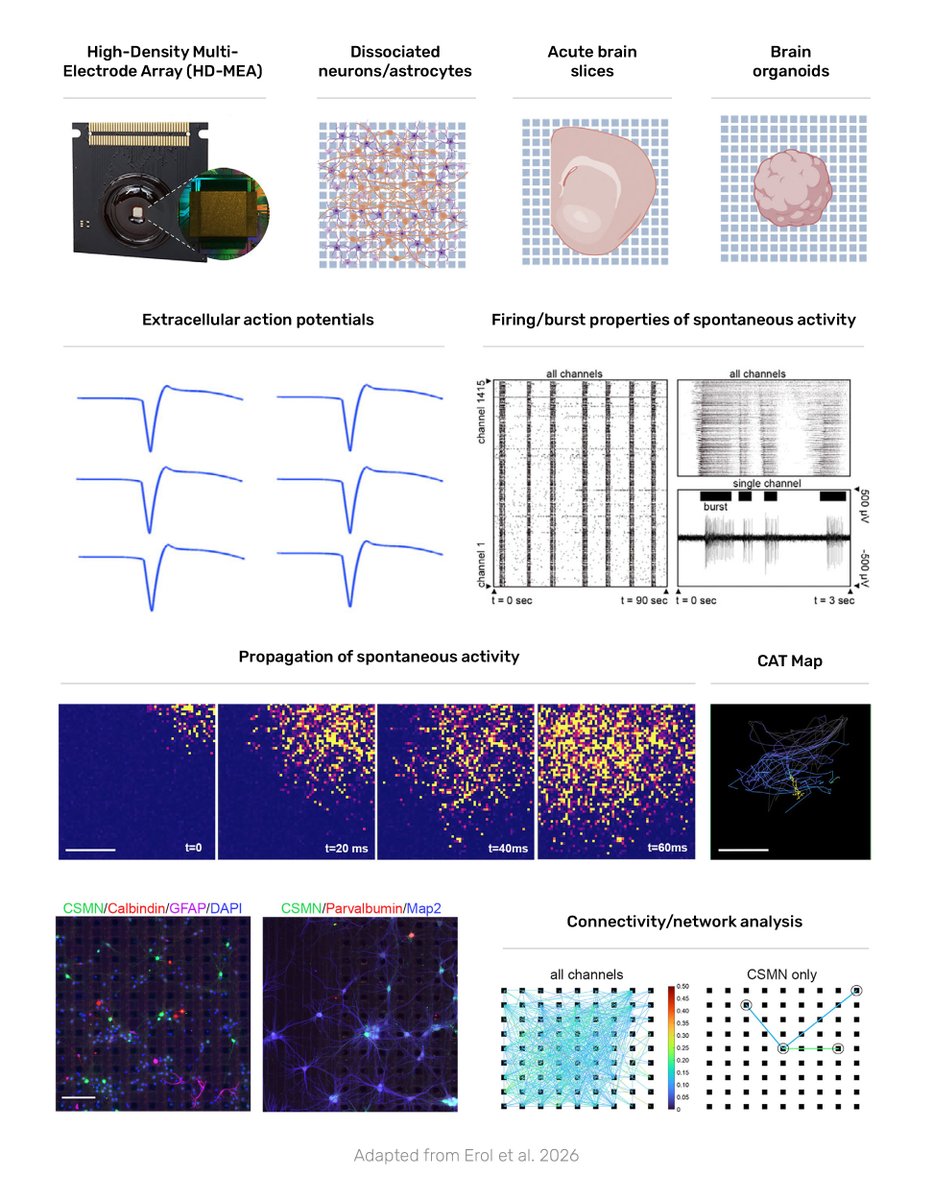
High-Density Microelectrode Array (HD-MEA) technology such as that found in CorePlate™ is providing researchers with high-resolution insights into neuronal activity and network dynamics, helping to reveal disease-relevant phenotypes and evaluate potential therapeutic approaches.
This article highlights how HD-MEAs can support neurodegenerative disease research, including ALS, by providing powerful functional readouts that complement molecular and cellular analyses.
If you're interested in neurodegenerative disease research, drug discovery, or advanced electrophysiology, this article from Zehra Yagmur Erol, Christopher Quintanilla and P. Hande Ozdinler is well worth a read.
Check out the article here: https://t.co/KY9Kpfth48
What do you see as the biggest opportunities for HD-MEA technology in neurodegenerative research?
#3Brain #CorePlate #HDMEA #ALS #AmyotrophicLateralSclerosis #Neuroscience #Electrophysiology #Neurodegeneration #DrugDiscovery