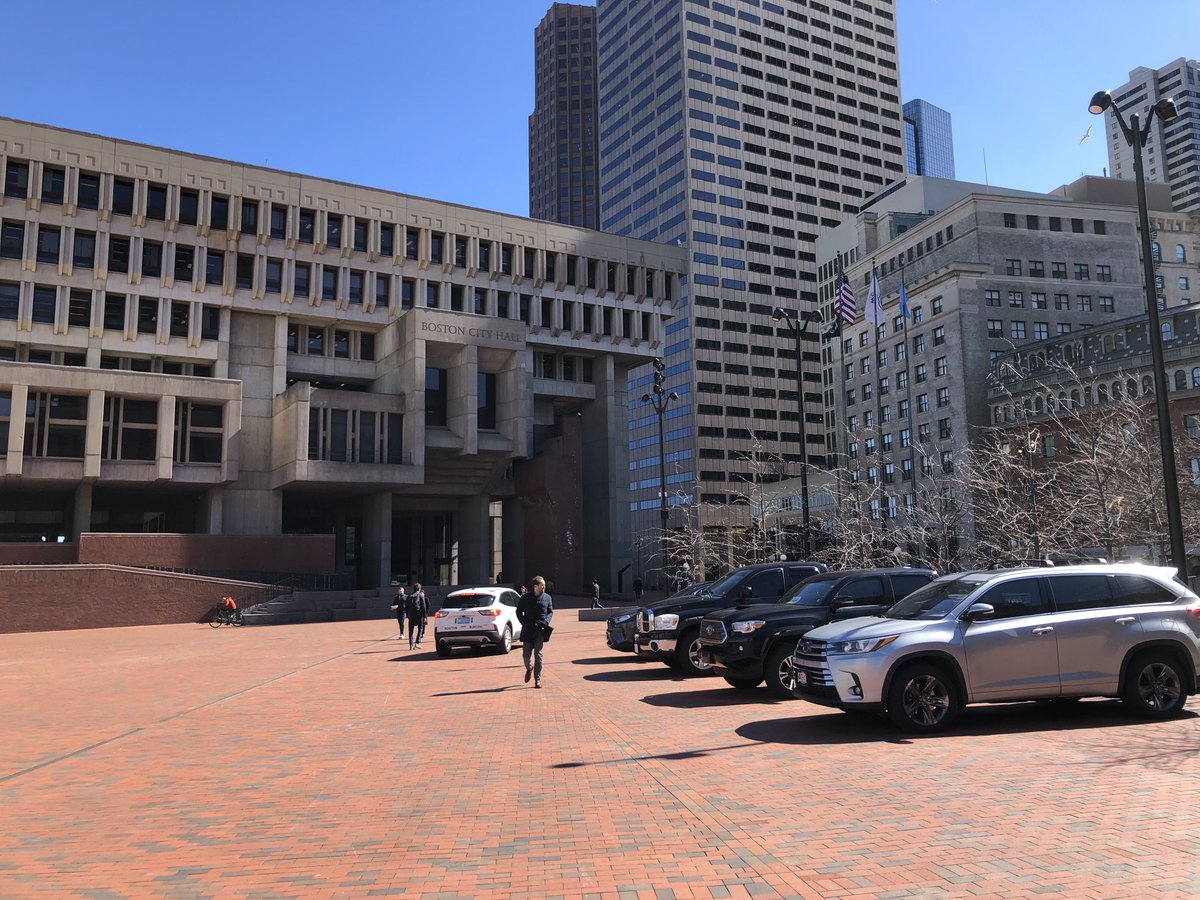
@HughLouisDewey@resetbasis@pslnational The speakers also included folks from Veterans for Peace and local union chapters, who obviously know how to get this stuff done fast. They likely had some signs already printed, too, seeing the writing on the wall. I swear this website has made people dumber.
@MarcHurBoston@SidKhurana3607 I reckon the story in Somerville is smaller households without much new construction (until recently), not so much decline.
@wbhub@4field Boston had oddly emerged as the east coast athletic shoe corporate hub, with Converse, New Balance and Puma all building HQs in recent years, plus Reebok.
@ElleryKlein@DoBetterLaura In this particular area there is a 20mph safety zone and brand new radar speed signs, but the basic school zone flashing lights have been nonfunctioning for weeks. The town government seems astonishingly indifferent to ped safety.
@DoBetterLaura They should also slow/stop for pedestrians. I hear a lot of anti-bike sentiment from active transport enthusiasts on two feet who don't enjoy being swerved around at full speed, especially when crossing with the pedestrian signal.
@DanielKayHertz@MarketUrbanism Your summary is great for these purposes, but one thing I’ve learned is that it’s impossible to describe the HUD AMI limits in a way that’s both accurate and readable. The actual calculation method is goofy. In each area, the whole table is scaled off of area median family income
@heatherpedia@jfurf@RyanRadia Oh for sure. Just adding another layer onto the observation that casual use of HHI in certain policy contexts really underestimates the financial condition of the type of household people often have in mind. And obviously all household types matter.
@jfurf@RyanRadia Even taking out the marriage filter, incomes of families and families with kids are a lot higher than the usual HHI discourse implies.
@UrbanDashboard@cszabla These things have been ubiquitous in suburban Boston for a while too. I thought it was a joke when I first heard someone mention it.
@DanielKayHertz Sort of. HUD AMIs are their own weird thing. They are based on median *family* income (not hh income) and then adjusted for household size based on fixed arbitrary ratios. And then there are weird overrides in high cost/income markets that cap certain tiers.
@JakeAnbinder@irapolis Something like 70% of MA households have natural gas or electric heat. The oil deliveries are highly visible and regionally specific, but a small and shrinking share...
@TomHorsman@PeteMarek The way they randomly cram the Christmas tree into a pedestrian path is hilarious to me. Reflects how poorly it was designed to accommodate even predictable seawoman use.