@theliverdoc@theliverdoc man you are so shrewd and your comments have an amazing sense of humor. Do you take alcohol Golis in the morning? Because those Golis are a joke 🤣
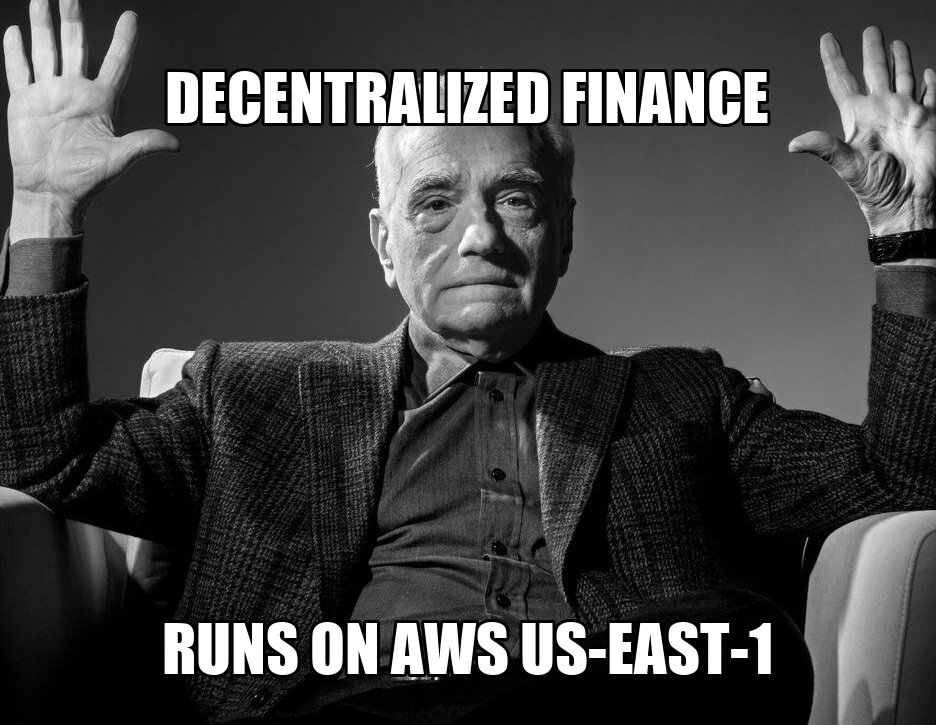
@brian_armstrong wild that "we experienced an outage" from the coinbase ceo is followed by "room overheating in aws". the decentralized future runs on one data center in virginia lol
@theliverdoc@theliverdoc thank you doing this but when I looked up the benefit of Rosehip, even Google AI talks about benefits to RA and joint inflammation. How can a ordinary person verify the medication?
Hello. How are you? Thank you. I love you. Please.
Some of the most frequently translated phrases of the past 20 years!
Google Translate began twenty years ago with a mission to help people understand one another, regardless of the language they speak. What started as a small experiment has become a global tool that helps over 1 billion users every month.
In that time Translate has evolved from simple pattern matching to true understanding. In 2006, it relied on statistical machine learning to look for patterns in small word clusters. By 2016, we pioneered a shift to neural networks to move beyond literal word-for-word translations, and today we’re using our powerful Gemini models to make Translate even more helpful.
We are moving from text to fluid, real-time conversations. With our latest models, you can even use your headphones as a personal interpreter that preserves your original tone and cadence - it’s an amazing experience!
One of the interesting things about AI is that as we make progress, we begin to take it for granted. If you met a person who could translate across a hundred languages faster than any human can, you would be so impressed. Today, one product does that for nearly 250 languages, and we kind of just shrug.
Being able to say thank you in 250 languages is not something I take for granted. So to the 1 billion who use Google Translate - merci, dhanyavaad, arigatō, gracias, and thank you! Let’s see what the next 20 years will bring.
₹8,181 crore. 22 years. And India became only the second country after Russia to pull this off.
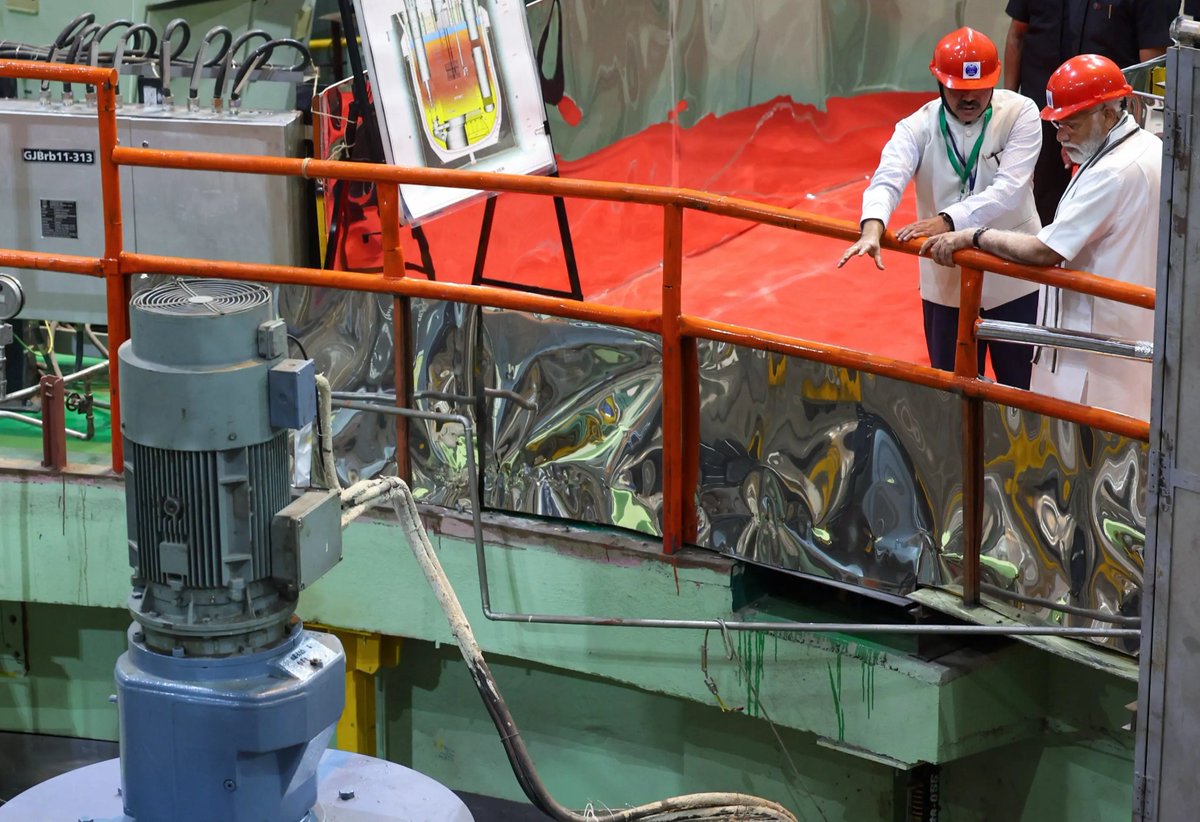
India's Fast Breeder Reactor went critical 3 days ago.
You've read the headline.
But almost nobody understands What made this reactor SO INSANELY HARD TO BUILD.
Here are 3 Engineering challenges that needed to be solved AND the 3 listed small-cap companies that solved them.
3 ENGINEEERING CHALLENGES:
1. Extremely high temperature,
2. Fuel structure development
3. Mastering sodium technology.
But first, why sodium? Why not just use heavy water like India's PHWR - Pressurised Heavy Water Reactors.
Because heavy water would kill the reactor's entire purpose. Heavy water is a moderator. It slows neutrons down.
A fast breeder needs fast neutrons to convert uranium-238 into plutonium-239.
Slow the neutrons and you kill the breeding. No breeding, no point.
Sodium let's the neutrons stay fast. That's the non-negotiable reason.
But sodium also happens to be a freakishly good coolant + Thermal conductor.
Thermal conductivity? 100x better than water.
Boiling point: 883°C, so at 550°C it stays liquid at atmospheric pressure.
No need for the 150+ atmospheres of pressurisation that water reactors require.
That means thinner vessel walls, no risk of pressure-rupture accidents, and a more compact core.
The trade-off? Sodium catches fire in air, explodes in water, and becomes radioactive inside the reactor.
You can't see through it. You can't inspect anything visually.
Every component must be perfect before it goes in, because YOU CANNOT open it up afterwards.
Now we got the basics, here are the 3 Engineering challenges + 3 Companies that solved them.
🔹 Challenge 1:
High Temperature → Kirloskar Brothers (KBL)
A conventional PHWR operates at around 300°C. The PFBR runs liquid sodium at 550°C. That 250-degree gap changes everything.
At 550°C, metals creep. They slowly deform under sustained stress. Welds weaken over time. Seals degrade.
Thermal expansion is massive, so every component must be designed with expansion tolerances that still maintain a perfect seal against sodium.
KBL built all the Primary and Secondary Sodium Pumps for the PFBR at their Kirloskarvadi plant.
Three primary pumps, 135 tonnes each, with an 11-metre long shaft submerged in liquid sodium.
That shaft expands and contracts with every temperature cycle.
The secondary pumps use hydrodynamic bearings running in sodium itself, no conventional lubrication possible.
Both pump types must be essentially maintenance-free.
You cannot open up equipment sitting inside a pool of liquid sodium at 550°C. Once installed, these pumps must run for years without human hands touching them.
Dr. Prabhat Kumar, former CMD of BHAVINI (the man who ran the entire PFBR project), wrote that "it took knowledge, skills and courage by the KBL team to accept the order for these pumps."
When the project head says it took courage to even accept the contract, you understand the engineering risk involved.
Market cap ~₹12,000 crore. KBL is the only Indian company that has built sodium pumps for a nuclear reactor. No second vendor exists.
🔹 Challenge 2:
Fuel Structure → MTAR Technologies
Fast neutrons inside a breeder reactor bombard the fuel cladding and wrapper materials at intensities far beyond what a PHWR experiences.
This causes "void swelling," where the metal literally puffs up at an atomic level.
Over time, fuel pins swell unevenly. Fuel sub-assemblies bow and distort.
Extracting a swollen, bowed fuel assembly (think rod) from a reactor core filled with opaque liquid sodium is one of the hardest precision engineering problems in nuclear technology.
MTAR manufactured the Inclined Fuel Transfer Machine (IFTM) and reactor top control plug for the PFBR.
The former BHAVINI CMD confirmed this directly.
And this is exactly where the PFBR's worst commissioning failure occurred.
The IFTM's transfer pot couldn't be lowered fully into the reactor during trials. Because sodium is completely opaque, engineers couldn't see what was wrong.
They had to develop ultrasonic imaging tools just to diagnose the problem.
This single issue delayed core loading by roughly two years.
IGCAR and BHAVINI eventually designed an alternate fuel handling scheme and fabricated new components in a 4-5 month sprint.
But the lesson is clear: fuel handling in a sodium environment demands micron-level precision in conditions where you're operating completely blind.
MTAR's market cap is ~₹8,500 crore. Nuclear was only 14% of FY25 revenue. But their order book hit ₹2,395 crore by December 2025, with the Kaiga order alone at ₹500 crore+.
The FBR-600 reactors will each need fuel transfer machines and control plugs. MTAR built the only ones India has ever made.
🔹 Challenge 3:
Mastering Sodium → Walchandnagar Industries (WIL)
Sodium is the best and worst coolant for a fast reactor at the same time.
Best: it doesn't slow down neutrons (essential for breeding), transfers heat brilliantly, and operates at atmospheric pressure (so vessel walls can be thinner and you eliminate high-pressure rupture risk).
Worst: it's opaque (no visual inspection possible), catches fire on contact with air, explodes on contact with water, and becomes radioactive (Na-24, 15-hour half-life) inside the primary circuit.
The PFBR holds 1,950 metric tonnes of this stuff.
The former BHAVINI CMD confirmed that WIL manufactured the large sodium-to-sodium and sodium-to-air heat exchangers.
These are the components where sodium mastery matters most.
The sodium-to-sodium heat exchangers (called Intermediate Heat Exchangers) sit between the radioactive primary circuit and the clean secondary circuit.
One leak and you contaminate the entire secondary loop with radioactive sodium.
The sodium-to-air heat exchangers are the decay heat removal system: the reactor's absolute last line of safety when everything else fails.
WIL also handled the sodium piping scope. Every weld, every joint, every bend in a sodium pipe must be perfectly leak-proof.
Not "industrial standard" leak-proof. Nuclear-grade, zero-tolerance leak-proof. Because a micro-crack in a sodium pipe gives you a fire, not a drip.
BHAVINI noted that the project handled 1,950 tonnes of sodium "without spilling a single drop."
WIL's fabrication quality is a big part of why that record held.
Market cap under ₹1,700 crore. Four decades of working with the Department of Atomic Energy. Class-I nuclear qualification from NPCIL, BARC, and BHAVINI.
For a company this small, the FBR-600 programme (six reactors, each needing heat exchangers and sodium piping larger than the PFBR prototype) could be transformative.
⚠️ Risks you can't ignore
📌 FBR-600 hasn't received financial sanction yet. DAE says it comes after one year of successful PFBR operation. That's 2027 at the earliest. Until then, this is optionality, not revenue.
📌 Sodium reactor technology has a brutal global track record.
Japan's Monju had a sodium leak in 1995 and never recovered. France's Superphénix was shut permanently. Russia's BN-800 is the only commercial fast breeder operating today.
India is betting it can be the second. If the PFBR hits serious problems during power ramp-up, the commercial FBR programme could stall for years.
📌 Valuations already reflect optimism. MTAR trades at roughly 180x FY25 earnings.
WIL has yet to run up on the nuclear narrative.
KBL is more reasonably priced but nuclear is still a tiny fraction of total pump revenue.
📌 BHAVINI is the sole buyer for FBR components. One budget cut, one priority shift at DAE, and these order pipelines disappear.
So that was it folks.
Three technical challenges. Three companies that solved them. Three qualification moats that took decades to build and can't be replicated quickly.
The real question isn't whether these companies are capable. They've already proved that.
The question is whether the PFBR works at full power over the next 12 months, because that's the trigger for everything that comes after.
Share with friends if you found this useful.
My dear front-end developers (and anyone who’s interested in the future of interfaces):
I have crawled through depths of hell to bring you, for the foreseeable years, one of the more important foundational pieces of UI engineering (if not in implementation then certainly at least in concept):
Fast, accurate and comprehensive userland text measurement algorithm in pure TypeScript, usable for laying out entire web pages without CSS, bypassing DOM measurements and reflow
NDIS EXPOSED: Massive 52 minute investigation with @PeteZogoulas into Australia's immense disability fraud crisis.
This is Minnesota on a national scale. The NDIS budget - now approaching $50 billion a year - is closing in on Australia's entire military budget, and there is so much fraud in the system that the official government regulator told the Australian Senate there are not enough judges in Australia to try all known cases of fraud. The entire Australian legal system would collapse if they tried.
Up to 99% of alleged NDIS fraud goes unprosecuted. Out of over 7,000 tip-offs alleging fraud in the March quarter of 2025, just 16 cases (0.22%) were prosecuted.
So alleged scammers don't even bother to hide abuse.
To give you just one example: we visited a West Sydney NDIS provider operating out of the exact same address as a previous NDIS business the Australian government shut down for fraud four months ago. They were using the same accountant and THE EXACT SAME PHONE NUMBERS!
When we confronted them on camera, the owners physically assaulted us, smashed $800 worth of @PeteZogoulas's equipment, and staff screamed "RETARD" at us.
These people work in disability care.
Very legitimate and professional disability service business.
Watch the whole thing now. This is just the tip of the iceberg.