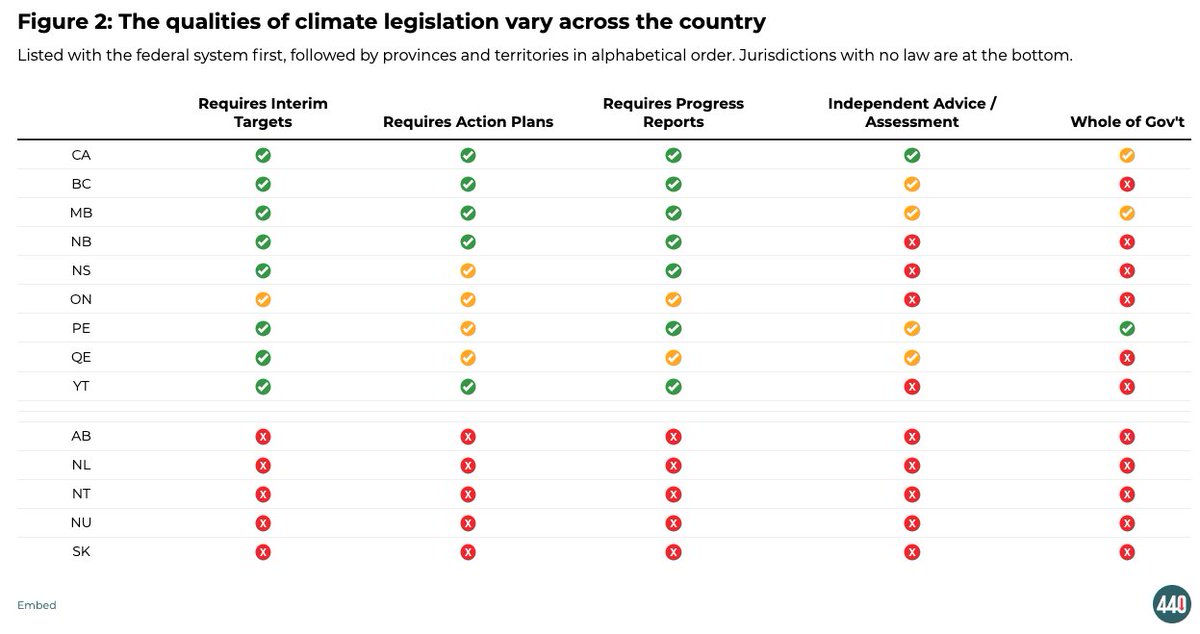
We analyzed the provinces and territories' climate accountability laws. Some are relatively strong, others are weaker. Take a closer look in our latest insight ⬇️ #cdnpoli
https://t.co/ZlAFIujmSb
There are ways to build on progress seen in recent years with best practices identified by @ClimateInstit. The more all governments are aligned, the smoother Canada’s path toward its climate goals will be. https://t.co/ZlAFIujmSb
INSIGHT: How are provinces and territories staying accountable for climate action? We took a closer look and found climate accountability laws across 🇨🇦 are a mixed bag. 🧵👇 #cdnpoli https://t.co/ZlAFIujmSb
Various governments - including in BC, Nova Scotia, Yukon and federally - issued reports on their own climate progress last year. However, climate accountability laws vary in strength and are applied unevenly across the country.
🇨🇦 is rapidly expanding its charging network, but needs to accelerate this work to keep up with demand. Fortunately, the new federal standard, alongside other policies, are incentivizing more charging infrastructure to meet a growing EV fleet. https://t.co/77KM9iLs6W
The public charging network in 🇨🇦 has expanded rapidly in recent years, more than tripling in size since 2018. This growth has accelerated over the past year—40% of new chargers have come online in 2023. Most of the chargers are concentrated in QC, BC, ON and AB.
INSIGHT: 🇨🇦’s new Electric Vehicle Availability Standard will increase the supply of new EVs for drivers across Canada and bolster demand for public charging stations. Is 🇨🇦’s charging network ready for the increased demand? 🧵👇 #cdnpoli
https://t.co/77KM9iLs6W
Canada is making big progress implementing policies and reducing emissions: it is on track to achieve 85 to 90 per cent of its 2030 target. But policies must be implemented swiftly and effectively. #cdnpoli
https://t.co/xwbQ0GJ10h
Closing the gap to 🇨🇦’s 2030 target will require all orders of government to work together. That means finalizing policies in development, strengthening existing ones and implementing new measures to hit to keep Canada’s targets within reach. https://t.co/xwbQ0GJ10h
🚨NEW RESEARCH 🚨 Is 🇨🇦 on track to meet is climate targets? Our 2nd independent assessment of Canada’s climate plan shows the country on track to achieve 85-90% of its 2030 target—if policies are implemented swiftly and effectively. 🧵👇 #cdnpoli https://t.co/xwbQ0GJ10h
Important policies have moved through the policy process since the release of 🇨🇦‘s climate plan, including the Clean Fuel Regulations, methane regulations, and ZEV sales mandate. Of the policies we modelled, 19 are now legislated, up from 9 in our 2022 assessment.
Despite progress, efforts to deploy solutions need to accelerate to align the sector with Canada’s emissions reduction target. Government actions like the new methane regulations and emissions cap for the sector have a critical role to play. https://t.co/mAXGcUANQh
Companies are investing in safe bet solutions like methane reductions, electrification and cogeneration, as well as wild card technologies like capture and storage https://t.co/8Vj6TL9hgR
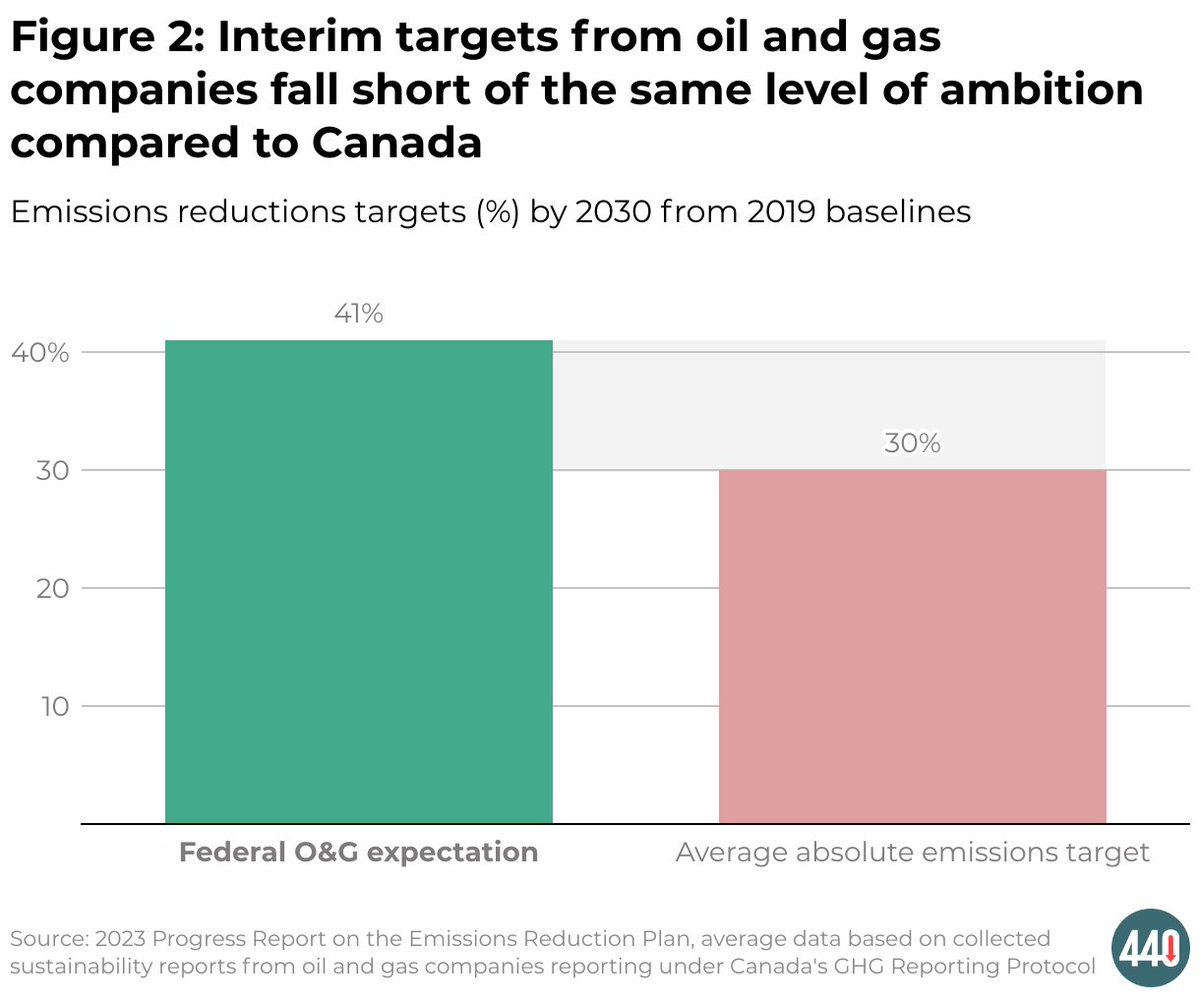
We found that the average 2030 corporate target was about 30% below 2019 levels. That’s much less ambitious than what’s needed to align the sector with Canada’s 2030 target, according to federal modelling, which sees emissions decline 41% by 2030 from 2019 levels.
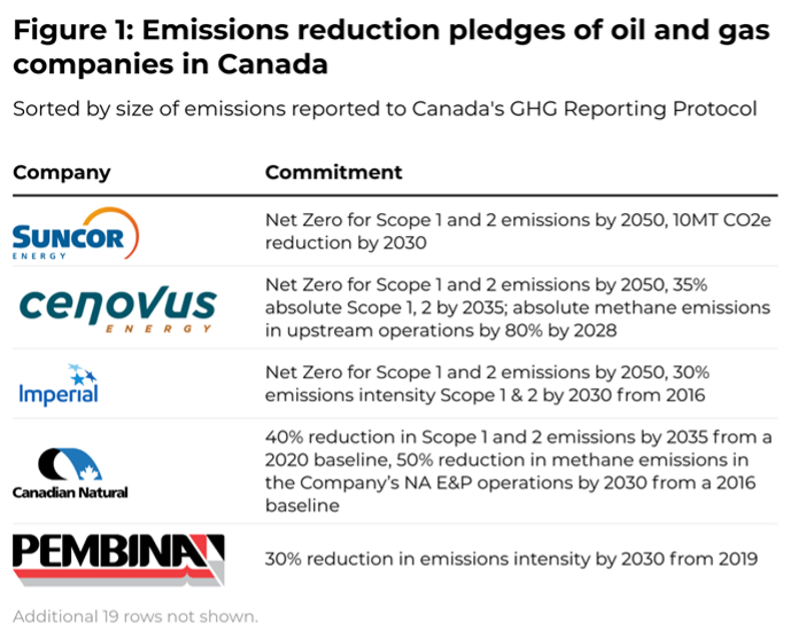
440 Megatonnes analyzed the commitments set by companies that currently cover over 86% of emissions reported from facilities that emit more than 10 kilotonnes of CO₂e a year in the sector.
https://t.co/mBYbrMyAFy
INSIGHT: Is 🇨🇦’s oil and gas sector walking the talk when it comes to reducing emissions? And does it line up with what’s needed to get to #NetZero? We added up the sector’s corporate commitments and took a closer look 🧵👇 #cdnpoli
https://t.co/mAXGcUANQh
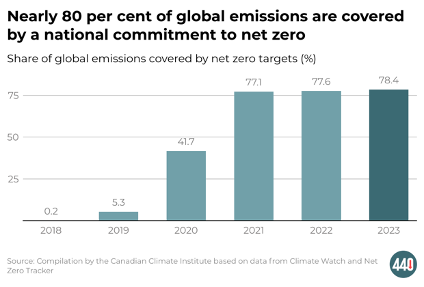
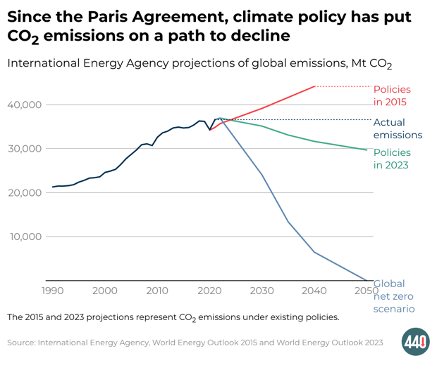
In 2015, no major emitter had a net zero target. In 2023, around 100 countries representing ~80% of emissions have a national net zero goal. Now is the time for accelerated action. We’re keeping 👀 for 🇨🇦’s progress report, expected by the end of 2023
#COP28 makes clear that much work remains on the path to net zero—but also that the world is making progress. Before Paris, CO2 emissions were expected to keep rising. Now they are expected to fall. And there are other signs of progress 👇
More than 150 countries have pledged to reduce 🌍 methane emissions at least 30% by 2030. At #COP28, 🇨🇦 announced new regulations to cut methane from oil and gas by at least 75%.