Thoughtful international advocacy for the humanities--backed up by research & projects of local chapters; powered by international digital humanities community.
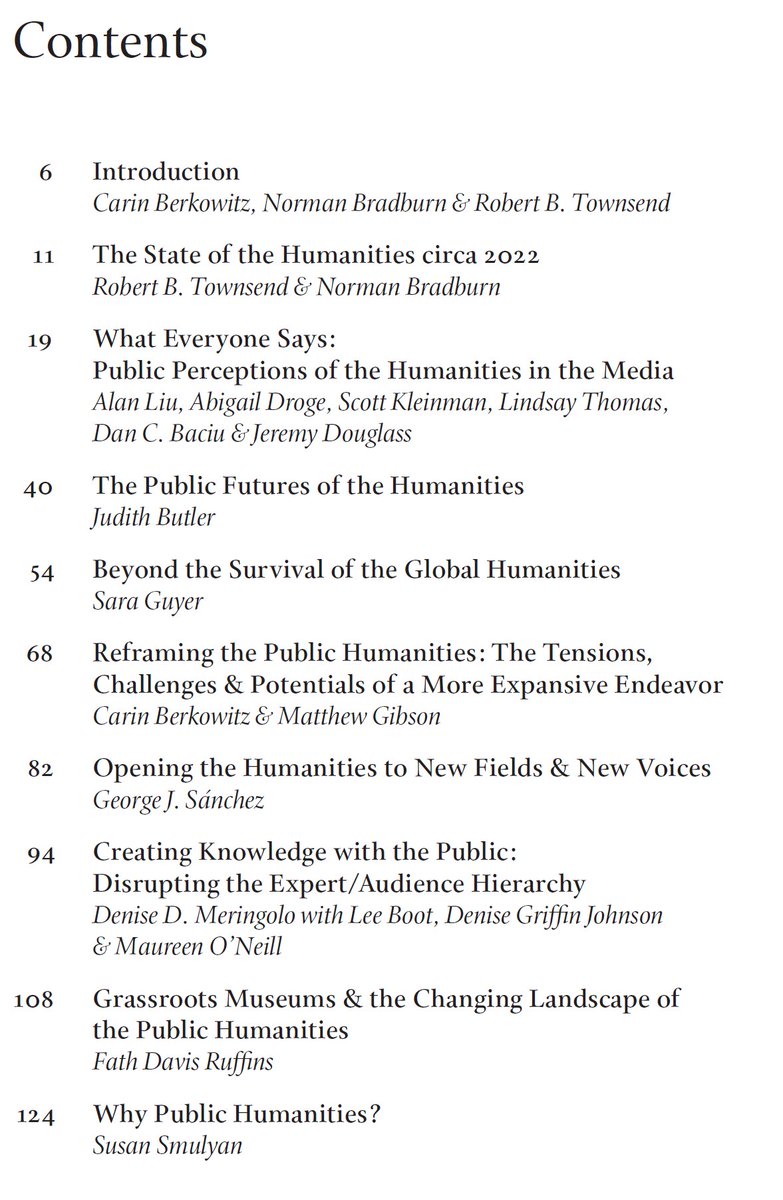
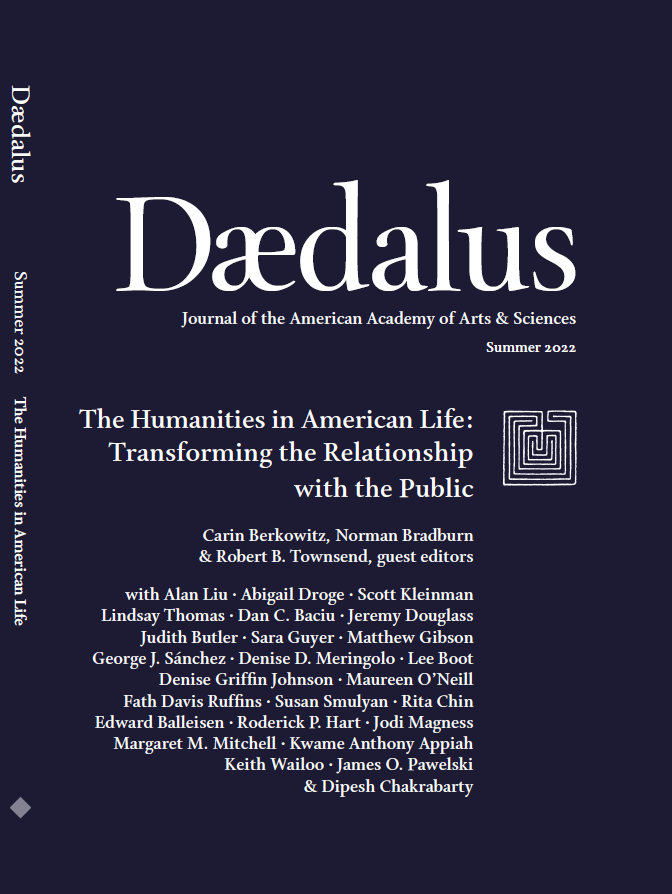
The entire Daedalus issue on "The #Humanities in American Life:
Transforming the Relationship
with the Public" is now available free for download as a single PDF at https://t.co/tXEIra0YZB. Read. Enjoy!
“The derision of English Literature and Philosophy as unprofitable degrees only counts when working-class students aspire to the humanities.” https://t.co/SutbtfrAeI
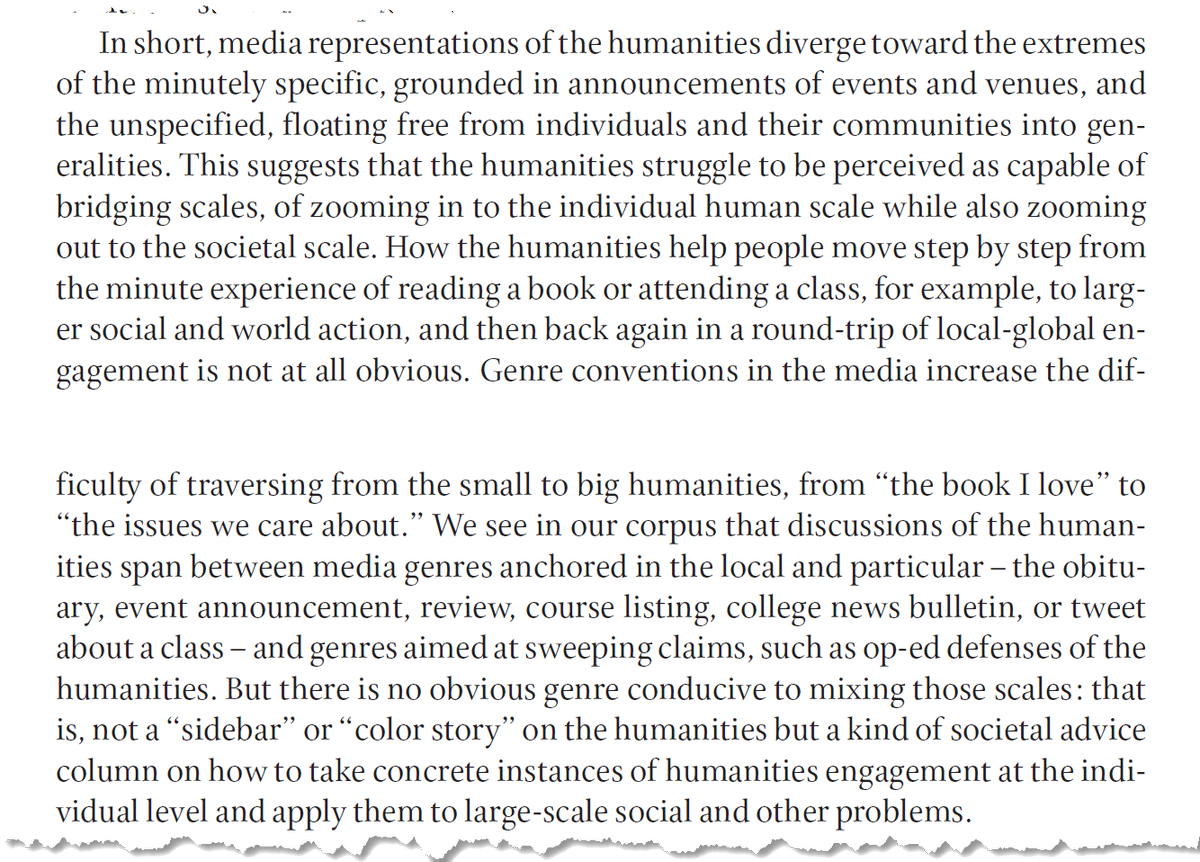
Excerpt from our @WE1Sproject article in Daedalus, https://t.co/6kDddVaR7D:
>> On how the humanities fail to show how to bridge between the "small" humanities ("the book I love") to the "big" humanities ("the issues we care about")
Excerpt from @WE1Sproject article in Daedalus, https://t.co/6kDddVaR7D:
>> On how "object-poor" the humanities are. In the public's perception, humanists do talks; scientists do things. See also WE1S card on contrast with sciences: https://t.co/1wE9UZhX5f)
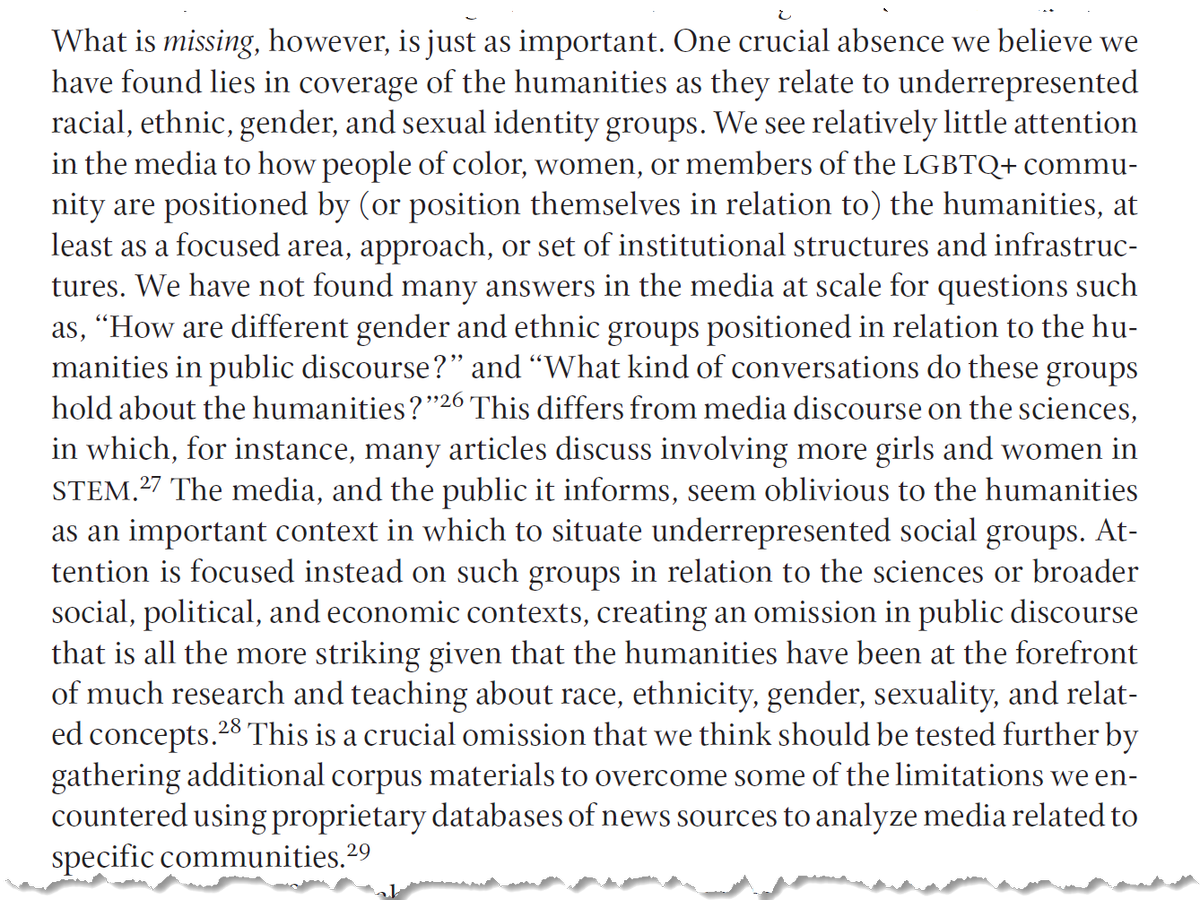
Excerpt from @WE1Sproject article, https://t.co/6kDddVaR7D:
>> On lack of media attention to how underrepresented groups relate to humanities by contrast to the sciences. This was WE1S's most frustrating research inquiry: huge effort, sparse results. Public doesn't seem to care.
@WE1Sproject Excerpt from our @WE1Sproject article in Daedalus, https://t.co/6kDddVaR7D:
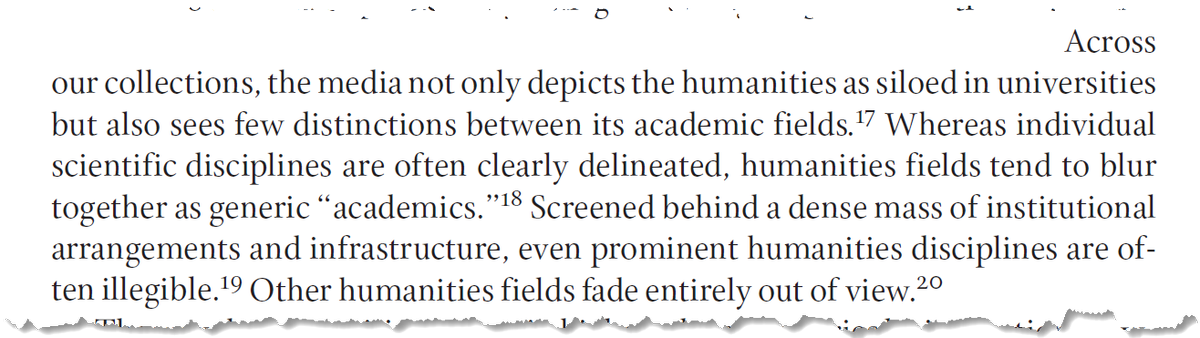
>> On the perception of the academic humanities as siloed in universities and blurred-together by contrast with the sciences.
Excerpt from our @WE1Sproject article in Daedalus, https://t.co/6kDddVaR7D:
>> On the different mind-share and flavor of the humanities in private vs. public higher ed institutions.
Excerpt from our @WE1Sproject article in Daedalus, https://t.co/6kDddVaR7D:
>> On the diffusion of humanities in "ordinary" life. (Cf. Michael Levenson's book, The Humanities and Everyday Life, 2017. See also WE1S cards on humanities & ordinary life: https://t.co/zeDXIpIIbJ)
Excerpt from our @WE1Sproject article in Daedalus, https://t.co/6kDddVaR7D:
>> On the invisibility of the "humanities crisis" in media. (See also WE1S cards on the humanities crisis: https://t.co/zeDXIpIIbJ)
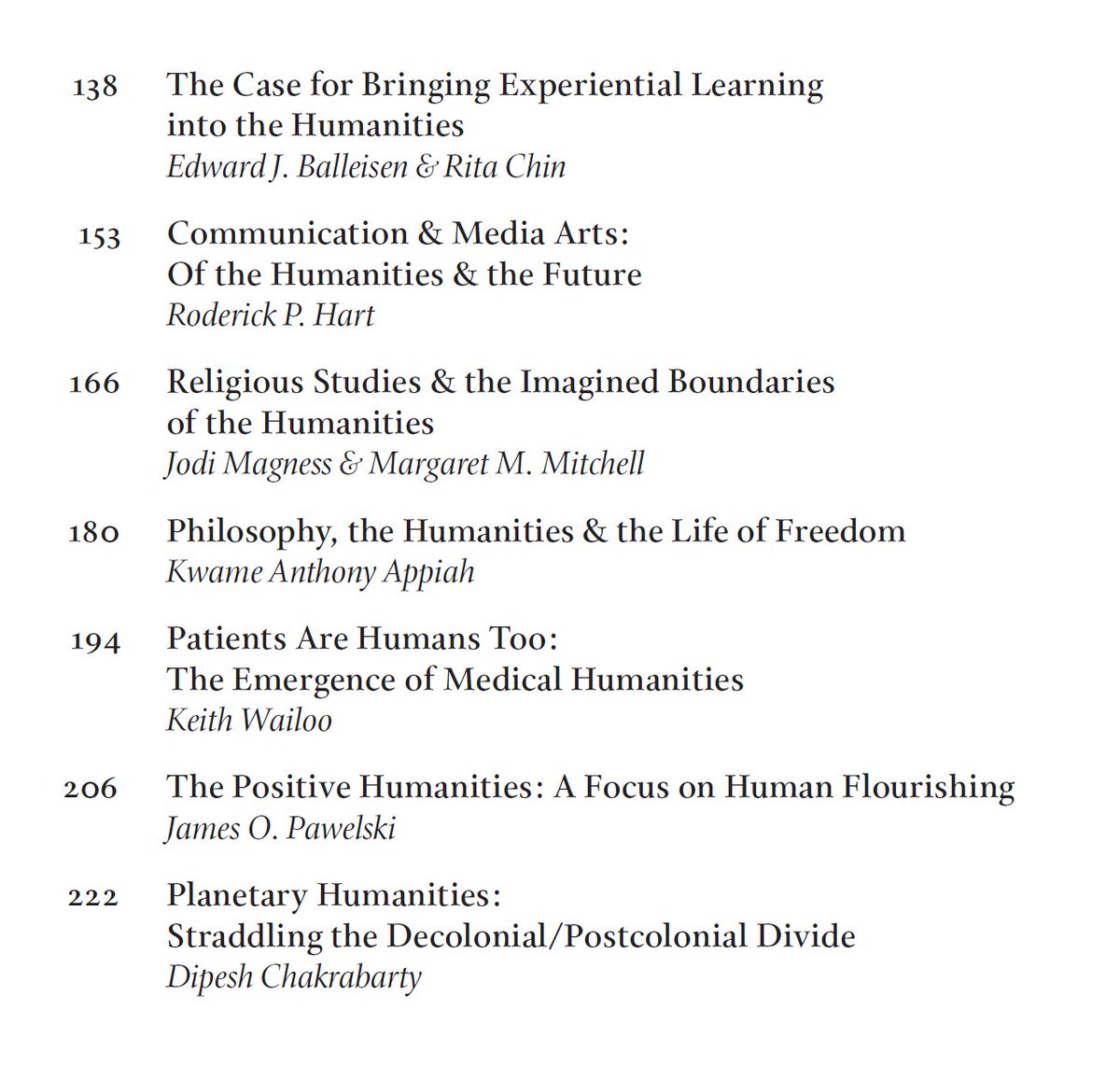
Our @WE1Sproject article in Daedalus is part of issue of the journal about "The Humanities in American Life: Transforming the Relationship with the Public": https://t.co/la1ska8hmS
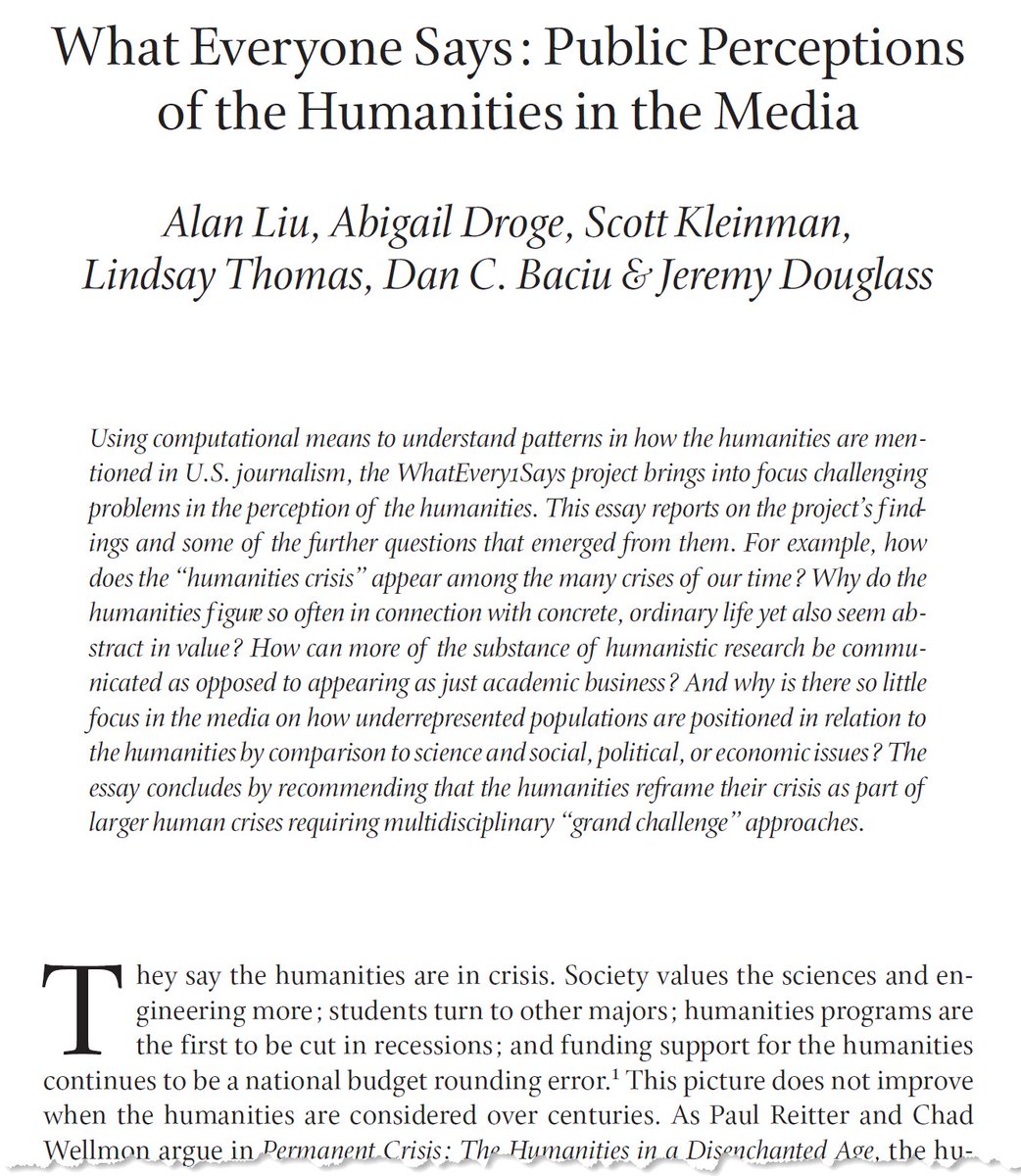
Just out in Daedalus: our ariticle "What Everyone Says: Public Perceptions of the Humanities in the Media" -- a high-level synthesis of findings from our WhatEvery1Sasy (WE1S) project, with reflections and and general recommendations for the humanities: https://t.co/ywigrWFvj4
Thrilled to finally share the new Daedalus issue on The #Humanities in American Life: Transforming the Relationship with the Public. Online (and open access) at https://t.co/1Ook53MVd5.
Eloquent commentary in @CulturalAnalyt today by @lindsaycthomas & @abigaildroge (https://t.co/CMhTAHj4uo), following up on their article in Cultural Analytics on “The Humanities in Public” (https://t.co/LVWgp5Faqa) based on @WE1Sproject data (https://t.co/9S3caBGKi7).
On the quantitative side, the @WE1Sproject's key method for computational analysis of large numbers of journalistic articles mentioning the humanities was topic modeling. See our 1-page card on topic modeling: https://t.co/BzG5k7EJfC
Our research in the WE1S project included combinations of quantitative & qualitative, computational- & human-powered, and "distant" and "close" reading methods.
We've tweeted on WE1S's materials & findings. Now we turn to how we studied materials to reach findings. Here starts a series of tweets on our methods. For an overview of WE1S methods, see https://t.co/39QSLenOJW. For explanatory cards of Key Methods, see https://t.co/npYiXDFeRm
Other interesting WE1S data collections are ones we used to compare humanities & sciences. E.g., C-21, data on news mentioning H & S (start page: https://t.co/yfUv1CzjLE); or C-33, news identified with text-classifier as "about" H & S (start page: https://t.co/UszhoRkuvr)