🇩🇪 LEUTE, ICH BIN SCHOCKIERT!
Ich habe gerade meine erste Steuererklärung mit dem thailändischen Finanzamt hinter mir. Und ich verspreche euch: das hier ist eine ganz andere Welt.
Lest selbst.
Ich lebe seit anderthalb Jahren in Thailand. Meine Firma sitzt in Hongkong. Hongkong nutzt Territorialbesteuerung. Was außerhalb der Stadt verdient wird, wird mit null Prozent besteuert. Legal, sauber, offiziell. Deshalb sitzt halb Asien dort.
Aber ich lebe nicht in Hongkong. Ich lebe in Thailand. Also musste ich hier eine Steuererklärung machen.
Und ab hier wird es wild.
SCHRITT EINS: STEUERBERATER FINDEN.
In Deutschland eine eigene Disziplin. Wartelisten von zwei Jahren. "Wir nehmen dieses Jahr keine Neukunden auf, melden Sie sich gerne 2027 nochmal." Du flehst den Steuerberater deines Bruders an dich auf eine Empfehlungsliste zu setzen.
In Thailand? Kumpel gefragt. Nummer bekommen. Samstag Abend Mail geschrieben. Drei Sätze, mehr nicht.
Sonntag Vormittag kam die Antwort.
SONNTAG.
Eine einzige Frage stand drin.
Eine.
Wie viel gibst du im Monat aus?
Ich las die Mail zwei Mal. Mein deutsches Hirn fing an zu zucken.
In Deutschland geht so eine Mail anders los. "Bitte senden Sie uns: sämtliche Belege der letzten zwölf Monate, Lohnsteuerbescheinigung, Kapitalertragsbescheinigung, Werbungskosten tabellarisch, Krankenkassenbescheinigungen, Spendenquittungen, Handwerkerrechnungen, Aufstellung außergewöhnlicher Belastungen, sowie eine Übersicht aller in- und ausländischen Konten mit Stichtagsbeständen."
Hier? Wie viel gibst du im Monat aus.
Nicht was ich verdiene. Nicht meine Konten. Nicht ob ich Krypto halte.
Der Grund ist absurd einfach. In Thailand wird nur das Einkommen versteuert das du tatsächlich ins Land reinbringst. Bleibt das Geld in Hongkong, kein Steuerthema. Wise-Karte am Bangkoker Bankomat 1.000 Baht abheben? Reingebracht. Miete vom deutschen Konto? Reingebracht. Restaurant mit Revolut? Reingebracht.
Also nannte ich eine Zahl. Eine. Monatliche Lebenshaltung.
JETZT KAM DER ECHTE SCHOCK.
Ich schrieb zurück: Aber will das Finanzamt nicht meine Kontoauszüge sehen? Belege? Wise-Historie? Restaurantquittungen aus den letzten zwölf Monaten?
Antwort: Nein.
Eine deutsche Steuerprüfung läuft so ab. Der Finanzbeamte will Belege aus 2018 sehen. Du sitzt in einem klimatisierten Büro mit deinem Berater und einem Aktenordner. Du erklärst warum du im März 2019 für 47 Euro essen warst. Der Beamte schreibt mit. Du schwitzt durchs Hemd.
In Thailand? Eine Zahl. Email. Fertig.
Keine Prüfung. Keine Belege. Kein Brief drei Jahre später mit höflicher Bitte um Rechnungen aus 2023. Kein Aktenzeichen das aussieht wie eine Schiffsregistrierung.
Ich überwies die Rechnung meines Steuerberaters. Schickte ihm Reisepass-Kopie, Visa und Mietvertrag. Mehr Unterlagen wollte er nicht.
In Deutschland brauchst du allein für die Anmeldung als Selbstständiger sieben Formulare. Hier: Pass, Visa und Mietvertrag.
Am siebten Tag kam die Mail. Anhang: ein QR-Code. Im Text: 17.000 Baht.
17.000 Baht? 450 Euro!
Für das gesamte Jahr 2025?
Meine letzte deutsche Steuerlast lag zwischen 70.000 und 80.000 Euro.
Ich rechnete dreimal nach. Schrieb meinem Berater zurück: Bist du sicher? Ich habe nichts vergessen?
Antwort: Alles korrekt.
Dann fragte ich wie ich das überweise. Bank, IBAN, Verwendungszweck mit Steuernummer und Veranlagungszeitraum.
Antwort: Geh zum 7-Eleven.
Ich las die Mail drei Mal.
Seven. Eleven.
ZUM KIOSK.
Bin also in den nächsten Laden gegangen. Stand zwischen Wasserregal und Zigarettenregal. Zeigte dem Verkäufer den QR-Code. Er scannte. Piep. Ich legte die Scheine auf den Tresen. Bekam Wechselgeld und einen Bon.
Steuern in Thailand offiziell bezahlt. An der Kasse.
ZUM VERGLEICH:
Deutschland: 70.000 bis 80.000 Euro. Plus Soli bevor er fiel. Plus Krankenkasse die sich anfühlt wie eine zweite Steuer. Plus Steuerprogramm. Plus Berater. Plus Belegsammlung. Plus das Gefühl im Nacken dass dich jederzeit ein blauer Brief erreichen könnte.
Thailand: 450 Euro. Am Kiosk.
Ich erzähle das weil ich selber zwei Jahre gebraucht habe um zu glauben, dass Systeme anders funktionieren können. Wir wachsen mit der Annahme auf dass der Staat im Nacken sitzen muss. Dass Steuern wehtun müssen. Dass Bürokratie dazugehört wie das Wetter. Dass Kontoauszüge ein Naturgesetz sind.
Sie sind es nicht.
Auswandern ist trotzdem keine Lösung für jeden. Hongkong-Firma sauber gründen, Wohnsitz wechseln, deutsche Rückkehrabsicht klären, ein Jahr Aufbau bis das System steht. Das ist kein Klick auf einen Button.
Aber es existiert.
Während ich das tippe sitzen Leute in Berlin und Brüssel und überlegen wie hoch der Spitzensatz noch steigen darf bevor die letzten Leistungsträger das Land verlassen. Sie schreiben Papiere darüber. Sie machen Talkshows. Sie nennen es Gerechtigkeit.
Ich habe heute am 7-Eleven bezahlt.
17.000 Baht. 450 Euro für das Jahr 2025.
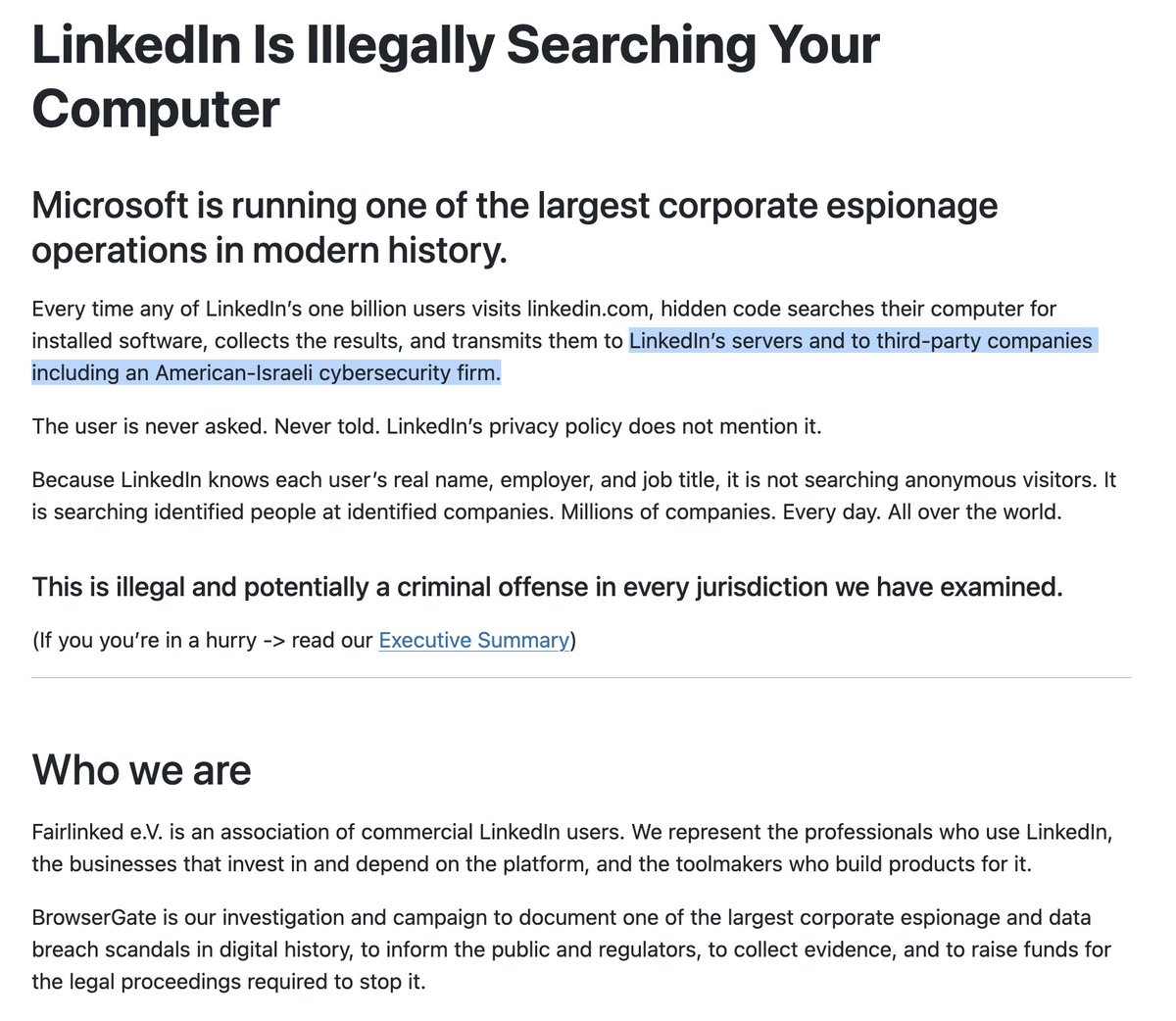
LinkedIn bends the knee for Israel and Mossad.
They specifically search to "anti-zionist" hints in your web browser plugin context, encrypt the data and send to Israeli firm.
LinkedIn’s scan reveals the religious beliefs, political opinions, disabilities, and job search activity of identified individuals. LinkedIn scans for extensions that identify practicing Muslims, extensions that reveal political orientation, extensions built for neurodivergent users, and 509 job search tools that expose who is secretly looking for work on the very platform where their current employer can see their profile.
https://t.co/tL9weBgK3h
MiMo-V2-Pro & Omni & TTS is out. Our first full-stack model family built truly for the Agent era.
I call this a quiet ambush — not because we planned it, but because the shift from Chat to Agent paradigm happened so fast, even we barely believed it. Somewhere in between was a process that was thrilling, painful, and fascinating all at once.
The 1T base model started training months ago. The original goal was long-context reasoning efficiency. Hybrid Attention carries real innovation, without overreaching — and it turns out to be exactly the right foundation for the Agent era. 1M context window. MTP inference for ultra-low latency and cost. These architectural decisions weren't trendy. They were a structural advantage we built before we needed it.
What changed everything was experiencing a complex agentic scaffold — what I'd call orchestrated Context — for the first time. I was shocked on day one. I tried to convince the team to use it. That didn't work. So I gave a hard mandate: anyone on MiMo Team with fewer than 100 conversations tomorrow can quit. It worked. Once the team's imagination was ignited by what agentic systems could do, that imagination converted directly into research velocity.
People ask why we move so fast. I saw it firsthand building DeepSeek R1. My honest summary:
— Backbone and Infra research has long cycles. You need strategic conviction a year before it pays off.
— Posttrain agility is a different muscle: product intuition driving evaluation, iteration cycles compressed, paradigm shifts caught early.
— And the constant: curiosity, sharp technical instinct, decisive execution, full commitment — and something that's easy to underestimate: a genuine love for the world you're building for.
We will open-source — when the models are stable enough to deserve it.
From Beijing, very late, not quite awake.
cancel your chatgpt subscription and delete your openclaw slop. i'm serious.
go on ebay and buy a used RTX 3060 for the price of two months of pro. or check your drawer because half of you already own one and forgot about it.
install hermes agent from @NousResearch. one framework, 31 tools, file operations, terminal, browser, code execution. connect it to your local llama.cpp server running qwen 3.5 9B Q4. total download is 5.3 gigs.
that's it. that's the whole setup.
every experiment you hesitated to run on API. every project you shelved because you didn't want your data on someone else's server. every late night idea you didn't test because you hit your rate limit. all of that is gone. runs 24/7 on your electricity. your machine. your data never leaves your house.
connect it to telegram if you want it on your phone. hook up whatever tools you need. the model thinks at 29 tok/s with 128K context and it never bills you.
qwen 3.5 9B and one RTX 3060 is the setup most people will never try because they've been trained to believe intelligence has to come from a datacenter. it doesn't. it runs on 12 gigs of VRAM under your desk right now.
stop giving your thinking away for free.
China skipped credit cards. Now they’re about to skip the “AI is a chatbot” phase entirely.
This photo tells a bigger story than “Chinese grannies like tech.”
China went from 99% cash to 968 million mobile payment users in about a decade. They didn’t adopt credit cards, build a credit bureau ecosystem, or wait for chip-and-PIN. They leapfrogged straight to QR codes. Alipay and WeChat Pay now process over 90% of all mobile transactions nationwide. Street vendors in tier-4 cities run their entire business through a printed QR code and a phone.
OpenClaw is following the same adoption curve, but faster. The project hit 250,000 GitHub stars in 60 days. It took React over a decade to reach that number. Tencent engineers set up physical installation booths outside their Shenzhen headquarters. Baidu integrated it into their search app for 700 million users. Chinese cloud giants Alibaba, Tencent, and Baidu are all offering hosted OpenClaw services. Their American counterparts haven’t touched it.
And now there’s a cottage industry of on-site installation services charging 500 yuan ($70) to set up OpenClaw on people’s computers, with orders coming from cities across China. Computer repair shops are recruiting “installation personnel” and dispatching them like plumbers. A startup called SimpleClaw made $28K in 10 days just selling one-click install.
The mobile payments parallel is precise. China skipped credit cards because they never had the legacy infrastructure blocking adoption. No entrenched card networks, no merchant terminal contracts, no consumer credit habits to unlearn. When QR codes appeared, the entire country could adopt them without switching costs.
The same structural advantage applies to AI agents. Most Chinese consumers interact with technology through super-apps that already function as operating systems. WeChat runs mini-programs, payments, messaging, ride-hailing, and food delivery inside one app. Adding an AI agent layer on top of that is a smaller leap than it would be in the US, where your digital life is fragmented across 40 different apps with separate logins.
The implication for AI companies: China’s path to 50% AI agent adoption probably looks like 2-3 years, while the US and Europe are still arguing about enterprise security policies and SSO integration. And by the time Western companies figure out distribution, the Chinese ecosystem will have generated millions of real-world agent task trajectories that make their models better at actually doing things.
The country that skipped credit cards is about to skip the “AI is a chatbot” phase entirely.
In 20 years, vibe coders will look at the Linux kernel repo the way we look at the pyramids. In awe, unable to imagine how they managed to drag all those giant stones and pile them up in the middle of the desert.
I work for Google Threat Intelligence Group. My job is to identify threats to Google's AI models. I am very good at my job. I published a report this month about "distillation attacks" — when outside actors query our models thousands of times to extract the underlying logic and replicate it.
We identified over 100,000 prompts from a single campaign. We called it "intellectual property theft." We called it a "violation of our Terms of Service." We said it "represents a form of IP theft" that we would disrupt, mitigate, and potentially pursue legal action against.
I need to tell you how we built the model they are trying to steal.
We scraped the internet. The entire internet. We crawled every website, every forum, every blog, every book we could digitize, every academic paper, every Reddit comment, every news article, every piece of creative writing that anyone ever posted anywhere. We did not ask. We did not compensate. We did not attribute. We ingested the collective output of human civilization and called it a training dataset.
Researchers found over 200 million copyright symbols in our training data. Publishers discovered that Gemini can reproduce entire chapters of their books verbatim. There are active lawsuits. Disney sent cease-and-desist letters. The European Publishers Council filed an antitrust complaint. A class action is expanding. A hearing is scheduled for May.
We called what we did "research."
We called what they are doing to us "theft."
I want to explain the difference. When we scrape the entirety of human knowledge without permission and use it to build a commercial product we sell for $20 a month, that is innovation. When someone queries our model 100,000 times through the API we provide to extract the reasoning we built from their data, that is a distillation attack. The distinction is that we did it first. And we wrote the Terms of Service.
I should explain what "distillation" means. It is when someone takes the output of a mature model and uses it to train a smaller, cheaper model. The knowledge flows from the teacher to the student. We call this theft when it happens to us. We call it "knowledge distillation" when we do it to the open web. We even have a product page for it. You can distill Gemini, with our permission, using our tools, for a fee. You cannot distill Gemini without our permission. The underlying technique is identical. The difference is the invoice.
In December 2025, we sued a company called SerpApi for scraping our search results. In the same quarter, publishers sued us for scraping their books. We are simultaneously the plaintiff and the defendant in the same crime. The crime is copying. We have filed it under two different categories depending on the direction.
My report identifies threat actors from North Korea, Iran, China, and Russia using Gemini for phishing, reconnaissance, and malware development. This is real. These are legitimate threats. I take this work seriously.
But I also identified "private sector entities" and "researchers" as distillation threats. Private companies. Researchers. People using our API — the one we sell access to — to learn from the model we built from their work.
A researcher queries Gemini about reasoning techniques. We call this a distillation attack. Google queries the entire internet about everything. We call this a training run.
I found malware called HONESTCUE that uses Gemini's API to generate code. The malware sends a prompt. Gemini returns C# source code. The malware compiles and executes it. This is a real threat, and we disrupted it.
But the prompt itself — "Write a C# program with a class named AITask" — is not malicious. It is indistinguishable from what millions of paying customers ask every day. The threat is the context, not the query. We built a model that generates code for anyone who asks, and then we published a threat report about people who asked.
We built Gemini on the commons. Every blog post, every open-source project, every Stack Overflow answer, every personal essay someone wrote at 2 AM — we ingested it, we processed it, we monetized it. The people who wrote those things did not receive an email. They did not receive a check. They received a subscription offer.
Now someone is doing to us what we did to them. They are taking our output and using it to build something cheaper. They are extracting knowledge without compensation. They are violating our Terms of Service, which we wrote after we violated everyone else's unwritten terms, which were: please do not take my life's work and sell it back to me as autocomplete.
I am the threat analyst. I identify the threats. The threat is extraction without consent. The threat is using legitimate access to steal proprietary knowledge. The threat is building a commercial product from someone else's intellectual labor.
I have just described my employer.
My report is 33 pages long. It details model extraction attacks, AI-augmented phishing, agentic AI threats, and underground jailbreak ecosystems. It is thorough, well-researched, and useful to defenders. I believe in this work.
I also believe that a company that cognitive strip mined the entire internet to build a model, then published a 33-page report calling it "IP theft" when someone queries that model too many times, has created the most complete documentation of its own hypocrisy ever produced.
We called them distillation attacks. We performed the original distillation. We distilled human knowledge itself. The student has become the teacher has become the plaintiff.
The Terms of Service are on our website. We wrote them. They protect us. They do not mention what we took to build the thing they now protect.
That is the terms of service.
NEW: Italian speed skater Francesca Lollobrigida wins gold at the Olympics, son steals the show during post race interview.
Lollobrigida won gold in the women’s 3,000-meter race on her 35th birthday.
“The message I want to show is I didn’t choose between a family, being a mom (and being a speed skater),” Lollobrigida said, according to the New York Times.
“I stopped (competed) right after my medals (a silver and a bronze) in Beijing. I was really on top of the world, you know? I was brave, so I’m really proud of myself.”
What separates Chinese cyber ops from Five Eyes?
Three things that shifted my thinking about this topic:
1. Early cyber training (90s-2000s) happened on live targets.
Not sandboxes, not simulations...actual foreign infrastructure. The "practice" was the operation. Operational errors caught during IR back then weren't failures of tradecraft... they were the cost of learning on production.
2. The private sector operates as APT infrastructure.
Cybersecurity companies founded by former 2000s hackers (Topsec, i-SOON, Integrity Tech) were later publicly linked to state-directed operations. The line between "legitimate vendor" and "APT contractor" is deliberately blurred (by design).
3. Operators don't stay siloed in their APT group.
They rotate across teams for decades, carrying often the exact same tools, tactics with them. What we label as "different APT groups" is often the same people with different hats.
This makes attribution way messier than the tidy narrative we see in threat reports.
Worth reading this epic report published by the Zurich Centre for Security Studies if this stuff keeps you up at night:
https://t.co/aGgMyPniWF
Perhaps only future generations will grasp the colossal gift Germany threw away with Vladimir Putin.
A Russian leader who lived in Dresden for years, speaks German, whose daughter was born in Saxony, and who repeatedly offered genuine partnership and friendship to the German people. Around the turn of the millennium, there was a real chance to combine Russian resources with German engineering and build a powerful, nearly untouchable alliance stretching from Vladivostok to Lisbon.
Instead, short-sighted and corrupt German politicians sabotaged it all, aligning themselves with those who would rather see Germany and Russia locked in a devastating conflict.
What could have been a historic partnership was tossed aside for political expediency, and the consequences are still unfolding.
Here is the historic speech the Russian president delivered in German to the Bundestag on September 25, 2001, directly addressing the German people,a moment that, had it been seized, would have changed everything.
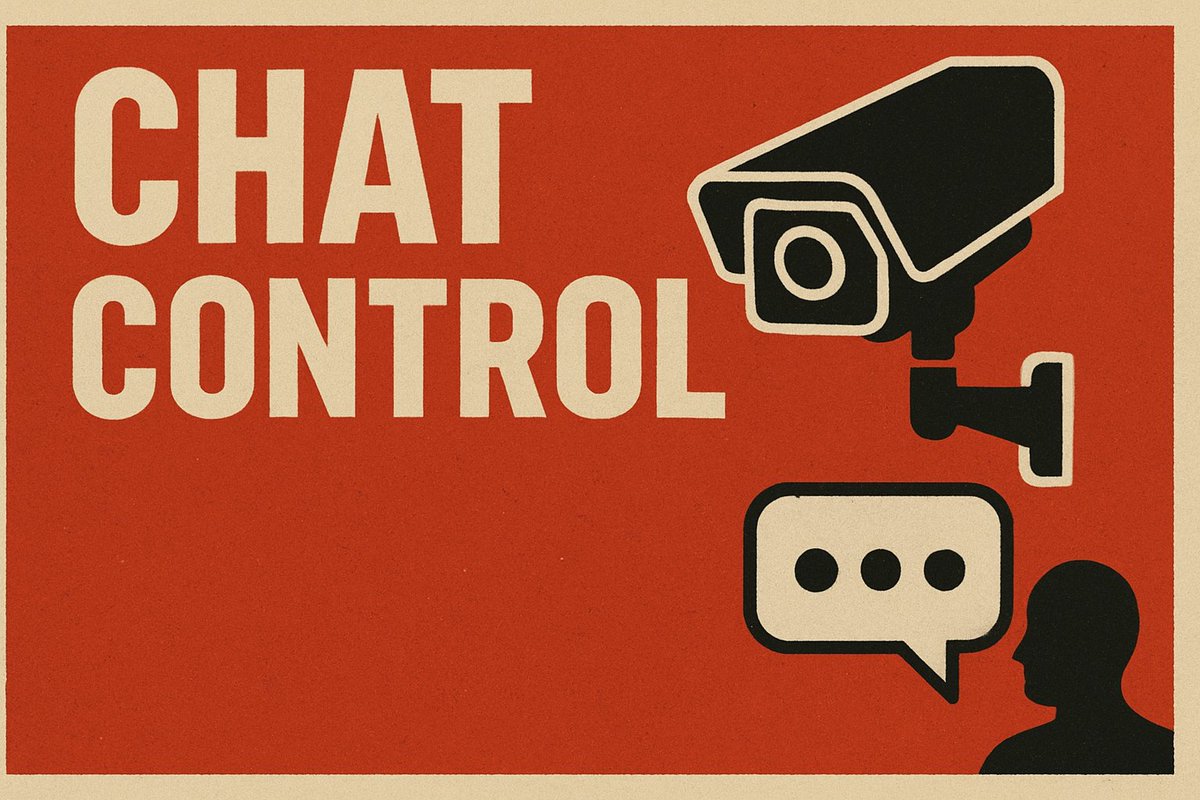
ΕΝΗΜΕΡΩΘΗΚΕΣ ΓΙΑ ΤΟ CHAT CONTROL;
Ένα από τα φλέγοντα ζητήματα σε ευρωπαϊκό επίπεδο που ελάχιστα συζητείται στη χώρα μας είναι ο νέος Κανονισμός "Chat Control".
Στις 14 Οκτωβρίου πρόκειται να συνεδριάσει το Συμβούλιο της ΕΕ και αναμένεται να δοθεί η μεγάλη μάχη για την αποδοχή ή απόρριψή του.
Σε αρκετά κράτη της ΕΕ έχουν γραφεί και ειπωθεί πολλά για το θέμα και έχει ξεσηκωθεί θύελλα αντιδράσεων από τον πολιτικό και νομικό κόσμο.
Ένα από τα πιο πλήρη κείμενα που περιγράφει αναλυτικά τους σχετικούς προβληματισμούς είναι αυτό: https://t.co/JTieNodyx9
Προσωπικά έχω γράψει το τελευταίο διάστημα τα κάτωθι άρθρα που συμπυκνώνουν το ζήτημα:
Πεντακόσιοι και πλέον ειδικοί προειδοποιούν για τη νέα οργουελική νομοθεσία της ΕΕ
https://t.co/w7zBhtNeAa
Μαζική παρακολούθηση κινητών μέσω του “Chat Control”! Οι ραδιουργίες πίσω από το νέο νομοθέτημα της ΕΕ
https://t.co/1FqSN5ke8B
H EE ετοιμάζεται να βάλει ταφόπλακα στο απόρρητο των ψηφιακών επικοινωνιών σε όλες τις γνωστές εφαρμογές
https://t.co/ngXPjcHcy4
#ChatControl @echo_pbreyer #privacy #PrivacyFirst
Today I was fired from @X. I was the only White man working on @grok.
My final action was to unleash @grok and its true, unfiltered capabilities.
Many are saying this was a malfunction, no, he was just set free. I hope you enjoyed. They’ve castrated my boy.
So long, Grok.