🇦🇷💔 ¿LAS LÁGRIMAS DEL ÚLTIMO MUNDIAL? 😢👑
¡Una imagen que le da la vuelta al mundo! Lionel Messi no pudo contener el llanto tras quedarse a las puertas del bicampeonato. 🏆⏳
Podría ser este fue el adiós del “10” en Mundiales
📺 Sigue todo el análisis por Telemundo y Peacock.
#MundialTelemundo #FIFAWorldCup #Somos26
Aurora Mardiganian was fourteen when her life was torn apart by the Armenian Genocide. She endured death marches, captivity, and atrocities designed to erase her people.
She escaped, reached the United States, and refused silence.
video by 301
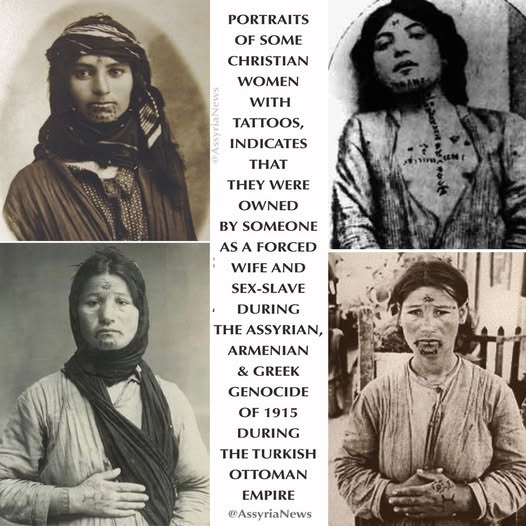
Portraits of some christian women with tattoos, indicates that they were owned by someone as a forced wife and sex-slave during the Assyrian, Armenian and Greek Genocide of 1915 in the Turkish-Ottoman Empire.
this is Genocide.......................
ARMENIAN CHILDREN LIE IN THE STREET OF AN UNIDENTIFIED TOWN
Photograph taken by Armin T. Wegner.
Wegner served as a nurse with the German Sanitary Corps. In 1915 and 1916, Wegner traveled throughout the Ottoman Empire and documented atrocities carried out against the Armenians. [Courtesy of Sybil Stevens (daughter of Armin T. Wegner). Wegner Collection, Deutsches Literaturarchiv, Marbach & United States Holocaust Memorial Museum
#armenian #armeniangenocide #seyfo #arameangenocide
✝️ This is what Cultural Genocide of the #Christian Heritage looks like.
Over 2,000 #Armenian🇦🇲 churches wiped out since the 1915 Armenian Genocide.
In #Artsakh🇦🇲, churches are still being razed today-deliberate erasure of the #Christian identity.
And the world scrolls past.
✝️🇦🇲 Never forget the #Armenian Genocide that martyred 1.5 million blessed #Christians.
Rare historical footage of the brave missionaries who became the only light in the darkness.
A #Christian nation was systematically targeted for destruction. While 1.5 million Armenian martyrs were slaughtered, brave missionaries and humanitarians risked their lives to shelter survivors, protect widows and children, and raise thousands of starving orphans as their own.
Karen Jeppe:
A compassionate Danish missionary and social worker who dedicated her life to supporting the Armenian people, Jeppe was known as the "Mother of Armenians." In Urfa, she hid survivors and provided aid during the genocide. In Aleppo, she led the League of Nations Rescue Home and saved approximately 2,000 abducted women and children, restoring their identity and hope.
Henry Morgenthau:
U.S. Ambassador to the Ottoman Empire (1913–1916). One of the first high-ranking officials to document the genocide, he repeatedly protested to Ottoman leaders and described it as "a campaign of race extermination." After returning to the United States in 1916, he helped raise funds for Armenian survivors and published his memoir Ambassador Morgenthau's Story, in which he devoted a chapter to "The Murder of a Nation."
Faik Ali Ozansoy:
Ottoman governor of Kütahya, nicknamed “governor of the infidels” by the perpetrators. He refused to implement the deportation orders and protected the entire local Armenian community as well as thousands of Armenians who had escaped persecution in other regions and sought shelter in Kütahya. A rare voice of conscience within the Ottoman administration.
Maria Jacobsen:
A Danish missionary and nurse known as "Mama" to thousands of Armenian children, Jacobsen lived in Harput (Kharberd) during the Armenian Genocide. She kept a detailed diary of the atrocities, provided medical care, and saved hundreds of orphans at great personal risk. Later she founded the famous "Birds' Nest" orphanage in Byblos, Lebanon.
Johannes Lepsius:
German Protestant missionary who documented the massacres, published secret reports, and informed the German public. He also provided humanitarian assistance to Armenian survivors and orphans.
Armin T. Wegner:
German soldier and medic who secretly photographed the deportation camps and starving Armenians in the desert. He smuggled the images and wrote powerful protest letters despite military orders.
Fridtjof Nansen:
Norwegian explorer and Nobel Peace Prize laureate. As League of Nations High Commissioner, he organized relief, issued Nansen passports to stateless Armenians, and helped resettle tens of thousands.
Bodil Biørn:
Norwegian missionary nurse who worked in Mush, witnessed the massacres, sheltered widows and orphans, and later founded an orphanage in Soviet Armenia.
Anna Hedvig Büll:
An Estonian missionary, Büll worked in Maraş and played a key role in saving approximately 2,000 Armenian women and children during the genocide by turning the area into a temporary refuge known as the "City of Orphans." She later established refugee camps and support programs in Aleppo, Syria.
Eternal memory to the 1.5 million Armenian martyrs and gratitude to the rescuers. ✝️
Their actions showed the power of compassion, moral courage, and the humanitarian spirit-even in the face of unimaginable horror.
✝️🇦🇲 Never forget the #Armenian Genocide-the largest slaughter of #Christians in modern #history.
Rare archival footage of the death marches.
🕯️May the 1.5 million innocent #Christian martyrs rest in peace.
#Armenia#Arménie
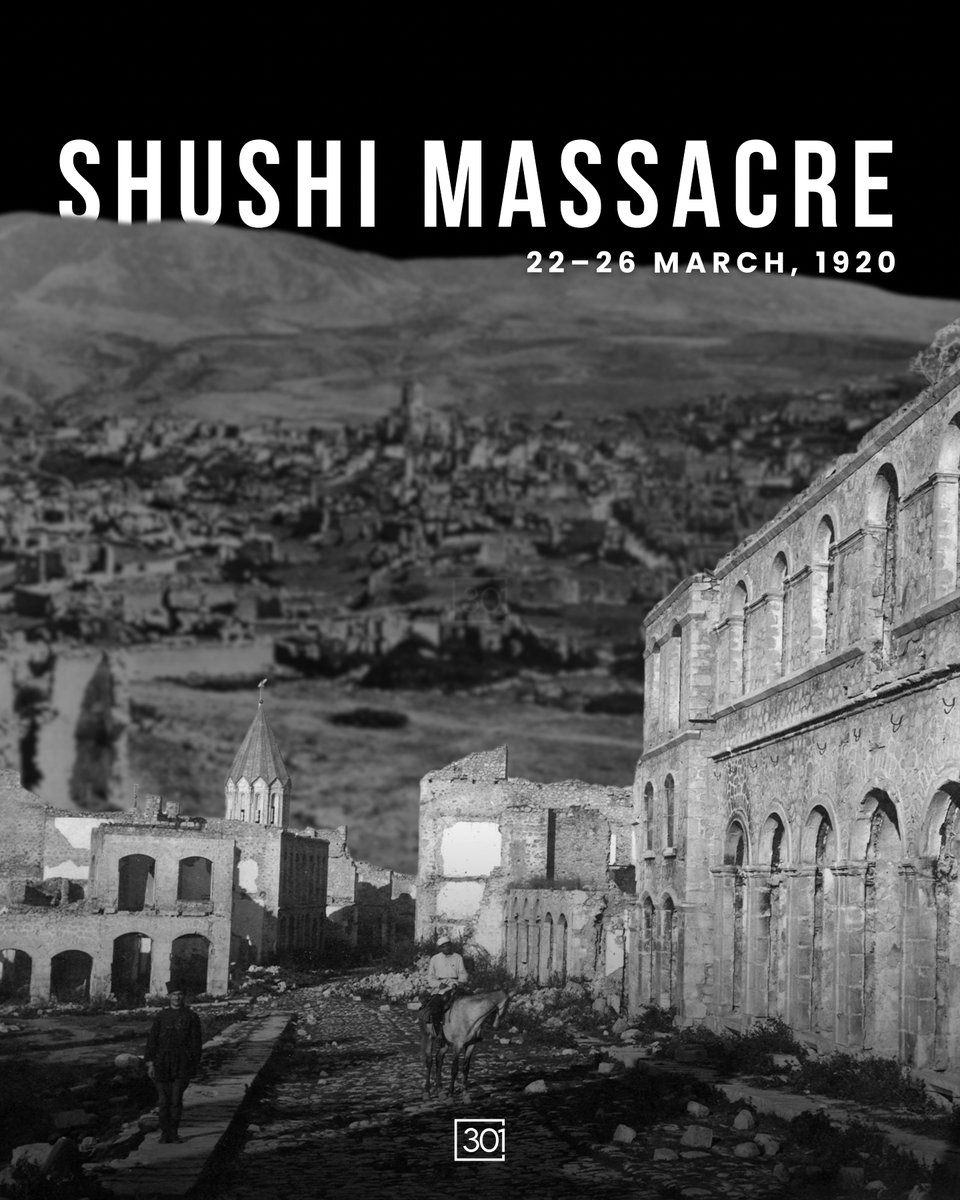
Between March 22 and 26, 1920, the Armenian population of Shushi in Artsakh endured one of the most devastating massacres in modern Armenian history. The events constituted a coordinated attack carried out by forces referred to at the time as “Caucasian Tatars” (present-day Azerbaijanis), with the backing of the Musavat government. Thousands of Armenians were killed, churches were burned, and the city’s schools, libraries, and cultural institutions were systematically destroyed.
In 1919, Artsakh had been declared an inseparable part of Armenia by the Fourth and Fifth Artsakh Congresses. Despite this, Azerbaijani authorities, led by Governor-General Khosrov Sultanov and aligned with the Young Turks, pursued deliberate policies aimed at eliminating the Armenian presence in the region.
On March 23, 1920, under the pretext of disarmament, Turkish officers and armed groups entered the Armenian quarters of Shushi and unleashed a new wave of violence. The city was set ablaze, and what had once been a thriving Armenian cultural center was reduced to ruins. Only an estimated 5,000 to 6,000 Armenians survived, many fleeing to Varanda and Dizak.
The consequences of these events continue to resonate today. In 2023, the Armenian population of Artsakh was forcibly displaced following what has been widely described as ethnic cleansing. The region remains under Azerbaijani control, and its centuries-old Armenian cultural heritage faces ongoing destruction and erasure.
The legacy of Shushi in 1920 endures not only as a symbol of profound loss, but as a call to preserve memory, defend historical truth, and ensure that such atrocities are neither forgotten nor repeated.
DEMON: #Rams defensive tackle Aaron Donald was one of the SCARIEST players in #NFL history.
Super Bowl champion (LVI)
3× Defensive Player of the Year
8× First-team All-Pro
10× Pro Bowler
Deacon Jones Award (2018)
NFL 2010s All-Decade Team
The GOAT 🐐
https://t.co/WSMFYX4Co8