$ADUR found a way to make stubborn heavy and waxy crude flow normally - potentially removing billions in transportation costs and lost value for the industry.
The early results are hard to ignore, and the program has moved incredibly fast since April and it's now in a Continuous-Flow Unit.
Check my latest article in case you missed it:
I am +318% up on my $ADUR position
But I said since day 1, this will be my +1000% gainer
When I first learnt of their Moat for breaking down plastic to recycle with water instead of heat, at 10% of the cost….I was blown away
I then heard they have 14 patents on this Tech that quite frankly will be difficult for any company to replicate, ever
Then I heard about their ability to break down hard oil to useable oil
Opening up entire oil fields that were otherwise unusable
These are two game changers
And their market cap is only $569 Million.
Could this company be valued at $10 Billion in 2-3 years
Very easily.
I am happy that I got you in at the ground level
Let’s get that +1000% gain next
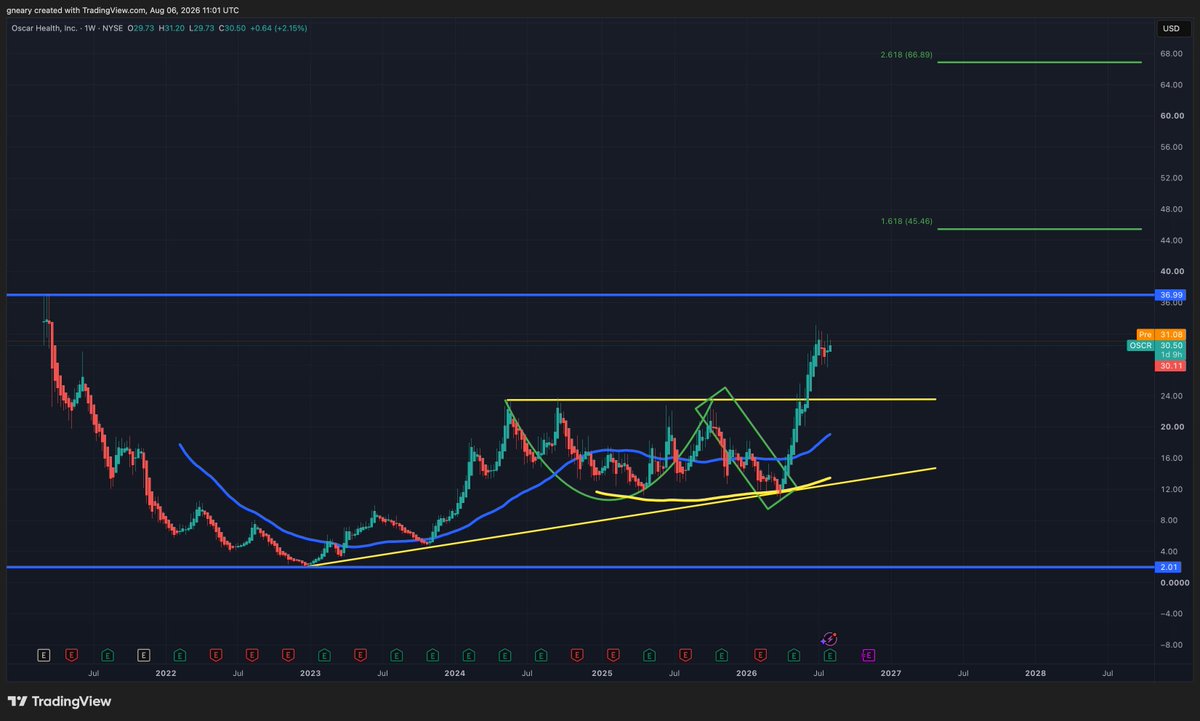
$OSCR and $ADUR chart side by side
What do you see?
Exact same bullish setups as each other, except $OSCR has already broken out and jumped +260%
$ADUR is still in its Ascending Triangle after completing its Cup and Handle formation
When this breaks $18, it can double fast.
Why I think $ADUR will have no problem scaling:
First let's understand the biggest challenge most plastic recycling companies face. And it's not the chemistry, it's about the building the actual infrastructure:
- For conventional recycling like pyrolysis to make money, the plant has to be big. I mean, really HUGE.
- Small plants just don't pay off, so the first commercial plant often has to be large right out of the gate. And large gets expensive fast. Easily $3,500 to $7,500+ per tonne of capacity, which pushes you toward a nine-figure project before you've earned a cent.
- These plants also tend to run on custom-built machinery. And when something hasn't been built before, scaling it up is genuinely hard to predict, hard to staff, and super slow.
- There's also a step people miss: the oil pyrolysis produces usually isn't ready to use on its own.
- It carries contaminants a steam cracker won't accept, so it needs a second clean-up stage before it becomes a real feedstock.
None of this makes the technology bad.
- It just means the bar to get that first plant standing is incredibly high. Which is why a lot of "advanced recycling" projects get announced, then quietly stall and struggle a lot to be profitable.
Now look at how $ADUR is building.
- Their first industrial plant is small, 10,000 tonnes a year.
- And it's modular. This is important.
- Because their goal isn't to scale it by building a monster. But through adding more copies.
- It runs on standard, off-the-shelf industrial equipment. Not custom built equipment (this was validated by a patent they filled in January 2025).
- With known behavior comes easier hiring and faster pace to build as the scaling ratios are known.
- Also, the process is water-based and runs at a modest temperature without needing exotic solvents or a giant high-pressure loop.
- And Aduro says its oil comes out ready for a steam cracker in a single step. (This was validated a few months ago by an undisclosed chemical major.)
Btw, they have a major steam cracker right next to where they're building in the Chemelot Industrial Park.
- So, looking closer, makes total sense for $ADUR to call this plant a "First-of-a-Kind" (FOAK) plant.
- Because they're really building the first plant of its type ever built.
- Conventional recycling need big, custom and complex plants. So the very first plant becomes the hardest part of the whole journey.
- Aduro with their unique technology flipped that. They build small, simple and modular. Then, they just need to copy it.
That's why I don't think scaling will be the easiest part for $ADUR.
The hardest part of this industry - getting that first plant standing - is the part Aduro designed around from the start.
They're really building the First-of-a-kind.
I see people commenting about scaling. The reason why investors are skeptical is because prior pyrolysis technologies failed to scale. Aduro’s tech works better every time the process get bigger. This is a fact. Think of boiling pasta in water vs heating pizza in an oven. Pasta is going to the same in larger pot. Pizza won’t. Bigger pizza over creates bigger problems. Also Aduro’s process uses known components that have well defined scaling parameters. For Aduro the hardest and riskiest part was going from bench scale to pilot. So the biggest scaling risk is already behind them $ADUR
Yesterday was a rough day for $ADUR and MANY high beta names. A bit of a domino effect. This morning is starting with a panic shakeout and yet NOTHING has changed with the company. Today great news dropped, ECOCE is moving forward in Mexico.
Aduro can move up or down quickly but the technology keeps moving forward.
$AIDR $AIRDF
Rocket Doctor has successfully achieved SOC 2 Type I compliance, validating the effectiveness of its security, privacy, and operational controls through an independent third-party audit.
https://t.co/jfJGovd8yf
🚨 There's a $60 billion leak in the oil market and $ADUR tech can fill the gap.
Let me show you.
Not all oil is created equal. Some flows like olive oil, being light and easy to refine. That's what Brent and WTI prices are based on.
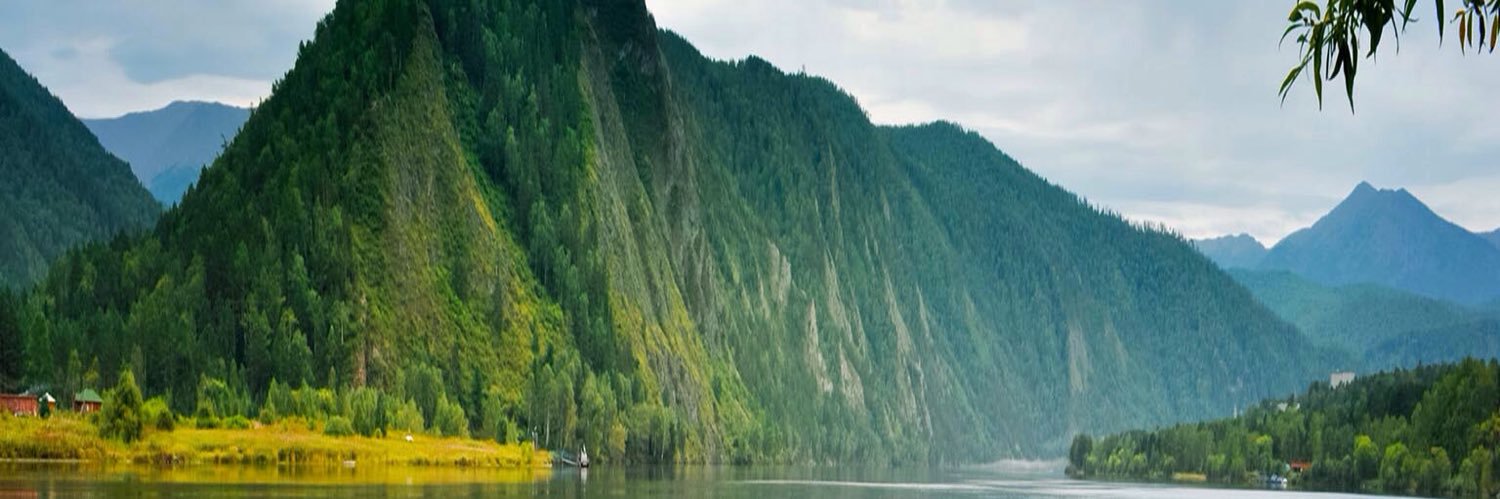
But a massive share of the world's oil looks nothing like that. It's thick, black and heavy. Think peanut butter, not olive oil (the type of oil you see in the image of this post).
Around 13 million barrels of this heavy oil come out of the ground every day. Industry estimates point to even 18 million by 2035.
The market punishes every single one of those barrels.
Heavy oil is harder to refine and harder to move. So it sells at a discount - historically $10 to $20 below light crude. Canada's energy regulator models around $13 per barrel going forward.
Let's do the math:
13,000,000 barrels/day × $13 = $169 million per day.
That's over $60 BILLION a year in value thrown away.
And it gets worse.
The heaviest oil can't even flow through a pipeline on its own. Producers blend in 1 barrel of expensive light diluent for every 3-4 barrels of heavy crude - just to make it move.
Meanwhile, the Strait of Hormuz crisis had the world scrambling for every available barrel.
We can't rely on geopolitical chokepoints. The world needs to be more efficient and getting the most out of the resources we already produce.
What if you could turn heavy oil into lighter, more valuable oil -cheaply?
Aduro Clean Technologies $ADUR has the solution for this with their Hydrochemolytic Technology.
Lighter oil means:
→ Smaller discount per barrel
→ Less money burned on diluent
→ More value from wells that already exist
$ADUR is a ~$560 million company today.
They are positioning themselves to capture a big % of this $60B added value in the heavy oil market.
And this is just one of their markets. Their total combined TAM is over $200B
It's clear that our planet has all the resources we need, the next big step is to make sure we're moving towards an efficient world where we get the most out of those resources.
$ADUR will lead this movement.