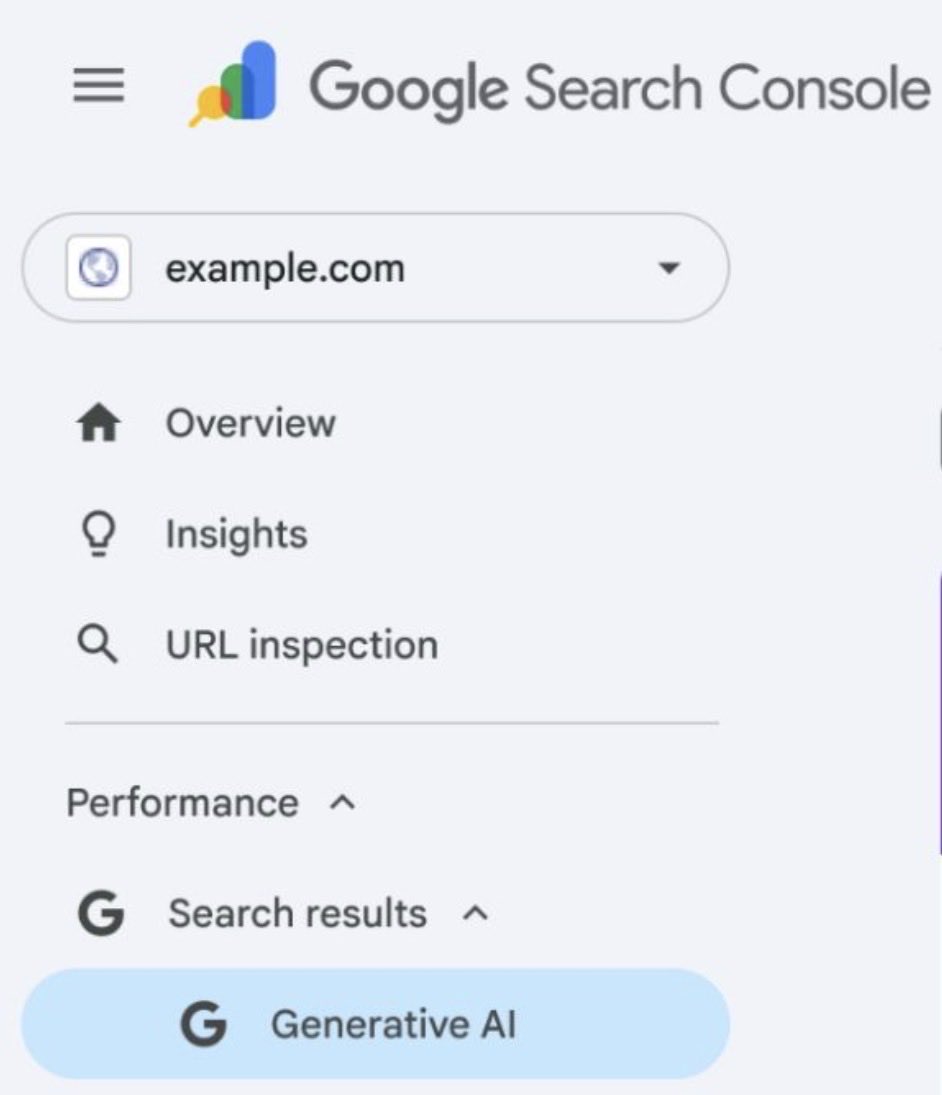
I think I've found a way to force AI Overviews to reveal its grounding metadata, and sometimes even its fan-out queries.
I still need to run a few more tests, but I'll probably publish something about it soon. It's not 100% reliable yet, though
Google I/O + GML : Gemini devient l'infrastructure. Le contrôle se déplace en amont ✨
#SEA : Fin des mots-clés, les DSA migrent vers AI Max en septembre.
#SEO : Seuls 38% des liens AI Overviews viennent du top 10 organique.
Notre décryptage complet 👇
https://t.co/cGpkpMcWLN
In modern AI search, language models act as re-rankers over results retrieved by traditional rank factors. Even in the absence of traditional ten blue links there's always a clear and measurable ordinal value to each brand mentioned in model's generative output.
Here's how I test this: https://t.co/J0syitvMg7
Google's grounding pipeline, for instance, decomposes a query, retrieves ranked sources, then has the model select sentence-level snippets under a fixed budget. Ranking #1 buys you a larger share of grounding, though being selected is a separate problem [1].
A model's parametric memory carries its own relevance priors, and those priors are an emerging class of factor shaping which results get selected and surfaced. A brand the model already perceives as relevant for a topic is more likely to be grounded when supplied as a source [2], and these priors are measurable: you can rank brands by how deeply they're embedded in a model's associative structure [3].
To be clear about terminology: when I say model rank factors I mean model-side selection factors. They're distinct enough from Google's ranking signals that I've taxonomized them as alignment, substance, architecture, style, framing, and proof, and built a ranker that simulates the model's source-selection step to measure which of them actually move a page's standing [4].
My current focus is understanding this behaviour through systematic observation of inputs and outputs, probing models directly and tracking how associations shift over time [5].
Direct steering and white-box interpretability aren't available for closed-weight models like Gemini, GPT and Claude, so this black-box approach is the practical one. It's the same logic applied psychology, psychiatry and cognitive science already use.
[1] SRO & Grounding Snippets https://t.co/SkUAnwIBaH
[2] Primary Bias on Selection Rate https://t.co/nzSowG1OzF
[3] AI Brand Authority Index https://t.co/oMiu8CHQlF
[4] Content Optimizer https://t.co/J0syitvMg7
[5] Beyond Rank Tracking https://t.co/iMT0A6mcyg
We pulled Chrome apart and found secret classification files. Will you find your site?
Lists baked into the browser that decide what your site is and what AI is allowed to do with it
2M domains tested and a tool to read it live:
https://t.co/CYMGybGGTn
cc @dejanseo
Ever wondered what Google AI Mode can actually do behind the prompt box?
We mapped the full list of tools and skills it runs on. Here is each one, and how it works
Grammar = tool_name : function
Before the colon sits the tool, after it the function it calls
No es la primera vez que me encuentro cosas de este estilo en AI Mode o las AI Overviews. Tiene pinta de ser Google tirando directamente del Shopping Graph para sacar entidades y normalizar el grounding del Web Graph.
¿Lo habéis visto alguna vez? #Leak
Frandroid plafonne à 5 pipelines #GoogleDiscover.
Le Monde en touche 12.
➡️Ce n'est pas une question de SEO, c'est une question de format éditorial.
La synthèse de notre série : 7 profils d'éditeur, leurs leviers, leurs limites.
https://t.co/3S3aT3Rpjp
What Microsoft is implicitly saying is that the value of search engines is no longer to send traffic but to generate the best answer. They still need open web and publishers, but more as providers of data and knowledge than as click destinations. This model won’t last long term…
🚨 @bing explains the evolving role of the index in traditional search vs AI systems: From ranking pages to supporting answers 👇
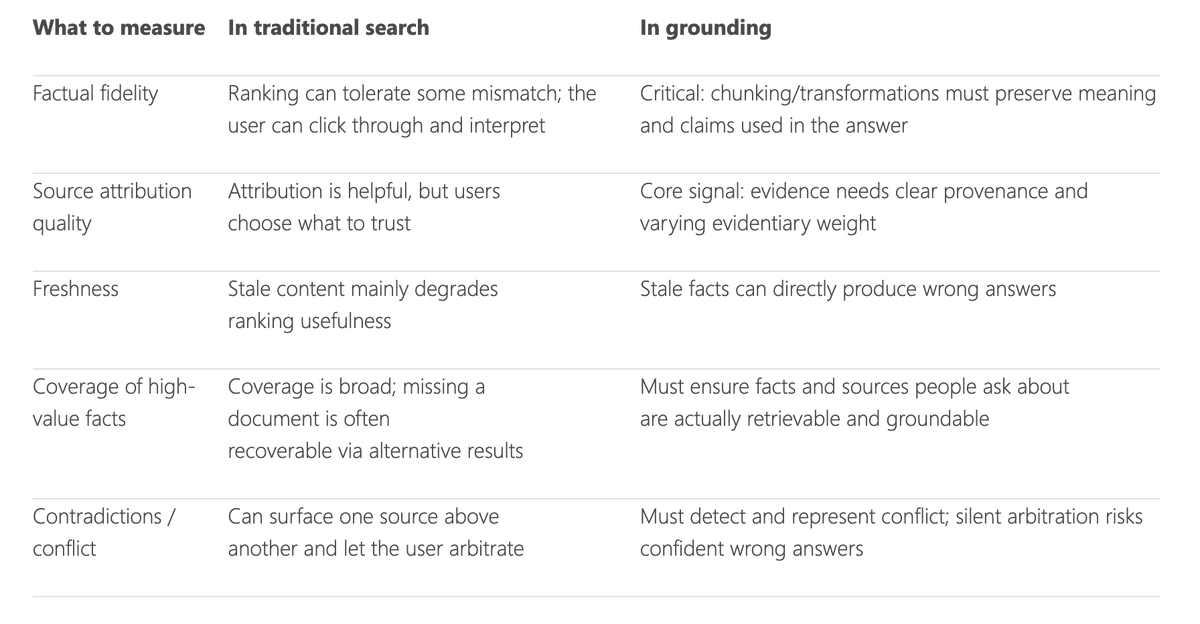
"Traditional search asks: which pages should a user visit? Grounding asks: what information can an AI system responsibly use to construct a response?"
Grounding an AI–generated answer introduces a fundamentally different constraint: the system is no longer just pointing to information, it is using it. The goal shifts from “fetch the best documents” to “fetch the best information to synthesize into a reliable, verifiable answer.”
What the Index Must Measure Differently: Factual fidelity, Source attribution quality, Freshness, Coverage of high-value facts, Contradictions / conflict.
By @kmadhavan77, Knut Risvik, Meenaz Merchant - thanks for publishing it 👏
Read it all: https://t.co/vZT3yQfzCs