@Dr_Nazarian_EP Saw it in Lancaster, PA as well.
News says “white light in the night sky drew a lot of attention across South-Central Pennsylvania Tuesday evening.
The light, which some WGAL viewers described as "swirling," was most likely a rocket that launched in South America.”
@narrowQRS@SergioPinski 2nd beat shows widening of the QRS due to fusion. P-wave is diff morphology. Then PAC blocks or causes block in FP; conducts down slow. It is tracked but device can’t violate MTR so pacer wenchebach. No fusion from there on out. Other option could be very slow ELT. Answer?
@narrowQRS@EJSMD@seth_j_worley@SergioPinski@JGrapsa@bogdienache@escardio@EPinnovation Would you agree that ratchet and reel syndromes occur closer to de-novo implant (days/weeks to months) whereas historic Twiddler can occur throughout the total implant dwell time and even after a generator change of pocket is expanded or significantly smaller device utilized?
@kvernooy Is your optimization technique for LOT-CRT the same as traditional CRT? Are you looking for certain QRS criteria or just the narrowest QRS? Thanks!!
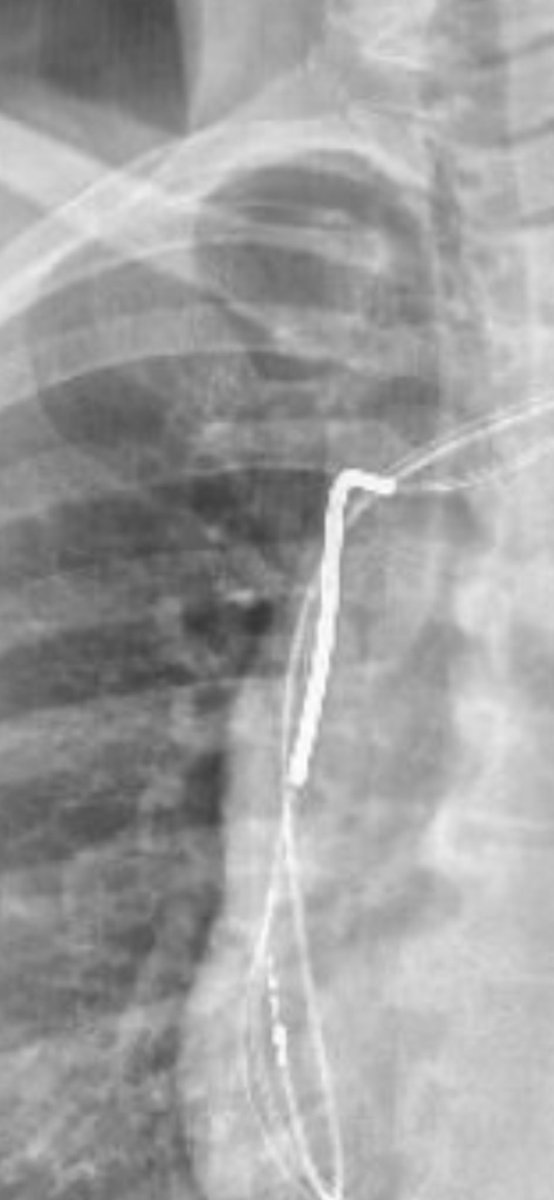
@SergioPinski Interesting SVC coil. Almost looks like the coil is “spiraling”. Is that just fluoro artifact or is possible lead was over torqued during initial fixation? Great case nonetheless!!
@narrowQRS@GlassyMatthew @EPLabRat I believe noise reversion is still “active” even in DOO/VOO. The device can still sense persistent noise and, if seen ,it paces.VOO @ 50bpm. Confusing for sure but I believe this is what may be happening.
@Dr_Nazarian_EP Does the “inter” VAT time play any role in deciding which is better for synchrony in this situation or is it best used to discriminate LV Septal Only from NS-LBBP?