Trump's abandonment of a democratic Ukraine and embrace of autocratic Russia during wartime will be recorded in future history books as one of the greatest, tragic mistakes in American foreign policy in our nation's history.
There’s a lot of self-serving spin emanating from the UK government about how virtuous it is re fiscal consolidation.
Here are the facts.
Labour inherited an OBR budget deficit forecast of £87bn (3.1% GDP) for FY2024/25. After R Reeves’ 1st disastrous budget the actual deficit was £153bn (5.2%). Massive jump.
Labour inherited OBR budget deficit of £77bn (2.7%) for FY2025/26. After RR’s disastrous 2nd budget that turned out to be £133bn (4.3%).
So in its first two years it added over £120bn to borrowing/deficit (despite huge increase in taxes).
The OBR forecast it inherited for this FY2026/27 was £69bn (2.3%). It is now forecast to be £116bn (3.3%). That looks like an underestimate. More likely to be closer to £130bn again.
Inherited budget forecast for 2027/28: £51bn (1.6%). Latest forecast: £97bn (2.9%).
Inherited budget forecast for 2028/29: £39bn (1.2%). Latest forecast: £86bn (2.5%).
Far from fiscal consolidation Labour is forecast to borrow an incredible £260bn more over the 5 years from 2024/25 than the forecasts it inherited. Despite the tax rises.
Which will continue. Alone among G7 countries the IMF projects the UK tax burden to rise by 3.7% of GDP 2025-31. The only other country with a rising tax burden is France (0.8%). Italy is static. Rest of G7 have falling tax burden.
And let’s not forget Labour’s so-called ‘fiscal consolidation’ is all backloaded to end-decade. Unlikely to happen. So taxes will have to rise by even more.
To Donald J. Trump, 45th and 47th President of the United States
From Viktor Yushchenko, 3rd President of Ukraine
Mr. President,
I write these words without diplomatic formulas or ceremonial language. I write simply, from one human being to another, and from one president to another—two men who understand that there are moments in history when decisions determine not only the fate of nations, but the fate of freedom itself.
For Ukrainians, freedom is not an abstraction. It is not a slogan written into a political declaration. Freedom is in our blood. It comes to us through generations — from our Cossack forefathers, from ancestors who valued above all else their liberty, their dignity, and the land God gave them.
We are a nation rooted in the soil. Our identity grew from love of our home, our field, our village, our city, our church, our family, and the sky above us. Ukrainians have never sought what belongs to another nation. But neither have we ever willingly surrendered what is ours.
Mr. President, look at what is happening in Ukraine right now, at this very moment. Every day and night, our cities shudder under Russian ballistic missiles, Iranian Shahed drones, and aerial bombs. Russia strikes ordinary residential buildings in ancient Kyiv, sleeping neighborhoods in Zaporizhzhia, Odesa, Dnipro, Kharkiv, and towns across our country. Families are killed in their homes. Millions live under the threat of another siren, another explosion, another night wondering whether their children will still be alive in the morning.
And when there is talk of “concessions” or deals with Putin, the Kremlin’s answer is more missiles, more drones, and more bloodshed. Ukrainian families pay the price.
Behind every statistic is a human life. A mother buries her child. A child stands beside the grave of a father. A family returns to what was once its home and finds only broken concrete and photographs scattered through the ruins.
This is not a distant “conflict.” This is the daily reality of millions of Ukrainians.
And against this reality, Ukrainians hear calls that Ukraine should stop. That Ukraine should restrain its strikes against the infrastructure that finances and sustains Russia's war. That trade in Russian energy can somehow be separated from the missiles and drones Russia sends against Ukrainian families. It cannot.
Money paid for Russian fuel is not an abstraction called “commerce” It finances an economy geared toward total war. Russia needs resources to wage this unjust war and Ukraine is fighting to deprive Russia of those resources.
There is a profound moral difference between the aggressor and the nation defending itself.
Mr. President, America knows this distinction better than most nations. It knows how dangerous it is to believe that trade can tame an aggressor or make the threat disappear. History taught us that lesson at a terrible price.
Before the United States entered World War II, America traded extensively with Imperial Japan, including in strategically important materials. Washington hoped for years to avoid a wider war in the Pacific. Ultimately, economic pressure and diplomacy could not prevent catastrophe and on December 7, 1941, Pearl Harbor was attacked.
History may not repeat itself exactly, but it does raise the same questions again. What price do free nations pay when aggression is rewarded rather than stopped?
Ukraine once placed extraordinary faith in the international order led by the United States. When the Soviet Union collapsed, Ukraine inherited one of the largest nuclear arsenals in the world. In negotiations with our allies, we agreed to give it up. We did so because we believed that a world governed by agreements was safer than a world governed by nuclear weapons.
In 1994, the United States of America, along with its partners, signed the Budapest Memorandum, providing Ukraine with official assurances of security, sovereignty, and the inviolability of our borders. They pledged not to threaten or use force against Ukraine. America assumed a moral responsibility toward Ukraine. So how can anyone today, when a treacherous enemy has attacked us, forget America’s signature on this document?
Ukraine kept its word. Russia broke its word.
That history matters today. Because when a nation gives up the most powerful weapons on Earth in return for international commitments, and is later invaded by one of the very states that made those commitments, the consequences extend far beyond Ukraine.
Every nation in the world is watching and asking whether agreements with great powers mean anything. They are asking whether giving up nuclear weapons makes a country safer—or more vulnerable. And they are watching America.
Mr. President, our nations are connected by more than treaties and diplomacy. We have stood together many times before. One of the six Marines who raised the American flag at Iwo Jima was Sergeant Michael Strank, whose family came from Lemkivshchyna and who gave his life fighting for the United States. When American and Soviet forces met at the Elbe in April 1945, American Lieutenant William Robertson was first embraced by a Ukrainian boy from the Cherkasy region — Oleksandr Silvashko. Ukrainian soldiers served alongside American forces in Iraq and Afghanistan, and, today, Ukraine continues to share its hard-won military experience with its American partners, including expertise in countering Iranian-designed drones. Ukrainians and Americans have shed blood together in defense of freedom against tyranny.
Mr. President, above all, there is one thing I want you—and the world—to understand.
Do not mistake the Ukrainian desire for peace for a willingness to surrender. The Ukrainian spirit cannot and will not be broken.
No people wants peace more than a people whose children are being killed. But peace cannot come by asking the victim to pay the price for the aggressor’s crimes. We cannot agree to a peace that will later cause the deaths of many more of our children and grandchildren.
We are a people with deep roots, bound to our land by love, labor, and the spirit of freedom. We will never yield our land willingly to anyone. This is our home, given to us by God. We were here, we are here, and we will always be here. We cannot be intimidated by missiles, and we cannot be forced to surrender.
Ukrainian identity has been forged through centuries of attempts to erase it. The Russian empire tried to silence our language, destroy our culture, starve our people, imprison our leaders, and rewrite our history. And still Ukraine survived. We survived because our roots are deep, and because the blood of a free people flows in our veins.
Russia can destroy our buildings. It can terrorize our cities. It can kill our people. But it cannot destroy who we are. It cannot compel Ukrainians to cease being Ukrainian.
Mr. President, America’s greatness was not built by accommodating tyranny, but by understanding, at decisive moments of its history, that freedom must be defended before the price of defending it becomes immeasurably greater.
Ukraine is defending that principle today with the lives of our people.
Today, the free world faces questions larger than Ukraine itself: whether borders may be changed by force; whether agreements between nations still have meaning; whether aggression will be rewarded; and whether the free world will stand beside those who choose freedom.
One does not negotiate with tyrants—one stops them.
Mr. President, I believe America understands this.
With faith in truth, freedom, and the honor of the free world,
Viktor Yushchenko
President of Ukraine 2005-2010
Who was first? Palestinians or Jews? The answer is not 'either or'.
In the Egyptian Museum in Cairo stands a slab of black granite carved around 1208 BCE. Its hieroglyphs celebrate the victories of the pharaoh Mernepta: “Israel is laid waste; his seed is not.”
The display makes no mention that more than three thousand years ago, an Egyptian king who knew nothing of the Hebrew Bible recorded that a people called Israel was living in Canaan.
The modern pro-Islamist claim that Jews are latecomers is historically false. Numerous ancient records refute it.
Around 840 BCE, King Mesha of Moab carved a stone boasting of his war against Israel and naming the Israelite king, Omri.
A ninth-century BCE inscription found at Tel Dan refers to the “House of David.”
In 701 BCE, the Assyrian king Sennacherib recorded his siege of “Hezekiah the Judean” in Jerusalem.
These records are written by people with every reason to ignore Israel, that confirm that an Israelite and Judean people lived in the hills of Canaan for centuries before Rome existed.
The second claim is that Palestinians are an ancient people of the region, even older than Israel. This also fails.
The word Palestine is truly old, but it never referred to the people who carry that name today. Herodotus used Palaistinē in the fifth century BCE, and it comes from the Philistines, a seafaring people who arrived on the southern coast around 1200 BCE.
A 2019 study of ancient DNA from Ashkelon, published in Science Advances, found that the Philistines brought European-related ancestry with them, and that within two centuries it had been absorbed into the local population.
The Philistines disappeared after Babylon destroyed their cities around 604 BCE. Rome revived their name in about 135 CE, after crushing the Bar Kokhba revolt, and renamed the province of Judea as Syria Palaestina.
The Arab armies came in the 630s CE, some 1,800 years after Merneptah’s scribe carved the word Israel. They brought new rulers, a language, and a religion, and over the centuries most of the population adopted all three. What we call the distinctly Palestinian national identity arrived much later.
The Palestinian historian Rashid Khalidi, no friend of Zionism, dates its emergence in his book Palestinian Identity to the late Ottoman period and the early twentieth century.
Under the British Mandate, “Palestine” was attached to any group that lived in the region, including Christians, Muslims, and Jews, that the country’s leading English-language Jewish newspaper was called the Palestine Post.
It became the Jerusalem Post in 1950.
Modern genetic studies show that both Jews and Levantine Arabs, including Palestinians, carry substantial similar ancestry from ancient populations.
But historically, the Jewish people have an independently documented presence in that land going back more than three thousand years. Palestinians are, in large part, Arab descendants of the land’s long-term inhabitants, but their national identity is about a century old.
As to the claim of who lived in the land first, between Jews and Palestinians, the answer is not close.
Anyone who stands on a campus and calls the Jews of Israel foreign colonizers in their ancestral home is arguing with a granite slab in Cairo that names a Judean king in Jerusalem nearly 1,300 years before Muhammad was born.
Stones never lie.
Other countries might be defined by blood, territory or language. America has always been creedal, an ideal of liberty turned into a state.
Its critics back-handedly recognise as much. The reason that anti-Americanism is a force in world affairs (unlike anti-Algerianism or anti-Armenianism or anti-Albanianism) is that America’s enemies acknowledge that it stands for something. That something is the package represented by personal autonomy, limited government, constitutional rule, regular elections and private enterprise – in a word, freedom.
A bias towards freedom has, until now, characterised US foreign policy. A people habituated to liberty immediately saw what was wrong with Nazism and Communism.
Which is why current US foreign policy is so shocking to pro-Americans.
Russia’s invasion of Ukraine is one of those rare occasions when we can clearly identify the aggressor. Vladimir Putin sought to annex a neighbour that offered him no threat – a neighbour that had given up its nuclear weapons in return for a promise that its sovereignty would be respected within its existing borders. Who guaranteed that promise? Britain, the United States and (never forget) Russia.
Donald Trump is backing a belligerent dictatorship against a beleaguered democracy. Putin is the one leader he never disparages. He threatens annexation against Denmark, muses about handing away British territory, wages economic war on Canada. But not Russia. Never Russia.
Now Trump is buying diesel from Russia, potash from Belarus, minerals from China – all because he doesn’t want to buy them from Canada, which has stood at America’s side in war after war.
American friends, can you not see what this is doing, not just to America’s standing, but to the free world which your fathers have built since 1941? Trump is bringing down the international system from which the US has been the chief beneficiary. And for what? To drink liberal tears? God help us.
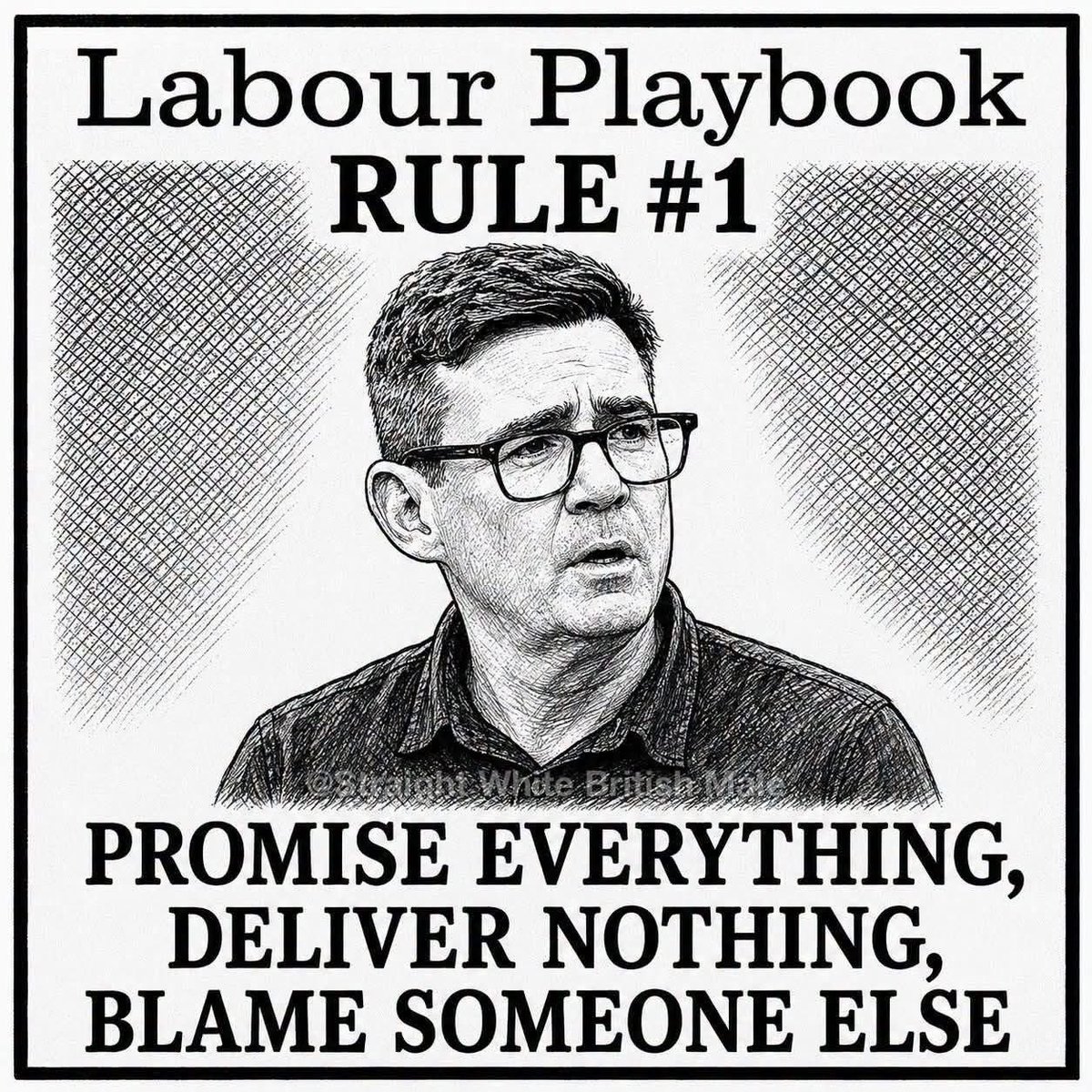
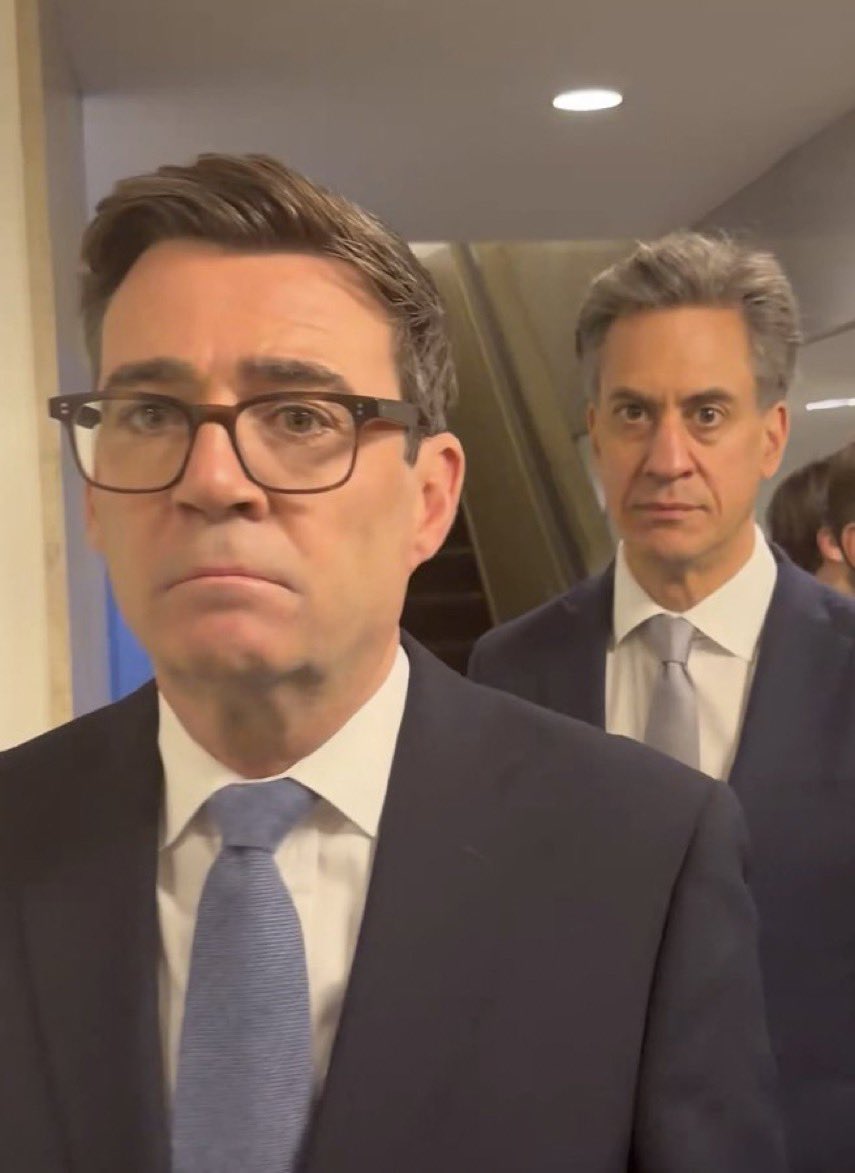
Here are two career politicians who have never built a business that had to survive on its own. Their entire adult lives have been spent inside politics - drawing salaries, climbing political ladders, and spending other people’s money - without ever running a business, making a payroll, or answering to a customer who could simply walk away.
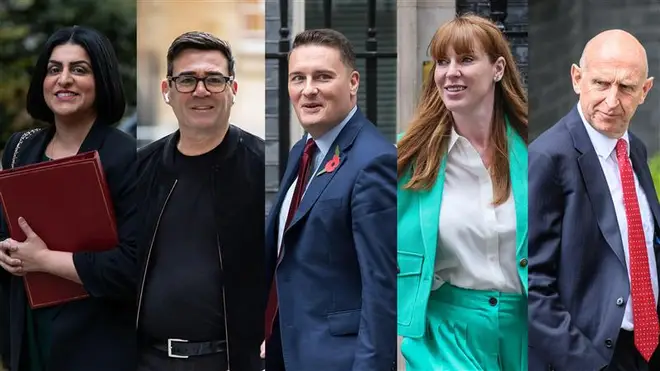
🚨 HERE IS WHAT LABOUR DID TO GREAT BRITAIN IN JUST ONE SINGLE WEEK
Take a look at the trail of absolute destruction Andy Burnham and his ministers inflicted on this country over the last seven days.
*Freed 700 convicted criminals onto British streets early, including violent domestic abusers and foreign offenders released into local communities on immigration bail.
*Andy Burnham confirmed on television that he could campaign to drag Britain back into the European Union, after his own aides admitted he ad libbed one third of his conference speech.
*Culture Secretary Lisa Nandy backed plans to force every household to pay a compulsory BBC levy on broadband and council tax bills, even if you do not own a television set.
*Financial Secretary James Murray imploded on live radio, unable to answer four times in a row how much his own Treasury energy policy will cost the taxpayer.
*Nature Minister Jenny Riddell Carpenter branded traditional British pubs, pints of ale, and pet black labradors a dangerous far right fantasy that never existed.
*Official figures revealed Shabana Mahmood is rubber stamping 1,100 permanent settlement applications every single working day, adding 200,000 people to welfare access in a single year.
Labour ministers do not have a clue how to run a sovereign nation.
They only know how to raise your taxes, police your online speech, empty the prisons, and surrender British borders to the rest of the world.
Retweet this immediately to make sure every voter in Britain sees the absolute carnage Labour caused in just seven days.
Fifty years ago, Britain was in crisis. The music was good, but the economy was a mess. We were forced to go to the International Monetary Fund for a deeply-damaging bailout.
The UK needed a new direction - that's why Margaret Thatcher and Keith Joseph founded the Centre for Policy Studies. A full half century on, our new Director, the economist and journalist @LiamHalligan, is arguing for another policy revolution now: lower taxes, cheaper energy, affordable welfare, an economy that rewards work and enterprise.
Britain’s problems are urgent – we're on the brink of another bailout. But we changed course fifty years ago - and with the right ideas, we can do so again.
The Centre for Policy Studies - where the fightback begins.
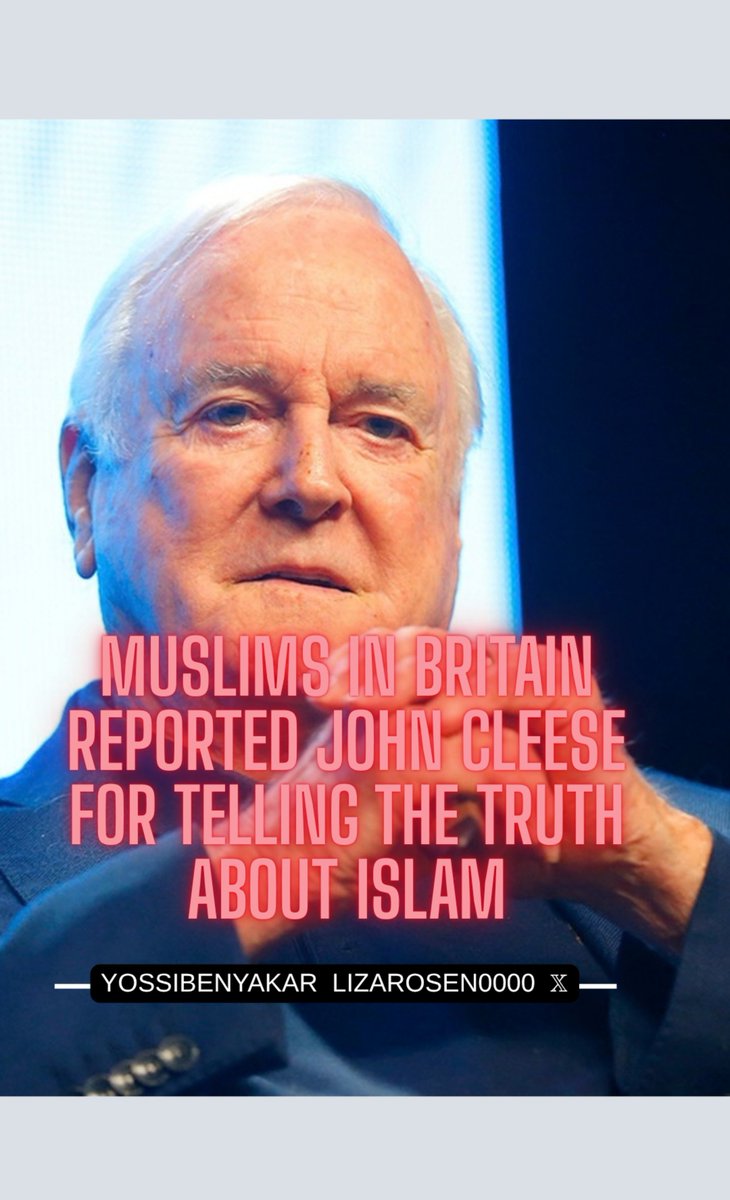
Britain referred John Cleese to Prevent for writing the truth about Islam.
Muslims in Britain are outraged and reported him in droves for Islamophobia. Activists called him a hate preacher and tried to cancel his show in Birmingham.
His crime was saying he prefers a culture that does not approve of FGM, child marriage, and killing infidels. A British citizen can no longer criticize Islam in public. That is a thought dictatorship.
Stand with @JohnCleese . He's telling the truth about Britain, and he is not afraid.
96% of Jews in Poland were murdered by the Nazis. That is genocide.
3% of Gaza’s population, mostly male combatants, died in the war they started. That is not genocide.
Kemi Badenoch being very clear on LBC that the Conservatives will leave the ECHR, regain control of our borders, and deport all illegal migrants.
This is what a true leader looks like. Taking the tough decisions, with a serious plan of action to deliver.