Egyptian Statuette, representing a lion, devouring a Nubian :
Made of bone, gold and Egyptian blue. It comes from the eastern delta of Qantir, in Egypt. New Kingdom, 9th Dynasty, under the reign of Pharaoh Ramses II - 1279-1213 BC.
MET Museum
#archaeohistories
I really love this essay by @ShannonVallor:
https://t.co/fpecDqGNhB
It points out that notions of "intelligence" held by AI researchers are very different from those held by people in cognitive science. I also wrote about this striking difference: https://t.co/3rmieCPsUE
Archaeologists have found an octagonal sword dating from more than 3,000 years ago at a burial site in the state of Bavaria, southern Germany.
The sword is so well preserved that it still gleams, according to a statement from the Bavarian State Office for the Preservation of Monuments. It was discovered last week at a site in Donau-Ries, and researchers believe it was left in the grave as a burial gift.
The sword is thought to date to the end of the 14th Century BC, the Middle Bronze Age. A sword like this, with an octagonal handle made entirely from bronze, is a rare find, according to the statement.
“The sword and the burial still have to be examined so that our archaeologists can classify this excavation more precisely,” said Professor Mathias Pfeil, Head of the Bavarian State Office for the Preservation of Monuments.
“The state of preservation is exceptional! A find like this is very rare,” he added.
Researchers believe the sword was a real weapon. “The center of gravity in the front part of the blade indicates that it was balanced mainly for slashing,” the statement reads.
It was left in a grave containing the remains of three people—a man, a woman and a young person—who were buried shortly after one another, the statement continues. It is not clear what their relationship was, but they were buried with a rich array of grave goods.
#archaeohistories
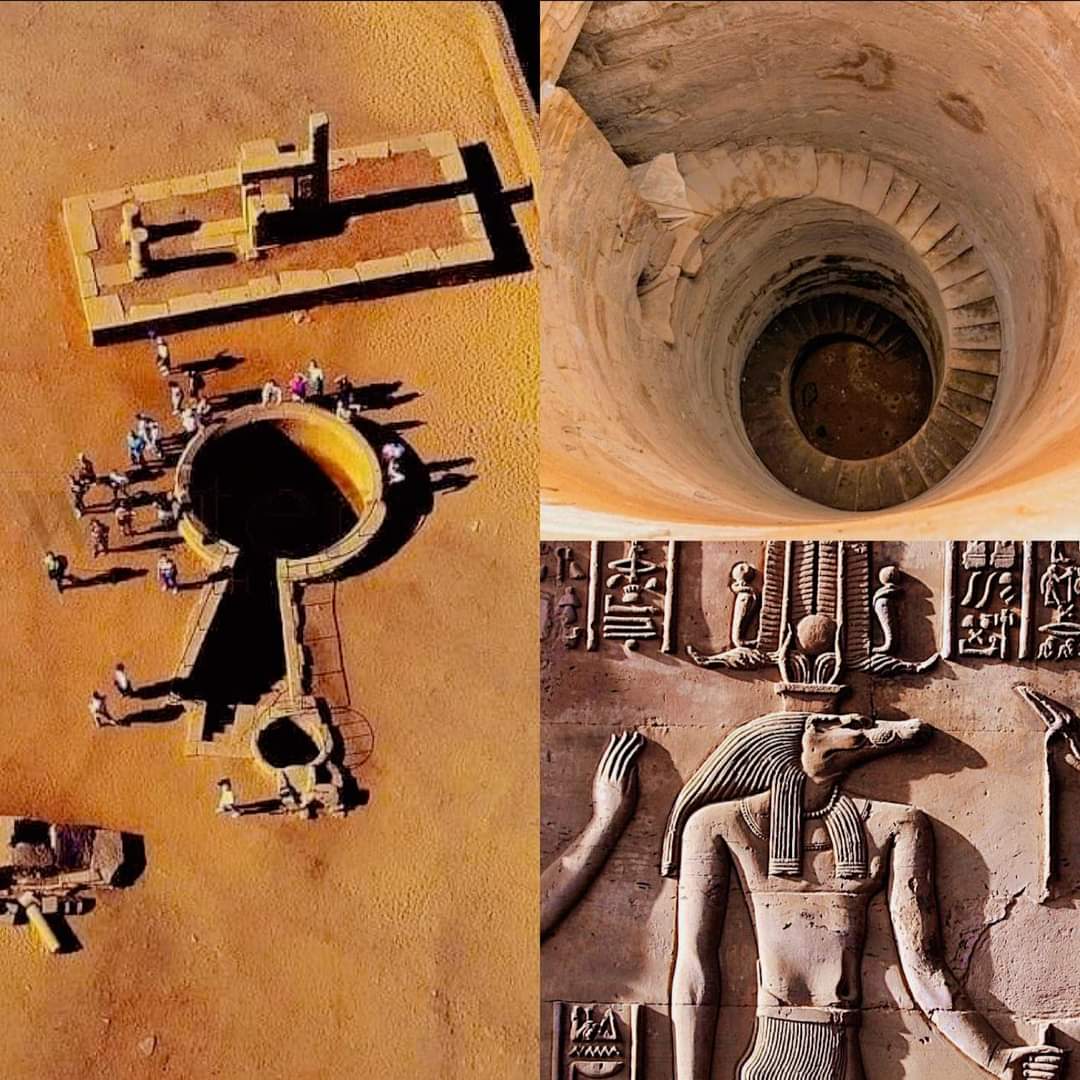
Temple of Kom Ombo in Egypt provides a fascinating insight into ancient Egyptian technology. The well within the temple complex served as a Nilometer, a tool essential for measuring the water level of the Nile during flooding seasons, crucial for planning agricultural activities.
Additionally, the presence of a staircase associated with crocodile worship suggests a deep religious significance, perhaps indicating rituals or ceremonies dedicated to crocodile deities. This integration of practicality and spirituality underscores the complexity of ancient Egyptian culture and its intricate architectural design.
#drthehistories
Artist’s painting of a hippopotamus on a flake of limestone. From Deir el-Bahri, Thebes, Egypt, c.1479–1425 BC.
Perhaps a practice sketch, or a template, or maybe just a doodle of a hippo from 3,500 years ago! 🦛❤️
📷 The Met https://t.co/9Ujnur1m7Y
#Archaeology
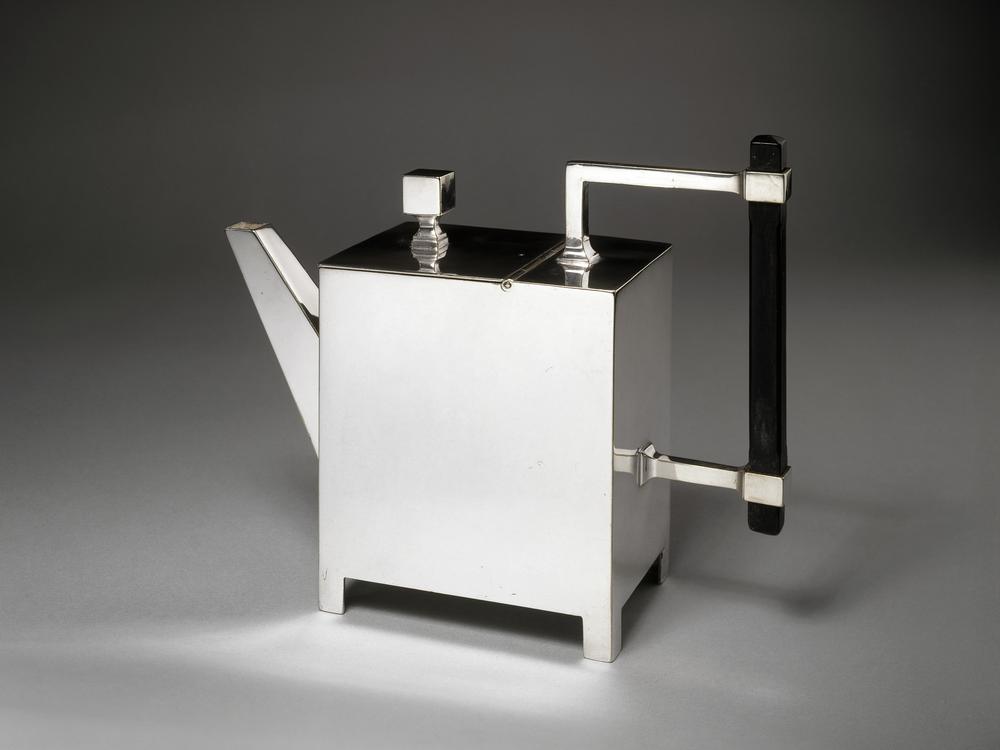
Looking back at history, you occasionally see an artefact that seems to have arrived decades early. One of my favourites: this teapot was designed in the 1870s.
Other examples of this phenomenon?
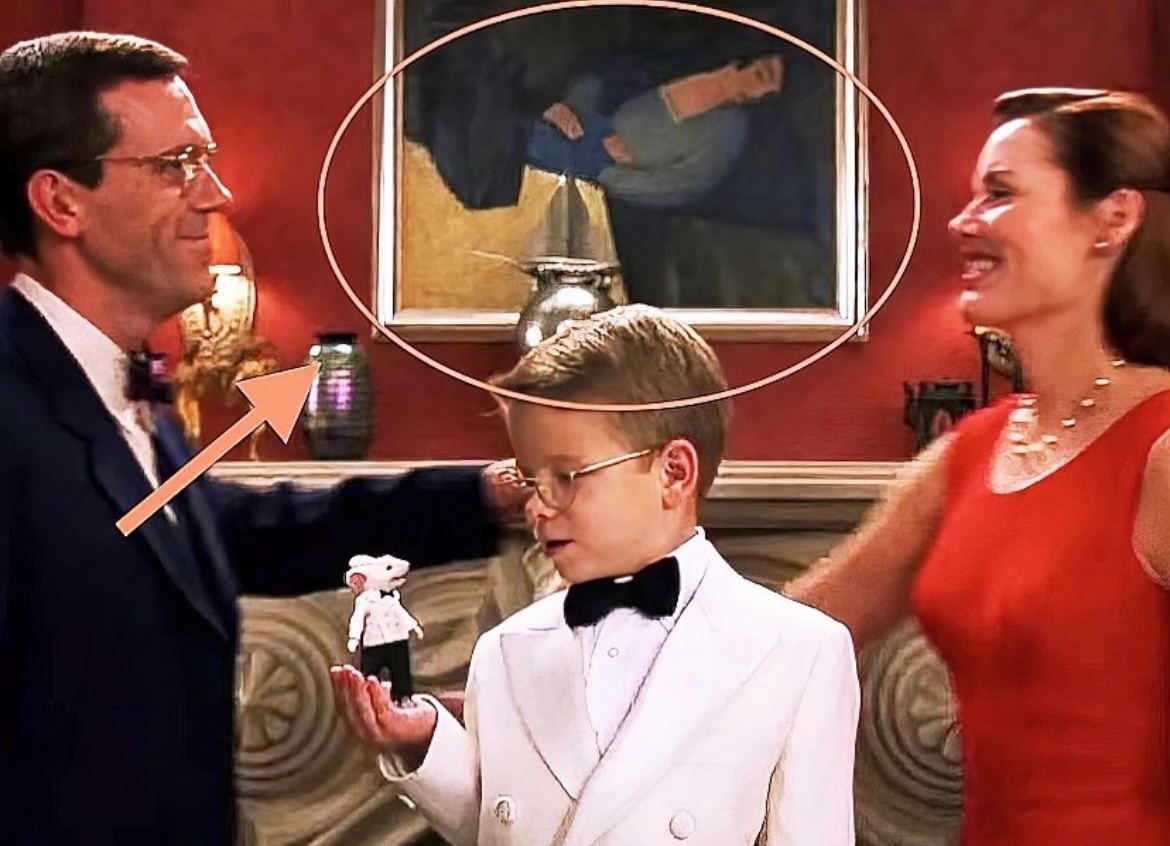
In 2009 while watching Stewart Little (1999), Hungarian art historian Gergely Barki, saw the painting "Sleeping Lady with Black Vase" by Róbert Berény. It had been missing for 90 years and had been used as a prop. It was the original.
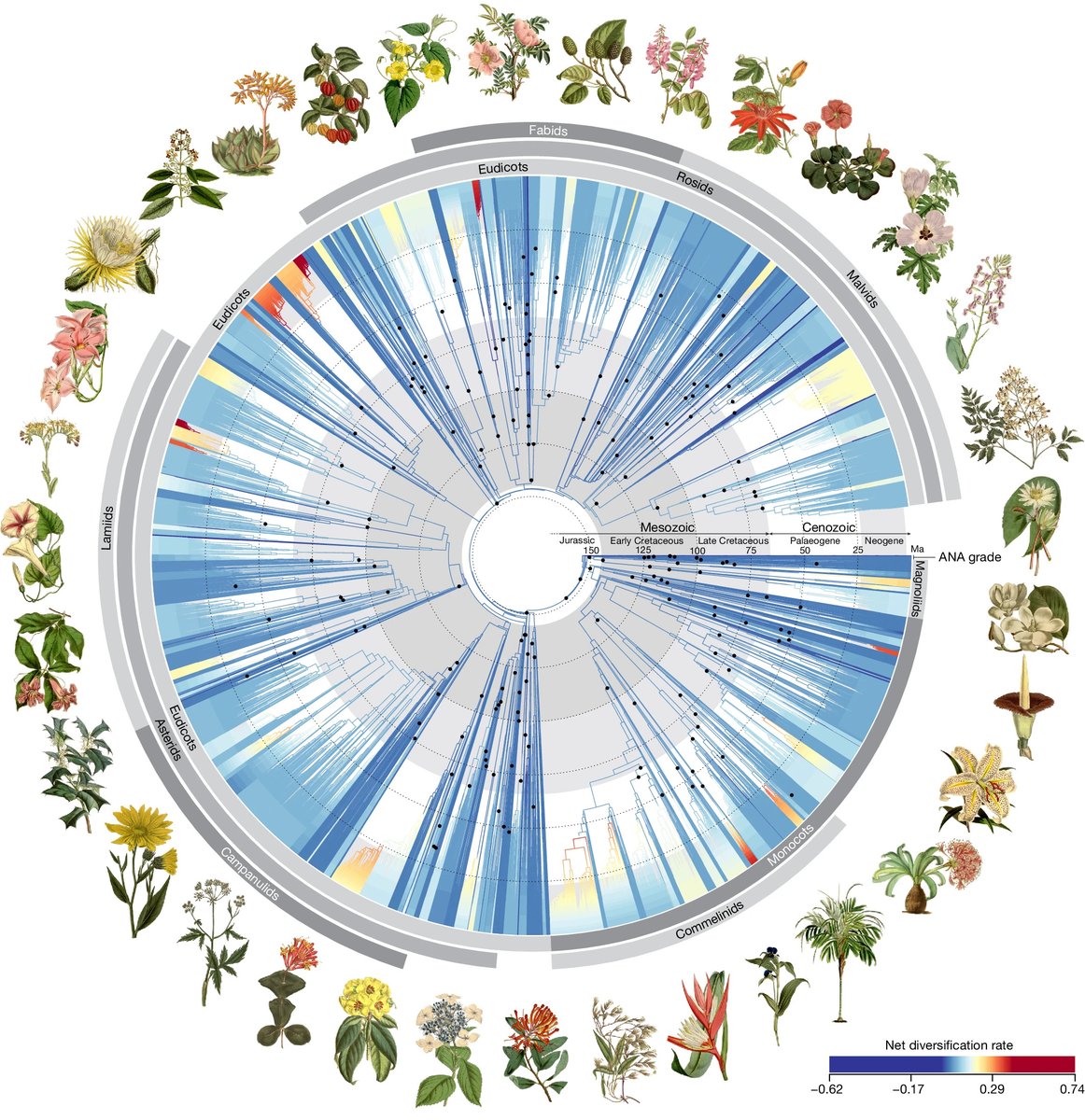
This might be the most beautiful graphic to ever appear in a scientific paper.
From this study on the deep history of flowering plants: https://t.co/EHUhZBA9EC
This is a salp.
Often mistaken for jellyfish, salps grow remarkably fast – reaching maturity in just 48h, being capable of increasing their body length by up to 10% per hour.
[📹 mermaid.kayleigh]
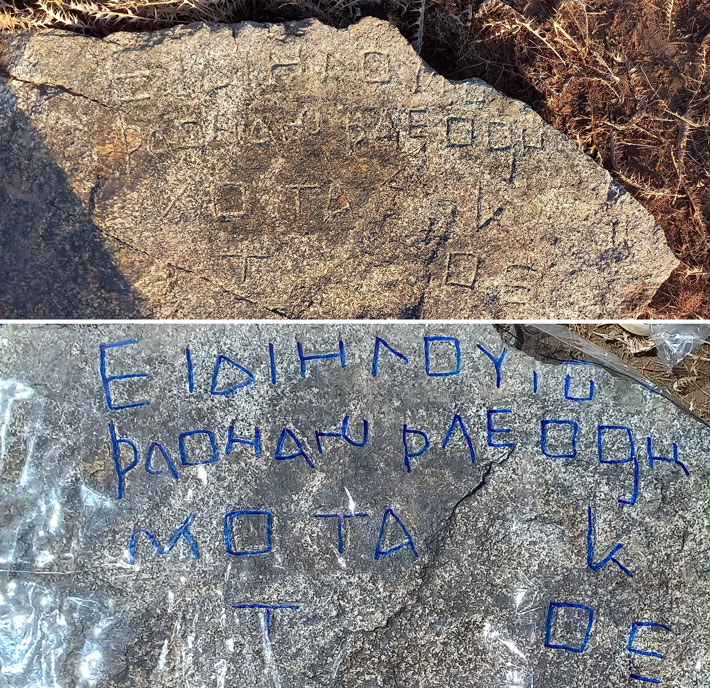
An inscription carved in the Almosi Gorge of Tajikistan’s Hissar Range in both Greek and an unknown writing system has enabled philologists to decipher the once-inscrutable script used by rulers of Central Asia’s Kushan Empire (ca. A.D. 50–250).
https://t.co/w5rKNHQuHT
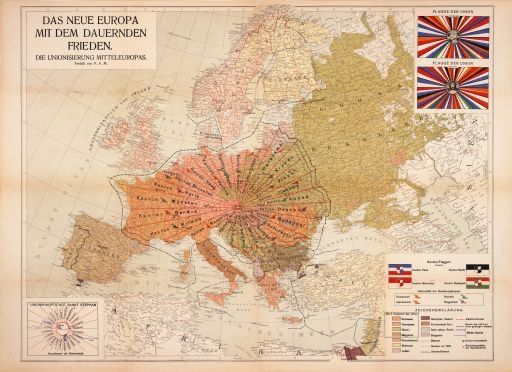
100 years ago this bizarre version of Europe was proposed by Austrian P.A. Maas as an attempt to create permanent peace in Europe by getting rid of traditional nation states. It's so mad it hurts my brain. Source: https://t.co/19jMlOOxm0