On This Day: "The Worst Journey in the World" begins on June 27, 1911.
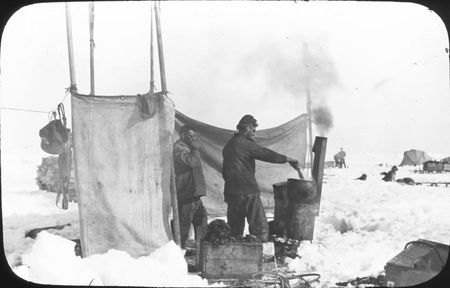
This photograph was taken in a wooden hut on the coast of Ross Island, Antarctica. Dr Edward Wilson, Lt. Henry Bowers and Apsley Cherry-Garrard, had just travelled on foot for thirty-five days through the 24-hour darkness of Antarctica’s winter to collect emperor penguin eggs for scientific research.
📸: Image courtesy Scott Polar Research Institute, University of Cambridge.
#antarctica #adventuretravel #penguin #OnThisDay
#OnThisDay in 1961, the Antarctic Treaty came into force. Signed in 1959 by 12 nations active during the IGY (1957–58), it now has 58 Parties. The Treaty ensures Antarctica is used for peaceful purposes only, with freedom of scientific research and open sharing of results.
#OnThisDay in 1921, the decision to go South as part of the Shackleton-Rowett 'Quest' Expedition 1921-22 was confirmed!
Shackleton met with several men who joined him on the Imperial Trans-Antarctic Expedition 1914-17, both 'Endurance' and 'Aurora' party members; Frank Worsley, Frank Wild, Leonard Hussey, Lewis Rickinson and Joseph Stenhouse, as well as his partner John Quiller Rowett, Lee Keedick, Northrup McMillan, Percy Wallace and Laurence Legge. The men dined at the Savoy Restaurant in London, and all signed the menu, complete with drawings of penguins.
📸 Signed menu at Savoy Resturant. Copyright unknown. Sourced from @ QuestChronicle
#OnThisDay in 1940, Ernest Edward Mills Joyce died in London. Joyce was a highly decorated polar explorer, awarded the Polar Medal with four bars for Scott's British National Antarctic 'Discovery' expedition 1901-04, Shackleton's British Antarctic 'Nimrod' expedition 1907-09, Shackleton's Imperial Trans-Antarctic Expedition 1914-17 (on which he was part of the Ross Sea Party), and the 'Aurora' Antarctic Relief expedition 1917.
Joyce was born 1875 in Bognor, England and joined the Royal Navy in 1891 after attending Greenwich Royal Hospital School. During this time, he became a First-Class Petty Officer and served in the South African War with the Naval Brigade before joining Scott's 'Discovery' expedition as an able seaman from HMS Gibraltar at Cape Town. Following the expedition, Joyce left the Royal Navy in 1905 however, he rejoined in August 1906, only to leave again for service in Shackleton's 'Nimrod' expedition, as chief of dogs and sledges.
Joyce was employed in a similar capacity for Douglas Mawson's Australasian Antarctic Expedition 1911, but after selecting and transporting the dogs from Copenhagen, Joyce did not sail South with Mawson from Tasmania.
Finally, he was again employed by Shackleton for the Ross Sea Party component of the Imperial Trans-Antarctic expedition. After which, he was awarded the Albert Medal for Gallantry, together with R. W. Richards, V. G. Hayward and H. E. Wild, for saving Lieutenant Mackintosh and attempting to save Rev. Spencer-Smith by dragging them on a sledge to reach safety during the Ross Sea Party's second depot laying season.
📸 Frank Wild and Ernest Joyce (far right). Copyright unknown.
#inspire #explore #discover #conserve #Antarctica
@todonoticias Muy bien el fiscal: el policía debería haberles invitado a cenar a los delincuentes a su casa, entregarles todas sus pertenencias, cederle la propiedad de su hogar y para cerrar hacerse sodomizar por los malvivientes.
@LauFerrito@CFKArgentina Durante la década de 1880, el entonces presidente Miguel Juárez Celman impulsó la construcción de un gran palacio que fuera la sede central de la Dirección de Correos y Telégrafos.
#OnThisDay in 1962, Jameson Boyd Adams, second in command for Shackleton's British Antarctic 'Nimrod' Expedition 1907-09, died aged 82 in Westminster, England.
Adams was born in Lincolnshire, England, and began his maritime career in the merchant service at the age of 13, in 1893. Several years later in 1902, Adams served in the Royal Naval Reserve as a sub-lieutenant and eventually Lieutenant before joining Ernest Shackleton as second-in-command.
During the 'Nimrod' expedition, Adams led the support party for the climb of Mount Erebus, reaching the top with the rest of the party on 10 March 1908, and becoming the first people to do so. He was also part of the Southern Party led by Shackleton, which set out to reach the South Pole. Whilst this wasn't achieved, they set a new farthest south record of 88°23’ S, just 97 miles from the South Pole on 9 January 1909.
Upon his return from Antarctica in 1909, Adams joined the Civil Service and served in both World Wars. Adams retired in 1948 and was knighted in the Royal Victorian Order.
Sadly, the diaries of Adams were destroyed by fire in World War Two and his account of the 'Nimrod' expedition were never published. Adams is commemorated in the Antarctic by Adams Glacier (78°7′ S 163°38′ E) named in his honour by the New Zealand Northern Survey Party of the Commonwealth Trans-Antarctic Expedition (1956–58).
📸 From left: Frank Wild, Ernest Shackleton, Eric Marshall and Jameson Boyd Adams safely aboard Nimrod upon return from their attempt to reach the South Pole. Canterbury Museum.
#OTD #inspire #explore #discover #conserve #Antarctica
#OnThisDay in 1934, Antarctic explorer Carsten Egeberg Borchgrevink died age 69. Borchgrevink was most famously known as leader of the British Antarctic 'Southern Cross' Expedition 1898-1900 at Cape Adare, Northern Victoria Land. Borchgrevink's huts at Cape Adare are the world’s only remaining examples of humanity’s first dwellings on any continent. Antarctic Heritage Trust is proud to care for this legacy on behalf of the international community.
Borchgrevink was born 1864 in Christiania, Norway and was educated at Gjertsen College and the Royal Forestry school, Tharandt, Saxony. He worked in Australia with government surveyors and in 1894 joined HJ Bull’s whaling expedition as an ‘ordinary seaman’.
During his 'Southern Cross' Antarctic expedition, Borchgrevink became the first to overwinter on the continent in 1899, coupled with a furthest south record by sledging over the Ross Ice Shelf. In 1930 he was awarded the Patron’s Medal of the Royal Geographical Society in recognition of his efforts in Antarctica.
Borchgrevink has several Antarctic features named after him, including the Borchgrevink Coast, Borchgrevink Glacier and Borchgrevink Glacier Tongue, Borchgrevinkisen (a glacier in the Sor Rondane Mountains) and Borchgrevink Nunatak.
📸 Carston Borchgrevink. Canterbury Museum
#inspire #explore #discover #conserve #Antarctica #borchgrevink #southerncrossexpedition
@AmbaTransporte LA LEY CON SANGRE ENTRA. Hasta tanto las multas sean tan baratas y también las aseguradoras no aumenten el precio del componente de la resp civil hasta cancelarla (EEUU), van a seguir todos los problemas de tránsito que tenemos.
#OTD is the International Day for Monuments and Sites and we are proud to care for five explorer bases designated as Historic Sites and Monuments under the Antarctic Treaty.
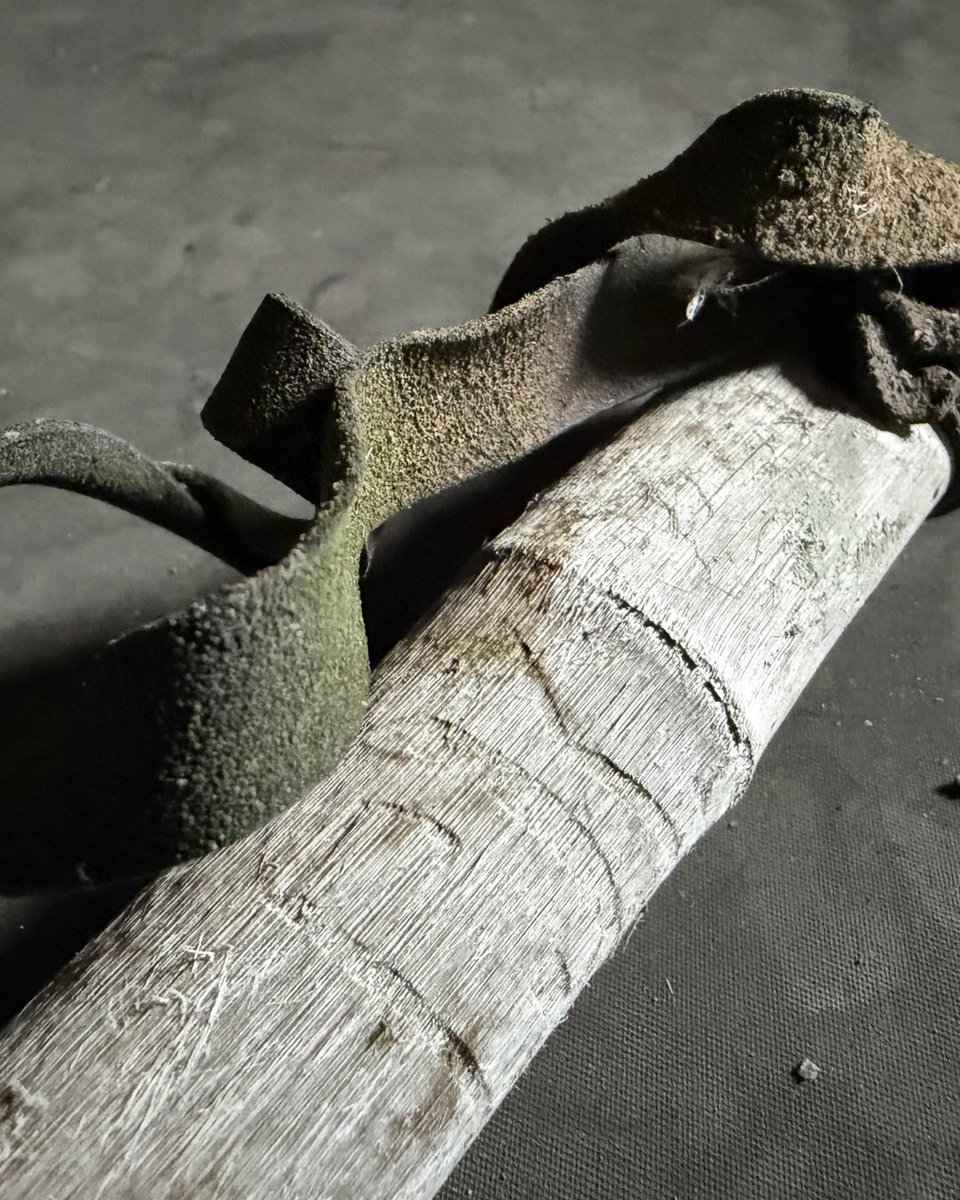
One of the most remarkable discoveries from the archaeology survey at Cape Evans this season emerged when Archaeologist Emma St Pierre uncovered a ski pole with hand carved initials on them, belonging to Patrick Keohane, a Petty Officer on Scott’s Terra Nova expedition.
Patrick Keohane was one of several Irishmen selected by Captain Robert Falcon Scott for the British Antarctic Terra Nova expedition (1910-1913), and one of 15 men chosen to set out with Scott from their Cape Evans base on the 900-mile journey to the South Pole.
Keohane initially assisted with the ponies before moving into the man hauling sled teams once the ponies had been put down. Although disappointed to be turned back 350 miles short of the Pole, this decision ultimately saved his life, as the small polar party that continued sadly never returned. Keohane later joined the search party that found the bodies of Scott, Dr Edward Wilson and Lieutenant Henry Bowers in their tent.
“Finding this ski pole was the highlight of my season on the Ice. It is rare to uncover an item that can be directly linked to an individual, so this felt incredibly special. To find it amongst all the bamboo scattered around the site was a real moment. Thinking that this pole may have been used during Scott’s journey to the Pole is both exciting and deeply meaningful,” said Emma.
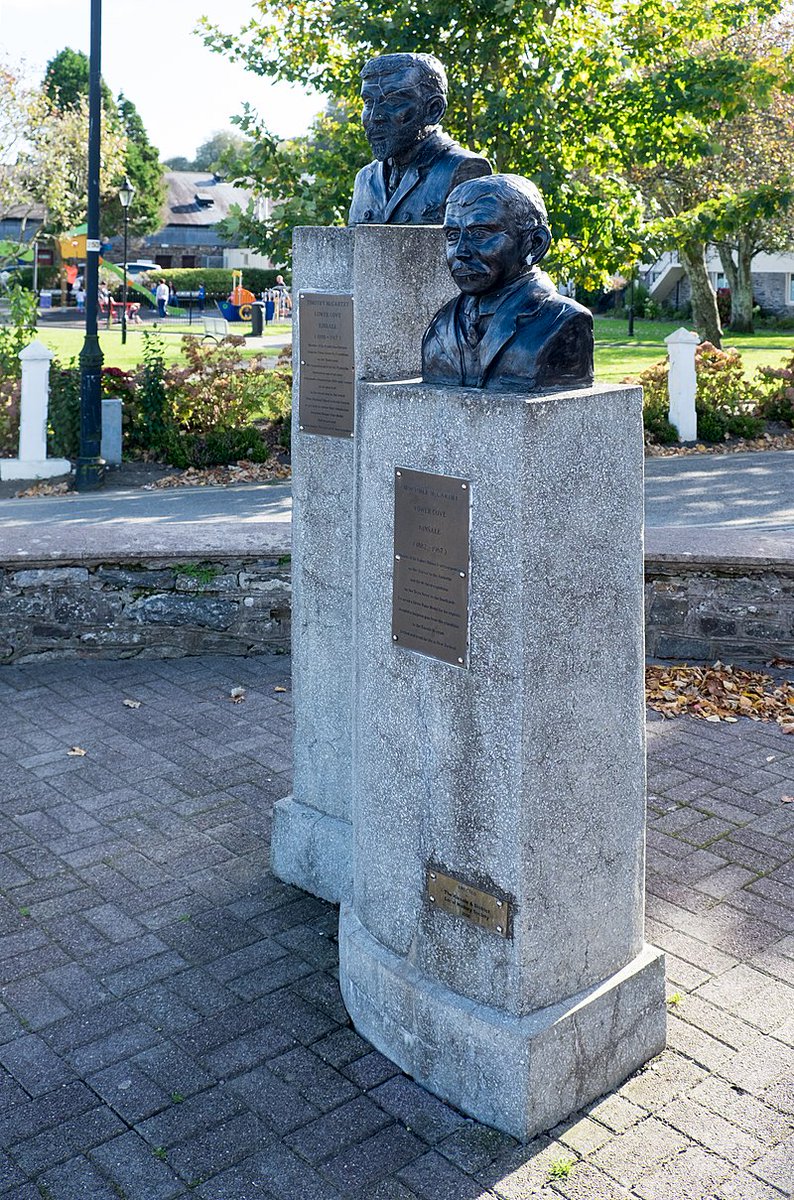
Keohane was commemorated for his part in the 'Terra Nova' expedition 100 years later when a bronze statue was commissioned and unveiled overlooking his birthplace in Courtmacsherry, West Cork, Ireland.
Keohane’s ski pole has been stabilised for interim storage and will be scheduled for conservation work in the upcoming season.
📷 The ski pole discovered this season belonging to Patrick Keohane, with the initials PK visible. �� AHT/Zack Bennett.
Bronze statue of Patrick Keohane at Courtmacsherry. Photographer unknown
#OnThisDay in 1916, as the sea ice broke up around them, Shackleton ordered his crew from the Imperial Trans-Antarctic 'Endurance' Expedition (1914-17) to abandon 'Patience Camp' on the ice floe where they had been living following the sinking of their ship 'Endurance' in November the previous year.
The 28 men boarded the ship's three lifeboats, renamed for the expeditions' benefactors - ‘James Caird’, ‘Dudley Docker’ and ‘Stancomb-Wills’. After five days at sea and suffering from exposure and dehydration, the men landed at Cape Valentine, Elephant Island, standing on solid ground for the first time in 497 days!
📷 The 'Endurance' crew cooking a meal at 'Patience Camp'. Credit: Canterbury Museum.
#inspire #explore #discover #conserve #antarctica #shackleton #endurance
Irish Antarctic explorer Timothy McCarthy died #OnThisDay in 1917. He served under Ernest Shackleton in the Imperial Trans-Antarctic 'Endurance' Expedition of 1914-16.
Timothy McCarthy was born 15th July 1888 in Kinsale, County Cork into a family of seafarers and navigators. Mortimer, his older brother, had served as an able seaman for Scott's 'Terra Nova' expedition. Before signing on as an able seaman for the 'Endurance' Expedition, McCarthy had served with the Royal Naval Reserve.
Impressed by McCarthy's skill during the incredible journey of survival from the northern Weddell Sea to Elephant Island following the sinking of 'Endurance', Shackleton chose him as one of six men that set off in the lifeboat the 'James Caird' in search of rescue. Upon reaching South Georgia Island, Shackleton, Frank Worsley and Tom Crean set off to finalise the rescue whilst the other two men, who were physically unfit for further service, remained under McCarthy's informal leadership.
Upon return to the British Isles, McCarthy re-enlisted in the Royal Naval Reserve and was appointed a leading seaman on the tanker SS Narragansett. Sadly, only three weeks since his return from South Georgia, McCarthy was killed when a torpedo hit his ship in the English Channel. He was only 29 years old.
McCarthy was posthumously awarded the Polar Medal in bronze and is honoured at the Plymouth Naval Memorial and, along with his brother Mortimer, in a memorial in Kinsale. He is also commemorated by McCarthy Island (54°10'S, 37°26'W), a mile-long island lying in the entrance to King Haakon Bay on the southern side of South Georgia.
#inspire #discover #explore #conserve
📸 Timothy and Mortimer McCarthy memorial by Graham Brett at Kinsale
@TrenesArg ETERNO FASTIDIO QUE JAM��S TERMINA. En un país decente, en este tiempo construyen una linea nueva completa.Jamàs rueda la cabeza de nadie, como jamás han publicado el PM de las obras. HDRMP
@AmbaTransporte
#OnThisDay in 1876, Petty Officer Edgar Evans was born in Middleton, on the Gower Peninsula in Wales.
One of twelve children and the son of a sailor, Evans enlisted in the Royal Navy in 1891 at the age of 13. In 1899 he served on 'HMS Majestic' where Robert Falcon Scott was serving as a torpedo lieutenant.
Evans served on Scott's British National Antarctic 'Discovery' Expedition 1901-04 and accompanied Scott on his 'Furthest West' sledge journey to the interior of Victoria Land in 1903.
Alongside Scott, Evans later joined the British Antarctic 'Terra Nova' Expedition 1910-13 and was held in high regard by Scott for his resourcefulness, strength and cheerful manner. Scott described him as "a giant worker—he is responsible for every sledge, every sledge-fitting, tents, sleeping-bags, harness, and when one cannot recall a single expression of dissatisfaction with any one of these items, it shows what an invaluable assistant he has been."
Evans was selected by Scott to be part of his five-man strong Polar Party which reached the South Pole on 17 January 1912. On the return journey Evans was suffering from severe frostbite and as Scott records in his diary "a good deal run down". His health continued to worsen, with a hand injury that wouldn't heal and suffering badly from frostbite. As the party descended the Beardmore Glacier it is thought that he sustained a serious concussion on 4 February, causing his condition to worsen rapidly. He collapsed on 16 February near the end of the Glacier and died the next day.
In honor of PO Edgar Evans there is a commemorative plaque on the Scott lighthouse memorial in Roath Park Lake in Cardiff, South Wales, which lists all of the crew members including Evans.
📸 Edgar Evans, Copyright Unknown.
#OTD #inspire #explore #discover #conserve #Antarctica