“Praying for a dip so I can buy more” as a sentiment is strongest in two asset classes: Bitcoin and Real Estate
Both because people have strong belief in a deep need for it
Underrated sentiment analysis tool for conviction in an asset
It’s undeniable that the m5 ultra release added pressure, aside from benchmarks of m5 ultra vs dgx sparks, Apple’s price per gb alone (excl. bandwidth) is amazing.
Given this, how can Nvidia comfortably cut their ram/dollar in half? They are confident that Apple has large price increases soon.
@MiaAI_lab Competition from the frontier and open-source near-frontier as well as the ability to shrink models and keep intelligence will keep plans worthwhile for many users, but we’ll probably still see spikes of Einstein-tier models that are extremely expensive for a few months at a time
@JASONMCNAB@nvidia Would be rough to have a machine with less people focused on optimizing for it, but the dynamic between them and Apple is interesting
https://t.co/89pt1OGAZ8
It’s undeniable that the m5 ultra release added pressure, aside from benchmarks of m5 ultra vs dgx sparks, Apple’s price per gb alone (excl. bandwidth) is amazing.
Given this, how can Nvidia comfortably cut their ram/dollar in half? They are confident that Apple has large price increases soon.
It’s undeniable that the m5 ultra release added pressure, aside from benchmarks of m5 ultra vs dgx sparks, Apple’s price per gb alone (excl. bandwidth) is amazing.
Given this, how can Nvidia comfortably cut their ram/dollar in half? They are confident that Apple has large price increases soon.
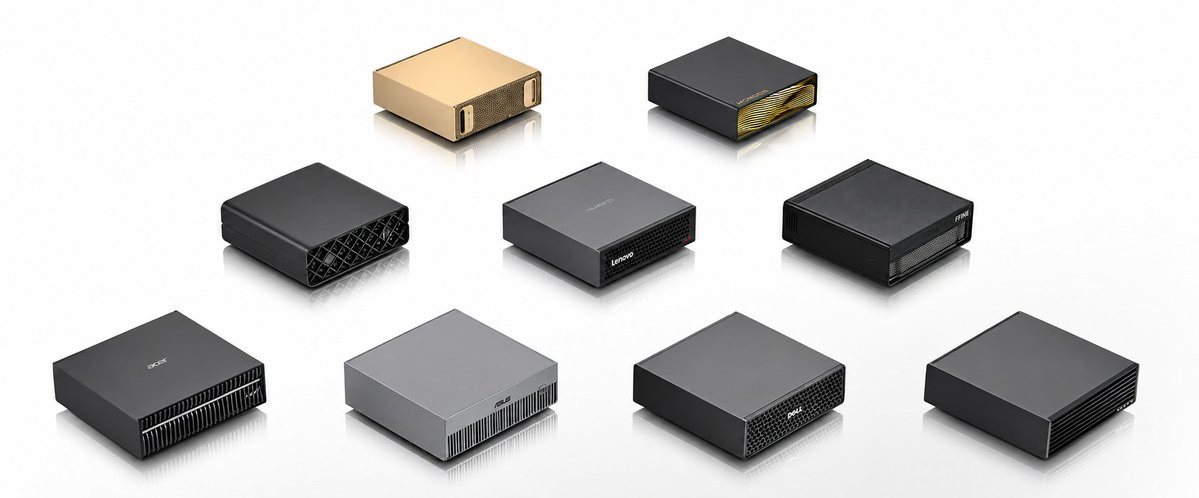
NVIDIA announces 64 GB DGX Sparks!! 😲
Starting Friday, Oct. 23
The new configuration will be available from Acer, ASUS, Dell, Gigabyte, HP and MSI.
Priced at $4,999
Once that book has liquidity, the admission rate stops functioning as an inefficiency, the hardware gap gets arbitraged into the token, and the one-in-forty filter survives only as a preference for original weights, not as the price.
OpenRouter admits inference providers at about one applicant in forty, which keeps spare GPU hours on thin rental boards and holds faster near-lossless quantizations to the first public weights. That admission causes a hugely inefficient spread for this industry: hourly capacity already prices below token revenue, and a router that lists speed beside price lets buyers take the weaker machine at a discount. The first book to publish that supply collects the gap OpenRouter is currently charging to withhold it.
Why is openrouter not open? Why do they need to “approve” providers at a rate of 1:40 applicants? Why is the data retention restriction not able to be applied technologically as a default?
People should see the worse performers at a lower price and decide themselves if they want that TPS and uptime at a discount, in a true open market. HUGE gap. DGX Spark rental markets are disparate and each have low demand. B300 hourly rentals are priced well below their effective market price of token output because of these uncomfortable, low-success-rate hoops to jump through.
Why is openrouter not open? Why do they need to “approve” providers at a rate of 1:40 applicants? Why is the data retention restriction not able to be applied technologically as a default?
People should see the worse performers at a lower price and decide themselves if they want that TPS and uptime at a discount, in a true open market. HUGE gap. DGX Spark rental markets are disparate and each have low demand. B300 hourly rentals are priced well below their effective market price of token output because of these uncomfortable, low-success-rate hoops to jump through.
Meanwhile, there are quantizations and innovations like tensorfold that provide model recipes at 2-3x speed that are near lossless, but you can only rent inference of the initial releases.