Location matters. 🧬📍
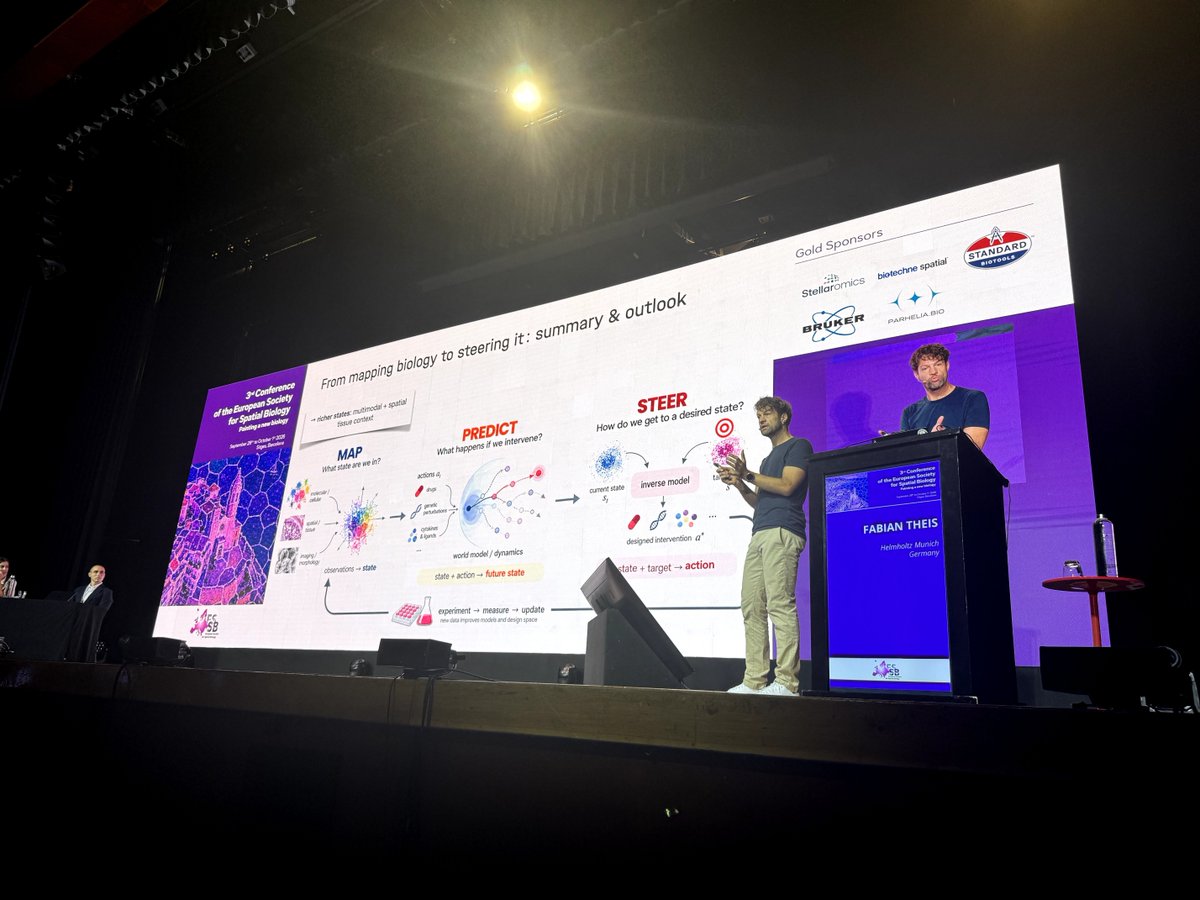
A beautiful start to #ESSB2026 in Sitges/Barcelona today, bringing together >700 scientists around this year’s theme: “Painting a New Biology.” Spatial biology has transformed our ability to map biological systems by adding something fundamental: where things happen.
In my intro keynote, “Closing the loop: from single-cell perturbations to spatial interventions,” I looked at what I think is the next step. We are becoming remarkably good at mapping biological states. Can we move from mapping to predicting what happens when we intervene, and ultimately to steering biology toward a desired state?
I discussed our journey from cellular and spatial atlases and foundation models, through perturbation models and biological world models, to LabCompass, where generative inverse design and experiments are brought together in a closed loop.
And spatial biology makes the challenge even more interesting: perturbation space already explodes across dose, time and biological context. Once spatial context and cellular interactions matter too, we will never measure everything.
That makes learning in the loop with experiments increasingly important.
Wonderful introduction by the ESSB founders and hosts, and a beautiful setting here in Sitges 🌊. Looking forward to the discussions!
#SpatialBiology #VirtualCell
[Please share and RT]
▶ We are hiring!
Our team is looking for a talented and motivated Research Assistant to help us develop and characterize paraxial mesoderm and skeletal muscle #organoid models 🔬 🧫💻👨🔬 👩🔬
#iPSC#organoid#genetherapy#AAV#bioengineering#myogenesis
🚨 Check out our new preprint!
Super excited to see this go over the finish line, thanks to a collaborative effort 📢 Katherine & Trevor!
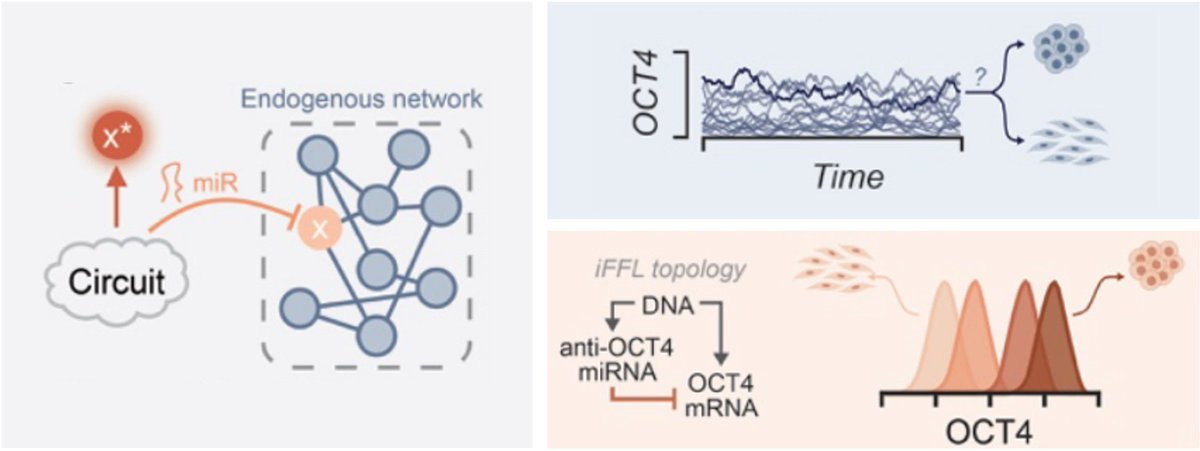
Tl;dr: #SynBio genetic circuits 🧬 + reprogramming to #iPSCs 🧫= robust cell fate control
See thread for the story!
https://t.co/T6m7jfhrAa
Time resolved single-cell RNA-seq is increasingly becoming a thing - interesting review about scRNA-seq assays with metabolic RNA labelling by @AE_Saliba & @DolkenL, amongst others. Fun computational challenges, too: https://t.co/NEGPf9f5Fq
Our paper on a quantitative framework of epigenome regulation and memory is now out in @NAR_Open. https://t.co/3uJceCi4vh .
New add-ons compared to the first bioRxiv [several spreading mechanisms including loop extrusion-like+link to percolation] ! Congrats @AmithZafal
Premier retour d'expérience de @ABonnaffoux et la création de la startup Vidium au @Lyon_LBMC lors de la matinée "Bio Valo, vous aussi valorisez votre recherche" organisée avec @Pulsalys
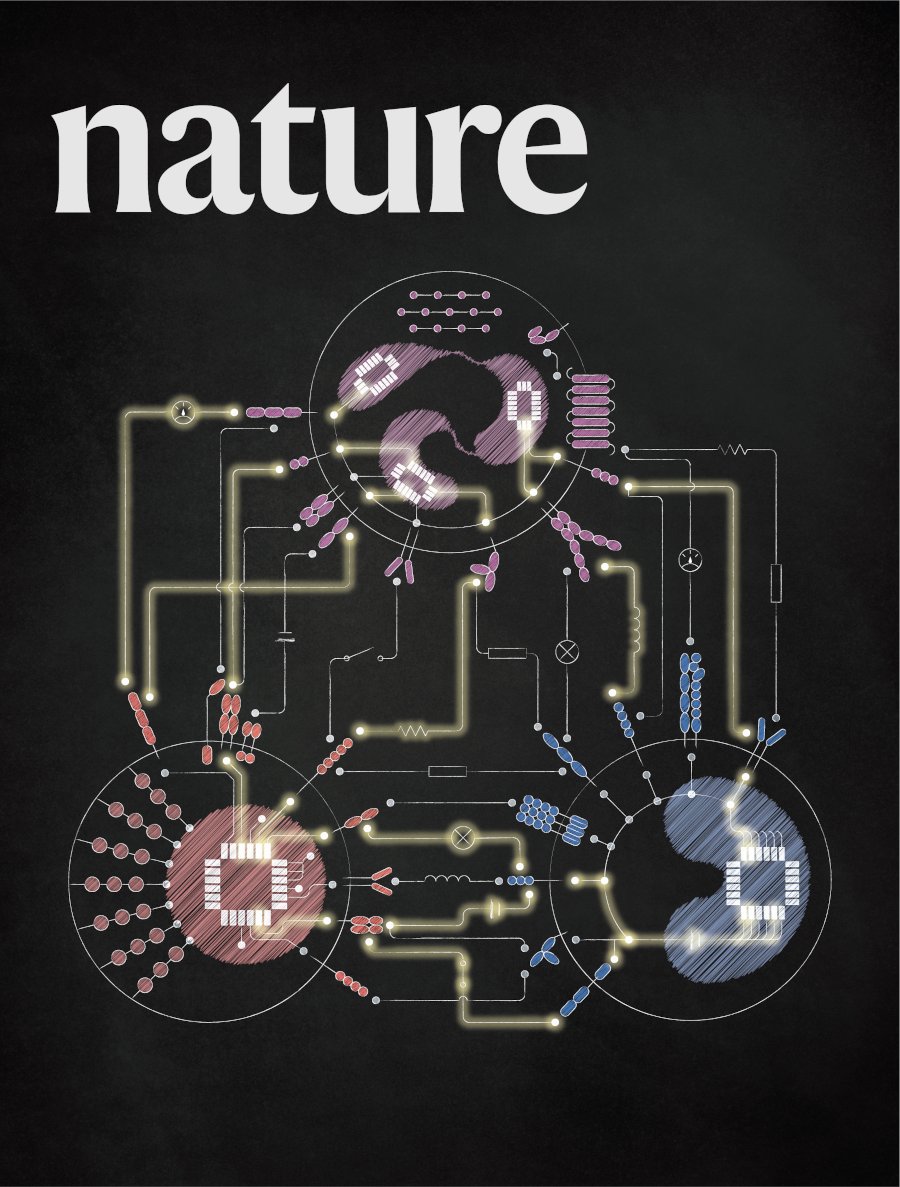
For centuries we've had anatomical maps of how the body's organs are connected, but what would a diagram of the immune system’s connections look like? In @Nature we report our initiative to map the "interactome" that links human immune cells together (1/14)https://t.co/sj4BKiITGd
Sijia Wang @Contreras_Lab@fabian_theis Paul Nurse & I contributed to @CellCellPress Voices article about multidisciplinary research. Challenges: get out of comfort zone, fit, review, background. My bit shown below. https://t.co/wPU9DOvVpv
Nous remercions tous les participants, le comité d'organisation @Sophie_ICEO, les intervenants pour cette #JournéeScientifique qui s'est très bien déroulée malgré les 35°C 🌞!
Merci également au @CbiToulouse de nous avoir reçu.
👉https://t.co/NCPaRoQ9u5
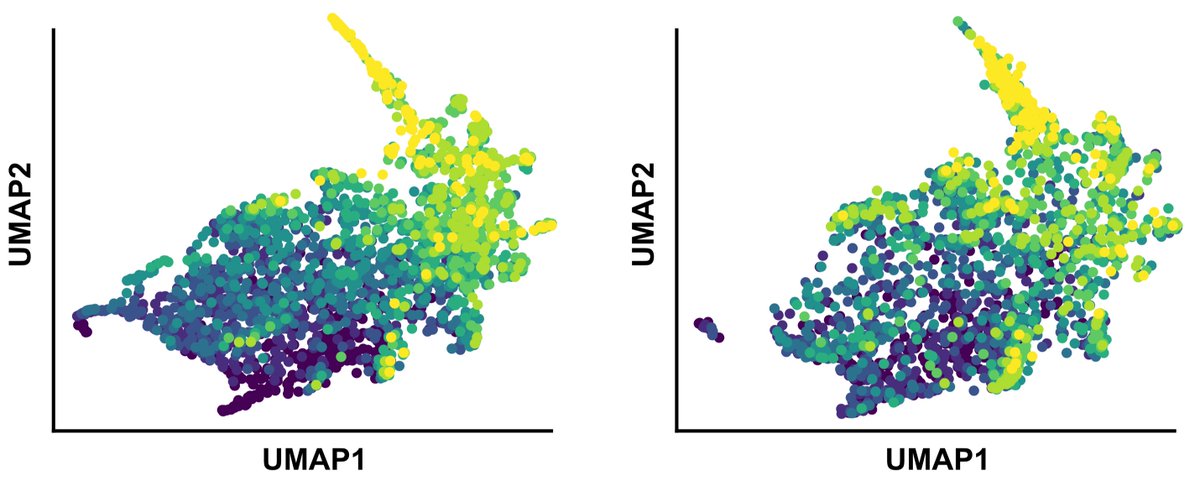
Can you spot the difference? On the left is the original data, on the right the in-silico generated data using the GRN we inferred from the original data. Pretty pretty pretty cool (OK I am biased...).
https://t.co/5WRogNlgez
🥼 "Understanding tumor cell plasticity, heterogeneity and resistance is crucial for tumor classification and notably for the development of future effective and personalized treatments in #oncology."
We provide the technology to tackle these challenges. 🚀Discover how:
"The development of “mechanistically justified normalization” is a pressing challenge for single-cell RNA-seq analysis."
Burstiness should be taken into account.
https://t.co/bEO3R0gaHz
A genetic proportional-integral (PI) feedback control system in mammalian cells.
Congrats to @TimothyFrei11, Ch-Hs Chang, @MauriceFilo, and A. Arampatzis whose work on this started 6+ years ago.
Thanks to @ETH@ERC_Research#synbio#cybergenetics
https://t.co/CH5P7wfQkw




![jb_dpt's tweet photo. [Please share and RT]
▶ We are hiring!
Our team is looking for a talented and motivated Research Assistant to help us develop and characterize paraxial mesoderm and skeletal muscle #organoid models 🔬 🧫💻👨🔬 👩🔬
#iPSC #organoid #genetherapy #AAV #bioengineering #myogenesis https://t.co/ICt7LPlhqB](https://pbs.twimg.com/media/FqxO6l9XwAAyW-2.png)